
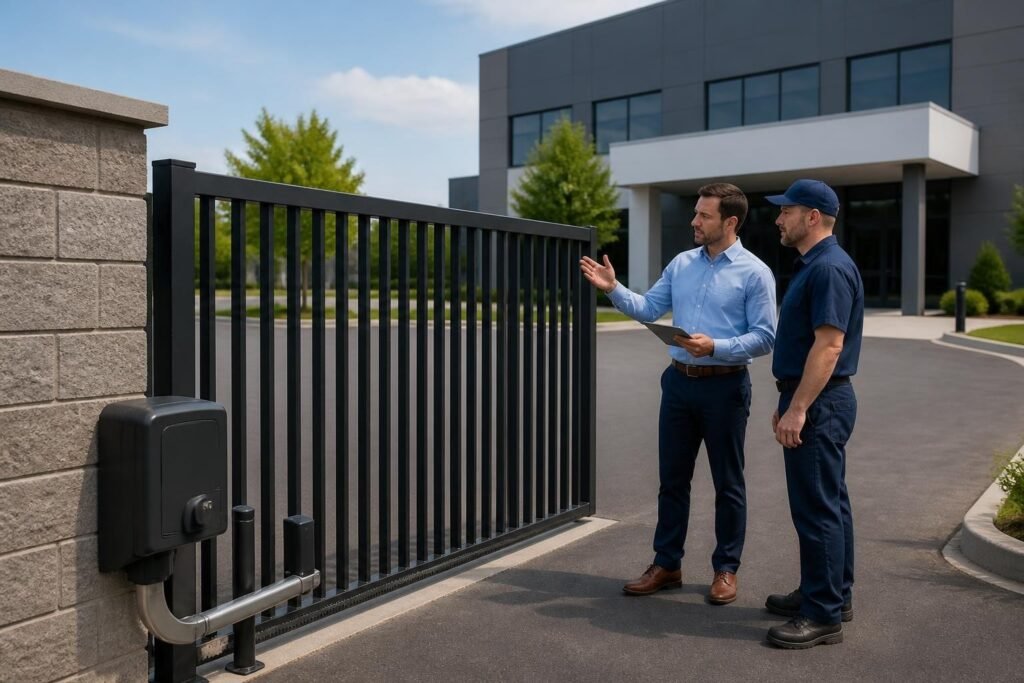
Property managers, business owners, and facility operators understand that controlling access to commercial premises requires reliable automated systems. A commercial gate opener serves as the foundation of secure, efficient entry management for warehouses, apartment complexes, gated communities, and corporate campuses. Unlike residential models, commercial systems must withstand substantially higher daily cycle counts, accommodate diverse user authentication methods, and meet stringent safety regulations. This comprehensive guide examines everything you need to know about selecting, installing, and maintaining commercial gate opener systems in 2026.
Understanding Commercial Gate Opener Classifications
Commercial gate operators differ fundamentally from residential units in design, durability, and regulatory compliance. The classification system helps buyers match equipment to their specific application requirements.
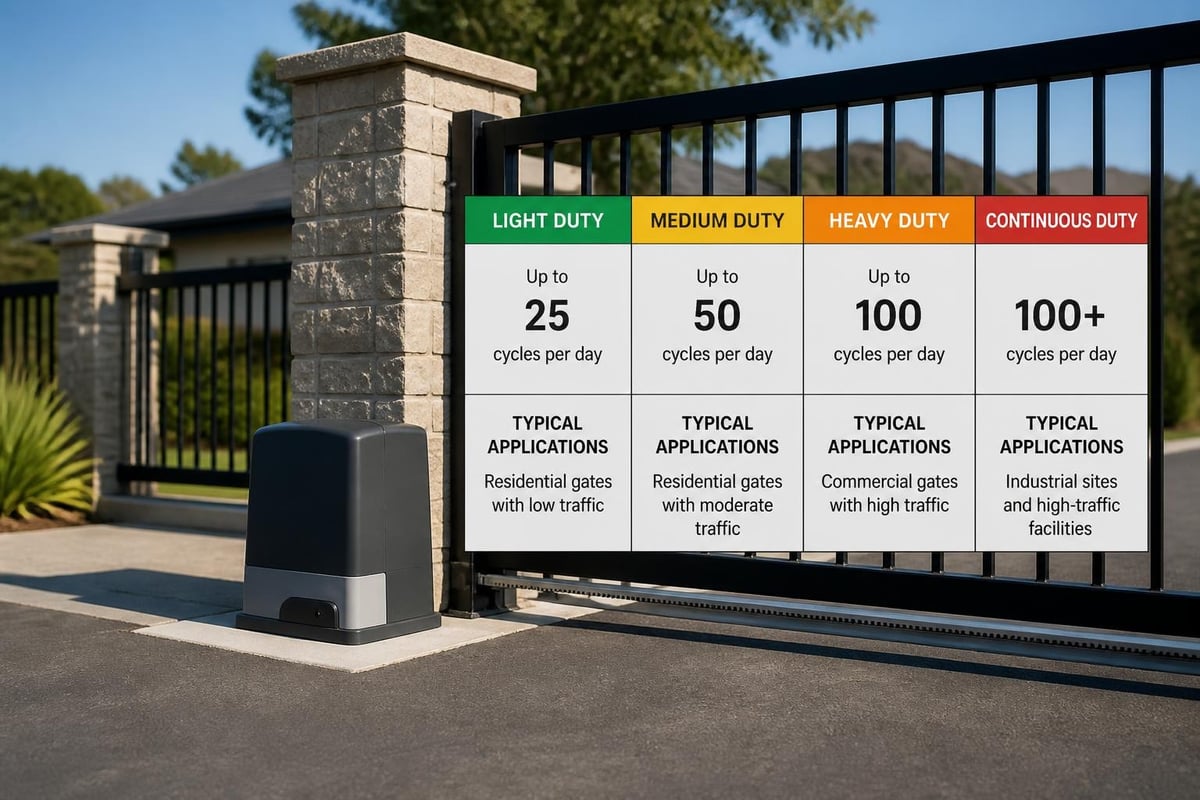
Duty Cycle Ratings and Usage Patterns
Duty cycle represents the percentage of time an operator can run within a given period without overheating or experiencing mechanical stress. Commercial installations typically require medium to heavy-duty ratings.
Duty cycle categories include:
- Light commercial: 30-50 cycles per day, suitable for small office parks
- Medium commercial: 50-150 cycles daily, appropriate for apartment complexes
- Heavy commercial: 150-500+ cycles daily, designed for industrial facilities
- Continuous duty: Unlimited cycles with proper cooling systems
A commercial gate opener rated for heavy duty incorporates reinforced gearboxes, enhanced cooling systems, and industrial-grade motors that maintain performance under constant use. Properties should calculate peak usage periods and add a 20-30% safety margin when selecting duty ratings.
Gate Type Compatibility
Different gate configurations require specific operator mechanisms. Swing gates use articulating arms or hydraulic rams, while sliding gates employ rack-and-pinion or chain drive systems.
| Gate Type | Operator Mechanism | Typical Weight Capacity | Best Applications |
|---|---|---|---|
| Single swing | Articulating arm | Up to 1,200 lbs | Standard driveways, pedestrian entries |
| Dual swing | Dual operators | 600 lbs per leaf | Wide commercial entrances |
| Sliding | Rack-and-pinion | Up to 6,000 lbs | Industrial facilities, limited space |
| Cantilever | Chain/belt drive | Up to 3,000 lbs | Uneven terrain, no ground track |
| Vertical lift | Hydraulic/screw | Up to 800 lbs | Parking structures, high-security |
Selecting the appropriate commercial gate opener requires analyzing gate weight, wind load exposure, and available installation space. Hydraulic operators excel in high-wind environments due to their inherent resistance to back-driving forces.
Essential Safety Features and Regulatory Compliance
Safety represents the most critical consideration when implementing commercial gate automation. Modern regulations mandate multiple redundant safety systems to prevent entrapment and injury.
UL 325 Compliance Requirements
The UL 325 standard establishes safety requirements for all commercial gate operators sold in North America. This certification ensures manufacturers incorporate required safety features and testing protocols.
Mandatory UL 325 safety devices:
- Monitored entrapment protection: Dual systems including photoelectric sensors and edge sensors
- Inherent force limiting: Automatic reversal when encountering resistance
- Emergency release mechanisms: Manual operation during power failures
- Non-contact sensors: Photoelectric beams across the gate path
- Warning signage: Permanent installation of safety notices
Properties must verify that any commercial gate opener displays the UL 325 label and includes documentation proving compliance. Non-compliant systems expose property owners to significant liability in injury incidents.
ADA Accessibility Standards
The Americans with Disabilities Act establishes specific requirements for automated gates serving public accommodations. The U.S. Access Board guidance details opening force, timing, and control placement standards.
Gates must maintain opening forces below 5 pounds, provide sufficient maneuvering clearances, and incorporate controls positioned between 15 and 48 inches above the floor. Commercial installations requiring ADA compliance should specify these requirements during the procurement process.
Access Control Integration Options
Modern commercial gate opener systems function as components within comprehensive access management platforms. Integration capabilities determine operational efficiency and security effectiveness.
Authentication Methods
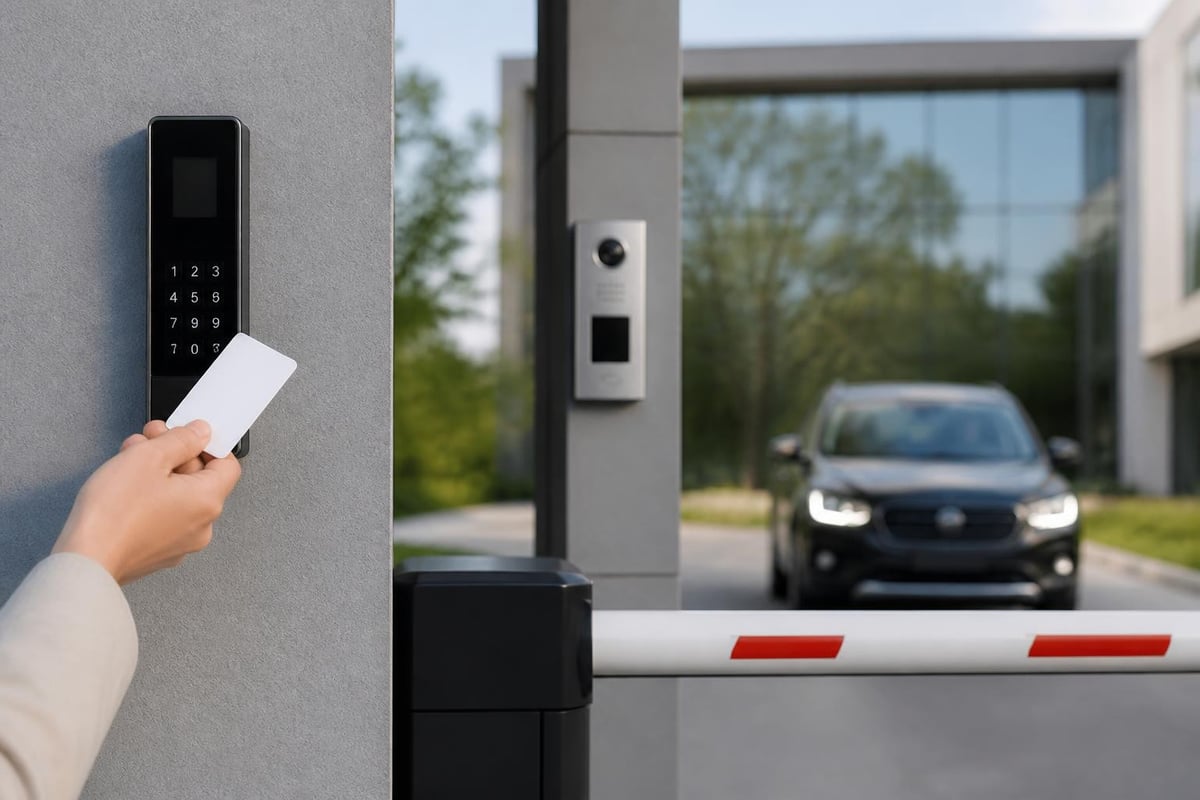
Contemporary systems support multiple credential types to accommodate diverse user populations and security requirements.
- Proximity cards and key fobs: Cost-effective for medium-security applications
- Mobile credentials: Smartphone-based access via Bluetooth or cellular
- Biometric readers: Fingerprint or facial recognition for high-security zones
- License plate recognition: Automated vehicle identification systems
- Intercom systems: Two-way communication for visitor management
- Cloud-based platforms: Remote management and audit trail capabilities
The optimal authentication approach balances security requirements against user convenience. Many facilities implement tiered access, using simple proximity cards for regular users while requiring multi-factor authentication for sensitive areas. For properties in Los Angeles requiring professional installation and integration, electric gate repair services can ensure all access control components function seamlessly with the commercial gate opener.
Network Connectivity and Remote Management
Cloud connectivity transforms commercial gate operators into intelligent devices providing real-time status updates and remote control capabilities.
| Feature | Benefit | Business Impact |
|---|---|---|
| Real-time status monitoring | Immediate fault notification | Reduced downtime, faster repairs |
| Usage analytics | Traffic pattern identification | Optimized staffing, resource allocation |
| Remote operation | Open gates from any location | Emergency access, visitor convenience |
| Scheduled automation | Time-based access rules | Enhanced security, reduced manual intervention |
| Integration APIs | Connection to building systems | Unified security management |
Cloud-enabled systems generate detailed audit logs documenting every gate operation, essential for security investigations and compliance reporting. Property managers can configure alerts for unusual access patterns or mechanical faults, enabling proactive maintenance.
Installation Considerations and Site Preparation
Proper installation determines long-term reliability and performance. Commercial gate opener projects require careful planning beyond simply mounting the operator.
Power Requirements and Electrical Infrastructure
Commercial operators demand robust electrical systems capable of delivering consistent power during peak usage periods. Most units require 208-240V single or three-phase power.
Electrical planning checklist:
- Verify available voltage matches operator specifications
- Install dedicated circuit breakers sized appropriately
- Provide surge protection and lightning arrestors
- Include battery backup systems for uninterrupted operation
- Plan conduit runs for control wiring and sensor connections
Solar-powered systems offer alternatives for remote locations lacking grid access, though battery bank sizing becomes critical for reliable operation during extended cloudy periods. Calculate power consumption based on maximum daily cycles plus accessory loads.
Environmental Protection and Weatherproofing
Outdoor installations expose operators to temperature extremes, moisture, dust, and corrosive elements. The commercial gate opener housing must provide adequate protection for the installed environment.
Coastal installations require marine-grade corrosion protection, while desert environments demand enhanced cooling systems and dust sealing. Northern climates benefit from heated operator enclosures and low-temperature lubricants preventing cold-weather failures.
Maintenance Strategies for Maximum Uptime
Proactive maintenance prevents unexpected failures and extends equipment lifespan. Commercial installations require structured maintenance programs matching usage intensity.
Preventive Maintenance Schedules
Establishing routine inspection intervals based on cycle counts rather than calendar periods ensures appropriate service frequency.
Recommended inspection tasks by cycle count:
| Cycles | Maintenance Activities |
|---|---|
| Every 5,000 | Lubricate moving components, inspect fasteners, test safety sensors |
| Every 10,000 | Check motor brushes, verify battery backup, calibrate force settings |
| Every 25,000 | Inspect gearbox oil, examine chain/belt wear, review electrical connections |
| Every 50,000 | Complete operator overhaul, replace wear components, update firmware |
High-traffic installations benefit from quarterly professional inspections documenting system condition and identifying developing issues before they cause failures. Maintaining detailed service records proves valuable for warranty claims and insurance purposes.
Common Failure Modes and Troubleshooting
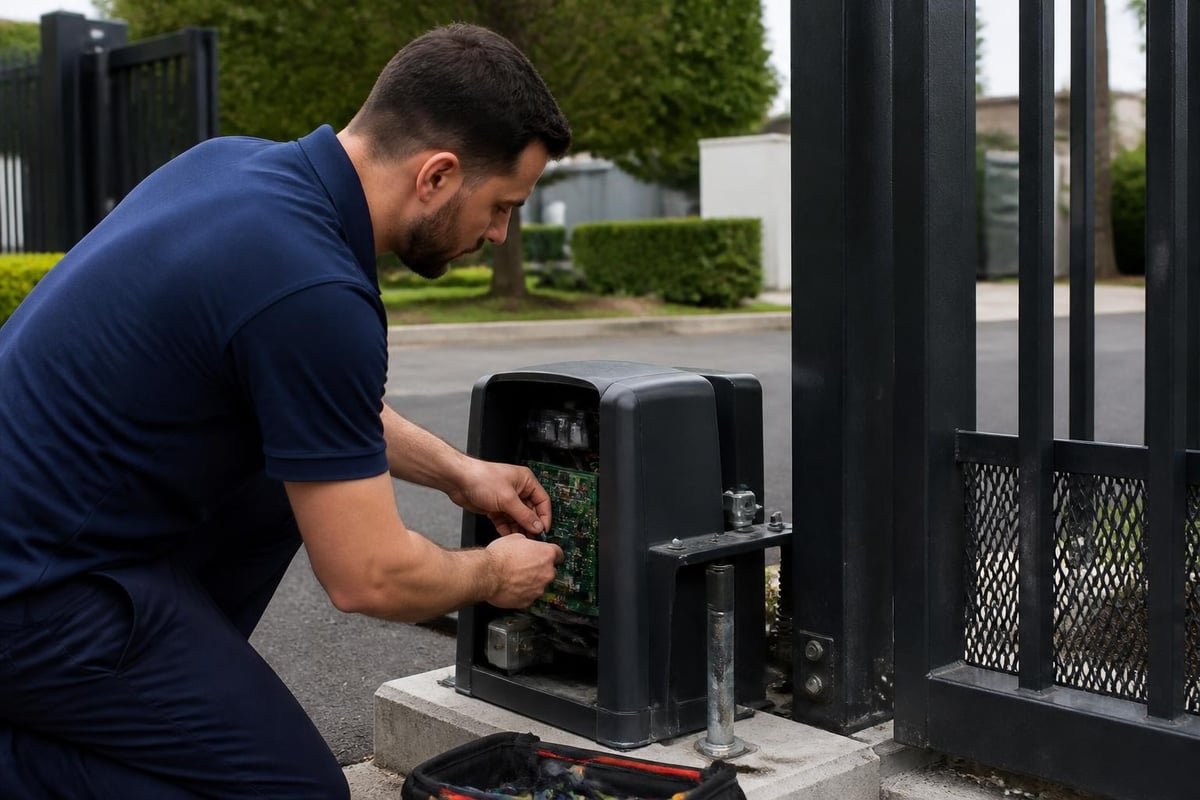
Understanding typical failure patterns enables faster diagnosis and resolution. Most commercial gate opener problems stem from a limited set of root causes.
Frequent issues include:
- Intermittent operation: Often caused by loose electrical connections or failing limit switches
- Slow response times: Typically indicates low battery voltage or motor capacitor degradation
- Safety sensor faults: Usually results from misalignment, dirt accumulation, or wiring damage
- Excessive noise: Suggests worn gears, insufficient lubrication, or mounting bolt looseness
- Gate drift: Indicates brake adjustment needs or hydraulic seal leakage
Operators should maintain spare parts inventory including limit switches, photo eyes, capacitors, and fuses to enable rapid repairs. Many manufacturers provide diagnostic tools that connect to operator circuit boards, displaying fault codes that pinpoint specific component failures.
Cost Analysis and Return on Investment
Commercial gate opener investments extend beyond initial purchase prices. Comprehensive cost analysis includes installation, ongoing maintenance, energy consumption, and downtime expenses.
Total Cost of Ownership Calculations
A realistic budget accounts for all expenses over the expected 10-15 year service life of commercial equipment.
Cost components:
- Equipment purchase: $2,500-$15,000 depending on gate size and duty rating
- Professional installation: $1,500-$5,000 for electrical, mounting, and programming
- Access control integration: $500-$3,000 per credential reader
- Annual maintenance contracts: $800-$2,500 for quarterly professional service
- Energy costs: $150-$400 annually based on usage patterns
- Replacement parts: $200-$800 annually for wear items
Higher-quality commercial gate opener models command premium prices but deliver superior reliability and lower maintenance costs. Budget systems often require more frequent repairs and shorter replacement cycles, ultimately costing more over extended periods.
Liability Reduction and Risk Management
Properly maintained automated gates reduce premises liability exposure compared to manual gates or unrestricted access points. Insurance carriers often provide premium reductions for properties with certified access control systems.
The European Commission’s Safety Gate reports document safety incidents related to automated gates globally, emphasizing the importance of compliance with safety standards. Documented maintenance records and compliance certifications strengthen legal positions in liability claims.
Emerging Technologies and Future Developments
The commercial gate operator industry continues evolving with advances in artificial intelligence, connectivity, and sustainable power systems.
Artificial Intelligence and Predictive Maintenance
Machine learning algorithms analyze operational data to predict component failures before they occur. AI-enabled systems monitor parameters including motor current draw, cycle completion times, and temperature patterns.
When deviations indicate developing problems, the commercial gate opener automatically schedules maintenance appointments and orders replacement parts. This predictive approach minimizes unexpected downtime and optimizes maintenance spending.
Sustainable Power Solutions
Solar integration continues improving with higher-efficiency panels and advanced battery chemistry. Modern lithium iron phosphate batteries deliver superior cycle life and cold-weather performance compared to traditional lead-acid designs.
Energy harvesting systems capture kinetic energy during gate closing operations, supplementing solar charging and extending battery runtime. These innovations make off-grid installations increasingly practical for remote commercial properties.
Selecting and maintaining the right commercial gate opener requires understanding duty ratings, safety compliance, access control integration, and lifecycle costs. Property managers who invest in properly specified equipment and implement structured maintenance programs achieve reliable access control while minimizing operational expenses. Whether you're installing a new system or maintaining existing infrastructure, Gates On Site delivers expert commercial and residential gate services throughout Los Angeles, offering same-day repairs with no extra emergency charges and over 20 years of industry experience.