
A commercial gate that fails during business hours is not just an inconvenience. Depending on the property, it can block employee access, strand customers, trigger security concerns, or halt operations entirely. Commercial gates handle significantly higher traffic cycles than residential installations, operate under greater mechanical stress, and are often connected to access control systems that add another layer of complexity to any repair. Understanding the different gate types, how they fail, and what professional repair involves is useful knowledge for any Los Angeles property manager or business owner responsible for keeping a facility running.
Gates On Site has been servicing commercial gates across Los Angeles for over 20 years, carrying over $100,000 in parts on every service vehicle so repairs can be completed on the first visit rather than requiring return trips for parts.
Sliding Gates
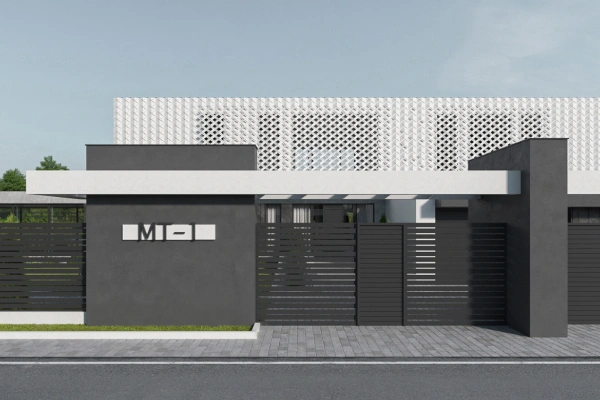
Sliding gates are the most common commercial gate configuration in Los Angeles. They move horizontally along a track and are well-suited to properties with limited space in front of the gate opening, driveways with inclines that would make a swing gate impractical, and high-traffic facilities where cycle speed and reliability are priorities.
The most frequent failure points on commercial sliding gates are the track and roller system, the motor and drive mechanism, and the gate’s alignment. Track debris is a constant maintenance issue in LA, where dust, gravel, and wind-blown material accumulate in the track channel and create rolling resistance that puts strain on the motor. Commercial sliding gates that cycle dozens of times per day wear through rollers faster than residential installations, and rollers that are worn flat or cracked create a grinding sound and an uneven, jerky movement that signals they need replacement.
Motor failures on sliding gates are often preceded by a period of slow or labored operation. When the gate takes noticeably longer to open or close than it used to, the motor is typically working against increased resistance somewhere in the system, whether from track debris, worn rollers, a gate that has gone out of alignment, or a motor that is reaching the end of its service life. Addressing the resistance issue early extends motor life. Waiting until the motor burns out entirely means a more expensive repair and unplanned downtime.
Gate alignment problems develop gradually on commercial sliding gates due to the cumulative effect of vehicle impacts, ground settlement, and hardware wear. A gate that no longer sits squarely in its track can drag, stall mid-travel, or fail to close fully and trigger the access control system to report an open gate condition.
Swing Gates
Swing gates open on hinges like a door, either as a single panel or a dual panel configuration. They are common at commercial driveways, parking facilities, industrial yards, and properties where the aesthetic of a swing gate suits the entrance design. Commercial swing gates place significant stress on the hinge and post system because the full weight of the gate panel is cantilevered on those points through every open and close cycle.
Hinge wear and post fatigue are the leading structural issues on commercial swing gates. A gate that sags, drags on the ground during operation, or no longer closes to a consistent position has typically developed hinge wear that is allowing the panel to drop. Left unaddressed, a sagging swing gate puts the opener arm in a binding condition that strains the motor and can bend or damage the arm mechanism.
The opener mechanism on a swing gate uses a hydraulic or electromechanical actuator arm to push and pull the panel through its arc. These arms require proper adjustment to the gate’s weight and swing radius, and they are affected by ambient temperature in ways that other gate types are not. Hydraulic actuators in particular can become sluggish in cold weather as the fluid thickens, and they can overheat and develop seal failures in the sustained summer heat that commercial properties in the San Fernando Valley and central Los Angeles experience regularly.
Dual-panel swing gate installations add coordination complexity because both panels need to open and close in the correct sequence to avoid colliding. Control board programming governs this sequence, and timing issues that develop over time often trace back to a controller that needs recalibration rather than a mechanical failure.
Barrier Arms
Barrier arms are the horizontal boom-style gates common at parking facilities, loading docks, drive-through checkpoints, and building entry lanes. They are designed for very high cycle volumes, with commercial-grade units rated for thousands of cycles per day, and they are typically integrated with ticketing systems, card readers, license plate recognition cameras, or other access control hardware.
The mechanical simplicity of a barrier arm makes many failures relatively straightforward to diagnose. The motor and gear assembly, the balance spring system, and the arm itself are the primary components. Balance spring tension is critical to barrier arm operation because the spring counterbalances the weight of the arm and allows the motor to operate efficiently. A spring that has weakened or broken causes the motor to carry the full arm weight, which accelerates motor wear and shortens service life significantly.
Barrier arms take physical damage from vehicle strikes more often than any other commercial gate type, and the arm material matters for repair practicality. Aluminum arms that bend in a strike can sometimes be straightened. Fiberglass arms that shatter on impact need full replacement but are designed to break away without damaging the motor housing, which is an intentional safety feature. When a barrier arm takes a vehicle strike, checking the motor housing, the gear assembly, and the limit switch settings after replacing the arm is important because the impact force transfers through the system even when the arm absorbs most of it.
Industrial Roll-Up Gates
Industrial roll-up gates, also called rolling steel doors or coiling doors, are used at warehouses, loading docks, storage facilities, commercial garages, and retail storefronts throughout Los Angeles. They consist of interlocking steel slats that coil around a barrel above the opening when the door is raised. Commercial and industrial roll-up gates are built for durability, but they operate in demanding environments and develop specific failure patterns over time.
Spring system failures are the most consequential mechanical issue on roll-up gates, paralleling what happens with residential garage door springs but on a larger scale. The counterbalance spring system on a commercial roll-up gate is calibrated to the weight of the door curtain, and when springs weaken or break, the motor must work against the full door weight. This strains the motor, causes slow or incomplete operation, and can result in a door that drops under its own weight when the motor stops. Spring replacement on commercial roll-up gates requires calibration to the specific door weight and is not a safe DIY procedure.
Motor and operator failures on roll-up gates are also common in high-cycle commercial environments. Commercial operators from manufacturers like LiftMaster and Chamberlain are designed for heavy-duty use, but they still have cycle ratings and wear timelines that depend on proper installation, lubrication, and maintenance. Control board failures, limit switch issues, and motor brush wear are the most frequent operator repair items and are generally less expensive to address than a full operator replacement when caught before they cause secondary damage.
Slat damage from vehicle impacts, corrosion in outdoor installations, and guide track misalignment are the primary structural issues on roll-up gate curtains. Individual slats can often be replaced without replacing the full curtain. Track misalignment causes the curtain to bind during travel, which puts lateral stress on the slats and the barrel assembly and can accelerate wear across the entire system.
If your commercial gate is down or operating unreliably anywhere in Los Angeles, Gates On Site provides same-day emergency repair service with no extra charge for emergency calls.