
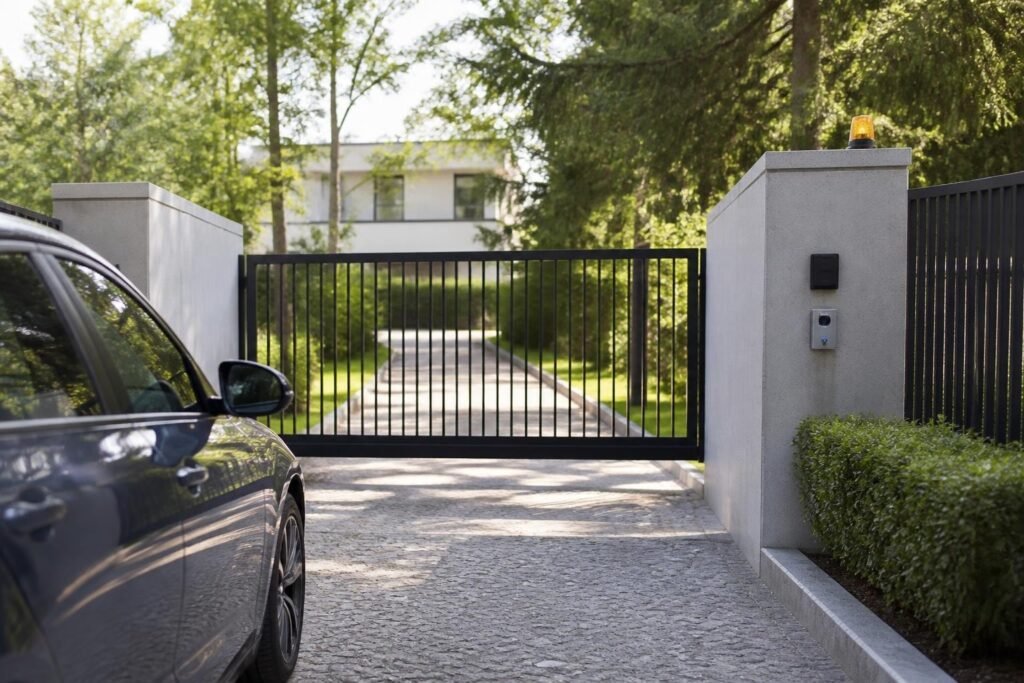
A gate on driveway represents more than just a physical barrier-it's your property's first line of security, a statement of privacy, and increasingly, a smart access control point. Whether you're protecting a residential estate in the hills or securing a commercial facility in Los Angeles, the right driveway gate system combines functionality, aesthetics, and reliability. Understanding the options available, installation considerations, and ongoing maintenance requirements helps property owners make informed decisions that protect their investment for decades to come.
Understanding Different Gate on Driveway Configurations
The type of gate on driveway you select fundamentally shapes your property's accessibility, security profile, and curb appeal. Each configuration offers distinct advantages depending on your driveway layout, available space, and operational requirements.
Swing Gate Systems
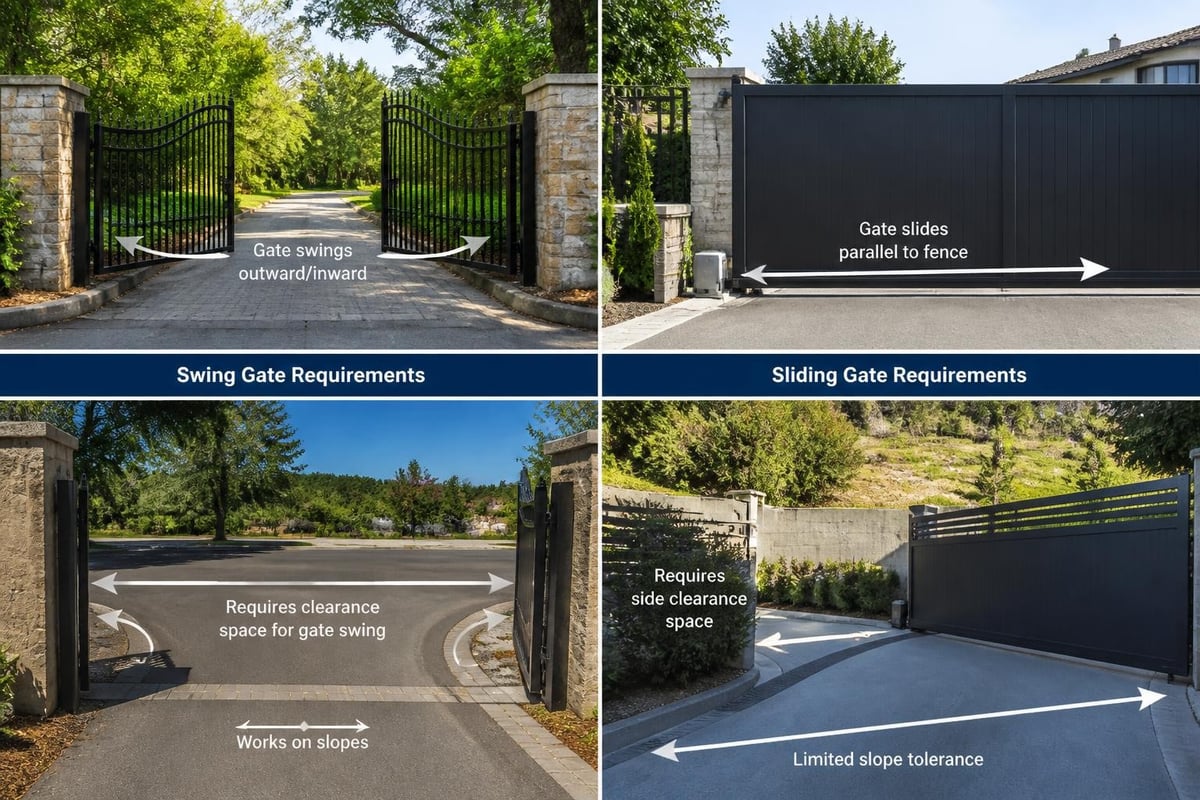
Swing gates operate on hinges, opening inward or outward like traditional doors. These classic systems work exceptionally well for properties with ample space on either side of the driveway. Single-swing gates suit narrower driveways up to 12 feet wide, while double-swing configurations accommodate wider entrances up to 24 feet.
Key advantages include:
- Lower initial installation costs compared to sliding systems
- Simpler mechanical design with fewer moving parts
- Easier manual operation during power outages
- Traditional aesthetic appeal that complements historic properties
The primary consideration involves clearance space. A 16-foot-wide double swing gate requires at least 16 feet of clearance in the direction of swing, which may prove challenging on sloped driveways or properties with limited setback from the street.
Sliding Gate Configurations
Sliding gates travel horizontally along a track, making them ideal for properties where space constraints prevent swing gate installation. A gate on driveway using sliding technology requires minimal clearance perpendicular to the fence line-just enough space parallel to the fence for the gate to slide open completely.
| Feature | Swing Gates | Sliding Gates |
|---|---|---|
| Space Required | Perpendicular clearance | Parallel clearance |
| Slope Tolerance | Limited (affects swing arc) | Excellent (follows ground) |
| Wind Resistance | Moderate | High (larger surface area) |
| Automation Cost | Lower | Higher (heavier motor required) |
| Maintenance Frequency | Lower | Higher (track cleaning) |
Commercial properties particularly benefit from sliding configurations. The robust design handles frequent daily cycles, and the compact footprint works well in tight urban Los Angeles locations where street setbacks are minimal.
Automation and Control Systems for Driveway Gates
Modern gate on driveway installations increasingly incorporate automation, transforming basic barriers into sophisticated access control systems. Electric gate operators provide convenience, security, and integration capabilities that manual gates cannot match.
Motor and Operator Selection
The foundation of any automated system lies in selecting the appropriate motor. Residential swing gates typically require 24-volt DC motors rated between one-quarter and one-half horsepower, while commercial sliding gates often demand industrial three-phase motors exceeding one horsepower.
Critical motor specifications include:
- Duty cycle rating (percentage of time the motor can operate before requiring rest)
- Gate weight capacity (total supported load including the gate itself)
- Operating speed (seconds required for full open/close cycle)
- Battery backup capability for power outage operation
For properties requiring automatic gate repair services, understanding your motor specifications helps technicians diagnose issues quickly and maintain proper functionality. Los Angeles properties should prioritize UL 325-listed operators that meet current safety standards, as outlined in UL’s published guidance on gate operator requirements.
Access Control Integration
A comprehensive gate on driveway system extends beyond simple open/close functionality. Modern access control platforms integrate multiple authentication methods to balance security with convenience.
Property owners can implement:
- Keypad entry systems with unique codes for different users
- Radio frequency (RF) transmitters providing single-button access
- Smartphone applications enabling remote operation and visitor management
- Intercom systems with video verification before granting entry
- License plate recognition automatically opening for authorized vehicles
The National Institute of Standards and Technology provides valuable guidance on operational technology security that applies to networked gate systems. As driveway gates become IoT-connected devices, implementing proper network segmentation and access controls protects against unauthorized digital entry.
Installation Considerations and Requirements
Installing a gate on driveway requires careful planning beyond simply selecting a gate style. Site preparation, compliance with local codes, and professional installation ensure long-term reliability and legal operation.
Site Assessment and Preparation
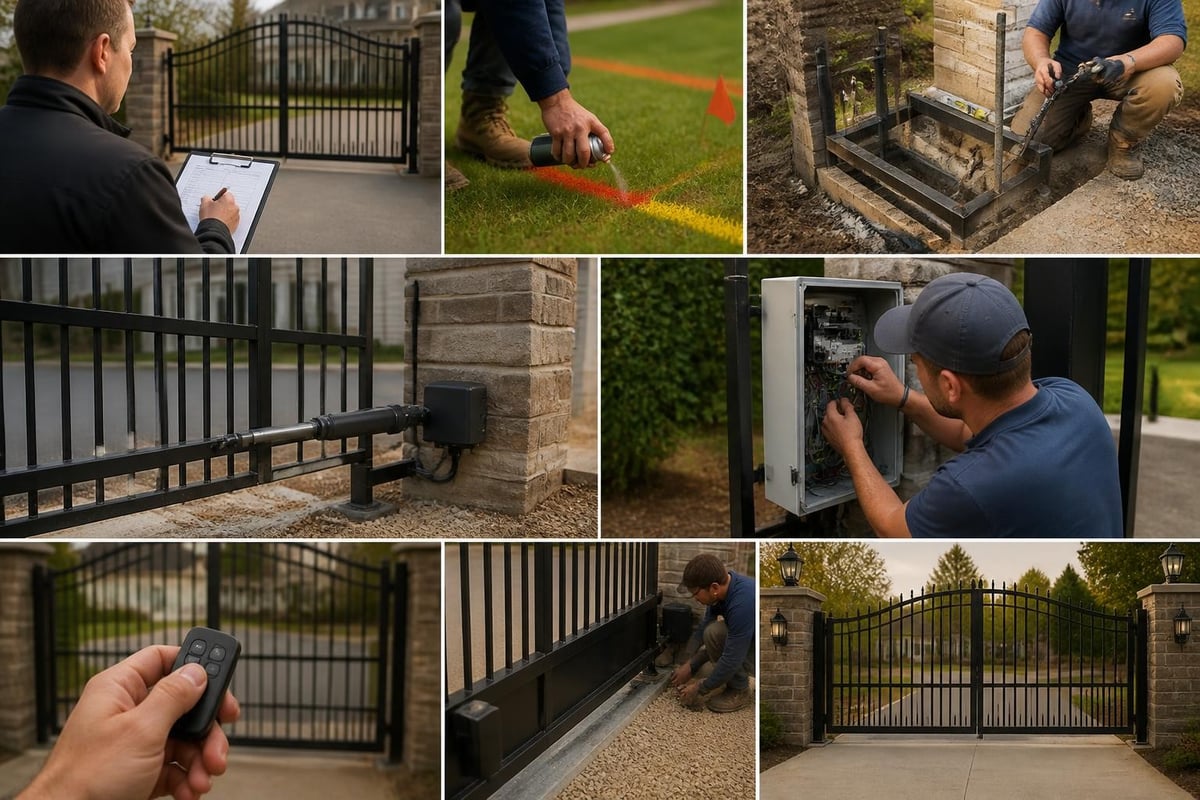
Before installation begins, evaluate your driveway's specific conditions. Measure the driveway width at the intended gate location, accounting for any narrowing or widening along its length. Document the grade change across the driveway-slopes exceeding five percent may require specialized hinges for swing gates or modified track systems for sliding configurations.
Underground utilities present critical concerns. California law requires property owners to contact USA North 811 before any excavation. Gate posts typically require concrete footings extending 36 to 48 inches below grade, potentially intersecting with water lines, electrical conduits, or communication cables.
Regulatory and Planning Compliance
Local jurisdictions maintain specific requirements for gates at driveway entrances, particularly where driveways meet public streets. The Federal Highway Administration's Manual on Uniform Traffic Control Devices establishes sight distance requirements to ensure vehicles exiting driveways have adequate visibility of approaching traffic.
In residential neighborhoods, homeowners associations often impose additional restrictions on gate height, materials, and appearance. Review your CC&Rs (Covenants, Conditions, and Restrictions) before finalizing design choices. Commercial properties may face stricter requirements, including fire department override systems allowing emergency access during power failures.
For context on planning requirements in other jurisdictions, the UK Planning Portal provides guidance on when permission is required for gates, while Scottish planning regulations detail permitted development limits-useful references when consulting with Los Angeles planning departments.
Materials and Construction Quality
The longevity of any gate on driveway depends heavily on material selection and construction quality. Los Angeles's coastal climate, with salt air and temperature variations, places specific demands on gate materials.
Metal Gate Options
Steel and aluminum dominate residential and commercial driveway gate construction, each offering distinct performance characteristics.
Steel gates provide superior strength and security. Powder-coated steel resists corrosion in coastal environments, though the coating requires inspection for chips or scratches that expose bare metal. Wrought iron gates, actually constructed from mild steel, offer decorative appeal with scrollwork and custom designs. Expect steel gates to weigh 50 to 100 percent more than equivalent aluminum designs, requiring more robust motors and hinges.
Aluminum gates excel in weight reduction and corrosion resistance. The material's natural oxide layer protects against rust without coating, making aluminum ideal for properties within five miles of the Pacific Ocean. Modern aluminum extrusions achieve surprising strength through strategic reinforcement, though aluminum remains more susceptible to denting than steel.
Wood and Composite Alternatives
Wood gates create warm, natural aesthetics that complement traditional architecture. Cedar and redwood offer natural rot resistance, while pressure-treated pine provides economy. All wood gates require regular maintenance-annual sealing or staining protects against moisture damage and UV degradation.
Composite materials combine wood fibers with polymer binders, creating gates that resist rot, insects, and warping. While composite gates cost 25 to 40 percent more than comparable wood versions, the reduced maintenance burden often justifies the premium over a 15-year service life.
| Material | Weight | Corrosion Resistance | Maintenance Level | Typical Lifespan |
|---|---|---|---|---|
| Powder-coated steel | Heavy | Good (if coating intact) | Moderate | 20-30 years |
| Aluminum | Light | Excellent | Low | 25-35 years |
| Cedar/Redwood | Moderate | Good | High | 15-25 years |
| Composite | Moderate | Excellent | Very Low | 20-30 years |
Safety Features and Requirements
Modern gate on driveway installations incorporate multiple safety mechanisms protecting people, pets, and vehicles from injury during operation. These features aren't optional luxuries-they're required components under current building codes and UL standards.
Entrapment Prevention Systems
The most critical safety feature prevents entrapment between the gate and fixed objects. UL 325 classifies gate operators by application and mandates specific entrapment protection appropriate to each class.
Primary entrapment protection methods include:
- Photoelectric sensors creating an invisible beam across the gate path
- Edge sensors with pressure-sensitive rubber strips on leading gate edges
- Loop detectors embedded in the driveway surface detecting vehicle presence
- Force-limiting controllers stopping motors when resistance exceeds safe thresholds
Residential installations require at minimum two independent entrapment protection devices. Commercial properties with higher pedestrian traffic often implement three or more overlapping systems. For comprehensive information about required safety mechanisms, review Gates On Site’s overview of safety features every property owner should consider.
Emergency Access and Override Systems
Fire and emergency services must access properties regardless of gate status or power availability. Manual release mechanisms allow gates to be opened by hand during power outages, typically engaged by key-operated locks accessible from outside the property line.
Knox Boxes or similar systems provide fire departments with keys for rapid entry without property damage. Battery backup systems maintain gate operation for 24 to 72 hours during power failures, ensuring residents can exit and emergency vehicles can enter.
Maintenance Requirements and Common Issues
Regular maintenance extends the service life of any gate on driveway while preventing unexpected failures. Los Angeles property owners should implement seasonal maintenance schedules addressing wear from daily operation and environmental exposure.
Routine Maintenance Tasks
Monthly visual inspections catch developing problems before they cause failures. Check hinges and pivot points for proper lubrication, applying lithium-based grease to metal-on-metal contact points. Examine gate alignment-a properly hung gate shows consistent spacing between the gate and posts across its full height.
Quarterly maintenance includes:
- Cleaning sliding gate tracks, removing debris, leaves, and accumulated dirt
- Testing all safety sensors using test objects to verify proper function
- Inspecting electrical connections for corrosion or loose terminals
- Checking remote transmitter batteries and replacing as needed
- Verifying proper gate closing force and auto-reverse sensitivity
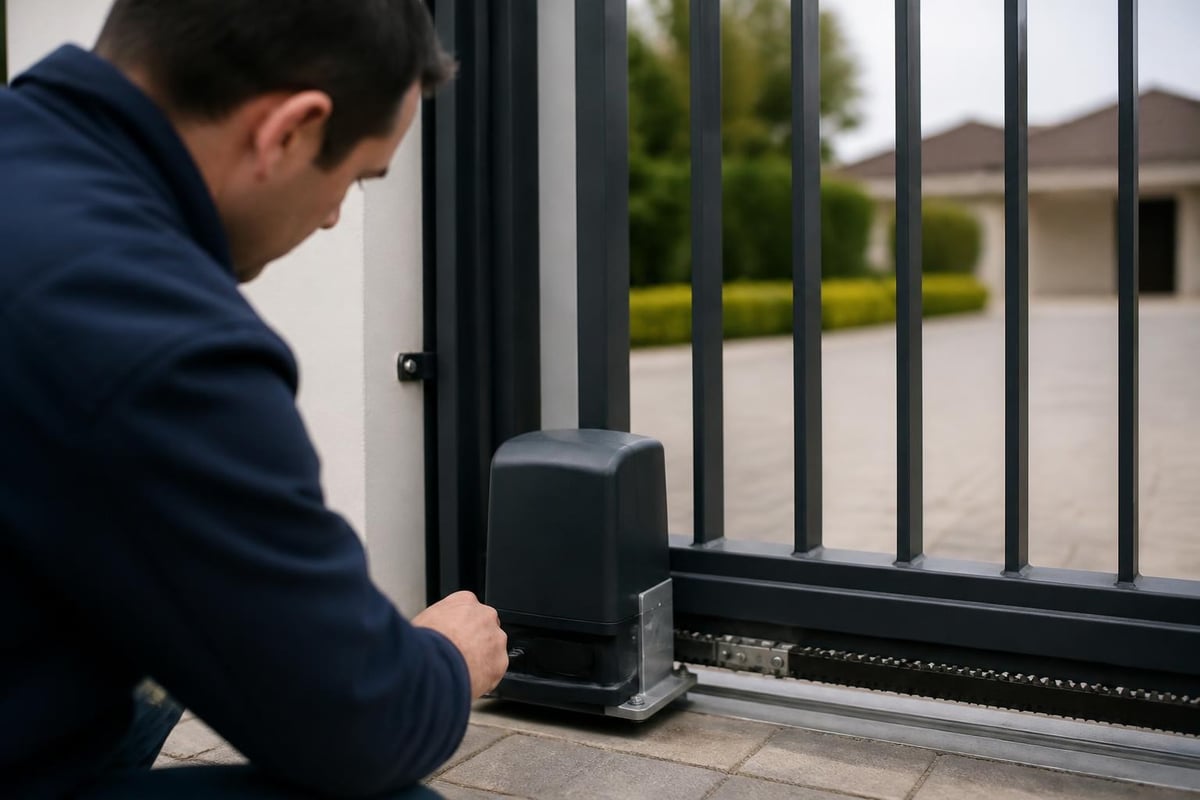
Annual professional service addresses components beyond typical property owner expertise. Technicians measure motor current draw, identifying bearings or gears approaching failure before breakdown occurs. They verify safety system compliance with current codes, particularly important as standards evolve.
Identifying Repair Needs
Several symptoms indicate a gate on driveway requires professional attention. Unusual grinding or squealing noises suggest bearing wear or inadequate lubrication. Gates that struggle to open or close fully despite unobstructed paths may have motor problems or misaligned tracks. Intermittent operation-gates that work sometimes but fail randomly-often stems from failing circuit boards or corroded connections.
Immediate professional service prevents minor issues from escalating into major repairs. A gate that reverses repeatedly without obstruction likely has miscalibrated force sensors or failing safety devices. Never disable safety features to "fix" operational problems-proper repair restores normal function while maintaining protection systems.
Cost Considerations and Budgeting
Understanding the total cost of ownership for a gate on driveway helps property owners budget appropriately and avoid surprises. Initial installation represents just one component of lifetime expenses.
Installation Cost Breakdown
Basic manual swing gates for residential driveways start around $2,500 to $4,000 installed, including posts, hinges, and hardware. Adding electric operation increases costs to $4,500 to $7,500 depending on motor quality and control features. Premium custom designs with ornamental metalwork, smart access control, and integrated security systems can exceed $15,000.
Sliding gate systems generally cost 30 to 50 percent more than equivalent swing configurations. The track, larger motor requirements, and more complex installation drive the premium. Commercial-grade sliding gates for properties with heavy traffic patterns range from $8,000 to $25,000 depending on span width and automation sophistication.
Ongoing Operating Costs
Electric gates consume minimal power during standby-typically 5 to 15 watts for the control board and sensors. Each operation cycle draws higher current for a few seconds, but total monthly consumption rarely exceeds $3 to $5 in electricity costs for residential installations.
Maintenance costs vary with system complexity and operating frequency:
- Annual professional service: $150 to $300
- Remote transmitters (replacements): $25 to $60 each
- Motor replacement (every 10-15 years): $800 to $2,500
- Safety sensor replacement: $100 to $400
- Control board repair/replacement: $300 to $800
Property owners who budget $200 to $400 annually for maintenance and repairs maintain reliable operation while avoiding emergency service premiums. Companies like Gates On Site offer same-day service throughout Los Angeles without emergency surcharges, but preventive maintenance remains more cost-effective than reactive repairs.
Enhanced Security and Smart Integration
Modern gate on driveway systems function as comprehensive security platforms rather than simple access barriers. Integration with property-wide security systems creates layered protection and convenient centralized management.
Video Surveillance Integration
Installing cameras at driveway gates provides multiple security benefits. Record everyone who approaches your property, creating searchable archives of vehicle license plates and visitor faces. Two-way audio intercoms allow homeowners to speak with delivery drivers or visitors before granting access, particularly valuable when you're not home.
Cloud-connected camera systems send real-time alerts when motion is detected near your gate. Advanced platforms use AI to distinguish between vehicles, people, and animals, reducing false alarms while ensuring genuine security events receive immediate attention.
Smart Home Platform Connectivity
Contemporary gates integrate with Google Home, Amazon Alexa, Apple HomeKit, and dedicated smart home controllers. Voice commands open gates for expected guests, while geofencing automatically opens gates as authorized residents approach.
Integration enables powerful automation scenarios. Program your gate to automatically close 30 seconds after your garage door closes, ensuring property security without manual intervention. Schedule gates to remain locked during specific hours, allowing deliveries during daytime while maintaining enhanced nighttime security.
Property-wide security panels display gate status alongside alarm systems, door locks, and camera feeds. Monitor and control every access point from a single interface, whether you're in bed upstairs or traveling across the country.
Selecting Professional Installation and Service Providers
The quality of installation and ongoing service significantly impacts your gate on driveway performance and longevity. Selecting experienced, licensed professionals protects your investment and ensures code compliance.
Credentials and Experience
California requires contractors performing gate installation to hold appropriate licenses. Class C-61 (Limited Specialty) specifically covers fence and automatic gate installation. Verify your contractor's license through the California Contractors State License Board, checking for active status and any disciplinary actions.
Experience with your specific gate type matters considerably. A contractor who primarily installs chain-link fencing may lack expertise in automated driveway gate systems. Request references from recent projects similar to yours-residential estates if you're a homeowner, commercial facilities if you're a business owner.
Service and Support Capabilities
Emergency gate failures create security vulnerabilities and access problems requiring rapid resolution. Select service providers offering responsive support, ideally same-day service for urgent issues. Companies maintaining fully stocked service vehicles resolve most problems during the initial visit, while those requiring parts orders may leave your property unsecured for days.
Service area coverage determines whether you receive priority attention or fall at the edge of a provider's territory. Local Los Angeles providers familiar with area-specific challenges-coastal corrosion, wind conditions, local code requirements-deliver superior results compared to distant contractors serving your area occasionally.
Environmental and Weather Considerations
Los Angeles's Mediterranean climate presents specific challenges for gate on driveway installations. Understanding environmental factors helps property owners select appropriate materials and implement protective measures.
Coastal Corrosion Management
Properties within five miles of the Pacific Ocean face accelerated corrosion from salt-laden air. Even high-quality powder coating degrades faster in coastal environments, requiring inspection and touch-up every three to five years rather than the typical seven to ten years inland.
Stainless steel hardware resists corrosion better than standard zinc-plated components. The premium for stainless fasteners, hinges, and brackets adds 15 to 25 percent to hardware costs but eliminates the frustration of seized bolts and corroded pivot points during future maintenance.
Wind Load Engineering
Santa Ana wind events regularly exceed 40 mph in Los Angeles, with gusts surpassing 60 mph in canyon areas. Large solid gates present substantial wind loads-a 16-foot-wide solid sliding gate experiences over 800 pounds of force in 60-mph winds.
Proper engineering addresses these loads through reinforced frames, adequate post sizing, and deeper concrete footings. Decorative gates with open scrollwork patterns reduce effective wind surface area by 30 to 50 percent while maintaining security and privacy.
Heat and Sun Exposure
Southern California's intense UV radiation and summer heat affect gate components and finishes. Dark-colored gates absorb heat, causing expansion that can bind sliding gates in their tracks or warp wooden components. Light colors reflect solar radiation, maintaining lower temperatures and extending finish life.
Metal gates facing south or west should incorporate expansion joints allowing thermal movement without binding. Automatic operators require derating for sustained high temperatures-a motor rated for 50 operations per hour at 77°F may handle only 35 operations at 104°F ambient temperature.
Installing and maintaining a gate on driveway requires balancing security needs, aesthetic preferences, operational convenience, and budget constraints. The right system enhances property value while providing years of reliable service when properly specified and maintained. When your driveway gate needs expert repair or service in Los Angeles, Gates On Site delivers same-day solutions backed by over 20 years of experience-keeping your property secure and accessible without delay.