
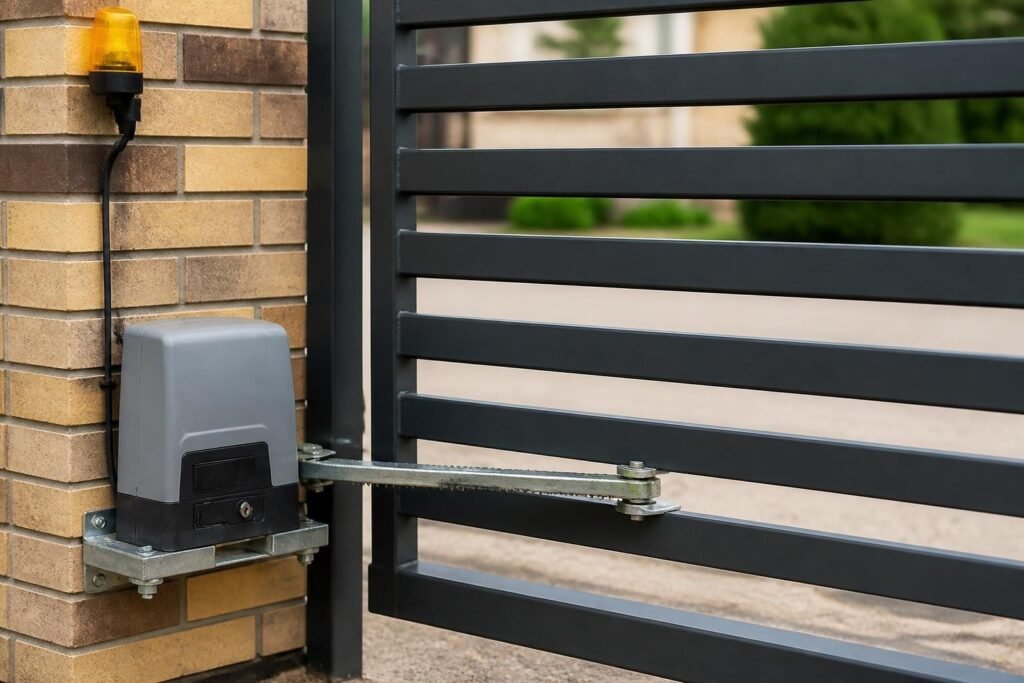
Installing an electric gate transforms property security, convenience, and curb appeal, but understanding the full scope of investment requires looking beyond the gate itself. Electric gate installation cost varies dramatically based on gate type, automation complexity, site conditions, and local requirements. Property owners in Los Angeles and similar urban markets face unique considerations, from strict permitting to specialized electrical work, that significantly impact the final price. This guide breaks down every cost component to help you budget accurately and make informed decisions about your gate project.
Understanding Base Electric Gate Installation Cost
The total electric gate installation cost typically ranges from $2,500 to $12,000 for residential properties, with commercial installations reaching $25,000 or more. This wide range reflects fundamental differences in project scope, materials, and complexity.
Gate Type and Material Selection
Your choice of gate style and construction material forms the foundation of your budget. Swing gates generally cost less to automate than sliding gates because they require simpler mechanisms and less ground preparation.
Common gate materials and their price ranges:
- Steel gates: $1,200 to $4,000 (material only)
- Wrought iron gates: $2,500 to $6,000 (material only)
- Aluminum gates: $1,500 to $3,500 (material only)
- Wood gates: $800 to $3,000 (material only)
- Vinyl or composite gates: $1,000 to $2,500 (material only)
Steel and aluminum offer the best balance of durability and cost for most homeowners. Wrought iron delivers exceptional aesthetics and longevity but commands premium pricing. Wood gates require ongoing maintenance and may need replacement sooner than metal alternatives.
The physical size of your gate dramatically affects both material and automation costs. A single 12-foot swing gate costs substantially less than a dual 20-foot sliding gate, which requires heavier operators, reinforced mounting, and more extensive electrical work.
Automation Components and Equipment Costs
Gate operators, control systems, and safety equipment represent 30 to 40 percent of your total electric gate installation cost. Quality automation components ensure reliable operation and compliance with safety standards.
Gate Operator Selection
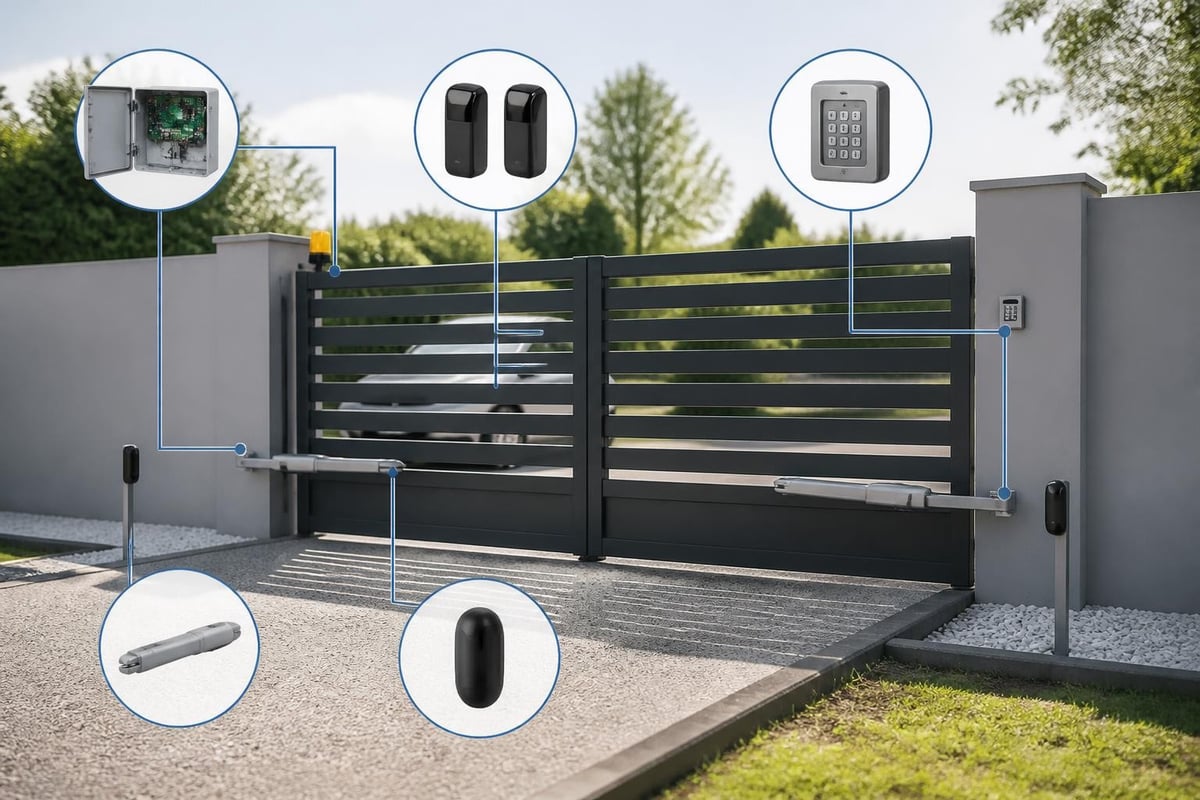
The operator (also called the motor or actuator) powers your gate's movement and must match your gate's weight, size, and usage pattern. UL 325 standards govern operator safety requirements, ensuring entrapment protection and fail-safe operation.
| Operator Type | Typical Cost | Best For | Duty Cycle |
|---|---|---|---|
| Swing gate arm | $400-$900 | Residential swing gates | Light to medium |
| Linear actuator | $500-$1,200 | Heavy swing gates | Medium to heavy |
| Sliding gate motor | $600-$1,500 | All sliding gates | Medium to heavy |
| Underground operator | $1,200-$2,500 | High-end swing installations | Heavy |
Underground operators hide completely beneath the gate, preserving aesthetics but requiring extensive excavation and professional installation. Most residential installations use surface-mounted operators that balance cost and performance effectively.
Safety and Access Control Systems
Federal and local regulations mandate safety features that prevent entrapment and injury. These requirements directly impact your installation budget but provide essential protection.
Required safety equipment:
- Photoelectric safety sensors: $150 to $400
- Edge sensors or safety edges: $200 to $500
- Warning lights or strobes: $100 to $300
- Emergency release mechanisms: included with quality operators
Access control adds convenience and security but varies widely in cost. Basic remote controls run $50 to $150 for a set of three. Keypad entry systems cost $200 to $600 installed. Advanced options like smartphone control, intercoms with video, or integration with existing security systems can add $500 to $3,000 to your project.
Professional installers familiar with automatic gate repair understand which control systems deliver the best reliability and user experience for your specific application.
Labor and Professional Installation Costs
Professional installation typically accounts for 40 to 50 percent of your total electric gate installation cost. This investment ensures proper operation, safety compliance, and warranty protection.
Installation Labor Breakdown
Licensed gate installation specialists charge between $65 and $150 per hour, with most residential projects requiring 16 to 40 hours of total labor. Commercial installations or complex sites demand additional time.
The labor scope includes:
- Site assessment and measurement verification
- Foundation or concrete pad installation for operators
- Gate hardware mounting and alignment
- Operator installation and mechanical setup
- Electrical wiring and connection
- Control system programming and testing
- Safety sensor calibration and verification
- Customer training and documentation
Sliding gates require concrete foundation work for the track and operator mounting, adding 4 to 8 hours of labor compared to swing gate installations. Sites with poor soil conditions, slopes, or limited access increase both material and labor requirements.
Electrical Work Requirements
All electric gates need dedicated electrical circuits run from your main panel to the gate location. Licensed electricians charge $75 to $125 per hour for this specialized work.
Typical electrical scope includes:
- Running conduit from panel to gate location
- Installing dedicated circuit breaker
- Pulling and connecting low-voltage and high-voltage wiring
- Grounding and bonding per code
- Installing weatherproof junction boxes and disconnects
The technical field guide on automatic gate operator installation provides detailed specifications for proper electrical installation, highlighting the precision required for safe, code-compliant work.
Distance from your electrical panel to the gate significantly impacts costs. Running electrical lines more than 100 feet from your panel can add $500 to $1,500 to your project due to additional conduit, wire, and labor requirements.
Permits, Inspections, and Regulatory Costs
Many jurisdictions require permits for electric gate installations, particularly when new electrical circuits or structural modifications are involved. Permit costs and inspection requirements vary by location but ignoring them can result in fines and expensive corrective work.
Building Permit Requirements
Los Angeles and most California municipalities require building permits for automatic gate installations. Permit fees typically range from $150 to $600, depending on project value and scope.
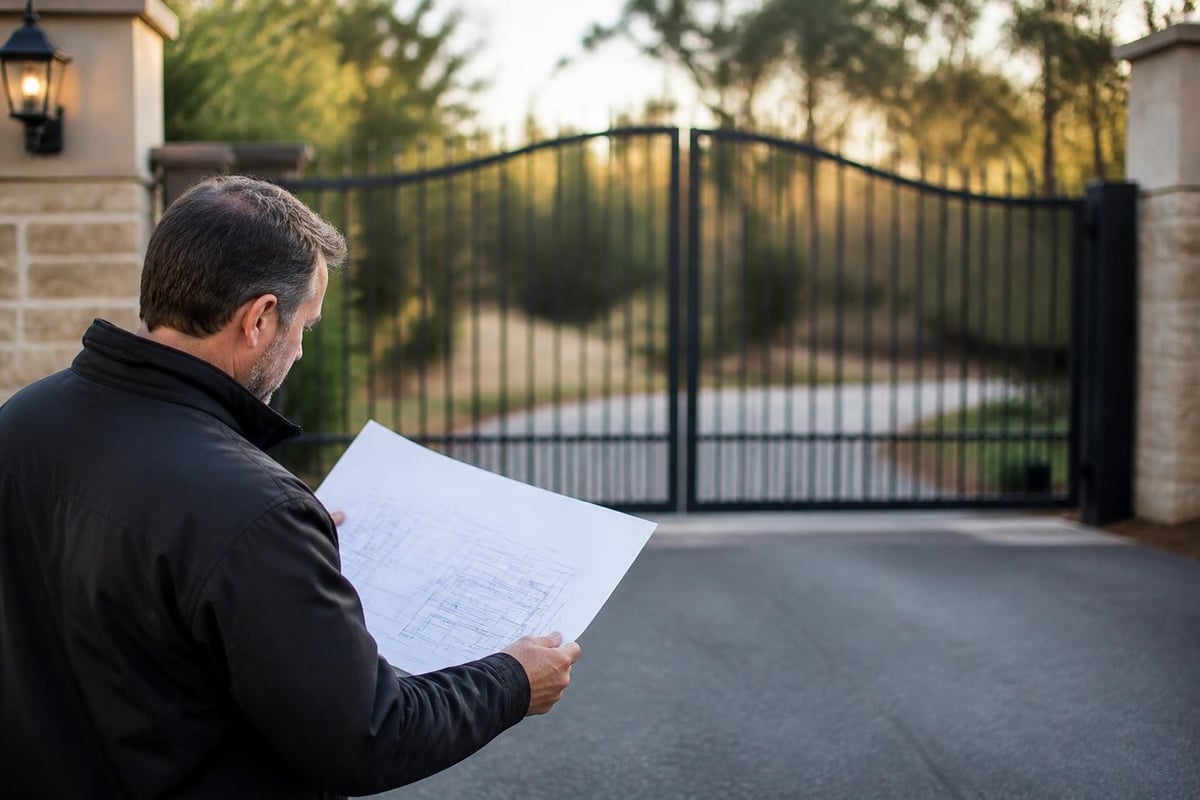
Local permit requirements often mandate detailed plan submittals showing gate location, electrical routing, safety features, and emergency access provisions. Professional installers familiar with local requirements can prepare these documents efficiently, while DIY approaches often face multiple review cycles and delays.
Fire and Emergency Access Compliance
Properties served by fire departments may need special emergency access provisions. NFPA guidance on gated communities establishes requirements for fire department override systems, minimum gate widths, and backup power provisions.
Emergency access systems add $400 to $1,200 to installation costs but are mandatory in many jurisdictions. These systems allow fire and emergency vehicles to trigger automatic gate opening, ensuring life safety compliance.
Some areas require engineered drawings stamped by licensed professionals, adding $500 to $1,500 to your budget. Regional technical standards provide examples of required documentation and installation details that affect both design and cost.
Site Preparation and Infrastructure Costs
Existing site conditions significantly influence your final electric gate installation cost. Properties with level driveways, stable soil, and nearby electrical service enjoy the lowest installation costs, while challenging sites require extensive preparation.
Ground and Driveway Work
Sliding gates demand level, stable tracks and foundations. Sites requiring grading or concrete work face additional expenses:
- Minor grading and leveling: $300 to $800
- Concrete pad for operator mounting: $400 to $1,000
- Track installation and alignment: $500 to $1,200
- Catch post or ground stop installation: $200 to $500
Swing gates need solid mounting posts capable of supporting gate weight and operational forces. Existing masonry pillars may require reinforcement or structural modification, adding $500 to $2,000 depending on scope.
Existing Gate Conversion
Converting an existing manual gate to electric operation can reduce costs if the gate structure remains sound and properly sized. However, many older gates lack the structural integrity or balance required for reliable automated operation.
| Conversion Scenario | Cost Range | Considerations |
|---|---|---|
| Simple operator addition | $1,500-$3,000 | Gate in good condition, proper balance |
| Operator plus structural repairs | $2,500-$5,000 | Hinges, wheels, or frame need work |
| Complete gate replacement | $3,500-$10,000+ | Existing gate unsuitable for automation |
Professional assessment determines whether conversion makes economic sense. Many installers offering electric gate repair can evaluate your existing gate's suitability for automation and recommend the most cost-effective approach.
Long-Term Costs and Maintenance Considerations
The true electric gate installation cost extends beyond initial installation to include ongoing maintenance, power consumption, and eventual component replacement. Understanding these factors helps evaluate total ownership costs.
Annual Maintenance Requirements
Automatic gates require regular maintenance to ensure reliable operation and safety compliance. Gate Safe guidance for electricians emphasizes routine inspection and testing of safety features, particularly for commercial installations.
Recommended annual maintenance:
- Operator lubrication and adjustment: $150 to $300
- Safety sensor testing and calibration: $100 to $200
- Hinge, wheel, or track inspection and service: $100 to $250
- Electrical connection inspection: $75 to $150
Budget $400 to $900 annually for professional maintenance, or learn to perform basic tasks yourself. Neglecting maintenance accelerates wear and leads to expensive repairs.
Power Consumption and Solar Options
Electric gates consume relatively little power, typically costing $3 to $8 monthly in electricity. Standby power for control systems and occasional gate cycles represents the primary load.
Solar-powered gate systems eliminate electrical wiring costs and provide off-grid operation. Quality solar gate kits cost $800 to $2,000 installed, offering attractive returns for remote locations or installations far from electrical service. However, solar systems require adequate sun exposure and may need backup battery replacement every 3 to 5 years at $150 to $400 per battery.
Commercial vs. Residential Installation Cost Differences
Commercial electric gate installations face different requirements and substantially higher costs than residential projects. Understanding these differences helps businesses budget appropriately.
Duty Cycle and Component Sizing
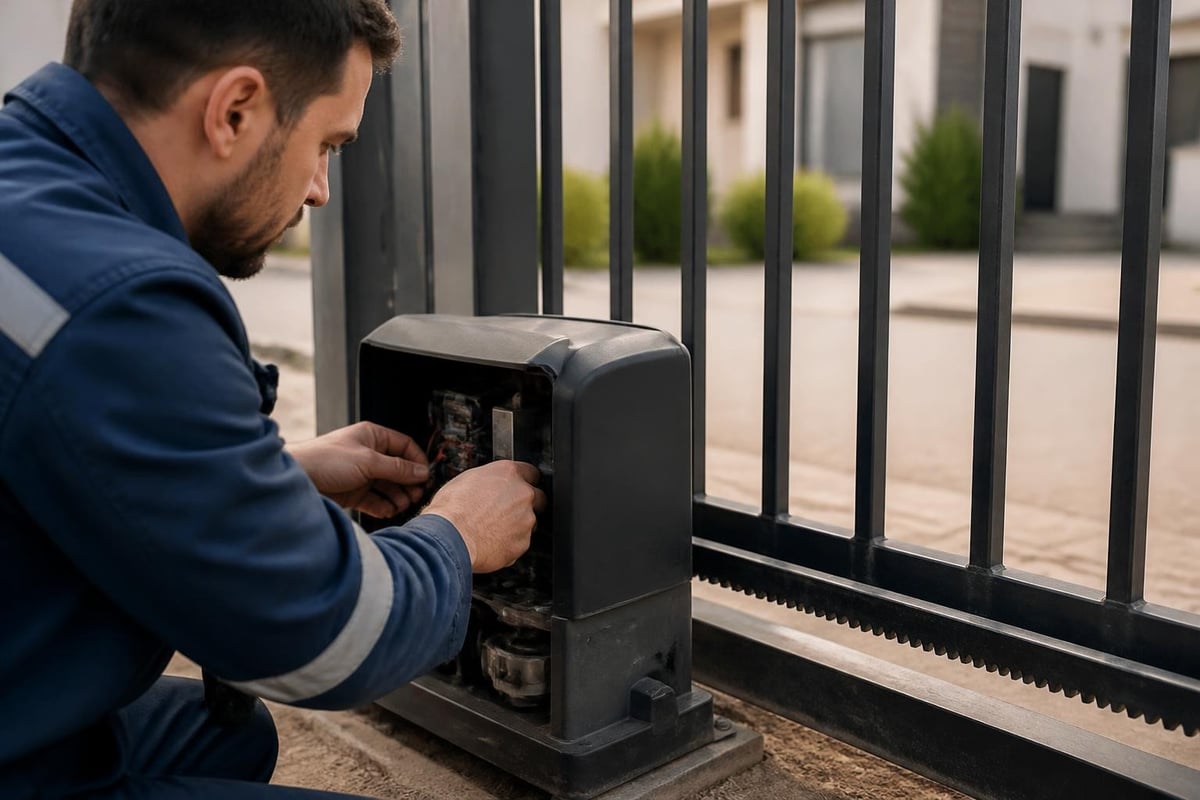
Commercial gates experience higher usage rates, requiring operators rated for continuous or heavy-duty cycles. These industrial-grade components cost 2 to 3 times more than residential equivalents but deliver the reliability commercial applications demand.
Commercial operators range from $1,500 to $5,000, with maintenance contracts adding $800 to $2,500 annually. However, this investment prevents downtime and maintains security for business operations.
Enhanced Safety and Access Control
Commercial installations typically require more sophisticated access control, multiple user management, and integration with existing security systems. Entry systems with vehicle detection, employee credential readers, and visitor management add $2,000 to $8,000 to installation costs.
Businesses also face stricter safety requirements and liability considerations. Comprehensive safety systems, proper signage, and documented maintenance programs become essential, increasing both initial installation and ongoing compliance costs.
Property owners seeking commercial gate repair services understand that commercial-grade installations justify their higher costs through superior reliability and reduced maintenance frequency.
Regional Cost Variations and Local Market Factors
Electric gate installation cost varies significantly by geographic location due to labor rates, permit requirements, and local building codes. Los Angeles represents a higher-cost market compared to many other regions.
Labor Rate Regional Differences
Metropolitan areas like Los Angeles see installation labor rates 25 to 40 percent higher than rural markets. Licensed, insured professionals command premium rates but deliver compliance assurance and warranty protection that reduces long-term risk.
California's strict licensing and insurance requirements ensure quality work but add to labor costs. Expect to pay $85 to $150 per hour for licensed gate installers in Los Angeles, compared to $55 to $95 in less regulated markets.
Material and Equipment Availability
Local supplier networks affect material costs and lead times. Los Angeles benefits from extensive supplier infrastructure, providing competitive pricing on standard components but commanding premium rates for custom fabrication or specialized equipment.
Transportation costs for heavy gates and operators can add $200 to $600 to projects in remote areas. Urban markets typically absorb these costs through larger supplier inventories and efficient logistics.
Cost Reduction Strategies and Value Engineering
Strategic planning and informed decision-making can reduce electric gate installation cost without sacrificing quality or safety. Several approaches deliver meaningful savings while maintaining reliable operation.
Timing and Contractor Selection
Obtaining multiple detailed quotes from licensed contractors reveals market pricing and identifies value opportunities. Request itemized proposals showing materials, labor, permits, and other costs separately to enable effective comparison.
Off-season installation (typically late fall through early spring in most markets) may yield 10 to 15 percent savings as contractors seek to maintain steady work. However, weather delays in winter months can offset scheduling advantages in some regions.
Questions to ask contractors:
- Are you licensed and insured for gate installation work?
- What warranty coverage do you provide on labor and materials?
- How long have you been installing this specific operator brand?
- Can you provide references from similar recent projects?
- What permits are required and who handles the applications?
Material and Feature Prioritization
Focus your budget on operational reliability and safety compliance, deferring purely aesthetic upgrades to future phases. A quality operator with proper safety features delivers better long-term value than an ornate gate with substandard automation.
Consider standard-size gates that use readily available operators and parts rather than custom fabrication requiring specialized components. This approach reduces both initial installation and future repair costs.
Phasing access control upgrades allows immediate installation of basic remote operation with plans to add keypads, intercoms, or smartphone control later. Most modern operators support feature expansion without requiring complete system replacement.
DIY Installation Considerations and Hidden Costs
Homeowners with electrical and construction experience may consider self-installation to reduce electric gate installation cost. However, this approach carries significant risks and often costs more than anticipated.
Required Skills and Tools
Successful gate automation requires expertise in electrical work, concrete finishing, mechanical alignment, and electronic programming. Electrical safety guidance emphasizes proper training and adherence to wiring regulations, which DIY installers often lack.
Specialized tools needed:
- Concrete mixing and finishing equipment
- Conduit bending and threading tools
- Electrical testing meters and circuit tracers
- Gate alignment and leveling equipment
- Programming interfaces for operator configuration
Tool rental or purchase can cost $300 to $800, offsetting a portion of labor savings. More importantly, improper installation creates safety hazards and may void manufacturer warranties.
Permit and Inspection Challenges
DIY installations face the same permit requirements as professional work. However, unlicensed individuals often struggle with plan preparation, code interpretation, and inspection scheduling. Failed inspections require costly corrections and re-inspection fees.
Insurance implications also deserve consideration. Improperly installed gates that cause injury or property damage may not be covered by homeowner's insurance, exposing you to significant liability. Professional installation includes liability coverage and typically carries workmanship warranties of 1 to 3 years.
For most homeowners, professional installation delivers better value when accounting for time, tools, permits, and risk. Experts in electrical gate repair can also handle future maintenance efficiently, relationships that DIY installations forfeit.
Warranty Coverage and Insurance Implications
Understanding warranty terms and insurance requirements helps protect your investment and avoid unexpected costs after installation.
Manufacturer and Installer Warranties
Quality gate operators carry 2 to 5 year manufacturer warranties covering defects in materials and workmanship. However, these warranties typically exclude damage from improper installation, requiring professional installation to maintain coverage.
Installer workmanship warranties range from 1 to 3 years and cover installation-related issues like wiring failures, improper mounting, or safety sensor malfunctions. Extended warranties or service agreements add $200 to $600 but provide peace of mind and priority service.
Always request warranty documentation in writing and understand exclusions. Some warranties require annual professional maintenance to remain valid, adding to long-term costs but ensuring proper system operation.
Property Insurance Considerations
Automatic gates may affect homeowner's or commercial property insurance rates and coverage. Some insurers offer premium reductions for improved security features, while others require additional liability coverage for gate-related injury risks.
Contact your insurance provider before installation to understand coverage implications and any required safety features or documentation. Properties with access control systems often qualify for security-related discounts that partially offset installation costs.
Understanding the complete scope of electric gate installation cost helps you budget accurately and make informed decisions about automation features, professional services, and long-term maintenance. From selecting appropriate gate materials and operators to navigating permits and safety requirements, each decision impacts both immediate investment and ongoing ownership expenses. If you're ready to explore electric gate installation or need expert assessment of your existing system, Gates On Site provides professional installation guidance and same-day repair services throughout Los Angeles, backed by over 20 years of experience with residential and commercial automatic gate systems.