
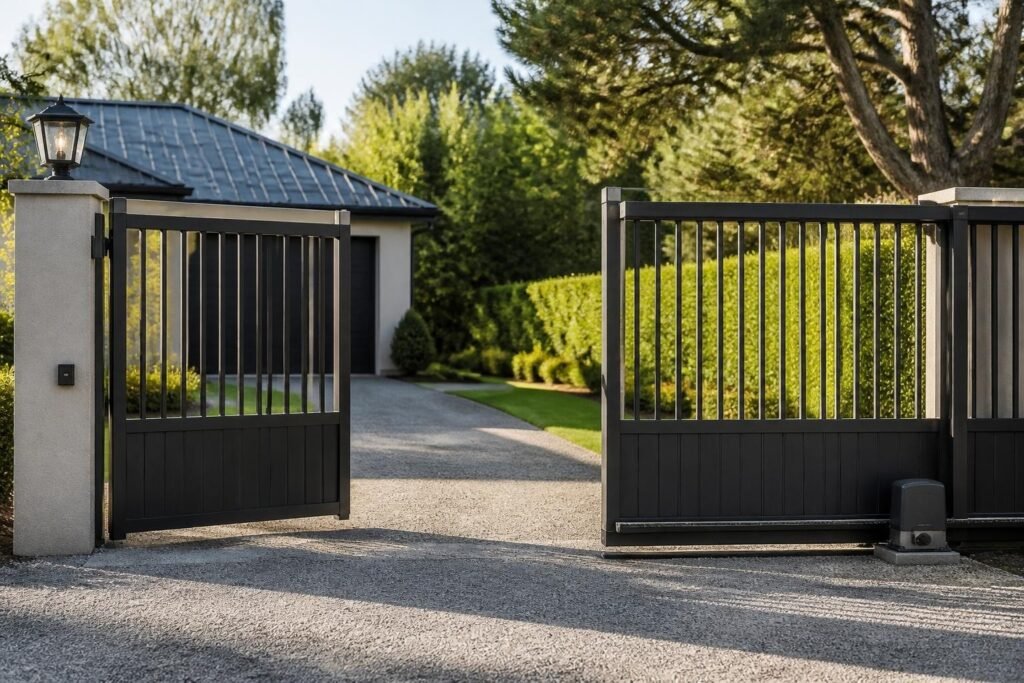
A basic driveway gate serves as the first line of security and curb appeal for residential and commercial properties. Whether you're securing a single-family home or a business entrance, understanding the fundamentals of driveway gates helps you make informed decisions about design, operation, and long-term maintenance. The right gate combines functionality with aesthetics while meeting local safety codes and your specific access control needs.
Understanding Basic Driveway Gate Configurations
The term "basic driveway gate" encompasses several configurations, each suited to different property layouts and user preferences. The two primary movement types are swing gates and slide gates, with each offering distinct advantages.
Swing gates operate like traditional doors, pivoting on hinges mounted to posts on one or both sides of the opening. Single-swing gates use one panel that opens inward or outward, while double-swing gates feature two panels meeting in the middle. This configuration works well for properties with sufficient clearance space in the swing path and can accommodate driveways up to 18 feet wide with dual panels.
Slide gates (also called sliding or cantilever gates) move horizontally along a track or beam parallel to the fence line. These gates excel in situations where space constraints prevent swing clearance or where steep driveway grades make swing operation impractical.
Key factors influencing configuration choice:
- Available clearance space (swing radius vs. lateral slide space)
- Driveway width and grade
- Wind exposure and weather conditions
- Aesthetic preference and architectural style
- Budget considerations
Material Selection for Durability
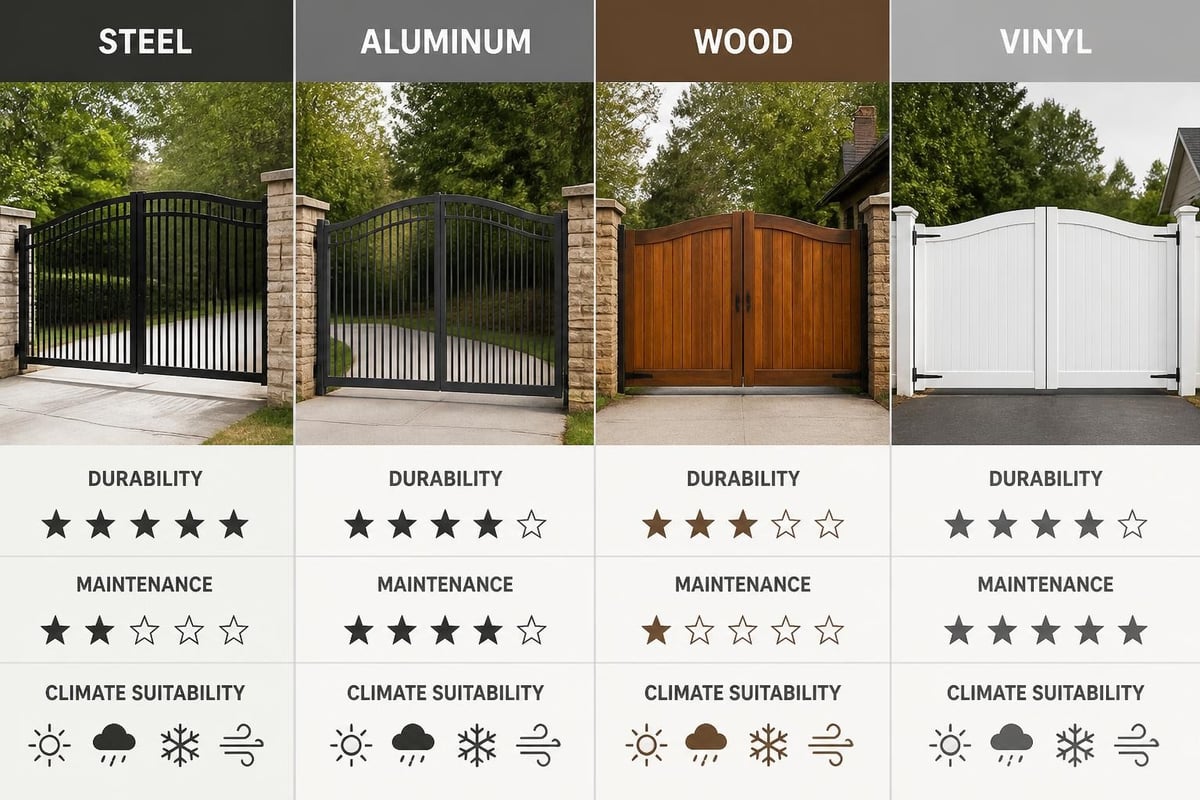
The material you choose for a basic driveway gate directly impacts longevity, maintenance requirements, and visual appeal. Each material offers specific benefits and trade-offs.
| Material | Durability | Maintenance | Cost Range | Best For |
|---|---|---|---|---|
| Steel | 20-30 years | Medium (rust prevention) | $$ | Security-focused applications |
| Aluminum | 15-25 years | Low | $$$ | Coastal areas, low-maintenance needs |
| Wrought Iron | 30+ years | Medium-High | $$$$ | Traditional aesthetics, durability |
| Wood | 10-20 years | High (sealing, staining) | $ – $$ | Natural look, customization |
| Vinyl | 15-20 years | Very Low | $$ | Minimal upkeep priority |
Steel gates provide excellent structural integrity and security but require powder coating or galvanization to prevent corrosion. Aluminum gates resist rust naturally, making them ideal for properties near saltwater or in high-humidity climates. For those interested in metal gate options, understanding the specific advantages of each metal type helps in long-term planning.
Wood gates offer warmth and traditional charm but demand regular sealing and treatment to withstand weather exposure. Composite and vinyl materials minimize maintenance while providing clean, contemporary aesthetics.
Manual vs. Automatic Operation Systems
A basic driveway gate can function as either a manual or automatic system, with the choice depending on convenience needs, budget, and frequency of use.
Manual Gate Systems
Manual gates require physical operation-users must exit their vehicle to open and close the gate. While this represents the most economical option initially, manual gates suit properties with infrequent access needs or backup systems for automated gates during power outages.
Manual operation benefits include:
- Lower upfront costs (no motor, controls, or electrical installation)
- Minimal ongoing maintenance (hinges, latches, and locks only)
- No electrical requirements (operates during power outages)
- Simplicity and reliability (fewer components to fail)
However, manual gates pose inconvenience during inclement weather and may present security vulnerabilities if left open inadvertently.
Automatic Gate Opener Integration
Automatic gate systems incorporate motorized operators that respond to remote controls, keypads, smartphone apps, or vehicle sensors. These systems transform a basic driveway gate into a sophisticated access control solution.
The UL 325 safety standard governs automatic gate operators, establishing requirements for entrapment protection, emergency release mechanisms, and proper installation practices. Compliance with this standard ensures that automated gates operate safely for all users, including children and pets.
Modern automatic gate systems offer multiple control options:
- Remote controls for vehicle-based access
- Wireless keypads for pedestrian entry
- Smartphone apps with scheduling capabilities
- Intercom systems for visitor verification
- Loop detectors for automatic opening on exit
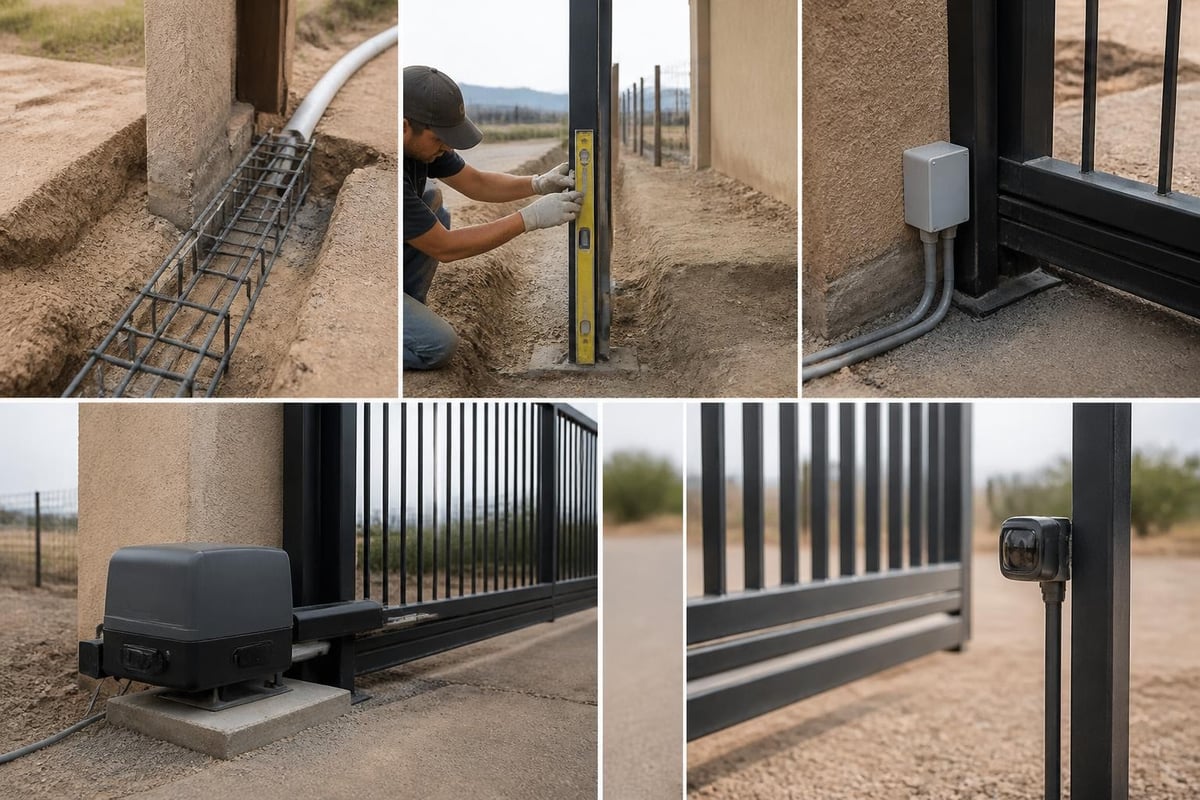
When considering motorized gate systems, evaluate your property's electrical infrastructure and ensure adequate power supply to the gate location. Many installations require trenching to run electrical conduit from the main panel to the gate operator.
Installation Requirements and Permitting
Installing a basic driveway gate involves more than simply mounting panels and hardware. Proper installation requires attention to structural, electrical, and regulatory requirements to ensure safe, reliable operation.
Foundation and Post Installation
Gate posts bear significant weight and stress, especially for wider gates or those equipped with automatic operators. Proper post installation begins with concrete footings sized appropriately for the gate span and weight.
Standard footing specifications:
- Depth: 36-48 inches below frost line
- Width: 12-18 inches diameter
- Concrete: Minimum 3,000 PSI mix
- Post material: Steel or pressure-treated wood rated for ground contact
- Curing time: 72 hours minimum before gate mounting
Posts must be perfectly plumb and properly spaced to prevent binding, uneven wear, and motor strain in automatic systems. Professional installers use laser levels and precise measurements to ensure alignment during the concrete curing process.
Electrical and Safety Compliance
Automatic gate installations involve electrical work that must comply with the National Electrical Code (NEC) and local amendments. The automatic gate operator installation process includes specific requirements for circuit protection, grounding, and emergency disconnects.
Critical electrical considerations include:
- Dedicated 120V circuit with GFIC protection
- Proper grounding of all metal components
- Conduit protection for underground wiring
- Emergency manual release accessibility
- Battery backup systems for power outages
Many jurisdictions require building permits for driveway gate installation, particularly for automated systems. Permit requirements vary by location, with some municipalities conducting inspections before, during, and after installation. Contact your local building department early in the planning process to understand specific requirements in your area.
Safety Features and Code Compliance
Safety represents the paramount concern in basic driveway gate design and operation. Modern gates incorporate multiple safety features to prevent entrapment injuries and ensure emergency access.
Entrapment Protection Systems
The TGM-500 standard and related gate safety practices establish guidelines for preventing entrapment incidents. These guidelines require multiple redundant safety devices working in concert.
Photo eye sensors project an infrared beam across the gate opening. When interrupted by a person, vehicle, or object, the beam triggers the gate to stop and reverse. These sensors should be mounted no more than 12 inches above ground level to detect small children and pets.
Edge sensors consist of pressure-sensitive rubber strips mounted along the gate's leading edge. Physical contact with any obstruction triggers immediate reversal. These sensors provide crucial secondary protection if photo eyes fail or are misaligned.
Loop detectors embedded in the driveway surface sense vehicle presence through electromagnetic induction. These loops prevent gates from closing on vehicles and can trigger automatic opening for exiting traffic.
Emergency Access and Manual Release
All automatic gate systems must include manual release mechanisms allowing operation during power failures or system malfunctions. The DASMA technical guidance provides detailed specifications for emergency release installation and accessibility.
Release mechanisms typically consist of:
- Key-operated disconnects accessible from outside the property
- Internal release levers for emergency personnel
- Battery backup maintaining automatic operation during outages
- Knox Box compatibility for fire department access
When electric gate problems occur, understanding your manual release location and operation procedure prevents dangerous situations and provides interim access until professional repairs restore full functionality.
Maintenance Best Practices
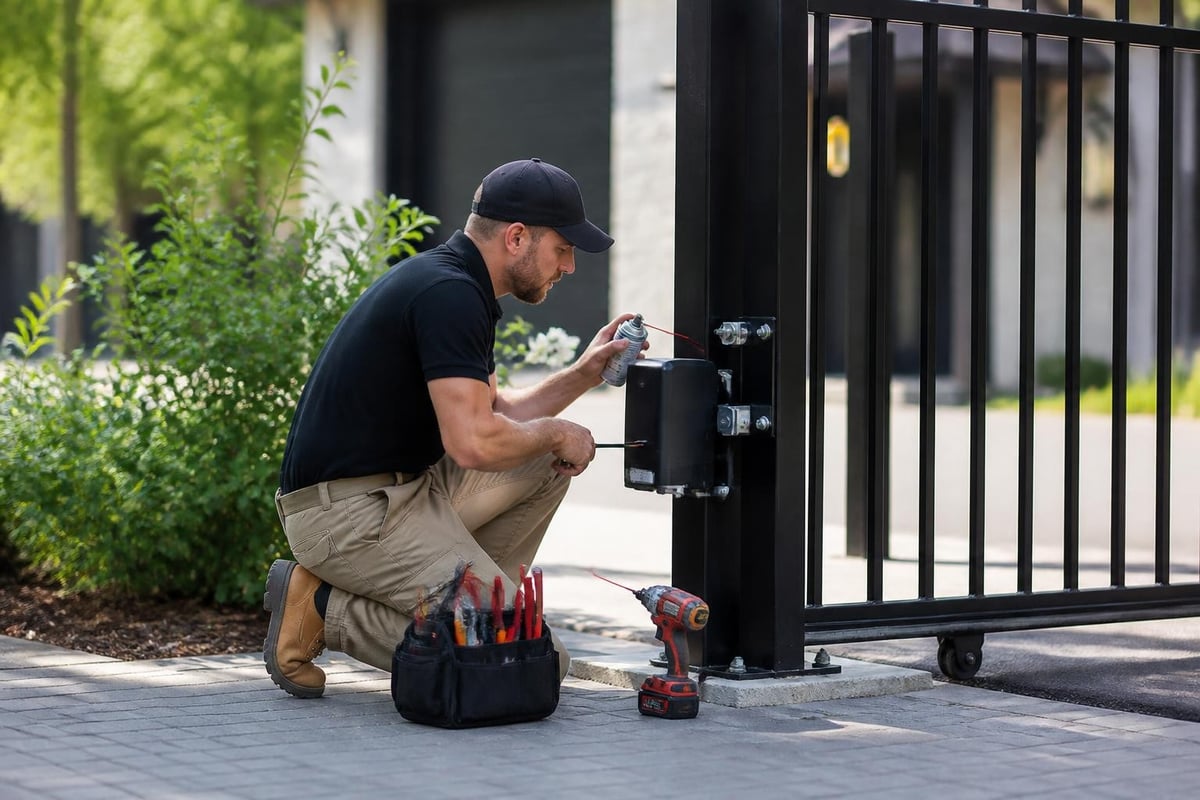
Consistent maintenance extends the service life of a basic driveway gate and prevents costly emergency repairs. Both manual and automatic gates benefit from regular inspection and servicing.
Routine Inspection Schedule
Monthly visual inspections identify developing issues before they cause system failures. Walk the full gate operation cycle, observing for:
- Unusual sounds (grinding, squeaking, rattling)
- Movement irregularities (jerking, hesitation, incomplete travel)
- Physical damage (rust, wood rot, loose fasteners)
- Sensor alignment (photo eye indicators, edge sensor continuity)
- Vegetation encroachment (blocking sensors or gate path)
Quarterly maintenance tasks include:
- Lubricate all hinges, rollers, and pivot points with appropriate grease
- Clean photo eye lenses and check alignment
- Test manual release operation and emergency access
- Inspect and tighten all mounting hardware
- Check gate balance (automatic systems should hold position when manually positioned mid-travel)
Annual professional servicing addresses complex automatic system components. Technicians inspect motor brushes, check control board connections, test safety device response times, and verify compliance with current safety standards. For Los Angeles property owners, professional gate services provide comprehensive inspections and preventive maintenance tailored to local climate conditions.
Common Wear Points and Replacement
Certain gate components experience predictable wear and require periodic replacement regardless of maintenance quality.
| Component | Typical Lifespan | Signs of Wear | Replacement Urgency |
|---|---|---|---|
| Hinges | 10-15 years | Squeaking, sagging | Medium (plan ahead) |
| Rollers | 7-10 years | Grinding, uneven movement | High (affects motor) |
| Photo eyes | 5-8 years | Intermittent false triggers | High (safety critical) |
| Gate motors | 10-15 years | Overheating, slow operation | Medium (gradual decline) |
| Control boards | 8-12 years | Erratic behavior, no response | High (total failure risk) |
Addressing wear promptly prevents cascading failures. For example, worn rollers increase motor strain, potentially causing premature motor failure and requiring more extensive repairs.
Cost Considerations and Value Analysis
Understanding the total cost of ownership for a basic driveway gate helps in budgeting and decision-making. Initial installation represents only part of the long-term investment.
Initial Installation Investment
Basic driveway gate costs vary significantly based on size, material, automation level, and installation complexity. Manual gates start at $1,500-$3,000 for materials and professional installation, while automated systems range from $3,500-$8,000 for standard residential applications.
Cost breakdown for automated basic driveway gate:
- Gate panels and framework: $800-$2,500
- Posts and foundation materials: $300-$600
- Automatic operator and controls: $600-$1,800
- Electrical installation: $400-$1,200
- Labor and installation: $800-$2,000
- Permits and inspections: $100-$500
Premium materials, custom designs, and complex access control integration can push costs to $10,000-$15,000 or higher. For detailed driveway gate installation cost analysis, consider requesting quotes from multiple qualified installers to compare approaches and pricing.
Long-Term Operating Costs
Beyond installation, basic driveway gates incur ongoing expenses for electricity, maintenance, and eventual component replacement.
Annual operating costs typically include:
- Electricity: $15-$40 for standard residential automatic gates
- Routine maintenance: $100-$200 for DIY supplies or $200-$400 for professional service
- Component replacement reserve: $100-$300 annually to fund future major repairs
Total 15-year cost of ownership (including installation, operation, and maintenance) averages $5,000-$12,000 for basic automated systems. This investment delivers security, convenience, and property value enhancement that many homeowners find worthwhile.
Smart Technology Integration
Modern basic driveway gate systems increasingly incorporate smart technology features that enhance convenience, security, and remote management capabilities.
Smartphone Control and Monitoring
Contemporary gate operators integrate with smartphone apps allowing remote operation from anywhere with cellular service. These apps provide real-time notifications when gates open or close, enabling property monitoring even when away.
Advanced features include:
- Scheduled operation (automatic closing after preset times)
- Temporary access codes for service providers or guests
- Activity logs tracking all gate operations with timestamps
- Video integration combining gate controls with security cameras
- Voice assistant compatibility with Amazon Alexa or Google Home
Smart gate systems typically require WiFi connectivity at the gate location, which may necessitate range extenders or dedicated access points for distant gate positions.
Security System Integration
Integrating your basic driveway gate with broader property security systems creates comprehensive access control. Professional-grade systems coordinate gates with:
- Perimeter cameras triggering recording on gate activity
- Alarm systems armed/disarmed based on gate status
- Lighting controls activating on gate opening
- Visitor management logging all access attempts
This integration transforms a basic entry point into an intelligent security layer. When planning electric gate installation, discuss integration capabilities with your installer to future-proof your investment.
Choosing the Right Basic Driveway Gate for Your Property
Selecting an appropriate basic driveway gate requires evaluating multiple factors specific to your property, usage patterns, and long-term goals.
Residential Applications
Single-family homes benefit from gates that balance security with aesthetic appeal. Consider your neighborhood character-ornate wrought iron suits traditional architecture, while clean aluminum complements contemporary designs.
Daily usage patterns influence automation decisions. If multiple household members enter and exit throughout the day, automatic operation justifies the additional investment through convenience alone. Properties with less frequent access may find manual gates adequate.
Security priorities vary by neighborhood and personal circumstances. High-crime areas warrant robust construction and reliable access control, while gates in secure communities may emphasize curb appeal over fortress-like security.
Commercial Property Requirements
Commercial installations face different demands than residential gates. Higher cycle counts (openings per day) require commercial-grade operators rated for continuous duty. Many commercial gates operate 50-100+ cycles daily, far exceeding residential equipment specifications.
Commercial gate installation must accommodate delivery vehicles, emergency access, and ADA compliance for pedestrian gates. Fire marshals often require specific emergency access provisions, including rapid-opening capability and Knox Box integration.
Liability concerns make professional installation and regular maintenance essential for commercial applications. Many insurance policies require documented maintenance records and compliance with current safety standards governing automatic gate operation.
Working with Professional Installers
Professional installation ensures your basic driveway gate operates safely, reliably, and in compliance with applicable codes. While DIY installation appeals to some property owners, the complexity of automatic systems and safety requirements favor professional expertise.
Selecting Qualified Contractors
Qualified gate installers possess specific skills beyond general contracting or fencing experience. Look for contractors with:
- Manufacturer certifications for gate operators and access control systems
- Electrical licensing appropriate for your jurisdiction
- Liability insurance covering gate installation and operation
- Local code knowledge including permit processes and inspection requirements
- Demonstrated experience with projects similar in scope to yours
Request references from recent clients and visit completed installations when possible. Observing finished work reveals attention to detail, craftsmanship quality, and long-term durability indicators.
Understanding Installation Timelines
Typical basic driveway gate installation spans 1-3 days for standard projects, though complex installations or extensive electrical work may require additional time.
The installation process generally follows this sequence:
- Day 1: Excavate post holes, set posts in concrete, begin electrical trenching
- Day 2-3: Complete electrical installation, mount operators, hang gate panels, install safety devices
- Final day: Testing, adjustment, and customer training
Permitting and inspection requirements may extend the overall timeline by several weeks. Some jurisdictions require approved plans before beginning work and inspections at multiple stages before final approval.
For properties in the greater Los Angeles area, local gate repair and installation professionals understand regional code requirements, soil conditions, and climate factors affecting gate performance and longevity.
Troubleshooting Common Issues
Even well-maintained basic driveway gates occasionally experience operational issues. Understanding common problems and their solutions helps you respond appropriately.
Gate Won't Open or Close
Complete failure to respond to commands suggests:
- Power supply interruption (check circuit breaker)
- Tripped safety sensors (clean photo eye lenses, check alignment)
- Control board failure (requires professional diagnosis)
- Remote control battery depletion (replace batteries)
Partial movement followed by reversal indicates obstruction detection or safety sensor activation. Inspect the gate path for debris, check photo eye alignment, and test edge sensor continuity.
Unusual Sounds During Operation
Grinding or scraping typically results from:
- Misaligned tracks or rollers
- Inadequate lubrication on moving parts
- Worn bearings or bushings
- Gate binding due to foundation settlement
Motor humming without movement suggests mechanical binding preventing the motor from turning the gate. Disengage the manual release and test gate movement by hand to identify binding points.
For persistent gate motor issues, professional diagnosis prevents guesswork and potential damage from incorrect repairs. Experienced technicians quickly identify root causes and implement lasting solutions.
Safety Sensor False Triggers
Photo eye sensors occasionally trigger false obstructions due to:
- Spider webs or debris on lenses
- Misalignment from ground settling or post movement
- Direct sunlight overwhelming infrared sensors
- Water intrusion in sensor housings
Clean lenses with a soft cloth and ensure proper alignment. Most photo eyes include indicator lights showing when the beam is properly established between sender and receiver units.
A well-chosen basic driveway gate provides years of reliable security and convenient access while enhancing property value and curb appeal. Whether you opt for manual simplicity or automated convenience, proper installation and regular maintenance ensure optimal performance throughout the gate's service life. When you need expert gate repair, installation, or emergency service in Los Angeles, Gates On Site delivers fast, professional solutions with over 20 years of experience serving residential and commercial properties throughout the region.