
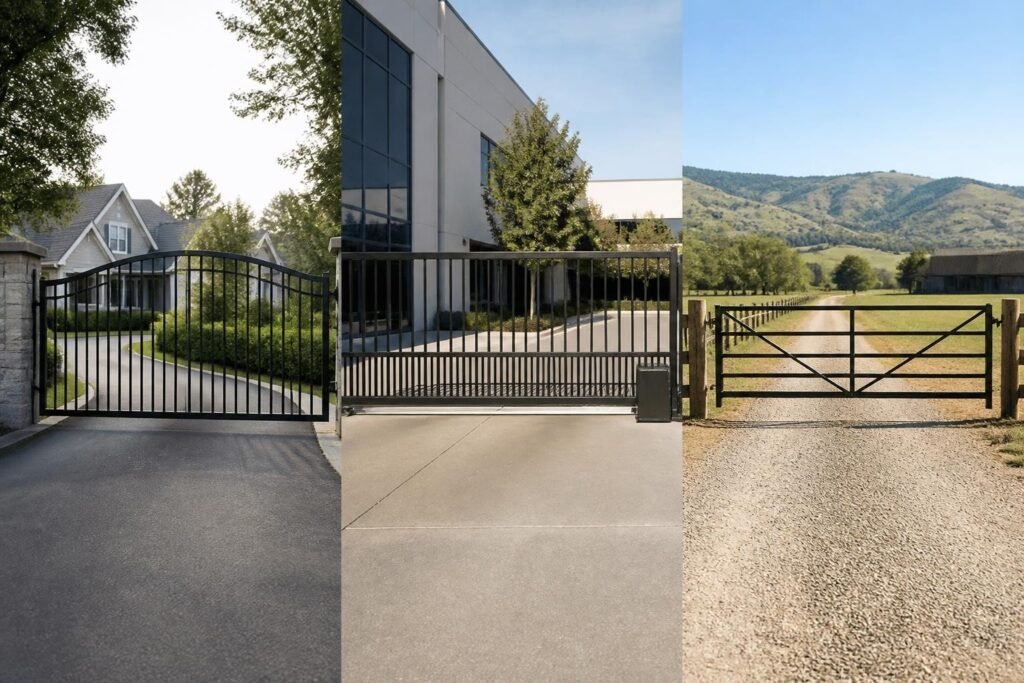
Choosing the best electric gate opener requires balancing functionality, safety, and durability to match your specific property needs. Whether you're securing a residential driveway, managing a commercial entrance, or controlling access to a gated community, the right opener system delivers years of reliable operation while protecting visitors and property. With advances in smart technology, safety standards, and motor efficiency in 2026, homeowners and facility managers have more options than ever before.
Understanding Electric Gate Opener Types
Electric gate openers fall into three primary categories, each engineered for distinct gate configurations and operational demands. Swing gate openers work like traditional doors, pulling or pushing gates inward or outward along an arc. These systems suit properties with adequate clearance space and work especially well for dual-gate installations at estate entrances.
Slide gate openers move gates horizontally along a track, making them ideal for properties with limited driveway depth or sloped approaches. These units handle heavier gates and perform reliably in locations where swing clearance isn't available.
Dual-function systems accommodate properties with multiple gate types or provide backup operation modes. Some advanced models integrate both swing and slide capabilities, though most residential and commercial applications benefit from purpose-built single-function units.
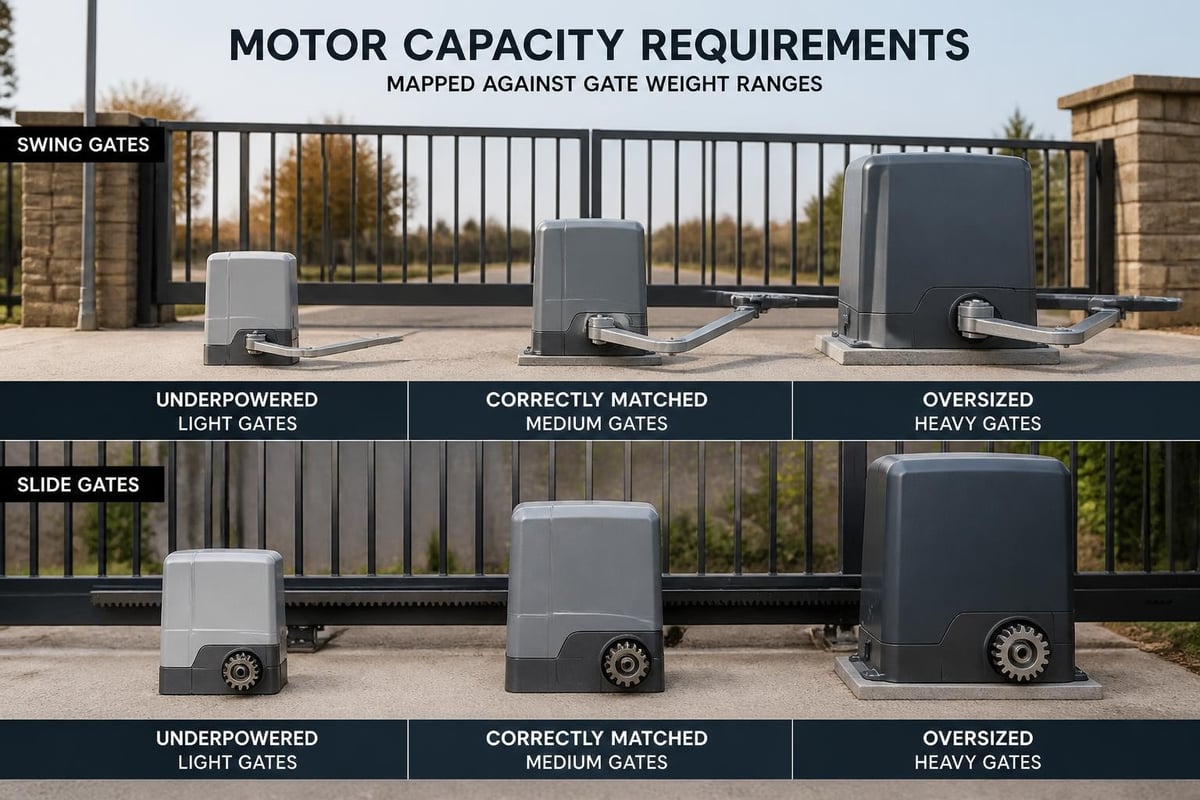
Motor Power and Gate Weight Capacity
Matching motor capacity to gate weight represents the single most critical specification when selecting the best electric gate opener. Undersized motors wear prematurely, struggle in wind or temperature extremes, and fail safety testing protocols.
| Gate Weight | Recommended Motor | Typical Application |
|---|---|---|
| Up to 300 lbs | 1/4 HP | Single residential swing gates |
| 300-600 lbs | 1/2 HP | Double residential swing gates, light commercial |
| 600-1,000 lbs | 3/4 HP | Heavy residential, standard commercial slide gates |
| 1,000-2,000 lbs | 1+ HP | Industrial slide gates, high-security installations |
Professional installers calculate total gate weight including decorative elements, which can add hundreds of pounds to wrought iron or wood composite designs. Motors rated 20-30% above actual gate weight provide operational headroom for weather resistance and extended lifespan.
Safety Features and Compliance Standards
The best electric gate opener incorporates multiple safety mechanisms that meet or exceed UL 325 safety standards, which govern entrapment protection and operational safety for powered gates. In 2026, compliance isn't optional-it's a legal requirement for commercial installations and strongly recommended for residential properties.
Modern systems include photoelectric sensors that detect obstructions in the gate path, immediately reversing direction when beams break. Edge sensors mounted on gate leading edges provide secondary detection for objects that might slip between photoelectric beams.
Entrapment Protection Technologies
Entrapment protection has evolved significantly beyond simple obstruction detection. Current systems layer multiple technologies:
- Force-sensing resistance monitoring that detects unusual motor load
- Infrared array sensors creating detection zones along the entire gate travel path
- Pressure-sensitive edge strips providing immediate tactile feedback
- Audible warning systems alerting pedestrians before gate movement begins
Understanding how UL 325 and access control standards align helps property owners make informed decisions about safety investments. Commercial properties and facilities open to the public must also consider ADA accessibility requirements, which specify maximum opening forces and minimum safety features for automated entrances.
Smart Integration and Access Control
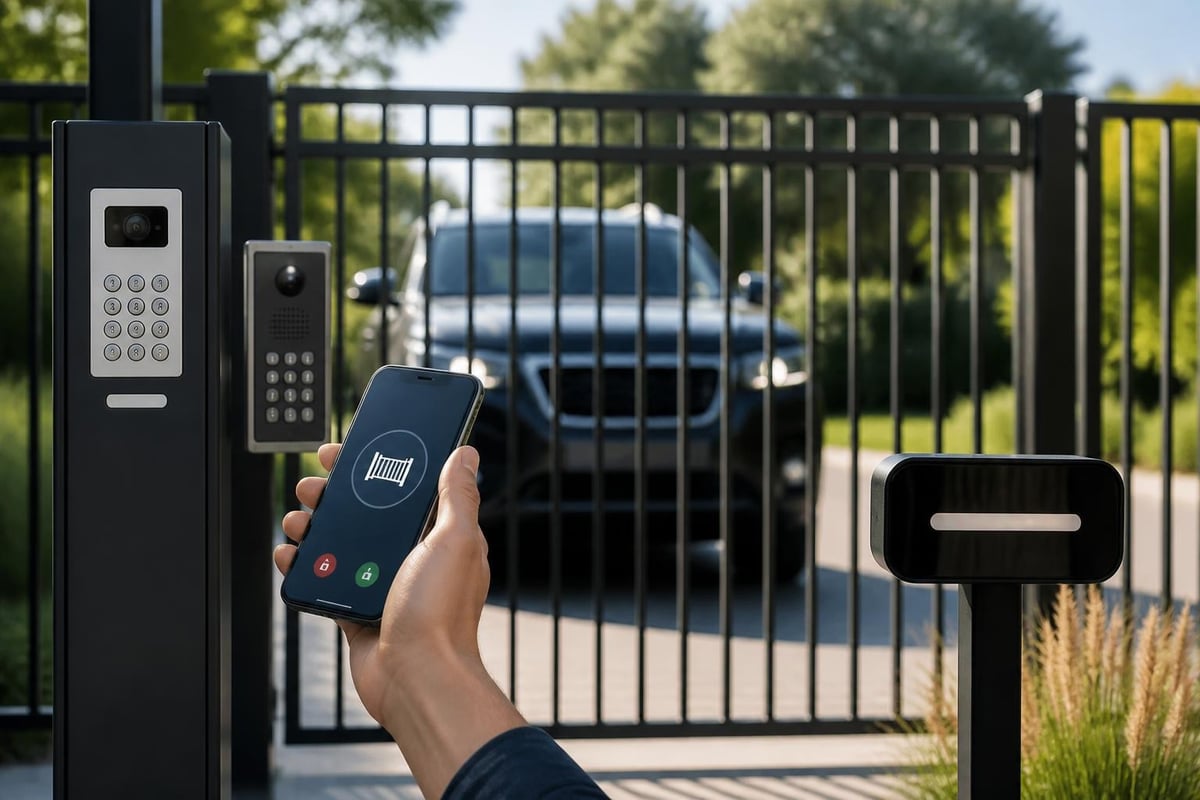
Smart home integration has transformed electric gate operation from simple remote control to sophisticated access management. The best electric gate opener systems in 2026 offer multiple connectivity options that balance convenience, security, and compatibility.
Wi-Fi-enabled controllers allow smartphone operation from anywhere, sending alerts when gates open or close. Many systems integrate with established smart home platforms, providing voice control through virtual assistants and automation routines that coordinate lighting, cameras, and alarm systems.
Bluetooth proximity activation offers hands-free operation as authorized vehicles approach, while maintaining tighter security than radio frequency systems vulnerable to code grabbing. Advanced systems use encrypted rolling codes that generate new authentication sequences with each use.
Access Management Options
| Access Method | Best For | Security Level | Cost Range |
|---|---|---|---|
| Remote control | Residential, basic commercial | Medium | $30-$80 per unit |
| Keypad entry | Multi-user residential, small business | Medium-High | $150-$400 |
| Smartphone app | Tech-forward homes, remote management | High | $200-$500 system cost |
| Intercom/video | Multi-tenant, high-security commercial | Highest | $800-$2,500+ |
| License plate recognition | Gated communities, parking facilities | High | $1,500-$5,000+ |
Professional property managers increasingly deploy cloud-based access systems that log every gate operation, revoke access privileges remotely, and integrate with broader property management software. These enterprise solutions suit apartment complexes, business parks, and facilities requiring detailed audit trails.
Power Supply Considerations
Power reliability determines gate performance during electrical outages and influences installation costs. The best electric gate opener for your situation depends partly on available electrical infrastructure and backup power requirements.
Hardwired AC systems (110V or 220V) deliver consistent power for high-cycle commercial applications. They require professional electrical installation and permanent conduit runs but eliminate battery maintenance while supporting the most powerful motor options.
Solar-powered systems suit remote locations without convenient electrical access, using photovoltaic panels to charge battery banks that store energy for 24/7 operation. Modern solar installations provide reliable performance even in partially shaded locations, though battery replacement every 3-5 years represents an ongoing maintenance item.
Battery Backup Systems
Even hardwired installations benefit from battery backup that maintains operation during power failures. Entry-level backup systems provide 10-20 cycles on battery power-sufficient for residential properties experiencing occasional outages. Commercial and security-critical installations warrant higher-capacity backup systems supporting 50+ cycles.
Deep-cycle batteries designed specifically for gate operators outperform automotive batteries, providing consistent voltage through discharge cycles and lasting 4-6 years under normal use. Smart charging systems prevent overcharging damage while maintaining readiness.
Gate operators equipped with electric gate repair service records demonstrate the importance of regular battery testing and replacement before failures occur, avoiding lockout situations during emergencies.
Duty Cycle and Usage Frequency
Duty cycle ratings indicate how frequently a gate opener can operate before requiring rest periods to prevent overheating. Residential applications typically require light to medium duty cycles, while commercial properties demand continuous-duty ratings for high-traffic periods.
Residential-rated openers handle 10-30 cycles per hour, matching typical family usage patterns. These units cost less initially but fail prematurely when repurposed for commercial service.
Commercial-rated systems support 50-100+ cycles per hour continuously, featuring enhanced cooling, reinforced gearing, and oversized motors. The best electric gate opener for business applications always carries commercial duty ratings, even if current traffic seems modest-growth and peak periods quickly overwhelm underpowered systems.
Installation and Professional Setup
While some homeowners attempt DIY installation, professional setup ensures proper safety feature calibration, force adjustment, and code compliance. Installation complexity varies significantly based on gate type, property configuration, and existing infrastructure.
Swing gate installations require precise hinge placement and clearance calculations. Installers must account for gate sag over time, seasonal ground movement, and wind load factors that affect long-term alignment. Proper installation includes reinforced mounting points that distribute operational forces across gate frames rather than concentrating stress at hinge points.
Slide gate installations demand level track installation, roller adjustment, and catch mechanism alignment. Ground preparation often represents the most time-consuming installation phase, requiring compacted bases that prevent settling and track misalignment.
Permitting and Inspection Requirements
Many jurisdictions require permits for electric gate installations, particularly commercial projects and residential installations visible from public rights-of-way. Building departments verify compliance with safety standards, electrical codes, and accessibility requirements.
Professional installers familiar with local requirements streamline the permitting process and ensure installations pass inspection on the first attempt. This expertise proves especially valuable when projects must meet NFPA life safety codes governing egress gates and emergency access provisions for fire department personnel.
Maintenance Requirements and Longevity
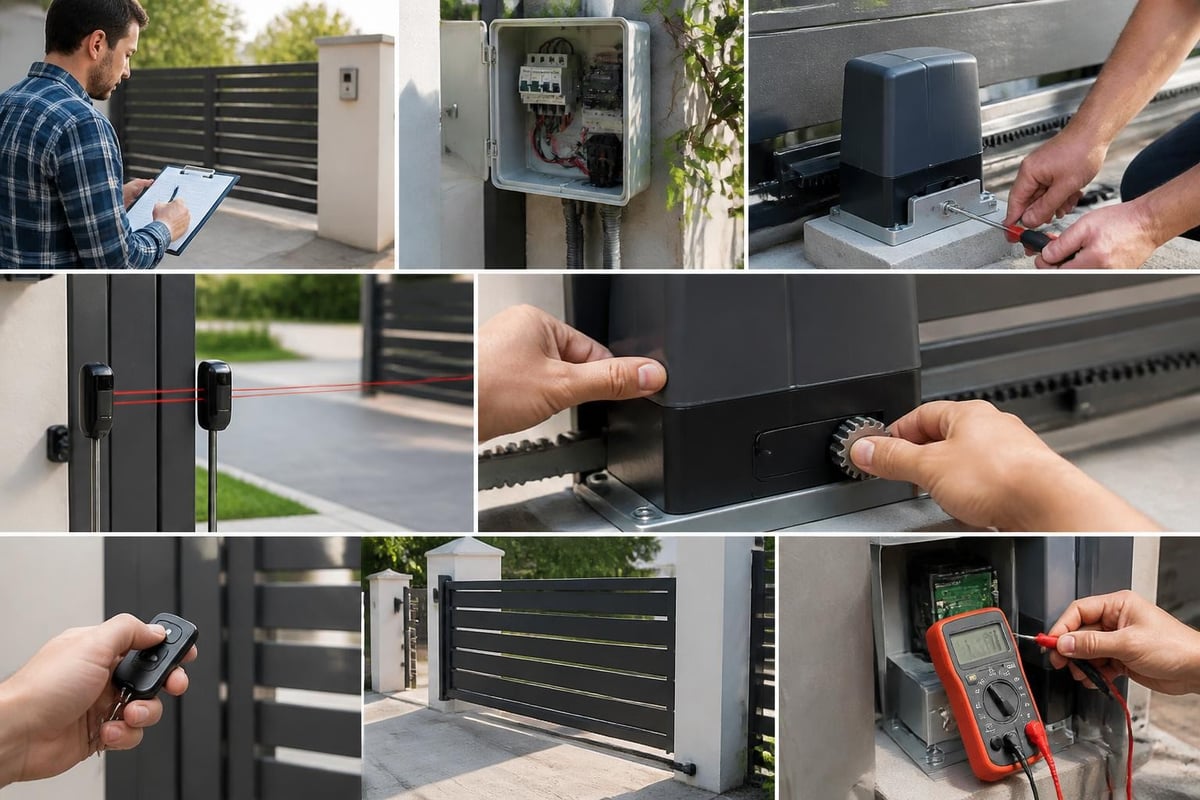
The best electric gate opener delivers years of service with minimal maintenance, but no system operates indefinitely without attention. Regular maintenance schedules prevent minor issues from escalating into costly repairs or dangerous malfunctions.
Quarterly maintenance tasks include:
- Visual inspection of gate alignment and mounting hardware
- Lubrication of hinges, rollers, and chain drives
- Safety sensor testing and cleaning
- Battery voltage testing on backup systems
- Remote control battery replacement
Annual professional service should address mechanical adjustments, electrical connection inspection, and comprehensive safety testing. Technicians calibrate force settings to maintain safe operation as components wear, preventing the excessive force application that causes entrapment injuries.
Gate operators in coastal environments require more frequent maintenance due to salt air corrosion. Properties with heavy landscaping should schedule regular track cleaning to remove debris that interferes with slide gate operation.
Weather Resistance and Environmental Factors
Geographic location significantly influences which features constitute the best electric gate opener for your property. Units installed in extreme climates require specialized components that maintain performance across temperature ranges, precipitation types, and environmental challenges.
Cold-weather packages include heaters that keep motors and hydraulic systems operational below freezing. Standard motor oils thicken in extreme cold, increasing startup loads and potentially triggering safety shutdowns. Arctic-rated lubricants and heated enclosures solve these problems for northern installations.
Hot-climate configurations emphasize cooling and UV resistance. Motors rated for continuous high-temperature operation prevent thermal shutdown during summer peaks. UV-stabilized plastics and powder-coated finishes resist sun damage better than standard components.
Corrosion Protection
Marine environments and industrial areas with chemical exposure demand stainless steel components or specialized coatings. Aluminum and galvanized steel deteriorate rapidly in salt air, causing premature mechanical failure.
| Environment | Recommended Protection | Maintenance Frequency |
|---|---|---|
| Standard residential | Powder-coated steel | Annual |
| Coastal (within 5 miles) | Stainless steel, marine-grade coating | Quarterly |
| Industrial/chemical | 316 stainless, specialty polymers | Monthly inspection |
| Desert/high UV | UV-stabilized components, aluminum | Semi-annual |
Noise Levels and Operational Characteristics
Gate opener noise varies from nearly silent belt-drive systems to louder chain-drive units. Residential installations near bedrooms or neighboring properties benefit from quiet operation, while industrial settings prioritize durability over noise reduction.
Belt-drive operators use reinforced rubber belts instead of metal chains, reducing operational noise by 50% or more compared to chain systems. These units cost more initially but deliver smoother operation with less vibration transmission to gate structures.
Screw-drive systems fall between belt and chain drives for noise levels, offering good durability at moderate sound output. The threaded rod mechanism provides positive gate control with minimal maintenance requirements.
Commercial properties should consider operational hours when evaluating noise impact. Gates cycling frequently during overnight shifts or early morning hours may disturb neighboring properties unless quiet operation receives priority during specification.
Brand Reputation and Warranty Coverage
Established manufacturers back their products with comprehensive warranties and maintain parts availability for obsolete models. The best electric gate opener comes from companies with decades of industry presence and robust dealer networks providing local service support.
Warranty coverage typically includes:
- 2-5 year motor and control board replacement
- 1-3 year coverage on mechanical components
- 90 days to 1 year on batteries and wear items
- Lifetime warranty on structural frames (premium brands)
Extended warranties available at purchase time often prove worthwhile for commercial installations, covering labor costs and ensuring priority service response. Consumer protection improves significantly when warranties come from manufacturers rather than third-party providers.
Reading warranty exclusions reveals important usage limitations. Many residential warranties void coverage if units operate in commercial applications. Others exclude damage from improper installation or lack of routine maintenance, emphasizing the importance of professional setup and service.
Cost Analysis and Budget Planning
Electric gate opener prices span from $300 for basic residential units to $5,000+ for industrial systems with advanced features. Total project costs include installation labor, electrical work, permitting, and optional accessories that significantly impact final investment.
Budget-conscious residential installations ($800-$1,500 total) typically feature:
- Single swing gate operator with basic remote control
- Standard safety sensors meeting minimum code requirements
- DIY-friendly installation or basic professional setup
- Limited smart features or connectivity options
Mid-range residential projects ($2,000-$4,000) upgrade to:
- Dual swing or slide operators with commercial-duty ratings
- Enhanced safety systems including multiple sensor types
- Smart home integration and smartphone control
- Professional installation with permit compliance
- Battery backup systems
Premium commercial installations ($5,000-$15,000+) deliver:
- Heavy-duty continuous-rated operators
- Advanced access control with logging and remote management
- Video intercom and license plate recognition
- Comprehensive safety systems exceeding minimum standards
- Enterprise warranty coverage and maintenance contracts
Value assessment should emphasize total cost of ownership rather than initial purchase price. Cheap systems requiring frequent repairs and early replacement cost more over typical 10-15 year ownership periods than properly specified quality equipment.
Evaluating Your Specific Property Needs
The best electric gate opener matches your unique combination of gate configuration, usage patterns, security requirements, and budget constraints. Systematic evaluation ensures specifications align with actual needs rather than marketing claims or features you'll never use.
Start by documenting:
- Gate weight, dimensions, and material composition
- Expected daily/weekly cycle count
- Number of authorized users and vehicles
- Security level requirements and access control preferences
- Available power sources and backup power necessity
- Local climate extremes and environmental challenges
- Budget for initial installation and ongoing maintenance
Properties with multiple gates might benefit from synchronized operators that coordinate dual-gate movement, preventing one gate from closing while the other remains open. This feature proves especially valuable for wide commercial entrances where partial gate operation creates traffic bottlenecks.
Understanding how features like DASMA industry recommendations influence product selection helps buyers focus on specifications that matter most for their applications. The trade association provides detailed guidance on matching equipment to usage scenarios, helping prevent costly over-specification or dangerous under-specification.
Selecting the best electric gate opener involves careful consideration of safety features, power requirements, and long-term reliability that matches your property's specific demands. When your gate system needs professional attention or you're ready to upgrade to a more reliable operator, Gates On Site delivers same-day electric gate repair and installation services throughout Los Angeles with over 20 years of experience. Our licensed technicians arrive fully equipped to diagnose issues and complete repairs on the spot, ensuring your gate operates safely and efficiently without the wait.