
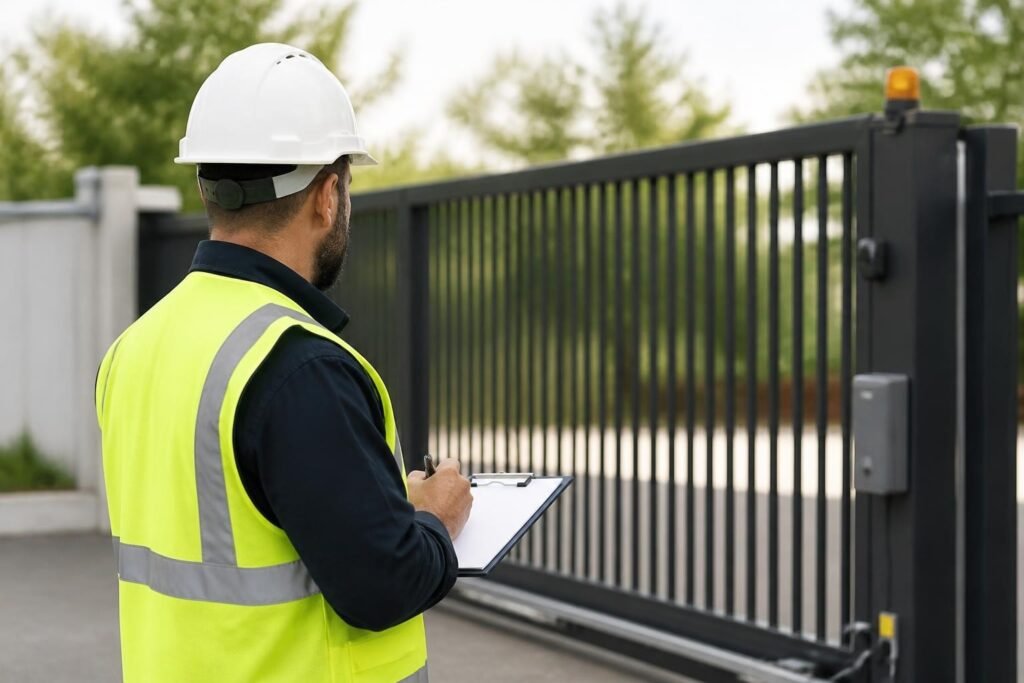
Commercial gate installation represents a significant investment in property security, access control, and operational efficiency. Whether you're securing a warehouse, managing parking at a multi-tenant building, or controlling access to a gated business park, selecting and installing the right gate system requires careful planning and expertise. This guide examines the critical considerations, compliance requirements, and technical decisions that ensure a successful commercial gate installation in 2026.
Understanding Commercial Gate Installation Requirements
Professional commercial gate installation begins with a comprehensive site assessment that evaluates traffic patterns, security needs, and existing infrastructure. Unlike residential applications, commercial installations must accommodate higher usage volumes, diverse user types, and strict regulatory compliance.
Property managers and business owners should evaluate daily traffic volume, peak usage periods, and the mix of vehicles accessing the property. A manufacturing facility with heavy truck traffic has vastly different requirements than an office park primarily serving passenger vehicles. These usage patterns directly influence gate size, operator selection, and automation features.
Key factors in site assessment include:
- Daily and peak traffic volume projections
- Vehicle types and weight classifications
- Available electrical service and power capacity
- Underground utilities and clearance requirements
- Compliance with local zoning and building codes
- Integration with existing security systems
The Americans with Disabilities Act (ADA) establishes specific requirements for gates that serve or affect public access. The accessibility standards for gates mandate maximum opening forces, clear width requirements, and operational characteristics that ensure equal access for all users.
Selecting the Right Gate Type
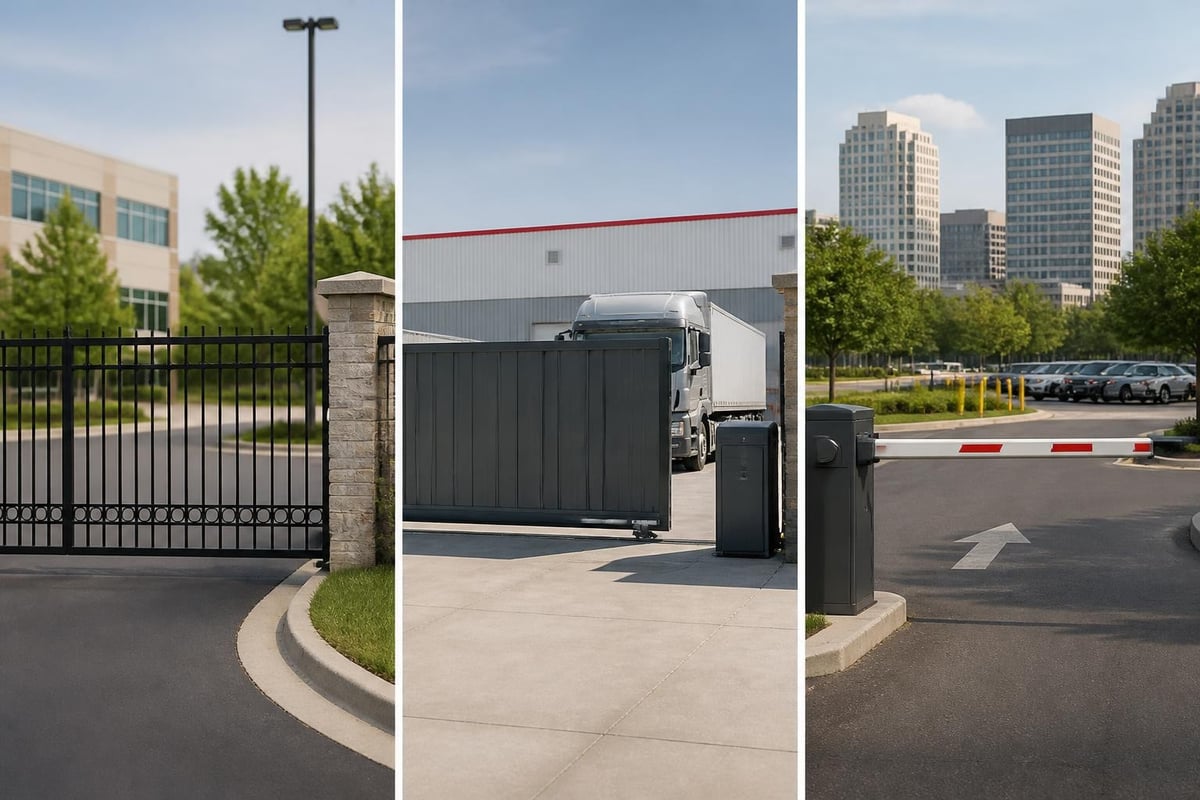
Commercial gate installation projects typically involve swing gates, slide gates, or barrier arm systems, each suited to specific applications and site conditions.
Swing gates require adequate clearance on the opening side but offer excellent security and visual appeal for entrances where space permits. Single or dual configurations accommodate different opening widths, with dual-swing gates providing balanced load distribution for larger openings.
Slide gates excel in applications with limited clearance perpendicular to the opening. Cantilever slide gates avoid ground tracks that can accumulate debris or ice, making them ideal for climates with challenging weather conditions. Track-mounted slide gates suit extremely wide openings where cantilever designs become impractical.
Barrier arm gates control vehicle access while maintaining clear pedestrian pathways. High-speed barrier arms cycle in seconds, making them efficient for parking facilities and locations with constant traffic flow.
Compliance and Safety Standards in 2026
Commercial gate installation must meet rigorous safety standards that protect users, maintain liability coverage, and ensure regulatory compliance. The ANSI/CAN/UL 325 standard establishes requirements for gate operators and safety devices based on gate classification and usage patterns.
| Gate Class | Application Type | Primary Requirements |
|---|---|---|
| Class I | Residential (not applicable) | Basic entrapment protection |
| Class II | Commercial/Industrial | Enhanced entrapment protection, monitored safety devices |
| Class III | Industrial (frequent use) | Maximum safety features, redundant protection |
| Class IV | Restricted access (authorized only) | Monitored edges, redundant systems |
Class II gates serve most commercial applications where gates are accessible to employees and the general public. These installations require monitored entrapment protection devices that halt or reverse gate operation when detecting obstructions. Photoelectric sensors, safety edges, and loop detectors work together to create multiple layers of protection.
Building Code Integration
Local building codes incorporate national standards while adding jurisdiction-specific requirements. Commercial gate installation typically requires permits, inspections, and final approval from local building departments before systems can be placed in service.
The ASTM F2200 standard provides detailed specifications for automated vehicular gate construction, including structural requirements, testing protocols, and documentation expectations. This specification complements UL 325 by addressing the gate structure itself rather than just the operator and safety systems.
Working with experienced installers familiar with local code requirements prevents costly delays and ensures compliance from the start. Many jurisdictions require licensed contractors for electrical connections, structural mounting, and final system testing.
Automation and Access Control Integration
Modern commercial gate installation centers on sophisticated automation that integrates with broader property management systems. Gate operators in 2026 offer network connectivity, remote monitoring, and integration with access control platforms that manage permissions across multiple entry points.
Selecting the appropriate operator begins with calculating the gate's weight, width, and usage frequency. Manufacturers specify duty cycles that indicate how often gates can operate within a given timeframe before requiring cooldown periods. Undersized operators fail prematurely, while properly specified equipment delivers years of reliable service.
Critical operator specifications include:
- Continuous duty rating: Maximum cycles per hour without overheating
- Gate weight capacity: Total load including gate structure and hardware
- Wind load rating: Resistance to wind pressure when closed
- Backup power compatibility: Integration with battery or generator systems
- Network connectivity: IP-based monitoring and control capabilities
The DASMA technical resources provide manufacturer-neutral guidance on operator selection, installation practices, and maintenance requirements that help specify appropriate equipment for specific applications.
Access Control System Selection
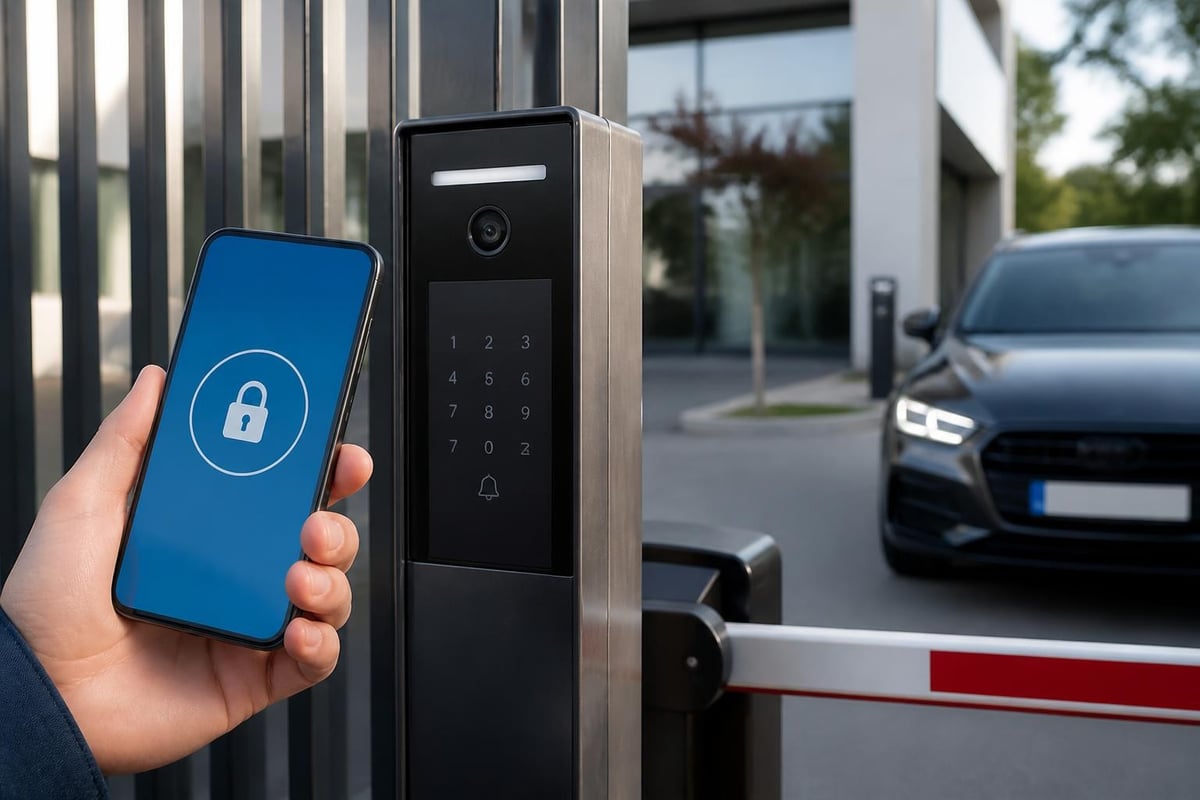
Commercial gate installation increasingly incorporates sophisticated access control that moves beyond simple keypads or card readers. Modern systems support mobile credentials, license plate recognition, and integration with visitor management platforms.
Cloud-based access control systems enable remote permission management, real-time activity logs, and instant credential updates without requiring on-site visits. Property managers can grant temporary access to contractors, track entry patterns, and receive alerts about unauthorized access attempts.
Multi-factor authentication combines credentials (cards, mobile devices) with PINs or biometric verification for high-security applications. These layered approaches prevent unauthorized access even when credentials are lost or stolen.
Professional Installation Process
Commercial gate installation follows a structured process that ensures proper function, safety compliance, and long-term reliability. Professional installers coordinate multiple trades, manage permit requirements, and conduct comprehensive testing before system handoff.
Site Preparation and Foundation Work
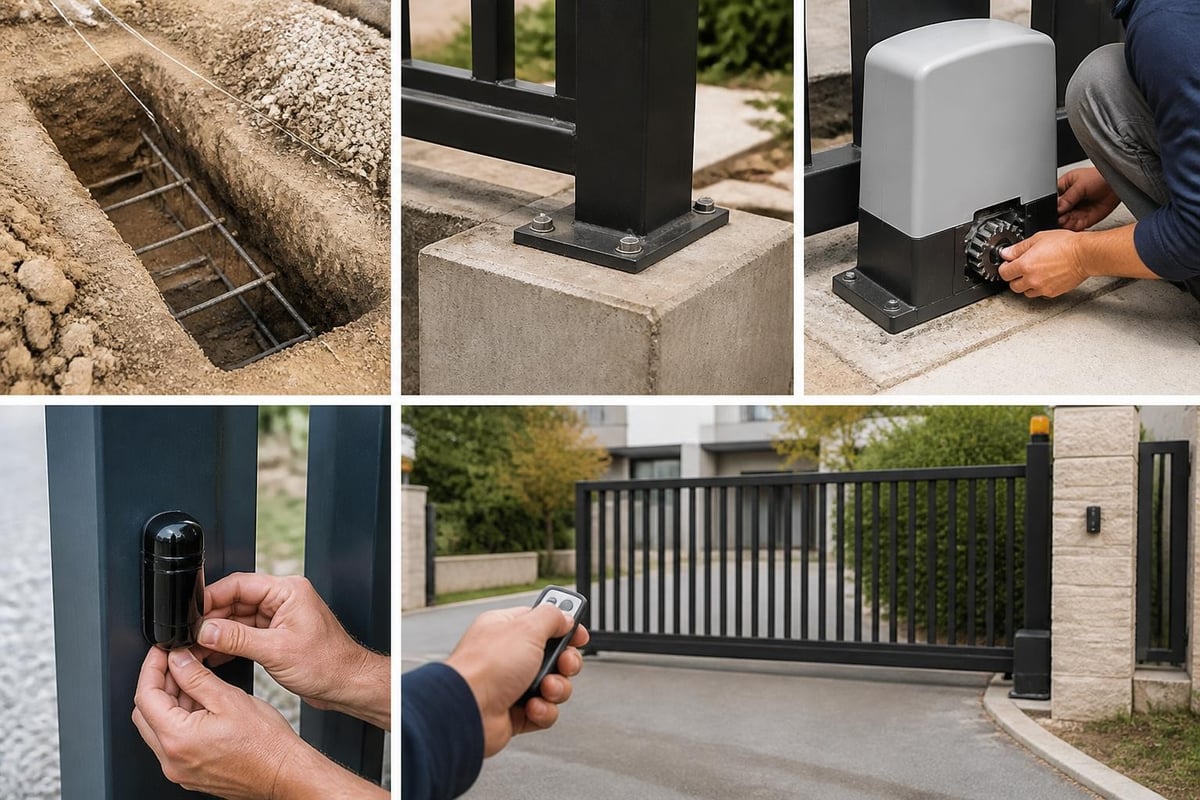
Proper foundation design supports gate weight, operator forces, and environmental loads including wind and seismic activity. Concrete footings must cure completely before mounting operators or hanging gates, typically requiring several days of installation timeline.
Electrical service installation runs conduit from the power source to operator locations, incorporating junction boxes, disconnects, and proper grounding. Many jurisdictions require separate permits for electrical work performed by licensed electricians.
Underground loop detectors require saw-cutting slots in paving, installing wire loops, and sealing cuts to prevent moisture intrusion. Proper loop installation ensures reliable vehicle detection without nuisance triggering from adjacent traffic.
Mounting and Alignment
Gate installation requires precise alignment to ensure smooth operation and prevent premature wear. Swing gates need proper hinge placement and gap consistency, while slide gates require level tracks and accurate stop positioning.
Operators mount to foundations or posts according to manufacturer specifications, maintaining proper clearances for service access and environmental protection. Weatherproof enclosures protect control boards and electrical components from moisture and temperature extremes.
Safety device installation positions sensors, edges, and loops to detect potential entrapment zones throughout the gate's travel path. Testing each device individually before integrated system testing ensures comprehensive protection.
Long-Term Maintenance Considerations
Successful commercial gate installation includes planning for ongoing maintenance that preserves performance and extends equipment life. Establishing maintenance schedules before system activation prevents neglect and identifies developing issues before they cause failures.
Regular maintenance tasks include lubricating moving components, inspecting safety devices, testing backup power systems, and cleaning sensors. Most manufacturers recommend quarterly professional service for commercial applications with moderate traffic volumes, with more frequent service for high-traffic installations.
The AFA certification programs establish industry standards for installer qualification and ongoing professional development. Working with certified professionals ensures installations meet current best practices and safety standards.
| Maintenance Task | Frequency | Critical Components |
|---|---|---|
| Visual inspection | Monthly | Hinges, tracks, chains, sensors |
| Lubrication | Quarterly | Moving parts, pivot points, rollers |
| Safety device testing | Quarterly | Photo eyes, edges, loops |
| Operator service | Quarterly | Motor, gearbox, control board |
| Comprehensive audit | Annually | All systems, structural components |
Predictive maintenance leverages connected operators that monitor performance metrics and alert property managers to developing issues. Tracking cycle counts, operation times, and obstruction events helps schedule service before equipment failures occur.
Establishing Service Partnerships
Commercial properties benefit from service agreements with qualified providers offering priority response and preventive maintenance. For properties in Southern California, partnering with experienced providers like Gates On Site ensures rapid response when issues arise and regular maintenance that prevents costly downtime.
Service agreements typically include scheduled maintenance visits, discounted repair rates, and priority emergency response. These partnerships prove especially valuable for properties with multiple gate systems or locations where gate failures impact business operations.
Technology Trends Shaping 2026 Installations
Commercial gate installation in 2026 incorporates emerging technologies that enhance security, improve user experience, and reduce operational costs. Understanding these trends helps property owners make forward-looking decisions that accommodate future needs.
Mobile credentials eliminate physical cards or fobs, allowing users to access gates through smartphone apps. These systems integrate with property management platforms, automatically granting or revoking access based on lease status or employment records.
License plate recognition (LPR) systems identify authorized vehicles without requiring driver interaction. Cameras capture plate images, compare them against permitted vehicle databases, and automatically open gates for approved entries. LPR works particularly well for delivery vehicles, fleet management, and properties with assigned parking.
Artificial intelligence enhances video analytics, detecting unusual patterns that might indicate security threats or operational issues. AI-powered cameras distinguish between vehicles, pedestrians, and animals, reducing false alarms while improving threat detection.
Sustainability and Energy Efficiency
Solar-powered gate operators reduce operational costs while supporting sustainability goals. Modern solar systems incorporate battery storage that maintains operation during extended cloudy periods or nighttime use. These installations work particularly well for remote gates or properties pursuing green building certifications.
Energy-efficient LED lighting illuminates gate areas while minimizing power consumption. Motion-activated lighting reduces energy use further while enhancing security through sudden illumination when vehicles or pedestrians approach.
Regenerative braking systems in some high-cycle operators capture energy during gate closing, feeding power back to batteries or reducing overall consumption. While adding initial cost, these systems prove economical for high-traffic applications over their service life.
Budgeting for Commercial Gate Installation
Commercial gate installation costs vary significantly based on gate size, automation complexity, and site conditions. Developing realistic budgets requires understanding all project components beyond the gate and operator themselves.
Material costs include the gate structure, operator, safety devices, access control hardware, and electrical components. Labor encompasses installation, electrical work, concrete finishing, and system programming. Additional expenses cover permits, inspections, and contingencies for unforeseen site conditions.
Budget components typically include:
- Gate fabrication and finishing
- Operator and control panel
- Safety devices and sensors
- Access control readers and credentials
- Electrical service and wiring
- Foundation and mounting hardware
- Professional installation labor
- Permits and inspections
- Initial user training
- Warranty and service agreements
Properties with challenging site conditions may encounter additional costs for utility relocation, soil stabilization, or extended electrical runs. Obtaining detailed quotes from multiple qualified installers helps establish realistic budgets while understanding the scope of work each proposal includes.
Value engineering identifies opportunities to achieve project goals while managing costs. Sometimes relocating a gate a few feet eliminates expensive utility conflicts. Other times, phased installation spreads costs across multiple budget cycles while delivering immediate security improvements.
Selecting Qualified Installation Partners
Commercial gate installation quality depends heavily on installer expertise, experience, and commitment to proper practices. Researching potential partners prevents costly mistakes and ensures installations that deliver years of reliable service.
Qualified installers demonstrate current knowledge of safety standards, local code requirements, and manufacturer specifications. Many hold certifications from industry organizations or manufacturers that validate their technical competence and ongoing professional development.
Request references from similar commercial installations and contact property managers about their experiences. Ask about project timeline adherence, problem-solving capabilities, and post-installation support quality.
Licensed contractors carry appropriate insurance protecting property owners from liability related to installation work. Verify general liability coverage, workers' compensation insurance, and contractor's license status before awarding contracts.
Coordinating with Building Systems
Commercial gate installation often integrates with broader building management systems that control access, monitor security, and manage energy usage. Planning these integrations during initial design prevents costly retrofits and ensures seamless operation.
Building automation platforms increasingly incorporate perimeter security, linking gates with door access, video surveillance, and alarm systems. Unified platforms provide single-pane visibility into all security systems while simplifying user management across multiple access points.
Fire and life safety codes may require gates to automatically open during emergencies, ensuring unimpeded egress for evacuating occupants. These fail-safe systems integrate with fire alarm panels, requiring coordination between gate installers and fire protection contractors.
Parking management systems link gates with payment kiosks, validation systems, and occupancy counters. These integrations enable sophisticated parking operations that maximize revenue while improving user experience through streamlined access.
Professional commercial gate installation balances immediate security needs with long-term operational requirements, compliance obligations, and future technology integration. From initial planning through ongoing maintenance, successful projects require expertise across multiple disciplines and careful attention to site-specific conditions. When you need expert guidance on commercial gate systems in Los Angeles, Gates On Site brings over 20 years of experience helping property owners select, install, and maintain reliable access control solutions that protect assets while supporting smooth daily operations.