
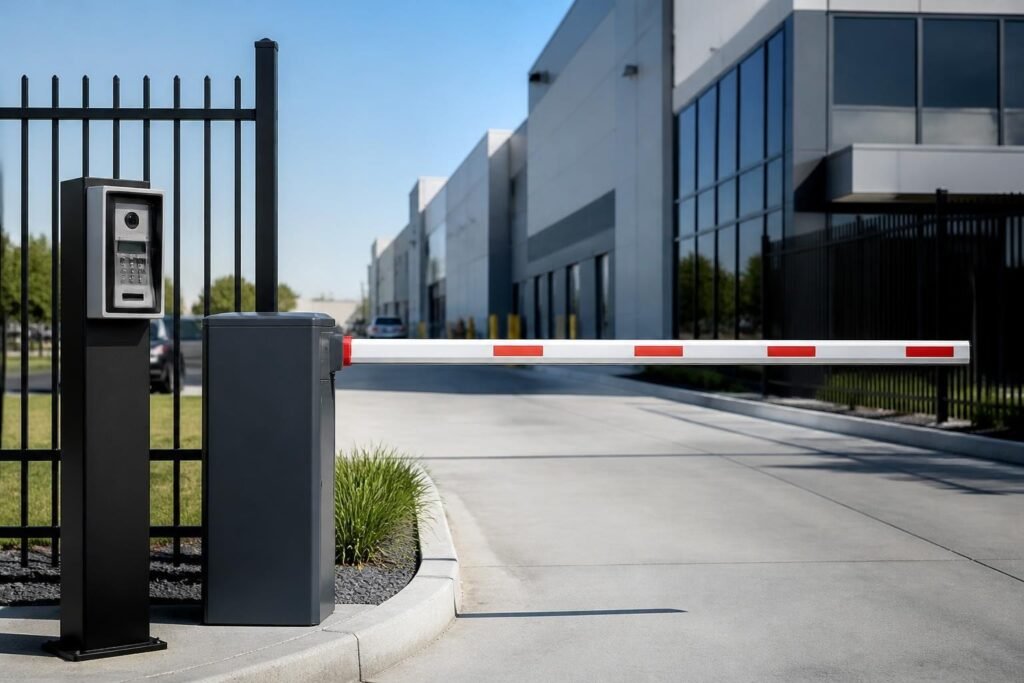
Commercial security gates serve as the first line of defense for businesses, warehouses, industrial facilities, and high-value properties throughout the United States. These specialized access control systems combine physical barriers with electronic automation to regulate vehicle and pedestrian entry while deterring unauthorized access. As security threats evolve and regulatory requirements become more stringent in 2026, understanding the capabilities, types, and maintenance requirements of commercial security gates has never been more critical for property managers and business owners.
Understanding Commercial Security Gate Systems
Commercial security gates differ fundamentally from residential installations in their construction, load capacity, and operational demands. These systems must withstand constant use, accommodate multiple vehicles per hour, and integrate with comprehensive security infrastructure.
The basic components of commercial security gates include the gate structure itself, an operator or motor system, access control devices, safety sensors, and backup power systems. Heavy-duty construction typically employs steel, aluminum, or reinforced materials capable of withstanding impact and weather exposure over decades of service.
Modern commercial installations increasingly incorporate smart technology that enables remote monitoring, usage analytics, and predictive maintenance alerts. Property managers can track entry patterns, identify mechanical issues before failures occur, and maintain detailed access logs for security audits.
Key Features That Define Commercial-Grade Systems
Commercial security gates must meet specific performance criteria that residential systems never encounter. Duty cycle ratings determine how many operations per hour the system can sustain without overheating or premature wear. Commercial operators typically offer 50-100% duty cycles compared to 20-30% for residential units.
Weight capacity represents another critical specification. Commercial gates often span wider openings and use heavier materials, requiring operators capable of moving 1,000 to 10,000 pounds smoothly and reliably. The motor and gearbox must deliver consistent performance regardless of weather conditions or frequency of use.
- Crash-rated barriers that meet ASTM F2656 vehicle impact standards
- UL 325 compliant safety systems with monitored entrapment protection
- Redundant safety sensors including photo-eyes, edge sensors, and loop detectors
- Battery backup systems maintaining 24-hour operation during power failures
- Weatherproof enclosures rated for extreme temperature ranges and moisture exposure
Types of Commercial Security Gates
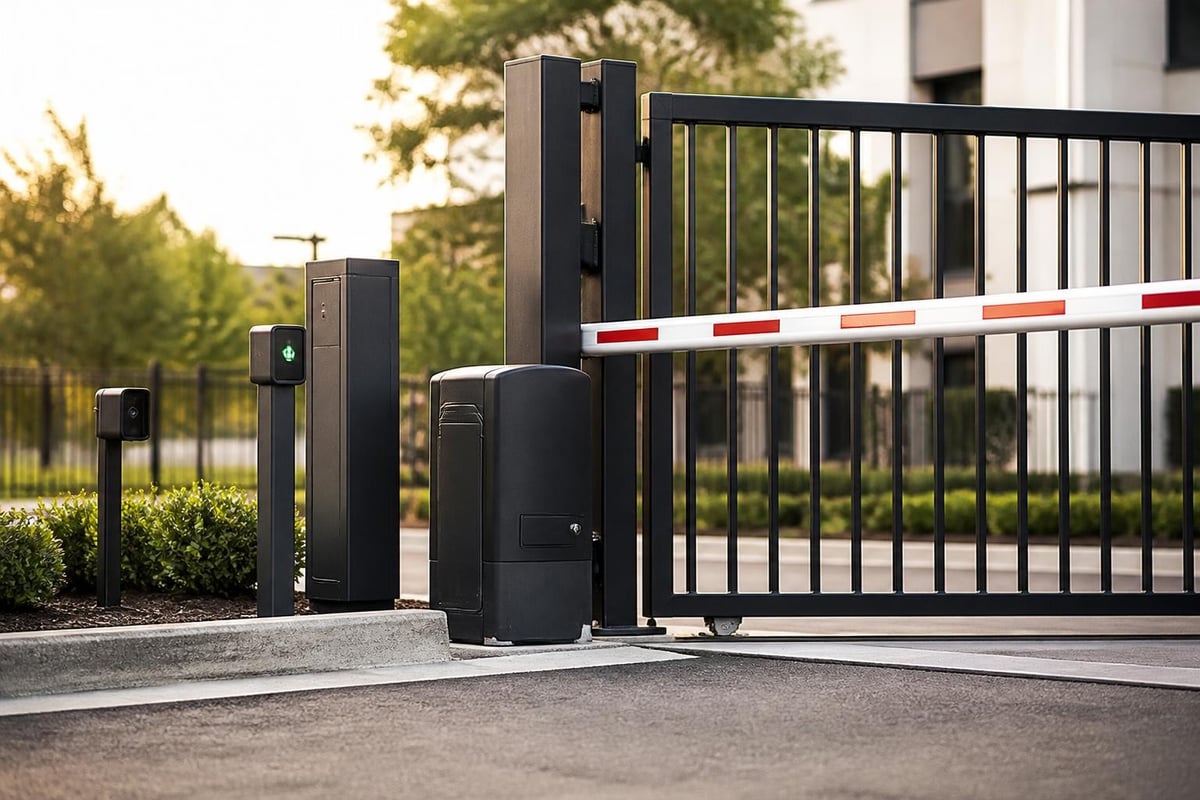
Selecting the appropriate gate type depends on site layout, security requirements, traffic volume, and available space for gate operation. Each configuration offers distinct advantages for specific applications.
Sliding Gates for High-Traffic Applications
Sliding gates remain the most popular choice for commercial installations due to their space efficiency and reliability. These systems travel parallel to the fence line, requiring no swing clearance and maintaining a consistent footprint regardless of position.
Cantilever sliding gates suspend the gate panel above the ground, eliminating ground tracks that accumulate debris and ice. This design proves especially valuable in Los Angeles and other regions where debris accumulation or uneven surfaces might impede tracked systems. The counterbalanced design distributes weight evenly, reducing motor strain and extending system longevity.
Track-mounted sliding gates offer the highest load capacity for extremely wide or heavy installations. Industrial facilities with openings exceeding 60 feet often specify tracked systems despite higher maintenance requirements. The track provides additional lateral stability essential for gates weighing several tons.
| Gate Type | Ideal Opening Width | Advantages | Maintenance Level |
|---|---|---|---|
| Cantilever Slide | 10-40 feet | No ground track, minimal debris issues | Low |
| Track Slide | 30-100+ feet | Highest weight capacity | Moderate |
| Vertical Lift | 10-30 feet | Minimal space requirements | Moderate-High |
| Swing (Single/Double) | 12-30 feet | Simple mechanism, cost-effective | Low |
| Barrier Arm | 10-25 feet | Fast operation, pedestrian-friendly | Low |
Vertical Lift and Barrier Arms
Vertical lift gates raise straight upward, making them ideal for sites with limited lateral space or where the gate must clear overhead when open. Parking structures, urban facilities, and locations adjacent to sidewalks frequently employ vertical lift configurations.
Barrier arms provide rapid access control for high-volume traffic while maintaining visual deterrence. Though not physical barriers against determined intrusion, modern barrier arms integrate with bollards or tire shredders for enhanced security. Their fast operation cycle (2-6 seconds) makes them perfect for parking facilities, checkpoints, and locations requiring frequent controlled access.
Security Standards and Compliance Requirements
Commercial security gates must satisfy multiple regulatory frameworks addressing safety, accessibility, and in some cases, threat mitigation. Understanding these requirements ensures legal compliance and reduces liability exposure.
The ANSI/UL 325 standard establishes safety requirements for all automatic gate operators installed in the United States. This standard mandates specific entrapment protection devices, force limitations, and operator performance characteristics. Class I through Class IV designations categorize gates by their vehicular or pedestrian usage patterns, with each class requiring progressively more comprehensive safety features.
For facilities requiring vehicle barrier protection against hostile threats, the Department of Homeland Security provides detailed guidance through their Vehicle Incident Prevention and Mitigation Security Guide. This resource outlines site assessment methodologies, barrier selection criteria, and integration strategies for commercial security gates serving critical infrastructure.
ADA Compliance for Commercial Installations
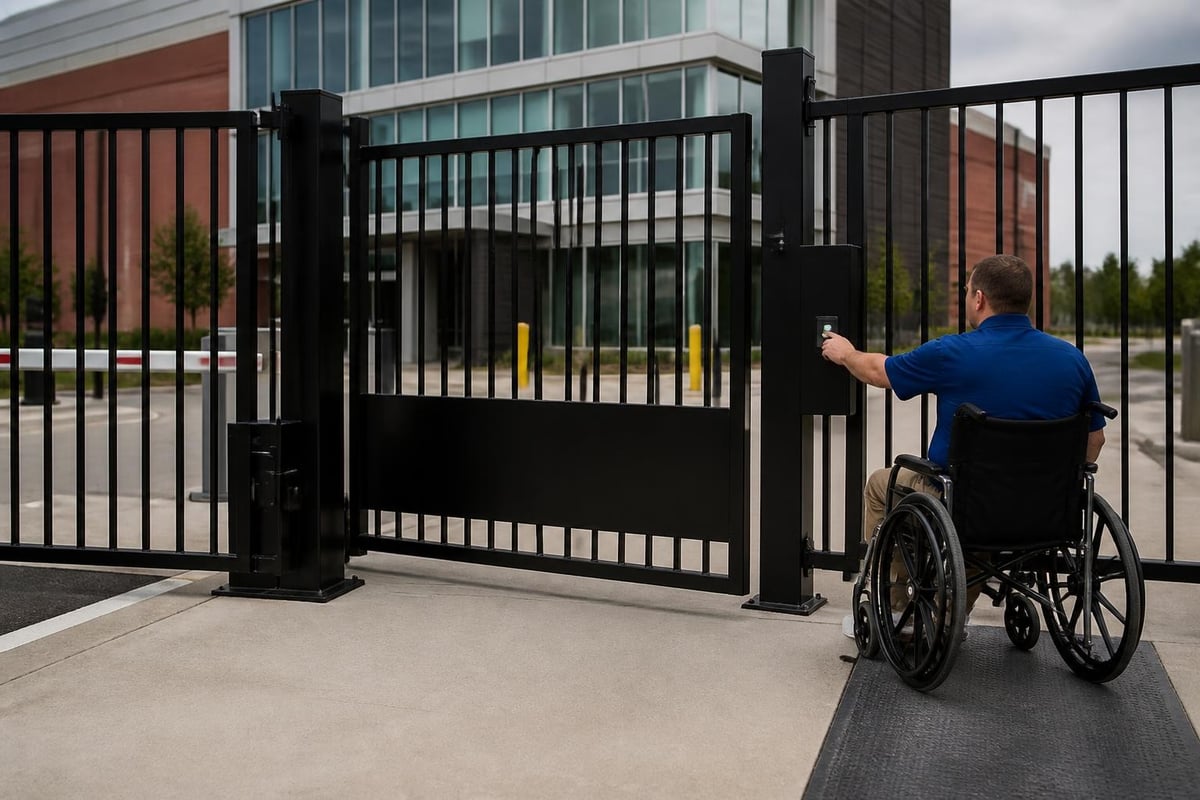
The Americans with Disabilities Act imposes specific requirements on commercial gate installations that provide public access. The U.S. Access Board’s technical guidance on gates establishes clear measurements for maneuvering clearances, opening force, and automated operation.
Maximum opening force cannot exceed five pounds for manual gates, though automated systems with compliant controls typically satisfy this requirement by default. Control devices such as keypads, card readers, or call boxes must be positioned within accessible reach ranges (15-48 inches above the ground) and located on accessible routes.
Automated gates serving public entrances must remain open long enough to permit passage by individuals using wheelchairs or mobility devices. Timing adjustments typically extend to 5-7 seconds minimum, compared to 3-4 seconds for standard commercial applications.
Access Control Integration
Modern commercial security gates function as physical components within broader access control ecosystems. The integration of credential readers, visitor management systems, and network connectivity transforms basic barriers into intelligent security nodes.
Credential Technologies and Authentication Methods
Commercial installations in 2026 deploy multiple authentication technologies to balance security with user convenience. Multi-factor authentication combining credentials (cards, fobs) with biometrics (fingerprint, facial recognition) or PIN codes provides enhanced security for sensitive facilities.
- Proximity card readers offer reliable, low-cost access control suitable for most commercial applications
- Long-range RFID readers enable hands-free access for vehicles, reading credentials from 10-30 feet
- License plate recognition (LPR) systems automate entry for registered vehicles while logging all access attempts
- Mobile credentials delivered via smartphone apps eliminate physical cards and enable remote authorization
- Intercom and video systems facilitate visitor screening and remote gate release
Cloud-based access control platforms have revolutionized commercial gate management by enabling centralized administration across multiple sites. Security managers can grant or revoke credentials instantly, generate detailed audit reports, and receive real-time alerts for unauthorized access attempts or system malfunctions.
Integration with Building Management Systems
Commercial security gates increasingly connect to comprehensive building management systems (BMS) that coordinate security, HVAC, lighting, and fire safety. This integration enables sophisticated automation scenarios such as automatically opening gates when fire alarms activate or restricting access during after-hours periods.
Video management systems (VMS) coordinate security cameras with gate activity, capturing footage of every entry and exit event. Modern systems employ analytics to detect tailgating, wrong-way entry, or vehicles loitering near gates, triggering alerts for security personnel.
Operational Considerations and Site Planning
Successful commercial security gate installations require careful site analysis and operational planning beyond simple product selection. Traffic patterns, peak usage periods, and emergency access requirements all influence system design.
Traffic flow modeling determines the number of gates required to handle peak vehicle volumes without creating dangerous backups onto public streets. As a general guideline, sliding gates processing standard passenger vehicles accommodate 15-20 vehicles per hour per lane. Barrier arms can process 60-100 vehicles per hour, making them preferable for high-volume facilities.
Emergency vehicle access represents a critical planning element. Fire departments typically require gates to fail in the open position during power failures or include Knox Box emergency access systems. Some jurisdictions mandate secondary access points or specify maximum response times for automated gate opening.
Environmental Factors Affecting Performance
Geographic location significantly impacts commercial security gate performance and longevity. Coastal installations face accelerated corrosion from salt air, requiring marine-grade finishes and more frequent maintenance intervals. Desert environments present challenges from dust infiltration and extreme temperature swings affecting electronic components.
- Wind loading calculations ensure gates resist local wind conditions without operator strain
- Seismic requirements in earthquake-prone regions mandate flexible mounting and emergency release mechanisms
- Flood zone considerations elevate electrical components and specify water-resistant operators
- Temperature extremes require operators rated for local climate ranges (-40°F to 140°F for extreme environments)
Los Angeles installations benefit from moderate temperatures but must account for seismic activity and occasional high winds. Proper foundation design and operator selection ensure reliable performance across the region's diverse microclimates from coastal areas to inland valleys.
Maintenance Requirements and Lifecycle Management
Commercial security gates demand proactive maintenance programs to ensure reliable operation and prevent costly emergency repairs. Unlike residential systems with intermittent use, commercial gates accumulate thousands of cycles monthly, accelerating wear on mechanical and electrical components.
Preventive Maintenance Schedules
Industry best practices recommend quarterly professional inspections for commercial installations with moderate traffic and monthly service for high-volume applications. These inspections verify proper alignment, check safety device functionality, lubricate moving components, and test backup power systems. For properties in Los Angeles requiring professional electric gate repair, establishing relationships with qualified service providers ensures rapid response when issues arise.
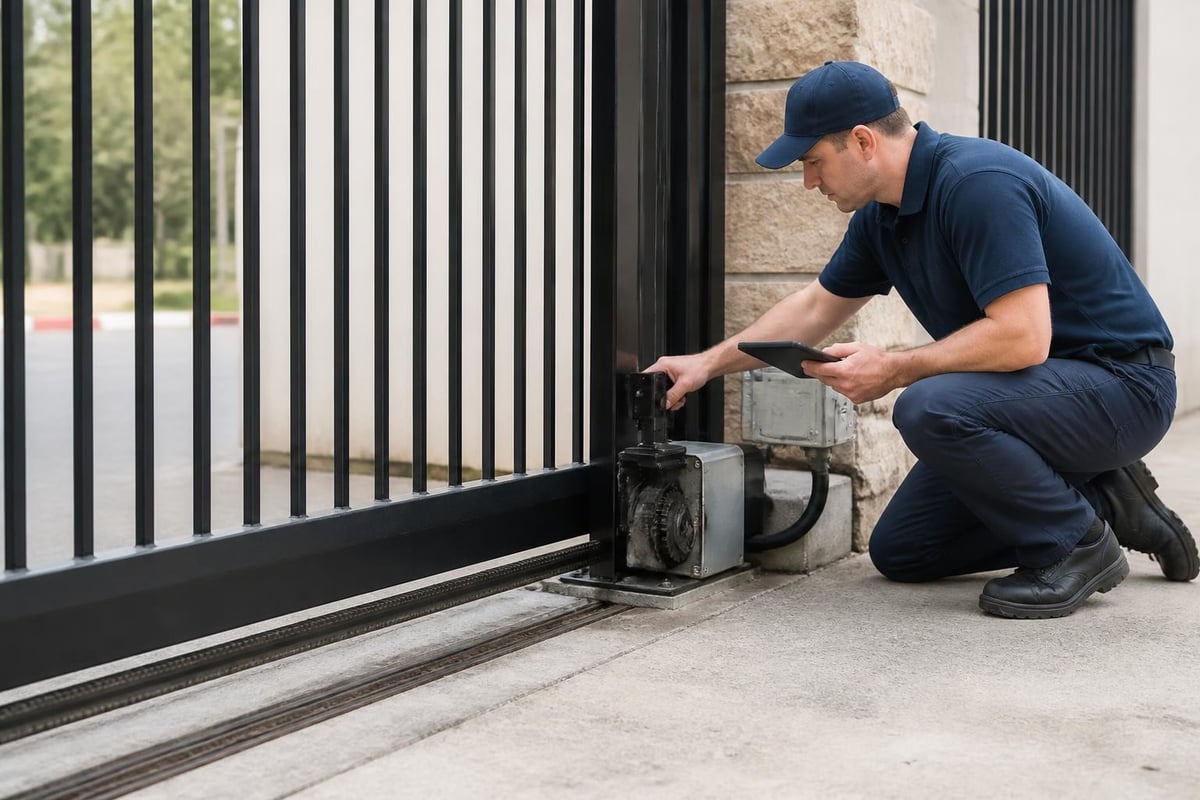
Critical maintenance tasks include chain or belt tension adjustment, track cleaning and alignment verification, operator ventilation inspection, and battery load testing. Neglecting these routine services leads to premature component failure and unexpected downtime that compromises security and disrupts operations.
Safety device testing represents the most critical maintenance activity from a liability perspective. Photo-eyes, pressure sensors, and emergency stop functions must be verified monthly to ensure compliance with UL 325 safety standards. Documentation of these tests protects property owners in the event of accidents and demonstrates due diligence to insurance carriers.
Common Failure Modes and Solutions
Understanding typical failure patterns enables proactive component replacement before complete breakdowns occur. Operator motor failures typically result from inadequate ventilation, voltage fluctuations, or duty cycle exceedance. Installing voltage regulators and ensuring proper motor sizing during initial installation prevents many premature failures.
Chain and belt drives require replacement every 3-5 years depending on usage intensity. Warning signs include excessive noise, visible wear or fraying, and inconsistent gate speed. Upgrading to industrial-grade components extends service intervals and reduces maintenance costs over the gate's lifecycle.
Electronic component failures often trace to moisture intrusion, temperature extremes, or voltage spikes. Weatherproof enclosures, surge protection, and proper grounding eliminate most electronic issues. Control boards in harsh environments benefit from conformal coating that protects circuits from moisture and corrosion.
| Component | Average Lifespan | Warning Signs | Replacement Urgency |
|---|---|---|---|
| Operator Motor | 7-10 years | Excessive noise, overheating, slow operation | Moderate |
| Chain/Belt Drive | 3-5 years | Fraying, rust, inconsistent speed | High |
| Safety Sensors | 5-7 years | Intermittent function, false triggers | Critical |
| Control Board | 8-12 years | Random errors, loss of programming | Moderate-High |
| Battery Backup | 3-4 years | Reduced runtime, charging failures | Moderate |
Security Enhancements and Upgrades
As security threats evolve, commercial properties frequently upgrade existing gate systems with enhanced capabilities. Modern retrofit options add sophisticated features to older installations without complete system replacement.
Anti-tailgating detection employs multiple sensors to identify when unauthorized vehicles follow closely behind authorized entries. Advanced systems use radar, laser scanners, or video analytics to differentiate between single and multiple vehicles, automatically closing gates or triggering alarms when tailgating occurs.
Forced entry detection monitors gate resistance and motor load. When someone attempts to force a closed gate open, the system detects abnormal resistance patterns and activates alarms while preventing motor damage. This feature proves especially valuable for facilities storing high-value assets or sensitive materials.
Crash Rating and Physical Security Upgrades
Facilities requiring protection against vehicle-borne threats can upgrade to crash-rated barriers that have been tested to specific penetration standards. The ASTM F2656 standard classifies barriers by the weight and speed of vehicles they can stop, ranging from passenger cars at 30 mph (K4 rating) to 15,000-pound trucks at 50 mph (K12 rating).
The Department of Defense's Unified Facilities Criteria provide detailed specifications for perimeter security systems protecting critical infrastructure and government facilities. Commercial properties can apply these same principles to achieve appropriate levels of protection based on threat assessments.
Bollard systems complement commercial security gates by preventing vehicles from bypassing gates or ramming through adjacent fencing. Retractable bollards enable emergency vehicle access while maintaining security during normal operations. Integration with gate control systems ensures synchronized operation.
Technology Trends Shaping Commercial Access Control
The commercial security gate industry continues rapid evolution as new technologies enable capabilities previously limited to high-security government installations. These advances improve both security effectiveness and operational efficiency.
Artificial intelligence and machine learning now power video analytics that distinguish between authorized and suspicious behavior patterns. Systems learn normal traffic flows and automatically flag anomalies such as vehicles circling multiple times, unauthorized photography, or individuals tampering with perimeter fencing.
Predictive maintenance algorithms analyze operational data to forecast component failures before they occur. By monitoring motor current, cycle counts, and operating temperatures, AI systems schedule preventive maintenance during convenient periods rather than reacting to unexpected breakdowns.
Integration with mobile device ecosystems enables sophisticated access scenarios. Geofencing automatically sends gate opening commands when authorized users' smartphones approach, while blockchain-based credentials provide tamper-proof audit trails for compliance-intensive industries.
Cybersecurity has become paramount as commercial security gates connect to networks. Modern systems implement encryption, multi-factor authentication for administrative access, and network segmentation to prevent gate control systems from becoming entry points for broader network intrusions.
Selecting the Right Commercial Security Gate
The decision process for commercial security gate selection must balance multiple competing priorities including initial cost, operational expenses, security effectiveness, and user convenience. A systematic evaluation methodology ensures optimal outcomes.
Begin with comprehensive threat and risk assessment identifying specific vulnerabilities the gate system must address. Different facilities face distinct threats: retail properties prioritize controlling vehicle access during closed hours, while warehouses require robust protection against cargo theft. Data centers and critical infrastructure demand the highest security levels with redundant systems and crash-rated barriers.
Total cost of ownership calculations should extend 10-15 years beyond initial installation. While pneumatic operators cost less upfront, their 3-5 year lifespan and higher maintenance requirements often make hydraulic systems more economical over time despite higher purchase prices. Energy consumption, particularly for gates operating hundreds of cycles daily, represents another significant ongoing expense.
Vendor selection criteria should emphasize experience with commercial installations, local service capabilities, and comprehensive warranty coverage. For properties throughout Los Angeles and surrounding areas, choosing service providers with proven track records in commercial applications ensures access to qualified technicians familiar with the unique demands of business-critical access control systems.
Integration capabilities deserve careful evaluation during the selection process. Systems using proprietary protocols limit future expansion options and create vendor lock-in scenarios. Open-standard platforms supporting common interfaces (Wiegand, OSDP, IP) enable integration with best-of-breed components and future technology upgrades.
Commercial security gates represent critical infrastructure components that protect property, manage access, and project professionalism to visitors and clients. Success requires understanding the interplay between physical barriers, automation technology, safety compliance, and operational requirements specific to each facility's unique needs. Whether you're planning a new installation, upgrading existing systems, or addressing operational issues with your current gates, partnering with experienced professionals ensures optimal performance and reliability. Gates On Site brings over two decades of expertise to commercial and residential properties throughout Los Angeles, offering same-day service and comprehensive solutions for all your gate system needs.