
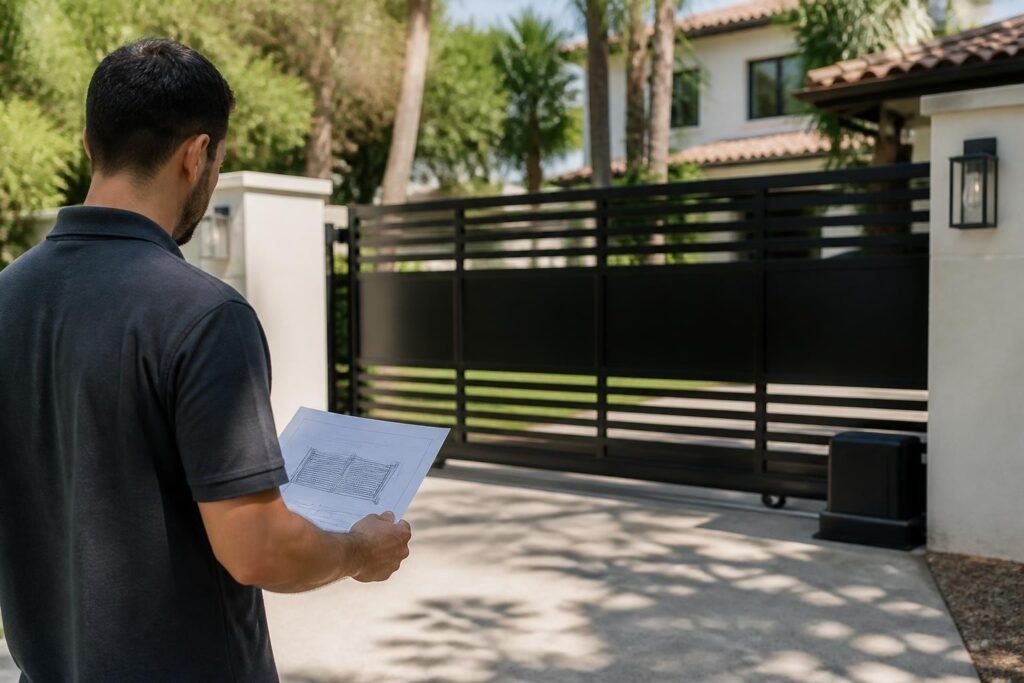
Installing a driveway gate transforms both the security and curb appeal of your property. Whether you're considering a manual swing gate for a traditional home or an automated sliding system for a modern estate, understanding the installation process helps ensure a successful project. This comprehensive guide walks you through everything from selecting the right gate type to meeting Los Angeles building codes, giving property owners the knowledge needed to make informed decisions about their driveway gate installation.
Understanding Gate Types and Mechanisms
Selecting the appropriate gate style represents the foundation of any successful driveway gate installation. Your choice impacts not only aesthetics but also functionality, maintenance requirements, and long-term costs.
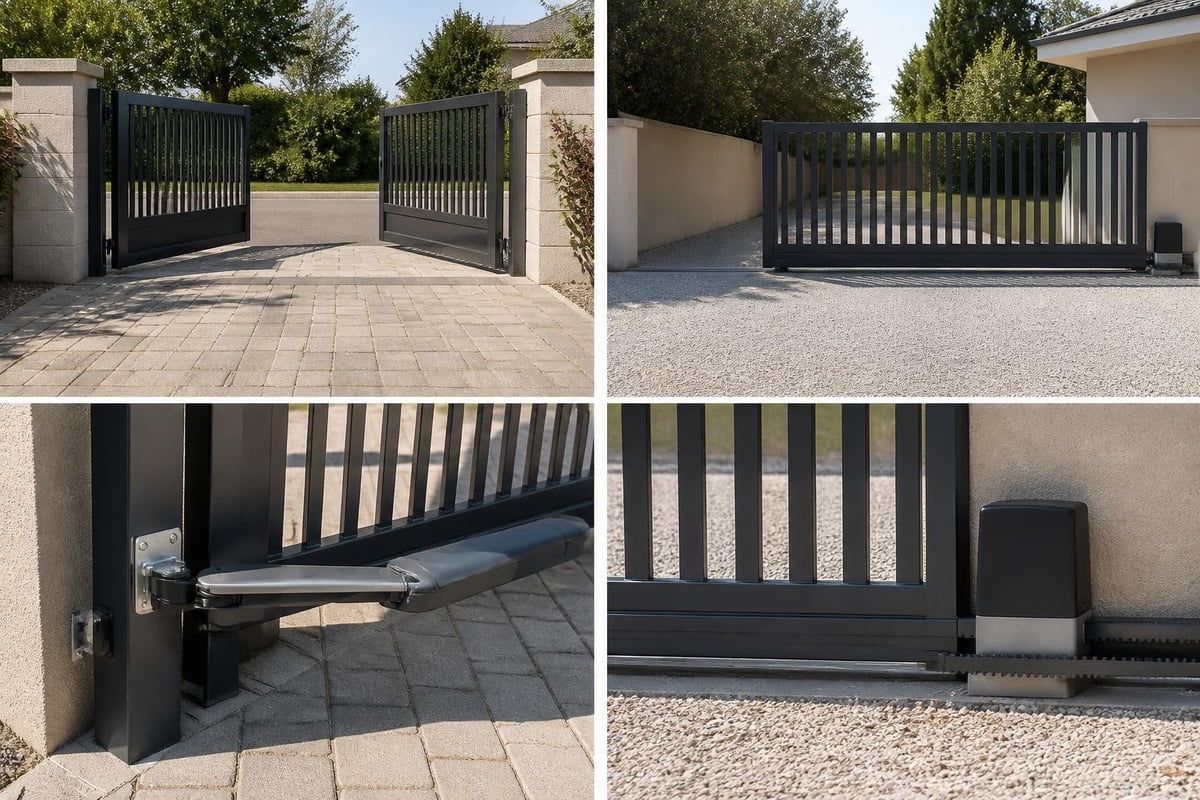
Swing gates operate like traditional doors, opening inward or outward. Single-swing gates work well for narrower driveways (up to 16 feet), while double-swing configurations accommodate wider entrances. These gates require adequate clearance space and perform best on level driveways with minimal slope.
Sliding gates move horizontally along a track, making them ideal for properties with limited clearance space or steep inclines. Cantilever sliding gates suspend above the ground using rollers mounted on a structural frame, eliminating ground tracks that can collect debris or freeze in cold weather.
| Gate Type | Best For | Space Required | Typical Cost Range |
|---|---|---|---|
| Single Swing | Driveways under 16 ft | Full arc clearance | $2,500 – $6,000 |
| Double Swing | Wide driveways 16-24 ft | Clearance both sides | $4,000 – $9,000 |
| Sliding | Sloped or limited space | 1.5x gate width parallel | $3,500 – $8,500 |
| Cantilever Sliding | Premium installations | Same as sliding | $5,000 – $12,000 |
Material selection significantly influences durability and maintenance. Wrought iron offers classic aesthetics with exceptional strength but requires periodic rust prevention. Aluminum provides lightweight construction resistant to corrosion, ideal for automated systems. Steel delivers maximum security with proper powder-coating or galvanization. Wood creates natural warmth but demands regular sealing and treatment.
Planning Your Driveway Gate Installation
Thorough planning prevents costly mistakes and ensures your gate functions properly for decades. Start by accurately measuring your driveway opening, accounting for both width and the space available for gate operation.
Site Assessment Considerations
Ground conditions determine foundation requirements. Clay soils expand and contract seasonally, requiring deeper post footings with gravel drainage. Rocky terrain may necessitate specialized drilling equipment. Properties with high water tables need additional waterproofing measures around electrical components.
Slope and grade affect gate operation significantly. Driveways with more than 3% grade typically require specialized hinges or track configurations. Swing gates on slopes need bottom clearance adjustments, while sliding gates may require graded tracks or cantilever systems.
Underground utilities must be located before excavation begins. Contact your local utility marking service at least 72 hours before breaking ground. In Los Angeles, this free service identifies water, gas, electric, and telecommunications lines. Hitting a utility line creates dangerous conditions and expensive repairs.
Code and Permit Requirements
Los Angeles requires building permits for most driveway gate installations, particularly automated systems. The permitting process ensures compliance with:
- Setback requirements from property lines and public right-of-way
- Height restrictions (typically 6-8 feet for front-yard gates)
- Electrical code compliance per National Electrical Code (NFPA 70)
- Safety standards outlined in ASTM F2200
Submit detailed plans showing gate location, dimensions, materials, and automation components. Plan for 2-4 weeks for permit approval in Los Angeles County. Some homeowners associations impose additional restrictions on gate styles, colors, or heights beyond municipal requirements.
Automation and Operator Selection
Modern driveway gate automation provides convenience while enhancing security. Choosing the appropriate operator system requires understanding your gate's specific requirements.
Operator Types and Applications
Swing gate operators come in three main configurations. Articulated arm operators mount to gate posts and attach via mechanical arms, accommodating gates up to 20 feet and 800 pounds. Underground/concealed operators hide beneath the gate swing area, providing clean aesthetics for high-end installations. Ram-style operators use hydraulic or electromechanical rams, perfect for heavy gates or high-usage commercial applications.
Sliding gate operators typically use rack-and-pinion or chain-drive systems. The motor turns a gear engaging a rack (toothed rail) mounted along the gate's bottom edge. Heavy-duty commercial operators handle gates exceeding 3,000 pounds, while residential models suit gates up to 1,500 pounds.
Power requirements vary by operator size and usage frequency. Residential installations typically operate on standard 120V circuits, though larger commercial systems may require 240V service. Solar-powered operators offer solutions for remote locations without electrical access, though they require battery backup for nighttime operation.
Access control options range from simple remote transmitters to sophisticated systems. Basic installations include wireless keypads and vehicle remotes. Advanced systems integrate smartphone control, intercom communication, video verification, and automatic closing timers. Many homeowners appreciate the integration capabilities of modern automatic gate repair systems that work seamlessly with home automation platforms.
Safety Features and Compliance
Safety represents the most critical aspect of any driveway gate installation. Automated gates pose entrapment and crushing hazards if not properly equipped with safety devices.
The UL 325 standard governs automatic gate operator safety requirements. Compliance isn't optional-it's required by building codes and crucial for liability protection. UL 325-listed operators include built-in safety features, though proper installation and additional safety devices remain essential.
Required Safety Devices
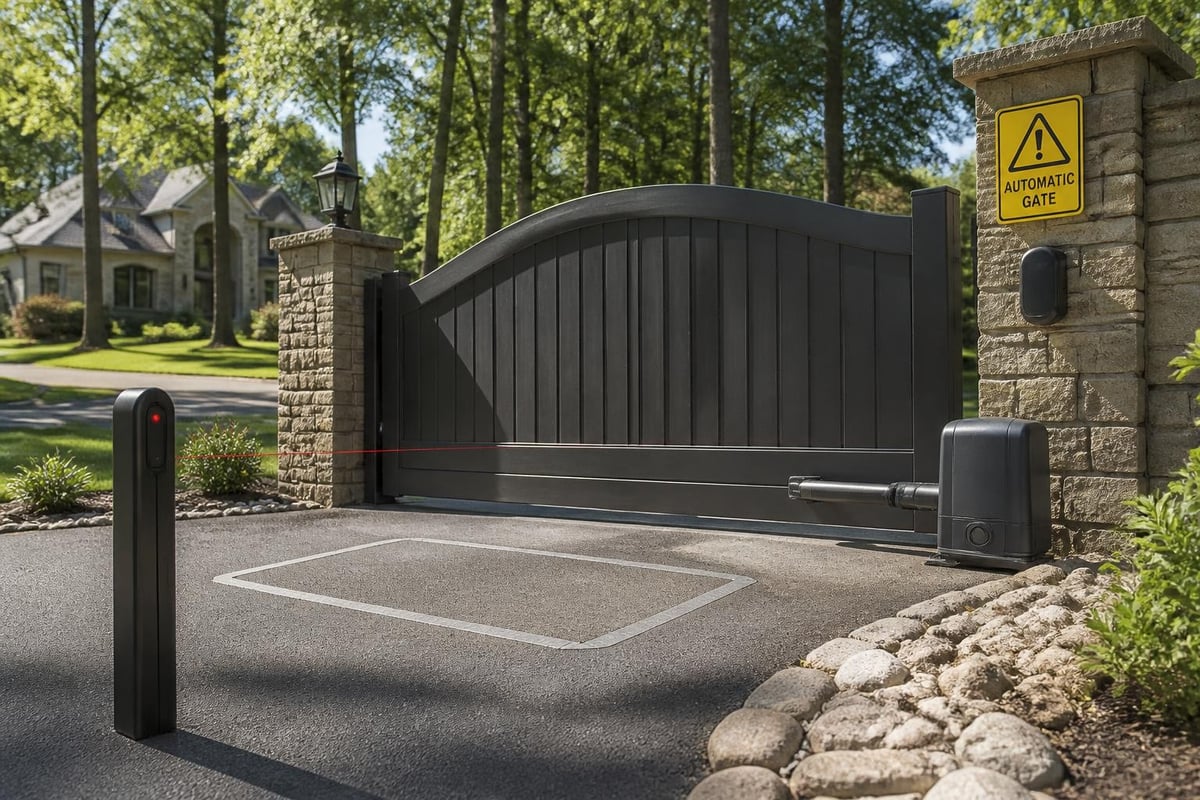
Photo eyes (photoelectric sensors) create an invisible beam across the gate path. Breaking the beam during closing triggers immediate reversal. Install sensors no higher than 12 inches above grade on both sides of the gate opening.
Edge sensors detect physical contact with obstructions. Pneumatic edge sensors use air-filled tubes along gate edges that trigger reversal when compressed. Electric edge sensors employ contact switches. Both provide crucial last-resort protection if other sensors fail.
Loop detectors bury sensing wires in the driveway to detect vehicle presence. Exit loops prevent gates from closing on departing vehicles, while shadow loops detect vehicles waiting outside closed gates. Professional installation ensures proper loop depth (2-4 inches) and appropriate sealant application.
- Install warning signs on both sides indicating automatic gate operation
- Maintain clear sight lines to monitor gate movement from control points
- Test all safety devices monthly and document inspections
- Provide manual release mechanisms accessible from both sides
- Ensure adequate lighting for nighttime visibility
Installation Process and Best Practices
Professional driveway gate installation follows systematic procedures ensuring structural integrity and long-term reliability. While experienced DIYers can tackle manual gate installations, automated systems benefit from professional expertise.
Foundation and Post Installation
Proper foundation work determines gate longevity and operation. Gate posts require concrete footings extending below the frost line (12 inches in Los Angeles, deeper in colder climates). Industry standards recommend:
Footing dimensions should be 3-4 times the post width and extend to stable soil. A standard 6-inch square post requires an 18-24 inch diameter footing. Heavy gates or loose soils demand larger footings or reinforcement with rebar.
Post material selection influences durability. Steel posts offer maximum strength and narrow profiles, ideal for modern designs. Masonry posts (brick or stone) provide substantial aesthetics but require steel reinforcement cores. Wood posts work for lighter gates but need pressure treatment and regular maintenance.
Set posts perfectly plumb using a quality level and temporary bracing. Even slight deviations create binding, uneven wear, and operational problems. Allow concrete to cure fully (7 days minimum) before hanging gates or installing operators.
Gate Hanging and Alignment
Proper hinge selection supports gate weight while enabling smooth operation. Strap hinges suit traditional wood gates, while adjustable barrel hinges work well for metal frames. Heavy gates require three or more hinges to distribute weight evenly.
- Mount hinges to posts first, ensuring perfect vertical alignment
- Position gate with temporary supports maintaining proper ground clearance (3-4 inches)
- Attach hinges to gate, checking swing clearance throughout full arc
- Adjust hinge positions to eliminate binding or sagging
- Test manual operation before adding automation
Sliding gates require precise track installation. The track must be perfectly level and straight, secured to a concrete foundation. Install track using hot-dip galvanized or stainless hardware to prevent rust deterioration.
Electrical Installation and Wiring
Electrical work represents a critical phase requiring careful attention to codes and safety. According to recent federal safety guidelines, proper electrical installation prevents fires, equipment damage, and safety hazards.
Run dedicated circuits from your electrical panel to gate operators. Residential operators typically require 15-20 amp circuits with GFCI protection. Underground wiring must use approved conduit (PVC Schedule 40 or rigid metal) buried at code-specified depths (typically 18-24 inches).
Control wiring connects operators to safety devices, keypads, and receivers. Use direct-burial rated wire for underground runs and weatherproof junction boxes for connections. Separate low-voltage control wiring from high-voltage power lines to prevent interference.
Solar installations require battery backup systems and charge controllers. Size solar panels based on gate usage frequency and local sun exposure. Los Angeles receives excellent solar potential, making solar operators viable for most locations. If you experience electrical issues with your existing system, professional electrical gate repair service can diagnose and resolve wiring problems safely.
Testing and Commissioning
Thorough testing before regular use prevents accidents and identifies installation defects. The International Code Council references require specific safety tests for automated gate systems.
| Test | Procedure | Pass Criteria |
|---|---|---|
| Photoelectric sensor | Break beam during closing | Gate reverses immediately |
| Edge sensor | Apply 15 lbs force to edge | Gate reverses within 2 seconds |
| Entrapment force | Measure closing force | Under 15 lbs per UL 325 |
| Emergency release | Activate manual release | Gate opens freely |
| Auto-reverse | Obstruct gate mid-cycle | Reverses without excessive force |
Program operator settings including opening/closing speeds, auto-close timers (if desired), and seasonal adjustments. Many operators allow speed reductions during cold weather when lubricants thicken.
Maintenance Planning and Long-Term Care
Establishing a maintenance schedule from day one extends gate life and prevents unexpected failures. Different components require varying attention frequencies.
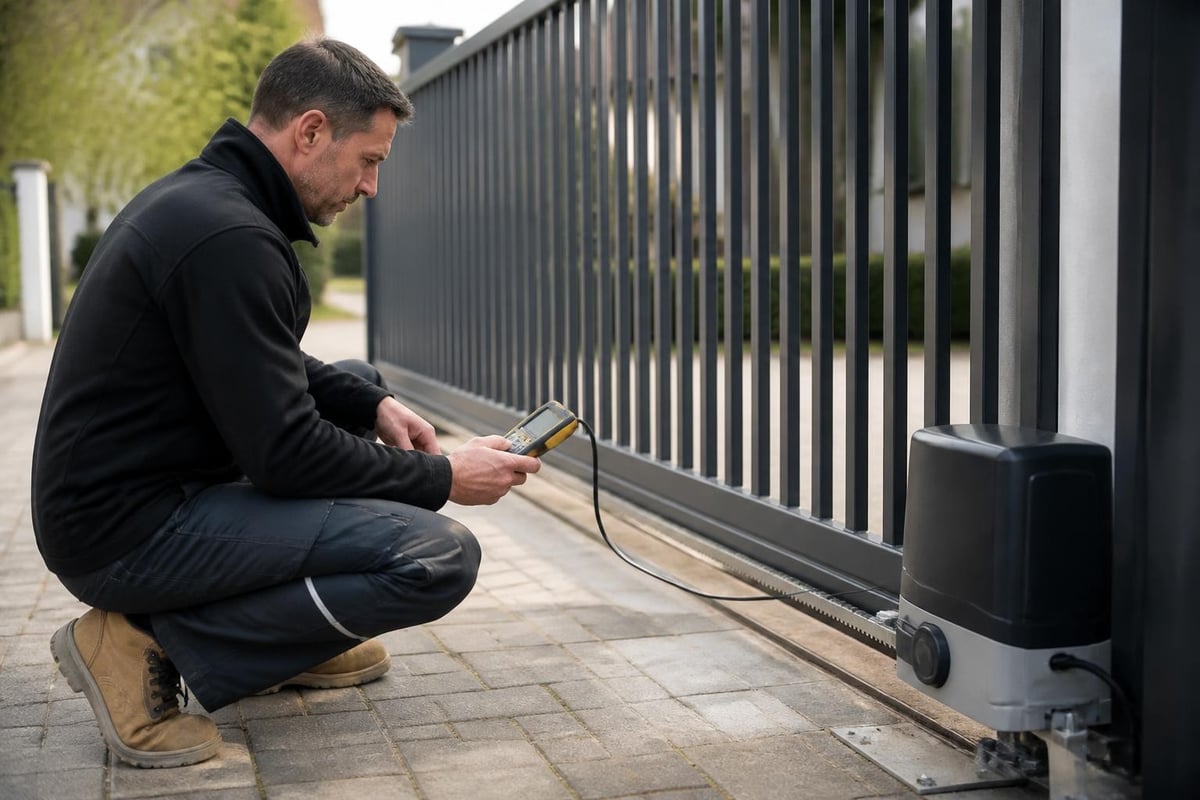
Monthly checks should include visual inspection of hinges, tracks, and rollers for wear or damage. Test all safety sensors by deliberately triggering them. Verify that gates open and close smoothly without unusual noises or binding. Clean photo eye lenses with a soft cloth to maintain proper beam transmission.
Quarterly maintenance involves lubricating moving parts using appropriate products. Apply silicone-based lubricants to hinges and pivot points. Grease chain drives and rack-and-pinion gears with lithium-based grease. Avoid petroleum-based products on rubber components as they cause deterioration.
Annual professional service provides comprehensive inspection and adjustment. Experienced technicians check electrical connections for corrosion, test safety device calibration, inspect structural integrity, and identify wear requiring attention. Many Los Angeles property owners benefit from establishing relationships with reliable service providers who understand their specific installations.
Weather protection extends equipment life significantly. Los Angeles's mild climate helps, but UV exposure, occasional rain, and dust still impact gates. Apply automotive wax to painted metal surfaces twice yearly. Treat wood gates with quality sealers annually. Consider weatherproof covers for exposed operators and control boxes.
Common maintenance tasks homeowners can handle include:
- Cleaning tracks and removing debris accumulation
- Touching up paint or finish on minor scratches
- Replacing remote batteries and keypads
- Adjusting seasonal timer settings
- Documenting operation cycles for operators with usage counters
Reserve complex repairs for professionals. Motor replacements, electrical troubleshooting, and structural welding require specialized tools and expertise. Attempting DIY repairs on automated systems can void warranties or create safety hazards.
Cost Factors and Budget Planning
Understanding the complete financial picture helps set realistic expectations for your driveway gate installation. Costs vary significantly based on materials, automation level, and site conditions.
Material costs range from $800-$3,000 for basic manual gates to $5,000-$15,000 for premium automated systems. Custom designs, ornamental details, and high-security features increase prices proportionally. Obtain quotes from multiple suppliers and compare warranty coverage.
Labor expenses typically equal or exceed material costs for professional installation. Expect $1,500-$4,000 for straightforward installations. Complex projects involving challenging terrain, extensive electrical runs, or custom masonry work can reach $8,000-$12,000 in labor alone.
Permit and inspection fees in Los Angeles run $200-$600 depending on project scope. Factor in potential costs for utility locating, engineering stamps (if required for large gates), and homeowners association approval processes.
Hidden costs often catch homeowners unprepared:
- Concrete work beyond basic footings (driveway approaches, decorative pillars)
- Landscaping restoration after installation disrupts existing plants or hardscaping
- Electrical panel upgrades if existing service lacks capacity for gate operators
- Extended warranty coverage or maintenance agreements
- Smart home integration for connectivity with existing automation systems
According to guidance from This Old House, typical complete installations range from $3,500 for basic single-swing manual gates to $20,000+ for high-end automated double gates with full access control integration.
Hiring Qualified Installation Professionals
Selecting the right installation contractor significantly impacts your project outcome. Los Angeles offers numerous gate installation companies, but credentials and experience vary widely.
Verify licensing and insurance first. California requires contractors license (C-61/D28 classifications for limited specialty) for gate work. Request proof of liability insurance ($1 million minimum) and workers' compensation coverage. These protections safeguard you from liability if accidents occur during installation.
Experience matters, particularly with automated systems. Ask how many similar installations the contractor has completed. Request references from recent projects and actually contact them. Visit completed installations when possible to assess workmanship quality.
Industry affiliations indicate commitment to professional standards. The North American Fence Contractors Association provides guidance on proper installation practices, and member contractors often maintain higher standards.
Evaluate contractor proposals carefully:
- Detailed scope of work listing all materials, labor, and timeline expectations
- Product specifications including manufacturer, model numbers, and warranty terms
- Permit responsibility clarifying who obtains permits and schedules inspections
- Payment schedule with deposits limited to 10-20% and substantial holdback until completion
- Warranty coverage for both materials and workmanship (minimum 1 year labor, product warranties vary)
Red flags include requests for large upfront payments, vague specifications, reluctance to provide references, or pressure tactics. Take time to compare multiple bids and understand what each includes.
Advanced Features and Future-Proofing
Modern technology enables sophisticated gate control far beyond basic remote operation. Planning for future capabilities during initial installation prevents costly retrofits.
Smartphone integration allows gate control from anywhere with cellular coverage. Cloud-based systems send notifications when gates operate, track usage history, and enable temporary access codes for visitors or service providers. Ensure your operator supports these features or can be upgraded later.
Video intercoms combine communication with visual verification. Visitors press the call button, you see them on your smartphone, and grant access remotely. Integration with home security systems creates comprehensive property protection.
Vehicle recognition systems use RFID tags or license plate cameras to grant automatic access to authorized vehicles without requiring driver action. Commercial properties and high-security residential estates particularly benefit from this convenience.
Access logging tracks every gate operation with date, time, and access method used. This data helps identify usage patterns, security breaches, or maintenance needs. Some systems generate reports for property management or security review.
Future-proof your installation by:
- Running extra conduit for potential camera or sensor additions
- Selecting operators with expandable control boards
- Installing network connectivity to gate location
- Choosing systems with manufacturer longevity and support history
- Documenting all wiring and equipment specifications for future reference
Technology evolves rapidly, but robust mechanical foundations and quality electrical infrastructure support upgrades without complete system replacement.
Successful driveway gate installation requires careful planning, quality materials, proper code compliance, and professional execution. Whether you're enhancing security, increasing property value, or simply adding convenience to your daily routine, understanding the process helps ensure your investment delivers lasting satisfaction. Gates On Site brings over 20 years of experience helping Los Angeles property owners maintain and optimize their gate systems. Our licensed technicians provide same-day service for all your gate needs, from initial installation consultation to ongoing maintenance and emergency repairs. Contact us today to discuss how we can help protect and enhance your property with reliable gate solutions.