
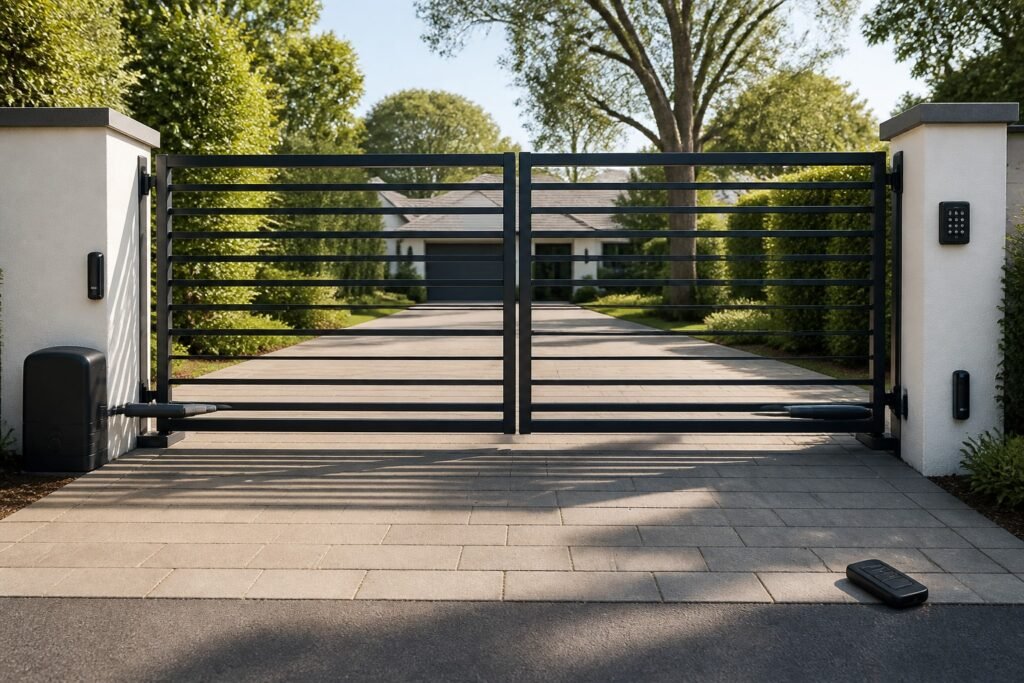
A driveway gate opener is a motorized operator that opens and closes your gate on command, using a motor, a control board, and safety sensors to move the gate from a remote, keypad, phone, or vehicle sensor. For Los Angeles homeowners, the right system depends on gate style, gate weight, power source, and how often the gate cycles each day. This guide explains the main opener types, the features that matter, the safety standard that governs them, and the warning signs that mean your opener needs professional attention.
How a Driveway Gate Opener Works
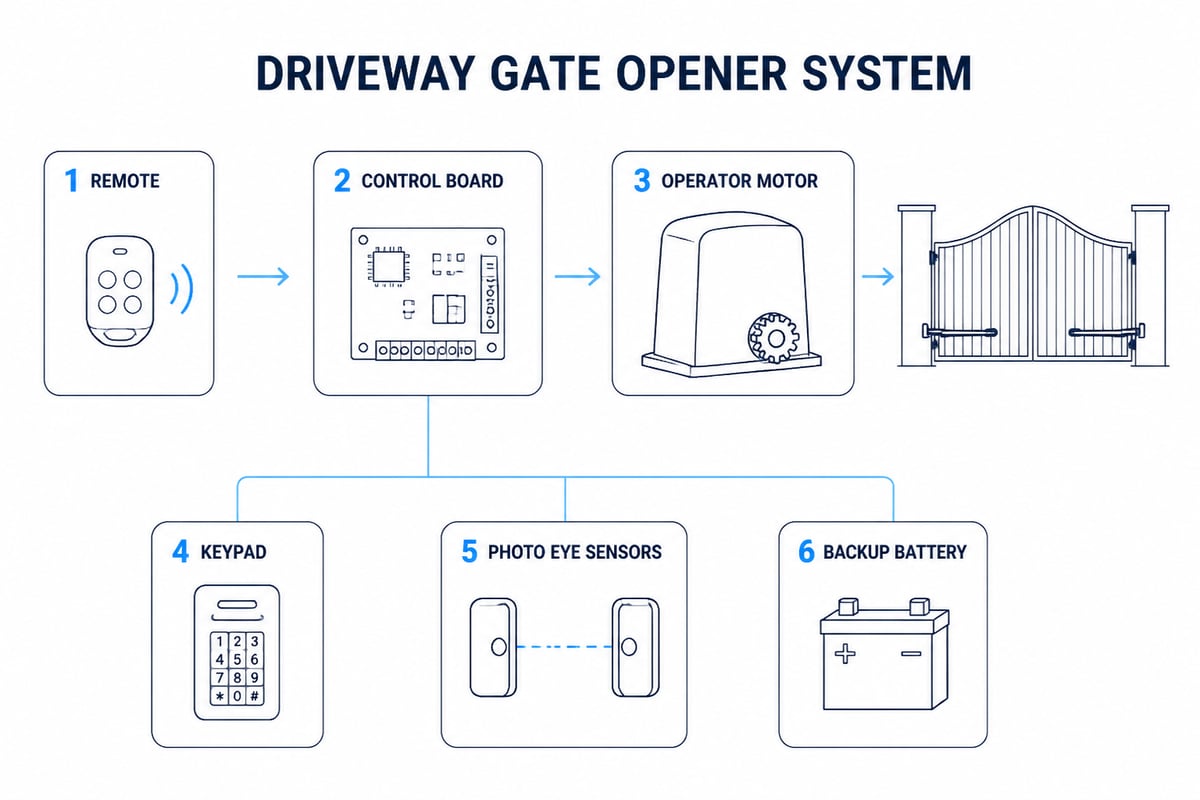
A driveway gate opener converts electric power into controlled movement through a motor, a drive mechanism, and a control board that listens for commands. When you press a remote button, the board receives the signal and energizes the motor. The motor drives an arm, chain, or wheel that moves the gate along its path. Limit settings tell the board where to stop, and safety sensors tell it when to reverse.
Most residential systems share the same core components:
- Operator motor: the unit that produces the force to move the gate, available in AC and DC versions.
- Control board: the brain that processes commands, manages travel limits, and adjusts force settings.
- Safety devices: photo eyes, edge sensors, and inherent obstruction detection that stop or reverse the gate.
- Access devices: remotes, keypads, intercoms, phone apps, and in-ground vehicle loops.
- Backup power: a battery pack that keeps the gate working through a short outage.
Understanding these parts helps when something fails. A gate that hums but does not move points to a different problem than one that ignores the remote entirely, and a technician who can name the failing component fixes it faster.
Types of Openers: Swing, Slide, and Underground
The three main categories are swing operators, slide operators, and underground operators, and the right one is determined mostly by how your gate moves and how much space surrounds it.
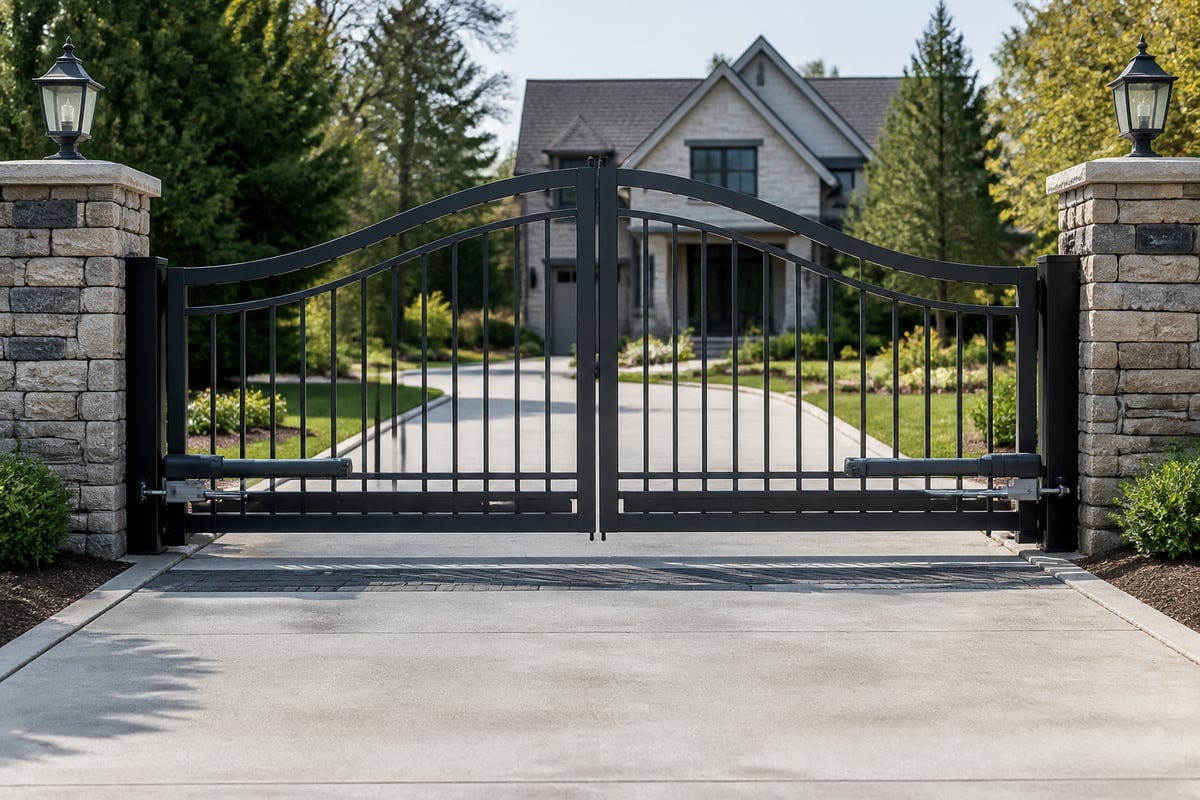
Swing gate openers push or pull a gate open on hinges. They suit level driveways with room for the gate to arc inward or outward. Articulated-arm and linear-actuator designs are the most common, and a double-leaf gate needs one operator per leaf. These are the most frequent choice for traditional residential entries.
Slide gate openers pull a gate sideways along a track or cantilever frame, usually with a chain or rack-and-pinion drive. They fit sloped driveways and tight frontages where a swinging leaf would hit a sidewalk or parked car. That makes them common on the steep hillside lots found throughout Los Angeles County.
Underground openers hide the motor in a sealed housing below grade, leaving the gate and posts uncluttered. They suit ornamental gates where appearance matters, but they require proper drainage and are more demanding to service.
| Opener type | Best suited to | Main consideration |
|---|---|---|
| Swing (articulated arm) | Level driveways with arc clearance | Needs room for the gate to swing |
| Swing (linear actuator) | Heavier or wider leaves | Post and hinge strength matter |
| Slide (chain or rack drive) | Slopes and tight frontages | Needs a clear run alongside the gate |
| Underground | Decorative gates, clean look | Drainage and service access |
If you are weighing a swing system against a slide system, Gates On Site publishes a useful overview of choosing the right gate opener in Los Angeles.
Choosing a Driveway Gate Opener: Features That Matter
The best choice is the one matched to your gate's weight, size, usage, and power situation, not the one with the longest feature list. Work through these factors in order.
Gate weight and length
Every operator has a rated gate weight and length. A solid wood or wrought iron gate weighs far more than a lightweight aluminum one, and an undersized motor will strain, overheat, and fail early. Always size the operator to the heaviest gate you could ever have, not the gate you have today.
Power source
AC-powered units draw from your home's electrical supply and deliver strong torque. DC units run on low voltage, often paired with a battery, and handle outages more gracefully. Solar-assisted DC systems suit properties where trenching power to the gate is costly, and Southern California's sunshine makes that a practical option.
Frequency of use
A gate cycling a handful of times a day has different demands than one serving a busy household with several drivers. Higher cycle counts call for a duty-rated operator built for continuous use, since a light-duty motor will wear out quickly under heavy traffic.
Access and control options
Think about how people will actually reach the gate. A standard remote is the baseline. Keypads suit guests and service workers, intercoms add visitor screening, and smartphone control lets you open the gate remotely. A remote control gate opener setup is the entry point for most households, and you can add layers later.
UL 325 Safety Requirements for Gate Operators
UL 325 is the safety standard that governs electric gate operators, and any opener installed on your property should be listed to it. The standard covers electric gate operators and related systems rated 600 V or less for ordinary locations, and its core purpose is to prevent entrapment injuries.
The standard has real regulatory weight. UL notes that the 2024 International Building, Residential, and Fire Codes require installed gate operators to be listed to UL 325. The standard also continues to evolve, and its September 15, 2025 revision clarified entrapment-protection definitions and added or revised requirements for pedestrian gates and operators.
In practical terms, a compliant opener should include:
- Primary entrapment protection, typically inherent obstruction sensing that detects resistance and reverses the gate.
- A secondary protection device, such as a photo eye or contact edge, positioned where a person could be trapped.
- Monitored external devices, so the operator behaves safely if a sensor fails. UL explains the role of external entrapment-protection devices in automated gate and door systems.
- Clear warning signs posted on both sides of the gate.
UL also advises consulting the local code authority before installation and using a qualified installer who follows the manufacturer’s instructions. That advice applies to replacement openers as well as new ones. Because a poorly set force limit can turn a convenience feature into a hazard, adjustments to sensitivity should be made by someone who understands the standard.
Gate Opener Problems Common in Los Angeles
Most opener failures in Los Angeles trace back to a short list of causes, and recognizing them early can prevent a stuck gate or a costly emergency call. Local conditions contribute: long dry stretches coat sensors and tracks with dust, winter rain finds its way into housings, and sun exposure degrades plastic and wiring over time.
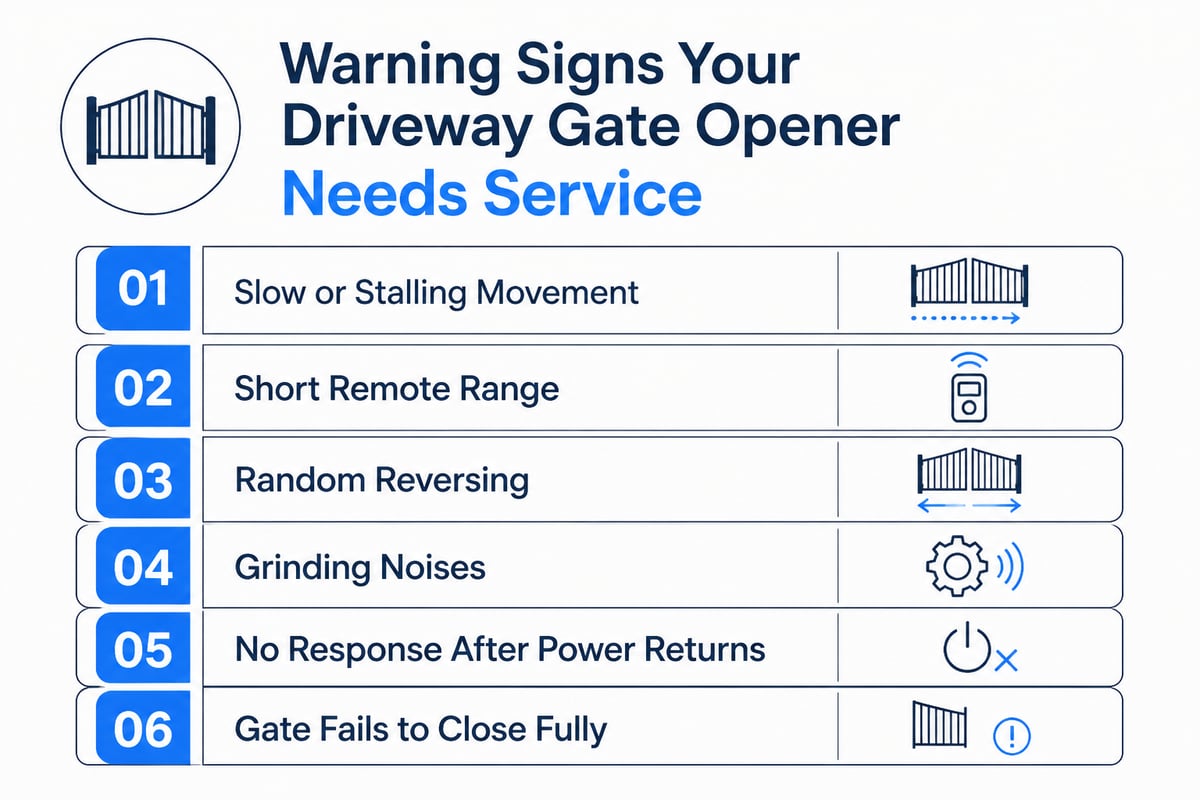
Watch for these warning signs:
- The gate moves slowly or stalls midway. This often indicates a weak motor, worn gears, a dying battery, or a track obstructed by debris.
- Remotes work at close range only. A failing receiver, a weak remote battery, or a damaged antenna is the usual cause.
- The gate reverses for no clear reason. Misaligned photo eyes or an overly sensitive force setting are common culprits.
- Grinding or clicking noises. Worn drive components, a stripped gear, or dry bearings need attention before they break outright.
- Power returns but the gate stays dead. A tripped breaker, a failed control board, or a surge-damaged component may be responsible.
- The gate will not close fully. Limit settings may have drifted, or the gate itself may have shifted on a settling post.
Unlike an unreliable garage door, a malfunctioning driveway gate can leave a vehicle trapped inside or outside the property, so it is worth addressing sooner rather than later. A guide to electric gate opener repair in Los Angeles describes the most frequent repairs in more detail.
Maintenance That Extends Opener Life
Regular upkeep is the cheapest way to extend the life of a driveway gate opener, and most of it takes minutes. A simple routine catches small problems before they become failures.
Every month:
- Wipe photo eye lenses and confirm nothing blocks their line of sight.
- Test the obstruction reversal by placing a sturdy object in the gate's path and confirming it reverses.
- Clear leaves, dirt, and debris from tracks and the area around the operator.
Every season:
- Lubricate hinges, rollers, and moving joints with the product the manufacturer recommends.
- Inspect wiring and conduit for sun damage, rodent chewing, or moisture.
- Check that the gate hangs level and has not sagged on its hinges or rail.
Every year:
- Test the backup battery and replace it if it no longer holds a charge.
- Confirm fasteners and mounting brackets are tight.
- Have a technician check force settings, limit switches, and safety devices.
A gate that is manually released during a power outage should be checked before it is put back into automatic mode. The release mechanism keeps the gate usable when the grid is down, but a gate left in manual mode will not respond to the remote.
When to Repair and When to Replace
Repair makes sense when the failing part is isolated and the rest of the operator is sound; replacement makes sense when repairs begin to pile up or the unit no longer meets safety requirements. A worn limit switch, a failed capacitor, a dead receiver, or a bad sensor are all inexpensive fixes that restore a healthy system.
Replacement deserves serious consideration when:
- The control board and motor are both failing on an older unit.
- Parts for your model are discontinued and hard to find.
- The operator lacks modern entrapment protection and cannot be brought up to current standards.
- The motor is chronically undersized for the gate it moves.
- Repair costs in a single year approach a meaningful share of a new opener's price.
If you are unsure which category your system falls into, a diagnostic visit gives you a clear answer before you commit. Gates On Site offers electric gate repair across Los Angeles County, with same-day service and mobile vehicles stocked with parts and tools, so many faults can be resolved on the first visit. The family-owned team has years of experience, and repairs are backed by a satisfaction guarantee.
Cost Factors for a Driveway Gate Opener
The total cost of a driveway gate opener depends on the operator type, the gate's weight, the power supply, and the accessories you add, so a firm number requires an on-site assessment. Rather than guess at prices, it helps to know which variables move the total the most. For a rough sense of what a new system involves, our electric gate opener cost guide breaks down typical prices by gate type.
- Operator class: heavier-duty and underground models cost more than light residential swing units.
- Number of leaves: a double swing gate needs two operators.
- Power work: trenching and running conduit to a remote gate adds labor, while a solar kit trades that cost for panels and batteries.
- Access upgrades: keypads, intercoms, vehicle loops, and smart controls each add to the total.
- Gate condition: a sagging or poorly balanced gate should be corrected first, since a new motor will not fix a mechanical problem.
For a closer look at pricing variables, Gates On Site covers driveway gate installation cost factors in one place. Repair estimates are often lower than replacement costs, which is another reason to diagnose before you decide.
Preparing Your Gate for Seasonal Weather
Southern California weather is mild compared with most of the country, but it still stresses gate hardware in predictable ways. Santa Ana wind events fill tracks and sensors with grit, brief heavy rains can flood underground housings and low enclosures, and strong summer heat causes batteries to age faster and plastic components to become brittle.
A few habits reduce weather-related failures:
- Keep slide tracks clear before and after wind events.
- Make sure drainage around underground or low-mounted operators is not blocked.
- Shade control boxes where possible, and confirm enclosure seals are intact.
- Replace backup batteries on a schedule instead of waiting for them to fail during an outage.
Brownouts and surges are another local concern. A surge can quietly damage a control board, so a whole-home surge protector or a dedicated protector at the operator is a worthwhile safeguard.
Frequently Asked Questions
Will my driveway gate still work during a power outage?
It can, if the operator has a battery backup or a manual release. Battery systems keep the gate cycling for a limited number of operations, while a manual release lets you move the gate by hand. Test both before an outage happens, and replace the battery on a regular schedule.
Can I install a driveway gate opener myself?
Some homeowners handle simple jobs, but wiring, force adjustment, and safety device placement affect both function and compliance. UL recommends a qualified installer who follows the manufacturer's instructions, and improper setup can create an entrapment risk. Professional installation or at least a professional safety check is the safer route.
How long does a driveway gate opener last?
Lifespan varies with the model, duty rating, and upkeep. A well-matched operator that receives regular maintenance commonly runs for many years, while an undersized or neglected unit fails much sooner. Keeping the gate balanced and the sensors clean extends service life noticeably.
Why does my gate open from the remote sometimes but not always?
Intermittent response usually points to weak remote batteries, interference, or a failing receiver. Replace the remote battery first, then check whether the problem occurs at certain distances or times of day. If it persists, the receiver or control board likely needs service. If the remote still fails after a battery swap, our LiftMaster gate opener repair guide covers resetting codes and checking the receiver.
What should I do if my gate is stuck open or closed?
Use the manual release to move the gate if you need immediate access, then avoid forcing it. Forcing a gate against a stalled motor can damage gears and hinges. Turn off power at the operator, note any error lights or sounds, and call a technician for a diagnosis.
Start by testing your gate's obstruction reversal and photo eyes today, and write down any slow movement, noise, or remote problems you notice so a technician can pinpoint the cause quickly. If your gate is already stuck or misbehaving, Gates On Site offers emergency service at no extra charge across Los Angeles County, and you can reach the licensed team to schedule a visit.