
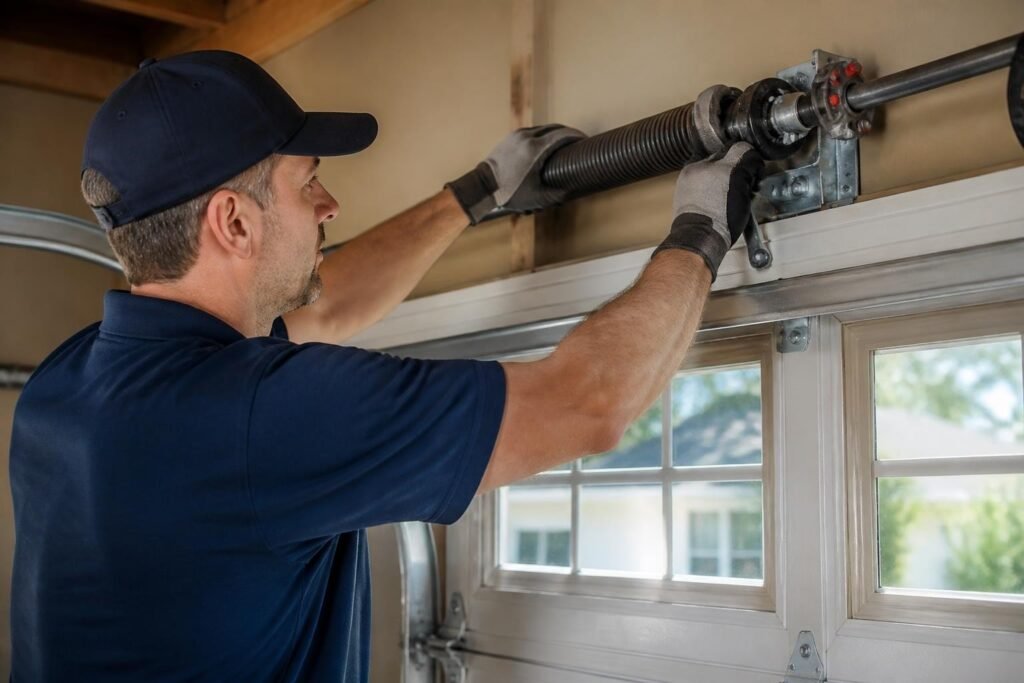
Every homeowner encounters garage door problems at some point, and knowing how to fix garage systems efficiently can save time, money, and frustration. Whether you're dealing with a door that won't close completely, strange grinding noises during operation, or a system that's stopped responding to your remote, understanding the fundamentals of garage repair empowers you to make informed decisions. In Los Angeles, where garages serve as primary entry points for most homes, a malfunctioning door isn't just an inconvenience-it's a security concern and daily disruption that demands immediate attention.
Common Garage Door Problems and Diagnostic Steps
When attempting to fix garage door issues, proper diagnosis makes all the difference between a quick solution and hours of wasted effort. The majority of garage door failures stem from a handful of predictable mechanical failures that follow recognizable patterns.
Identifying Door Balance Issues
A properly balanced garage door should remain in place when manually lifted halfway. If your door slams down or shoots upward when released, the spring tension requires adjustment. Torsion springs and extension springs bear the entire weight of the door, and when one fails, the opener motor struggles to compensate, leading to premature opener failure.
Test your door's balance by disconnecting the opener using the red emergency release handle. Lift the door manually to chest height and let go. A balanced door stays put; an unbalanced door moves up or down.
- Door falls rapidly: Springs have lost tension or broken
- Door rises on its own: Springs are over-tensioned
- Door feels unusually heavy: Both springs may have failed
- Uneven movement: One spring (in a two-spring system) has failed
The step-by-step guide to replacing garage door springs from This Old House provides detailed safety protocols, but homeowners should recognize that spring replacement carries significant injury risk due to the extreme tension involved.
Sensor and Safety System Failures
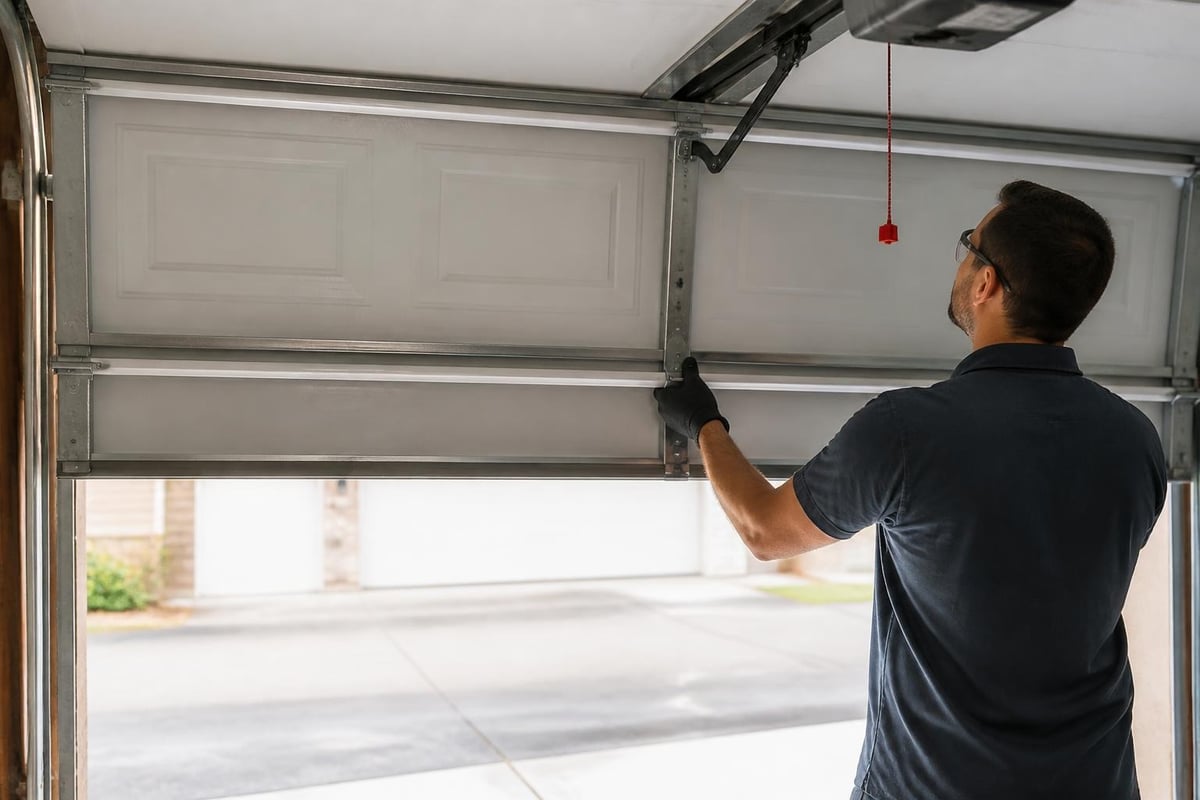
Modern garage doors incorporate multiple safety features mandated by UL 325 standards. The photoelectric sensors positioned near the floor on each side of the door opening prevent closure when the invisible beam is interrupted. When you need to fix garage sensor problems, start with the simplest solutions first.
| Symptom | Likely Cause | Quick Fix |
|---|---|---|
| Door reverses immediately | Sensor misalignment | Adjust sensor brackets until LEDs show solid |
| Door won't close, opener lights blink | Obstructed sensor beam | Clean lenses, remove obstructions |
| Sensors work intermittently | Loose wiring connections | Tighten wire connections at sensors and opener |
| One sensor LED is off | Power supply issue | Check wire continuity, replace faulty sensor |
Understanding key safety requirements in UL 325 helps contextualize why these sensors shouldn't be bypassed or disabled. The standard exists because automatic doors exert tremendous downward force-enough to cause serious injury or death if safety features fail.
Mechanical Components That Require Regular Attention
Beyond emergency repairs, preventive maintenance identifies problems before they escalate. When you systematically fix garage door wear points before complete failure, you extend the system's lifespan and avoid costly emergency service calls.
Track Alignment and Roller Condition
Garage door tracks must remain parallel and properly spaced to guide the door smoothly. Even slight misalignment causes the door to bind, putting excessive strain on the opener motor and causing premature roller wear.
Inspect your vertical tracks with a level. Both should be perfectly plumb (vertical). Horizontal tracks should slope very slightly downward toward the back of the garage-about one-quarter inch over eight feet. This gentle slope helps the door stay closed.
Warning signs of track problems:
- Gaps between rollers and track
- Rubbing or scraping sounds during operation
- Door requires excessive force to open manually
- Visible bends or dents in track sections
Rollers themselves wear out over time, especially plastic varieties. Steel rollers with sealed bearings last significantly longer but cost more initially. A complete roller replacement takes about two hours and dramatically improves door operation smoothness.
Cable and Spring System Inspection
The cable system works in tandem with springs to lift the door's weight. Cables run through pulleys and attach to the bottom door corners. When springs break, cables often fail simultaneously or shortly afterward due to the sudden shock load.
Inspect cables for:
- Fraying or broken wire strands
- Rust or corrosation along the length
- Proper seating in cable drums (torsion spring systems)
- Tension consistency on both sides of the door
Never attempt to adjust or replace cables on a door with tensioned springs. The combination creates a dangerous situation where sudden energy release can cause severe injuries. Professional technicians use specialized tools to safely control spring tension during cable replacement.
Opener System Troubleshooting and Repairs
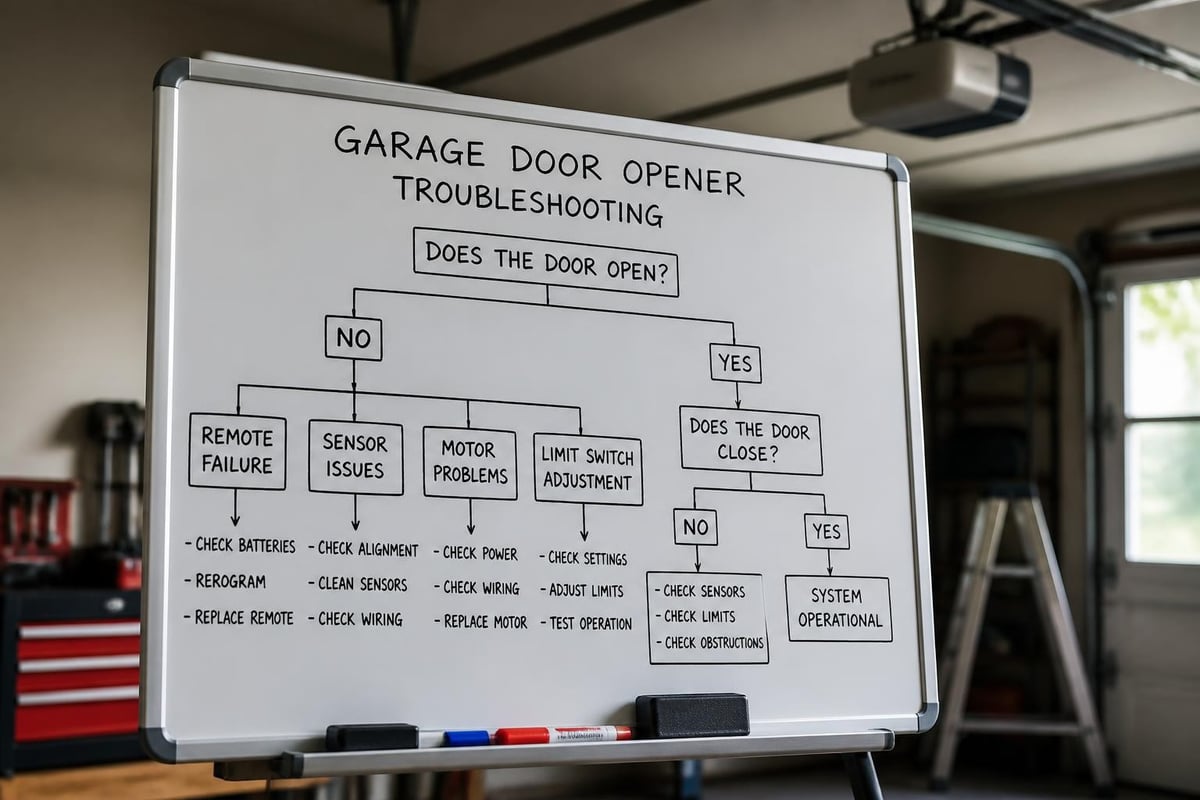
Modern garage door openers incorporate sophisticated electronics, multiple safety sensors, and wireless communication systems. When you need to fix garage opener malfunctions, understanding the system architecture helps identify whether you're dealing with a mechanical issue, electrical problem, or programming glitch.
Remote and Wall Console Issues
Before assuming opener failure, verify that the problem isn't with the control devices. Remotes fail when batteries die or internal components corrode. Wall consoles experience wire connection problems or button membrane failures.
Test your opener system methodically:
- Try both remote and wall console-if only one works, that narrows the problem
- Replace remote batteries with fresh ones (even if they seem to work)
- Check wall console wire connections at the opener head
- Verify the antenna wire hanging from the opener isn't damaged
Many homeowners find that smart garage door openers offer improved reliability and the convenience of remote monitoring. Consumer Reports testing identifies models with strong connectivity and reliable operation through various conditions.
For Los Angeles residents dealing with stuck or jammed systems, professional overhead garage door repair services can diagnose complex opener failures that resist DIY troubleshooting.
Motor and Drive System Problems
The opener motor drives the door through one of three mechanisms: chain drive, belt drive, or screw drive. Each system presents distinct failure patterns and fix requirements.
Chain-drive systems produce the most noise but deliver exceptional reliability and strength. When these fail, the chain typically requires tension adjustment or the drive sprocket shows wear. The characteristic clanking sound indicates a loose chain that needs tightening about one-half inch of vertical slack.
Belt-drive systems operate more quietly but the reinforced rubber belt eventually stretches and cracks. A slipping belt prevents the door from opening fully or causes jerky movement. Belt replacement requires removing the trolley assembly and installing the new belt with proper tension.
Screw-drive systems use a threaded steel rod that rotates to move the trolley. These require periodic lubrication and eventually need complete rod replacement as the threads wear. The advantage: fewer moving parts mean less frequent maintenance overall.
Safety Protocols and When to Call Professionals
Attempting to fix garage systems without proper knowledge, tools, and safety awareness puts homeowners at serious risk. Certain repairs should always go to trained technicians who maintain proper insurance and follow OSHA safety guidelines.
High-Risk Repairs That Require Professional Service
Spring replacement tops the list of dangerous garage door repairs. A typical two-car garage door weighs between 130 and 350 pounds, and the springs bear that entire weight under extreme tension. When a torsion spring breaks, it releases energy equivalent to a gunshot, and attempting DIY replacement has resulted in numerous severe injuries including broken bones, lacerations requiring dozens of stitches, and worse.
Cable replacement on doors with tensioned springs carries similar risks. The cable works under tremendous load, and if it slips during installation, the metal cable can whip with enough force to sever fingers or cause deep tissue injuries.
| Repair Type | DIY Appropriate? | Risk Level | Professional Cost Range |
|---|---|---|---|
| Sensor alignment | Yes | Low | $75-$150 |
| Remote battery | Yes | None | $5-$15 |
| Roller replacement (with released spring) | Maybe | Medium | $150-$300 |
| Spring replacement | No | Extreme | $200-$400 |
| Cable replacement | No | Extreme | $150-$350 |
| Track replacement | No | High | $250-$500 |
Maintenance Tasks Homeowners Can Safely Perform
Routine maintenance prevents many emergency repair situations. Bob Vila's comprehensive maintenance checklist outlines monthly and seasonal tasks that keep systems running smoothly without requiring specialized tools or technical expertise.
Monthly maintenance routine:
- Visual inspection of all moving parts
- Listen for unusual sounds during operation
- Clean and align safety sensors
- Test auto-reverse function with a 2×4 board
- Lubricate rollers, hinges, and tracks with silicone spray
Seasonal maintenance (every 3-6 months):
- Tighten all roller brackets and hinge bolts
- Inspect weather stripping for damage
- Clean tracks with degreaser
- Test door balance with opener disconnected
- Verify that manual release mechanism functions properly
These simple tasks take less than an hour quarterly but dramatically reduce the likelihood of sudden failures and expensive emergency repairs.
Environmental Factors Affecting Los Angeles Garage Doors
Los Angeles' Mediterranean climate and coastal proximity create specific challenges for garage door systems. Salt air accelerates metal corrosion, while temperature fluctuations-though less extreme than other regions-still affect metal expansion and lubrication viscosity.
Coastal Corrosion and Metal Protection
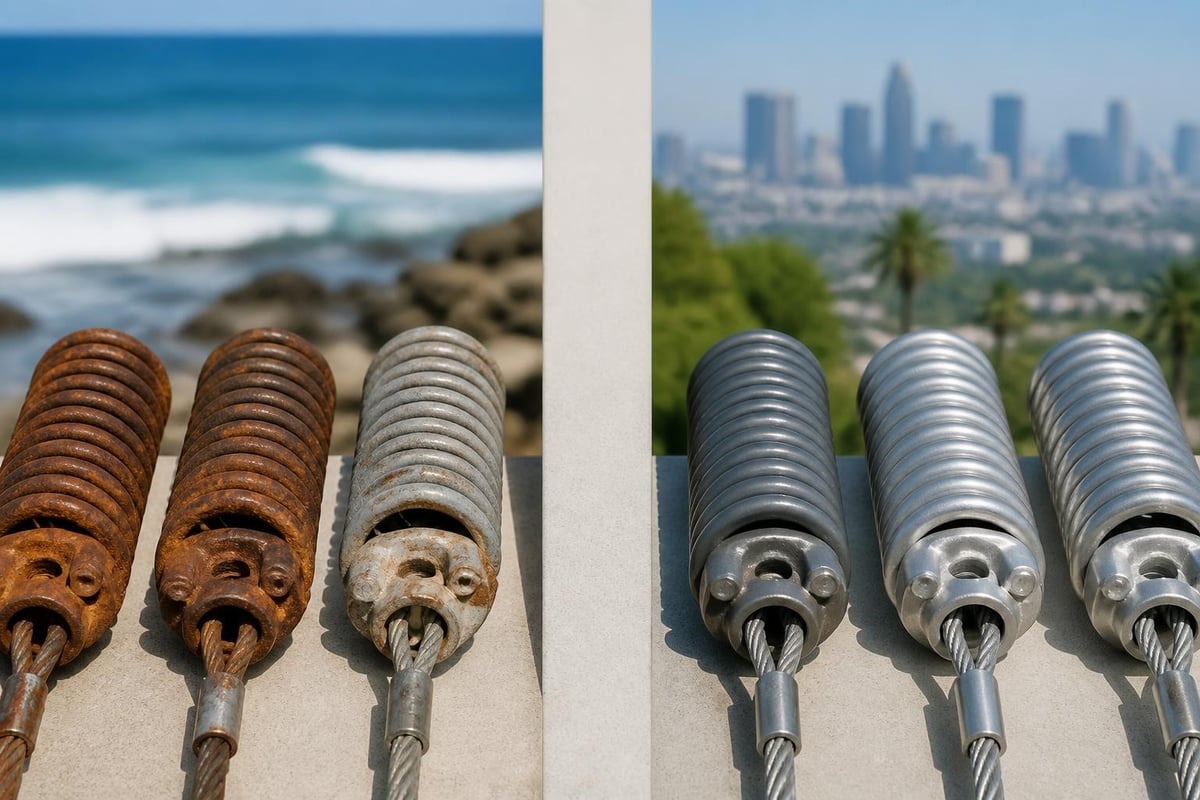
Properties within ten miles of the Pacific Ocean experience accelerated deterioration of metal components. Springs, cables, hinges, and tracks all show rust and corrosion much faster than inland installations. When you fix garage hardware in coastal zones, factor in this aggressive environment when selecting replacement parts.
Galvanized steel offers better corrosion resistance than plain steel but still succumbs to salt air eventually. Stainless steel components cost significantly more but last two to three times longer in marine environments. For critical components like springs and cables, the investment pays dividends through reduced replacement frequency.
Apply corrosion inhibitor annually to all metal parts. Products specifically formulated for marine environments create a protective barrier against salt-laden moisture. This simple step extends component life substantially.
Temperature Effects on Opener Performance
While Los Angeles rarely experiences freezing temperatures, summer heat affects garage door opener electronics and lubrication. Garage spaces often reach 110°F or higher during summer afternoons, pushing electronic components toward their thermal limits.
Opener motors incorporate thermal overload protection that shuts down operation if internal temperatures exceed safe thresholds. If your door stops working on hot afternoons but functions normally in the evening, thermal shutdown is the likely culprit. Improving garage ventilation or adding a small fan near the opener head resolves most heat-related failures.
Lubrication viscosity changes with temperature. Heavy grease becomes semi-solid in cool weather and liquifies in extreme heat. Use lithium-based grease rated for temperature extremes (-40°F to 300°F) to maintain consistent performance year-round.
Understanding When Replacement Beats Repair
Sometimes the most cost-effective way to fix garage problems involves complete system replacement rather than repairing increasingly unreliable components. Several factors help determine whether repair or replacement makes better financial sense.
Calculating Repair-Versus-Replace Breakpoints
Garage door systems typically last 15-30 years depending on usage frequency, maintenance quality, and environmental exposure. A door opened four times daily accumulates nearly 1,500 cycles annually. Most residential springs are rated for 10,000-15,000 cycles, translating to roughly 7-10 years of service life.
When repair costs exceed 50% of replacement cost, or when multiple major components need attention simultaneously, replacement usually offers better value. A complete residential garage door installation-including door, tracks, springs, cables, and opener-ranges from $1,200 to $3,500 depending on door size, insulation value, and material quality.
Consider replacement when:
- The door is 20+ years old and shows extensive wear
- Multiple major components failed within six months
- The door bottom section shows rot, rust-through, or major dents
- Modern safety features are absent (pre-1993 doors)
- Energy efficiency improvements would provide substantial utility savings
Stick with repair when:
- The door is less than 10 years old
- Only one or two components need attention
- The door panels remain structurally sound
- The opener is relatively new (less than 5 years)
- Previous maintenance has been consistent
This Old House provides excellent guidance on fixing doors that won’t close, helping homeowners determine whether adjustment solves the problem or whether more extensive intervention becomes necessary.
Professional Service Advantages for Complex Repairs
While many homeowners successfully fix garage door minor issues, professional service offers significant advantages for complex problems, especially in a metropolitan area like Los Angeles where same-day service availability can prevent security vulnerabilities and schedule disruptions.
Licensed technicians arrive with fully stocked service vehicles carrying common replacement parts, specialized tools for safe spring tensioning, and diagnostic equipment that quickly identifies intermittent electronic failures. The time savings alone often justifies professional service-what might take a homeowner an entire weekend takes an experienced technician 60-90 minutes.
Professional service benefits:
- Warranty coverage on parts and labor
- Proper tools for high-tension component work
- Code compliance for safety feature installation
- Diagnosis of complex intermittent problems
- Same-day service availability for emergencies
Many Los Angeles residents find that scheduling annual professional maintenance catches developing problems before they cause complete failures. This proactive approach costs $100-$150 annually but typically prevents at least one emergency service call, making it cost-neutral while providing peace of mind.
Upgrade Opportunities During Repair Projects
When circumstances require you to fix garage systems, consider strategic upgrades that enhance convenience, security, and energy efficiency. Modern technology offers substantial improvements over systems installed even five years ago.
Smart Home Integration Options
Battery backup systems keep your garage door operational during power outages-a critical feature during emergencies or when you need to leave during an outage. These systems add $150-$300 to opener cost but provide invaluable peace of mind.
Smart controllers enable smartphone operation, real-time status monitoring, and activity alerts. Receive notifications when your door opens or closes, grant temporary access to service providers, and verify closure from anywhere. Some systems integrate with broader smart home ecosystems including Alexa, Google Home, and Apple HomeKit.
Security and Efficiency Enhancements
Insulated garage doors reduce energy transfer between conditioned indoor spaces and the garage environment. In Los Angeles' climate, this primarily benefits attached garages where the shared wall allows heat transfer. R-value ratings of 12-18 provide noticeable comfort improvements and modest energy savings.
Modern LED lighting systems replace traditional incandescent bulbs, providing brighter illumination with minimal power consumption. Motion-activated LED fixtures ensure adequate lighting when entering the garage while eliminating phantom power draw when unoccupied.
Rolling code technology in remotes prevents code grabbing and replay attacks that allow unauthorized access. If your opener uses fixed-code remotes (typically pre-2000 installations), upgrading to rolling code substantially improves security.
Addressing garage door problems promptly prevents minor issues from escalating into expensive emergencies while maintaining the security and convenience your home depends on daily. Whether you're tackling sensor alignment, scheduling spring replacement, or evaluating complete system upgrades, understanding the fundamentals helps you make informed decisions. For Los Angeles homeowners dealing with stubborn problems or requiring professional expertise for high-risk repairs, Gates On Site delivers same-day service with over 20 years of experience in residential and commercial garage door repair, backed by fully stocked service vehicles and a 100% satisfaction guarantee.