
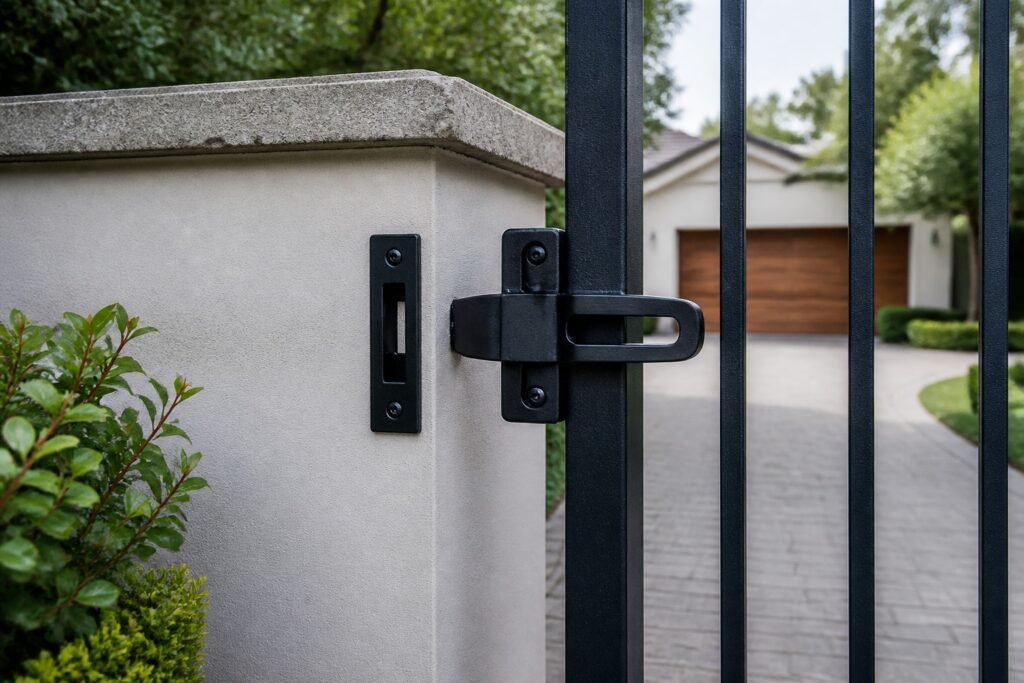
Fixing a gate latch usually comes down to one of three jobs: tightening or replacing loose hardware, realigning the latch with its strike plate, or correcting a sagging gate that has pulled the latch out of position. Most of these repairs take under an hour with basic hand tools. If your gate is automatic and the latch or lock is tied to a motor or access control system, the repair works differently, and the sections below explain where that line falls.
Why a Gate Latch Stops Working
A gate latch stops working because something has moved: the gate, the post, or the latch itself. Latch mechanisms are simple, so the cause is almost always mechanical rather than a defective part.
The most frequent causes are:
- Loose screws or bolts. Years of opening and closing work fasteners free from wood and metal alike.
- A sagging gate. When the gate drops even half an inch, the latch bolt no longer meets the strike plate.
- Post movement. Leaning or shifting posts change the gap between the latch and its catch.
- Corrosion and debris. Rust, dirt, and dried grease keep springs and bolts from moving freely.
- Warped wood or bent metal. Heat swings and moisture change the shape of the gate frame over time.
- Worn parts. Springs weaken and bolt edges round off after thousands of cycles.
Identify which of these applies before you buy a replacement. A new latch installed on a gate that still sags will fail the same way the old one did.
How to Diagnose What Is Wrong
Start by closing the gate slowly and watching where the latch bolt meets the strike plate. The point where they miss each other tells you what needs to move.
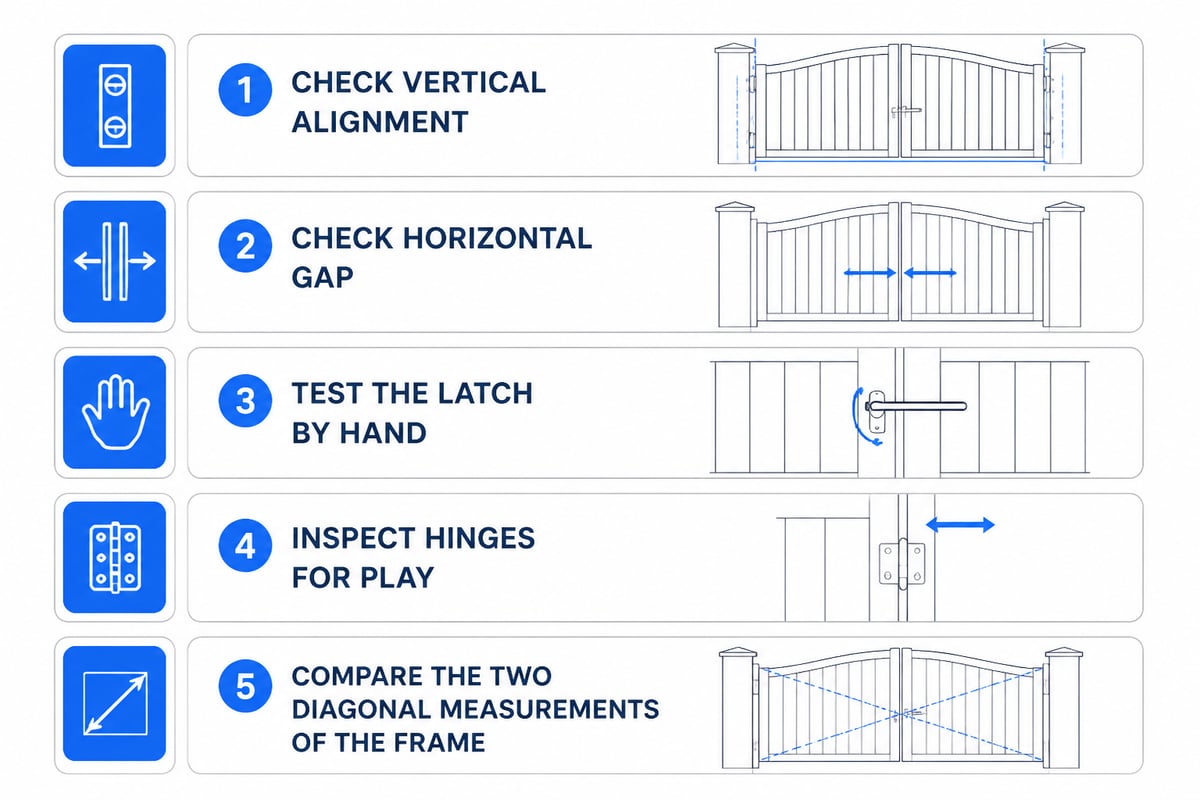
Work through this checklist:
- Check vertical alignment. If the bolt hits above or below the catch, the gate has likely dropped or the post has shifted.
- Check horizontal gap. A gap wider than the latch can bridge points to a loose hinge or leaning post.
- Test the mechanism by hand. Lift the latch and release it. If it sticks or fails to spring back, the problem is inside the latch.
- Inspect the hinges. Grab the gate at the latch end and lift gently. Any play at the hinges means they have loosened.
- Measure the frame. Compare the two diagonal measurements of the gate. The Spruce notes that unequal diagonals indicate the frame is out of square, which is a common reason a latch will not line up.
What Could Be the Reasons My Gate Isn't Closing Fully?
A gate that won't close fully is almost always blocked by sag, a shifted post, or an obstruction at the latch or hinge. Each has a different fix, so confirm the cause first.
Sag is the most common culprit. As hinge screws loosen, the latch end of the gate drops and drags or misses the catch. Post movement follows closely, especially in Los Angeles County where soil expansion and contraction around footings can slowly tilt a post. Obstructions are simpler: a raised paver, overgrown shrub, or buildup of debris under the gate can stop it a fraction of an inch short.
Also check the hinge side. If the top hinge has pulled away from the post, the entire gate leans toward the latch side and binds. A gate that closes fine in the morning and fails in the afternoon often points to a wood gate swelling with heat or moisture.
Tools and Materials for the Repair
Most latch repairs need only common hand tools and a few inexpensive parts. Gather these before you start so the repair does not stall halfway through.
| Item | Purpose |
|---|---|
| Cordless drill and bits | Pilot holes and driving screws |
| Screwdrivers | Removing and tightening hardware |
| Tape measure and level | Checking alignment and diagonals |
| Pencil or marker | Marking new hole positions |
| Wood filler or wood glue | Repairing stripped screw holes |
| Replacement screws | Longer or thicker screws for worn holes |
| Penetrating oil or dry lubricant | Freeing stuck springs and bolts |
| Wire brush | Removing rust and debris |
| Replacement latch or strike plate | Only if the old parts are worn out |
Choose stainless steel or galvanized hardware when you replace parts. Coastal moisture and summer heat shorten the life of untreated steel.
Fixing a Gate Latch Step by Step
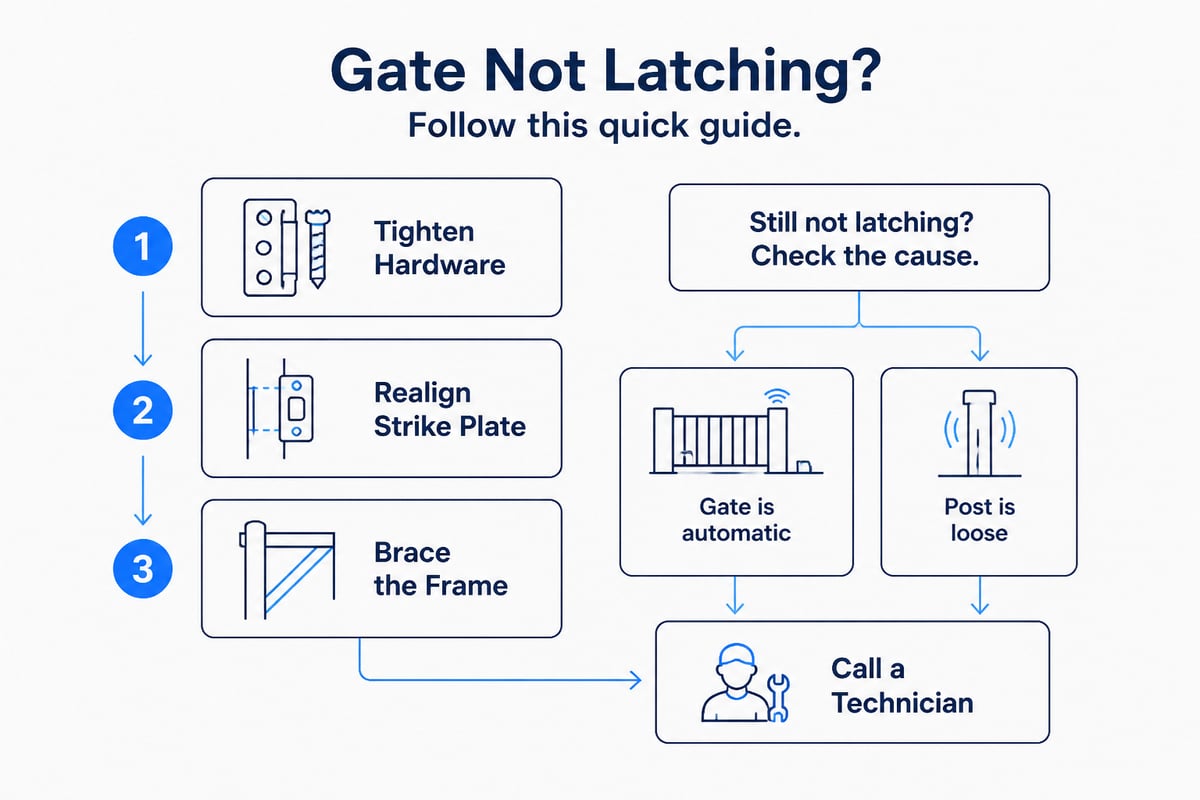
Fixing a gate latch follows a predictable order: tighten, clean, realign, then replace only what remains faulty. Working in this sequence prevents you from replacing parts that only needed adjustment.
Step 1: Tighten and Replace Loose Fasteners
Tighten every screw on the latch, strike plate, and hinges first. If a screw spins without gripping, the hole is stripped. The Spruce recommends replacing it with a screw of the same diameter that is 1/2 inch longer, which bites into fresh wood past the damaged area. For badly stripped holes, fill with wood glue and toothpicks or wood filler, let it cure, and redrill.
Step 2: Clean and Lubricate the Mechanism
Remove rust with a wire brush, wipe away dirt, and apply a dry lubricant or light penetrating oil to the bolt and spring. Avoid heavy grease outdoors, since it attracts dust and gums up over time. Work the latch several times until it moves freely and snaps back on its own.
Step 3: Realign the Strike Plate
If the bolt misses the catch by a small margin, move the strike plate instead of the latch. Close the gate, mark where the bolt rests, and reposition the plate to match. For misalignments under a quarter inch, enlarging the plate opening with a file may be enough. For larger gaps, fill the old screw holes and mount the plate in its new position.
Step 4: Replace the Latch if Needed
Replace the latch when the bolt is worn smooth, the spring is dead, or the housing is cracked. Match the new latch to the gate's material and thickness, and use the old mounting holes where possible to keep the repair clean.
How to Attach a Latch to a Gate
To attach a latch to a gate, mount the latch body on the gate frame at about 36 to 48 inches off the ground, then position the strike plate on the post so the bolt lines up when the gate is closed.
Follow this order:
- Close the gate and hold it in its final, square position.
- Mark the latch location on the gate, keeping it level.
- Drill pilot holes slightly smaller than the screws to avoid splitting wood.
- Fasten the latch body to the gate.
- Mark the strike plate position on the post with the latch engaged.
- Drill pilot holes, mount the strike plate, and test the action several times.
On metal gates, use self-tapping screws or through-bolts, and check that the post is plumb before you commit to hole positions. Where a gate protects a pool, local codes may require specific latch types. Florida law, for example, requires a self-latching device with a release positioned so a young child cannot reach it, according to the Florida Statutes. California has its own pool barrier requirements, so confirm local rules before choosing hardware.
Correcting a Sagging Gate That Keeps Breaking Latches
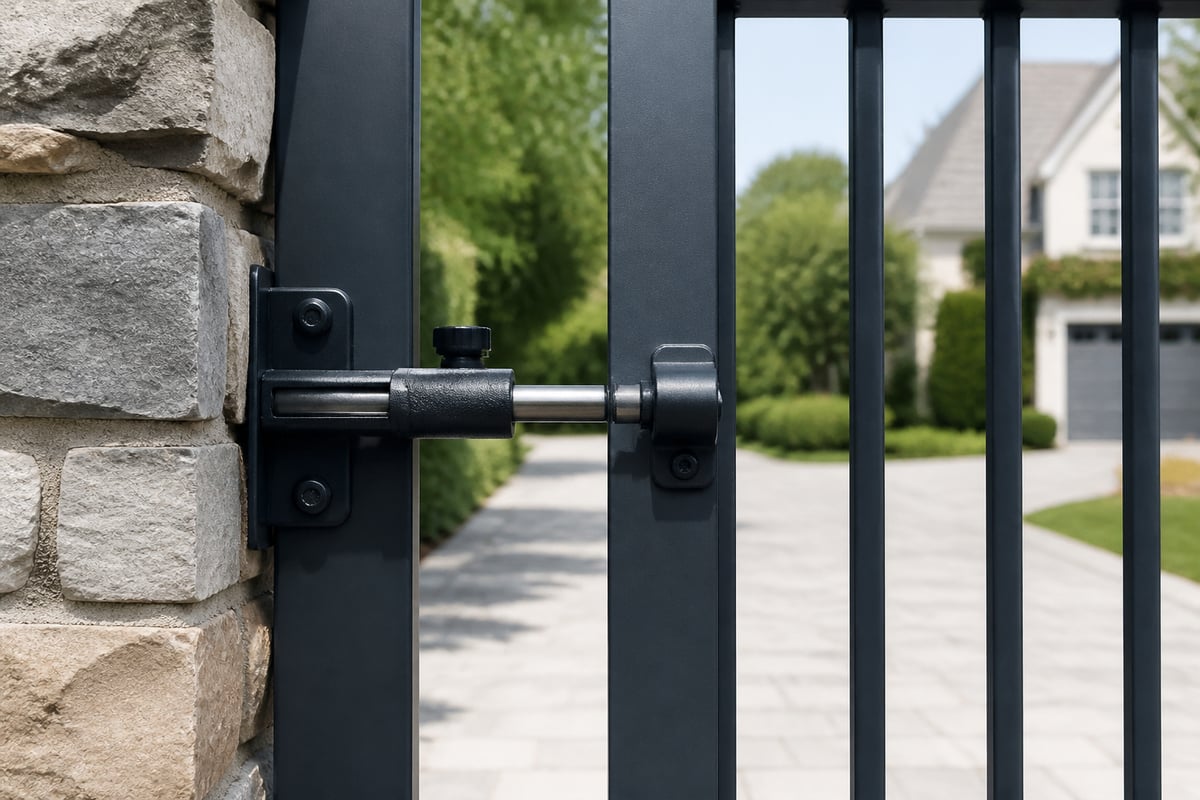
A sagging gate will keep defeating any latch you install, so correct the sag before replacing hardware. The frame has to be square and supported for a latch to hold alignment.
Begin with the diagonal measurement described earlier. If the diagonals differ, the frame has racked. Add a diagonal brace running from the bottom hinge corner up to the top latch corner on wood gates, which transfers weight back to the hinge post. For a cable-and-turnbuckle brace, The Spruce describes running it diagonally from the top hinge corner toward the lower latch-side corner and tightening the turnbuckle to bring the gate back into alignment.
Then check the hinge post. If it moves when you push on it, the footing has failed, and no brace will fully compensate. A post that rocks needs to be reset in new concrete or replaced. Adjust slowly and recheck the latch fit after every change, since small corrections at the hinge translate to larger movement at the latch end.
Metal Gate Latches: Rust, Welds, and Bent Frames
Metal gate latches fail from rust, loose welds, and bent frames more often than from the latch itself. Treat these differently from wood gate problems.
- Surface rust: Sand it back to bare metal, apply a rust-inhibiting primer, and repaint. Skipping the primer lets rust return within a season.
- Seized latch: Soak the pivot with penetrating oil, work it free, then switch to dry lubricant.
- Cracked welds: These need re-welding. A bolted patch rarely lasts on a gate that swings daily.
- Bent frame or bar: A slightly bent latch bar can often be straightened in a vise. A bent gate frame usually means the gate has been struck, and the hinges should be inspected for damage as well.
Wrought iron and tubular steel gates common in Los Angeles neighborhoods also trap water inside hollow sections. Check for drain holes, because standing moisture corrodes the frame from the inside.
When the Latch Is Part of an Automatic Gate
If your gate is automatic, a latch problem is often a sign of a motor, sensor, or alignment issue rather than a hardware failure, and it should be handled differently from a manual gate. Automatic and electric gates rely on precise positioning, so a latch or lock that no longer engages can prevent the opener from reading the closed position.
Warning signs that the problem goes beyond a simple latch repair include:
- The gate stops short of fully closing and reverses
- A clicking or humming sound from the operator without movement
- The magnetic lock or electric strike does not engage
- The gate closes but the control board shows an open or fault condition
- Safety sensors trip repeatedly when nothing is in the path
Adjusting an automatic gate's travel limits or lock hardware incorrectly can damage the operator or create a safety hazard. A licensed technician can test the limit switches, safety edges, and wiring in a single visit. Gates On Site offers electric gate repair across Los Angeles County, with same-day repair on the first visit and parts stocked in every service vehicle. For related motor faults, the team also covers gate motor repair.
How Much Does It Cost to Fix a Gate Door?
Fixing a gate door costs very little for DIY hardware work and rises with the complexity of the fault. A basic latch, screws, and lubricant typically cost in the range of a few dozen dollars at a hardware store, while professional repairs vary with the gate type, the parts needed, and whether the gate is automatic.
Several factors move the price:
- Gate type: Manual wood gates are the least expensive to repair. Automatic and commercial gates involve motors, sensors, and electrical components.
- Extent of damage: A loose latch is a minor fix. A failed post or bent frame is a larger job.
- Parts: Standard latches are inexpensive, while specialty locks and electric strikes cost more.
- Urgency: After-hours calls often carry a surcharge with many providers.
Gates On Site provides emergency gate and garage door repair throughout the day at no extra charge. For a firm figure on your specific gate, contact the team through the contact page rather than relying on general estimates.
Preventing Latch Problems Before They Start
Regular light maintenance prevents most latch failures and takes only a few minutes each season. Build these habits into your routine:
- Tighten latch and hinge screws every few months.
- Lubricate moving parts with a dry lubricant twice a year.
- Keep the area around the gate clear of plants and debris.
- Touch up paint or sealant at the first sign of chipping.
- Watch for early sag, such as a gate that begins to scrape or needs a firm push to latch.
- Do not hang loads on the gate or let it slam, since both strain hardware and posts.
Catching a small shift early is far cheaper than repairing a post or frame later.
FAQ
How do I fix a gate latch that keeps coming loose?
Loose latches usually mean the screw holes are stripped. Fill the holes with wood glue and toothpicks or wood filler, let it cure, then redrill pilot holes and use longer screws. On metal gates, switch to through-bolts with lock washers.
Can I fix a gate opener myself?
Simple checks like clearing obstructions, cleaning sensors, and replacing remote batteries are reasonable for a homeowner. Anything involving the operator, wiring, or limit settings should go to a licensed technician, since mistakes can damage the motor or create a safety risk.
Should I repair or replace a worn gate latch?
Repair it if the problem is loose screws, dirt, or misalignment. Replace it if the bolt is worn smooth, the spring has failed, or the housing is cracked. A new latch is inexpensive, but it will not fix a sagging gate or leaning post.
Start by closing your gate slowly and noting exactly where the latch bolt misses the strike plate, since that single observation tells you whether you need new screws, a realigned plate, or a bigger structural fix. If the gate is automatic, or the post and frame need more than a basic adjustment, Gates On Site can handle the repair as a family-owned team with over 20 years of experience, licensed and insured technicians, and a 100% satisfaction guarantee on every repair.