
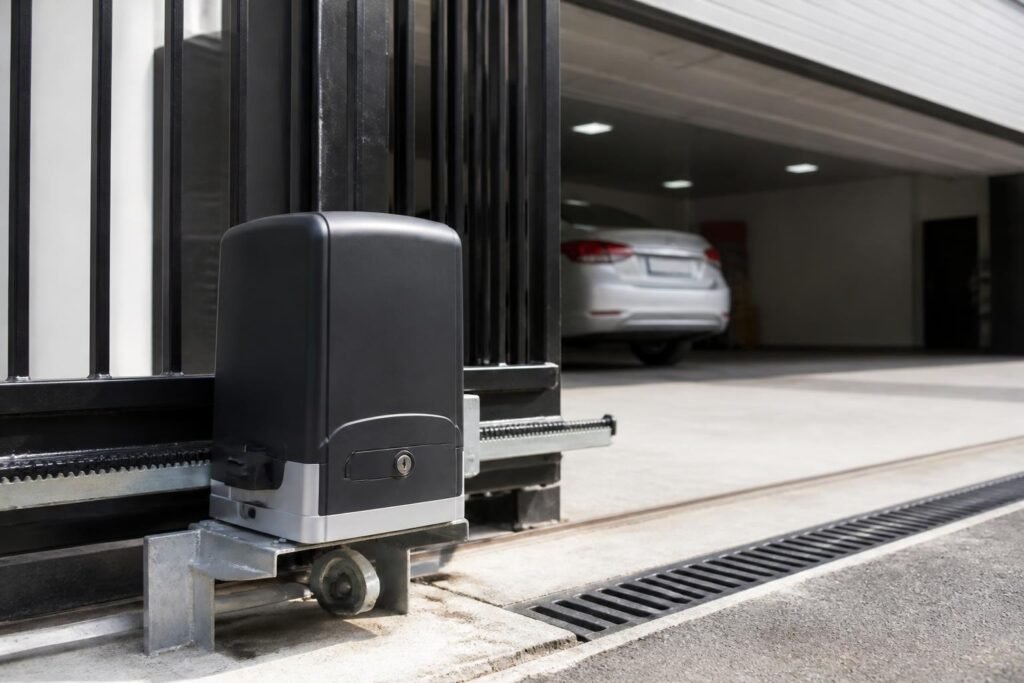
The term "garage door gate" describes both a hybrid access control solution and a common shorthand for garage door systems that function similarly to vehicular gates. Whether you're managing a commercial parking structure, a residential property with multiple access points, or simply seeking to understand how modern overhead door systems incorporate gate-like features, understanding this convergence is essential. As property access control becomes more sophisticated in 2026, the boundaries between traditional garage doors and automated gates continue to blur, creating systems that offer the best of both worlds.
Understanding the Garage Door Gate Concept
A garage door gate represents the intersection of two distinct access control technologies. Traditional garage doors operate vertically, rolling up into tracks or sectioning overhead, while gates typically swing or slide horizontally across an opening. Modern installations increasingly combine these functions, using overhead door hardware with gate-style access control, remote operation, and security features. For a closer look at combining these two approaches, see our guide to garage door gate design, safety and repair.
Key Components That Define These Systems
Every garage door gate system relies on several critical elements working in harmony:
- Motor and operator assembly that powers the opening and closing cycle
- Track or guide systems that direct the door's movement path
- Safety sensors and reversing mechanisms that prevent injuries and property damage
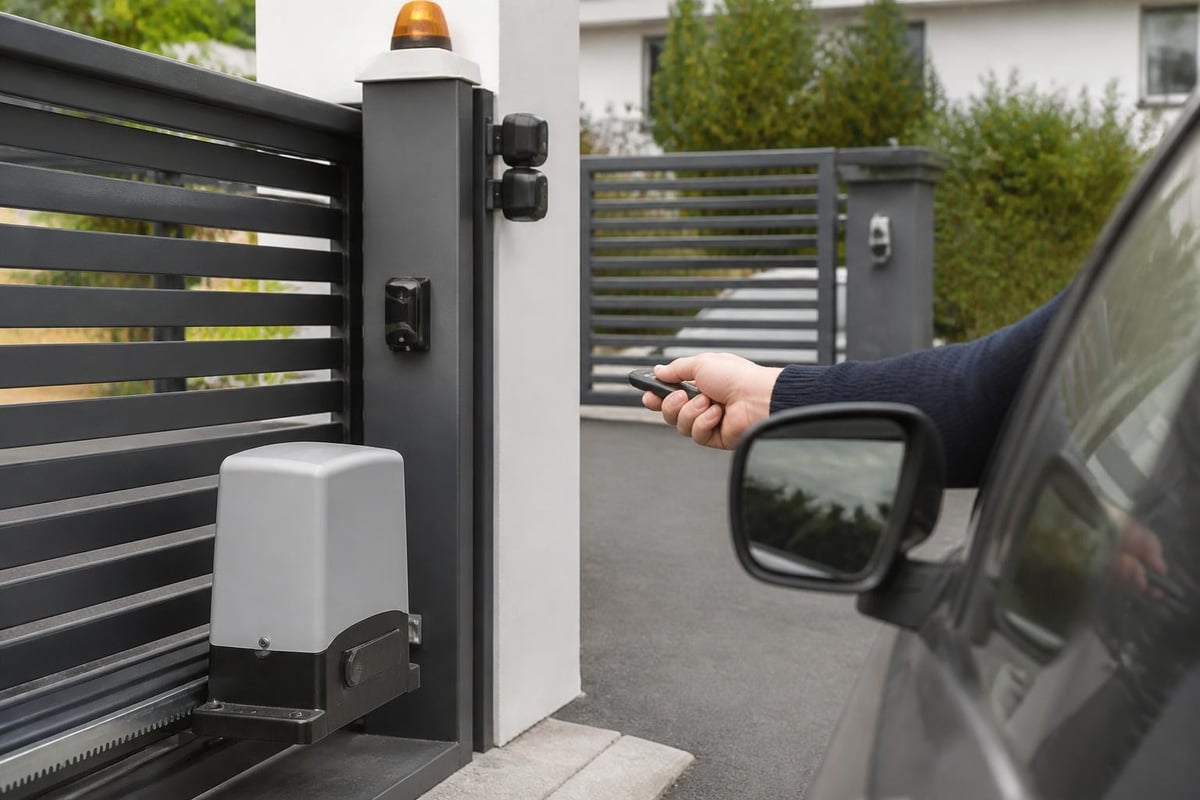
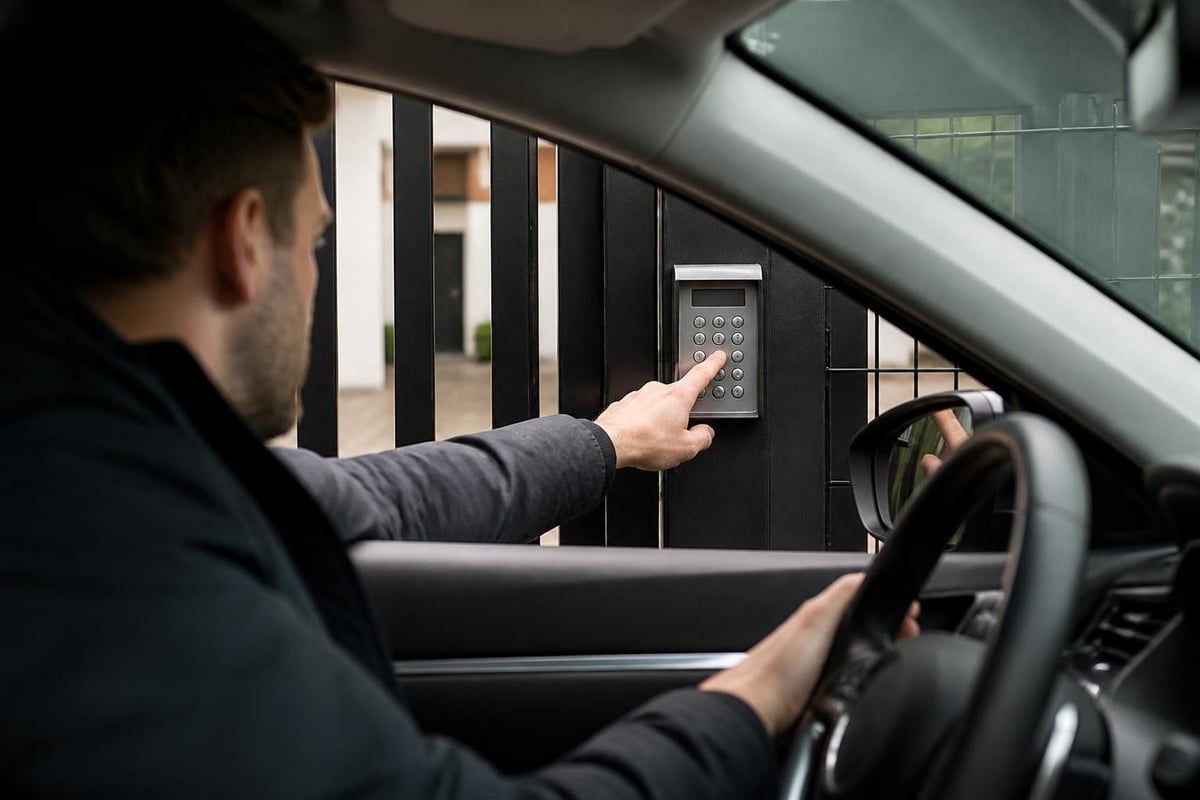
- Access control devices including keypads, remote transmitters, and smartphone integration
- Structural framework designed to support the door's weight and operational stress
The integration of these components determines system reliability, safety compliance, and long-term performance. Property owners must understand how each element contributes to overall function.
Safety Standards and Code Compliance
Modern garage door gate installations must satisfy rigorous safety requirements established by multiple regulatory bodies. The UL 325 standard governs door and gate operator safety, requiring specific entrapment protection features that activate within milliseconds of detecting an obstruction.
Building codes have evolved significantly to address residential and commercial applications. The International Residential Code addresses garage door provisions with specific requirements for testing, installation, and maintenance protocols that every property owner should understand.
Testing and Certification Requirements
| Standard | Application | Key Requirements |
|---|---|---|
| UL 325 | Operator safety | Entrapment protection, force limits, emergency release |
| ANSI/DASMA 102 | Residential doors | Performance testing, cycle life, wind load resistance |
| ANSI/DASMA 107 | Commercial doors | Heavy-duty operation, high-cycle durability, safety edges |
Professional installers verify compliance through systematic testing. Monthly safety checks help maintain certification standards and prevent liability issues that arise from non-compliant equipment.
The DASMA safety guidelines provide comprehensive technical resources for manufacturers, installers, and property managers. These documents outline best practices that extend beyond minimum code requirements, offering actionable recommendations for long-term system integrity.
Operational Mechanisms in Modern Systems
Garage door gate systems employ several distinct operating mechanisms, each with specific advantages for different applications. Understanding these differences helps property owners select appropriate technology and anticipate maintenance needs.
Roll-Up and Sectional Configurations
Roll-up doors coil around a drum mounted above the opening, creating a compact storage footprint ideal for spaces with limited overhead clearance. Sectional doors divide into horizontal panels connected by hinges, traveling along tracks that curve from vertical to horizontal planes.
Roll-up advantages:
- Minimal space requirements
- Simplified track systems
- Faster operation cycles
- Excellent for commercial applications
Sectional advantages:
- Better insulation properties
- Quieter operation
- Enhanced aesthetic options
- Superior wind resistance
Commercial facilities often choose roll-up configurations for loading docks and service bays, while residential properties typically prefer sectional systems for aesthetic and acoustic reasons. When these systems require attention, professional services like overhead garage door repair address both configuration types with specialized expertise.
Access Control Integration
Modern garage door gate installations incorporate sophisticated access control that rivals dedicated security gate systems. These features transform simple overhead doors into comprehensive property access solutions.
Wireless technology has revolutionized how operators interact with their systems. Smartphone applications now provide real-time status monitoring, remote operation from any location, and detailed access logs showing exactly when doors opened or closed. Integration with home automation platforms enables voice control, scheduled operation, and coordination with other security devices.
Multi-User Management Features
Property managers and business owners benefit from advanced user permission systems:
- Individual access codes assigned to specific employees, contractors, or family members
- Time-based restrictions that limit operation to certain hours or days
- Temporary credentials for delivery personnel or service providers
- Activity reporting that tracks all system interactions
- Remote credential management allowing instant activation or deactivation
These capabilities make the garage door gate concept particularly valuable for commercial properties where controlled access is essential. The technology scales from single-family homes to multi-tenant facilities with hundreds of users.
Maintenance Requirements and Common Issues
Regular maintenance prevents the majority of garage door gate failures and extends equipment lifespan significantly. Property owners who implement systematic inspection schedules avoid costly emergency repairs and dangerous malfunctions.
Monthly Inspection Checklist
Visual inspection items:
- Track alignment and mounting bracket security
- Cable tension and wear indicators
- Spring condition and balance testing
- Weather seal integrity
- Safety sensor alignment
Operational testing:
- Reverse mechanism response time
- Manual release function
- Emergency stop features
- Auto-close timer accuracy
- Remote control signal strength
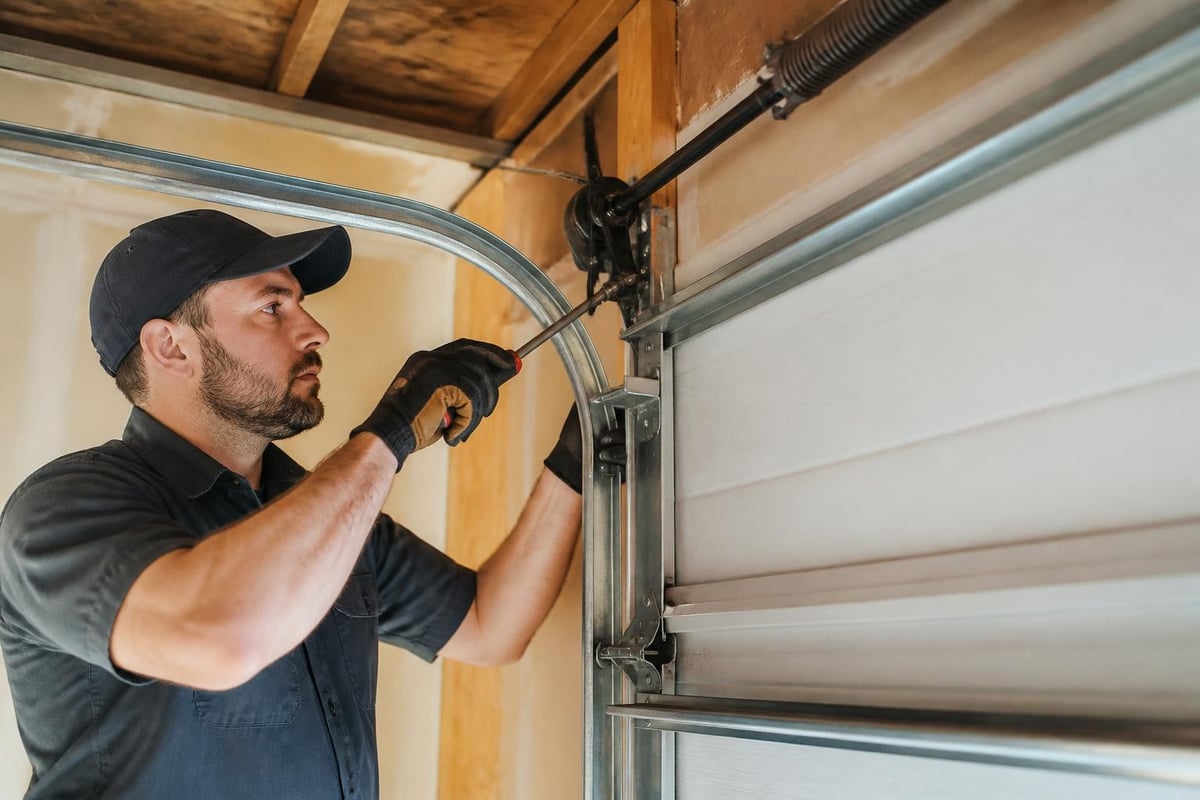
Professional technicians use specialized tools to measure spring tension, track alignment tolerances, and motor performance metrics beyond typical homeowner capabilities. This Old House provides comprehensive maintenance guidance suitable for residential property owners seeking reliable information.
Component Lifespan and Replacement Cycles
Understanding typical component longevity helps property owners budget for inevitable replacements and recognize early warning signs of failure.
| Component | Expected Lifespan | Failure Indicators |
|---|---|---|
| Torsion springs | 10,000-20,000 cycles (7-12 years) | Slow operation, uneven lifting, visible gaps |
| Extension springs | 8,000-15,000 cycles (5-10 years) | Sagging door sections, jerky movement |
| Motor operators | 10-15 years | Excessive noise, intermittent operation, overheating |
| Rollers | 10,000-15,000 cycles (7-10 years) | Grinding sounds, track scoring, difficulty rolling |
| Cables | 8-12 years | Fraying, rust spots, unraveling strands |
Environmental factors dramatically affect these timelines. Coastal properties face accelerated corrosion from salt air, while extreme temperature variations stress springs and lubrication systems. Annual professional assessments identify deterioration before catastrophic failures occur.
Electric vs. Manual Operation Considerations
The decision between electric and manual garage door gate operation involves analyzing usage patterns, security requirements, and budget constraints. Each approach offers distinct advantages for specific applications.
Electric operators provide convenience and enhanced security features impossible with manual systems. Battery backup units maintain functionality during power outages, while smartphone integration enables remote monitoring and control. For properties with elderly residents or physical accessibility concerns, electric operation eliminates the physical demands of manual lifting.
Manual systems offer simplicity and zero dependence on electrical infrastructure. They excel in rural locations with unreliable power, emergency backup scenarios, and applications where security concerns are minimal. Maintenance requirements decrease substantially without electric components, though physical operation demands increase proportionally.
Hybrid Solutions for Maximum Flexibility
Many modern installations combine both capabilities, featuring electric operators with well-maintained manual override mechanisms. This dual-mode approach provides reliability regardless of power availability while maintaining the convenience of automated operation under normal conditions.
Troubleshooting Common Performance Problems
Property owners who understand basic troubleshooting can often resolve minor issues without professional intervention, though safety concerns should always prompt expert consultation.
Intermittent operation problems typically stem from remote control batteries, interference from nearby electronic devices, or dirty safety sensor lenses. Simple cleaning and battery replacement resolve most cases within minutes.
Unusual noise development signals mechanical issues requiring prompt attention. Grinding sounds indicate bearing wear or track misalignment, while squealing suggests inadequate lubrication or worn rollers. Ignoring these warnings leads to more extensive damage and expensive repairs.
Speed variations during operation point to motor controller issues, spring imbalance, or track obstruction. Professional diagnosis identifies root causes and prevents secondary damage to operators and structural components.
Commercial Applications and Special Requirements
Commercial garage door gate installations face demands far exceeding residential applications. High-cycle operation, exposure to weather extremes, and security requirements necessitate heavy-duty components and rigorous maintenance protocols.
Loading dock doors cycle dozens or hundreds of times daily, requiring commercial-grade operators rated for continuous duty. These systems incorporate advanced safety features including motion detectors, pressure-sensitive edges, and emergency stop circuits that comply with OSHA workplace safety requirements.
Security Integration for Business Properties
Business facilities integrate garage door gate systems with comprehensive security infrastructure:
- Video surveillance synchronized with door operation
- Alarm systems that monitor unauthorized access attempts
- Fire suppression coordination that automatically opens doors during emergencies
- Access logging that creates audit trails for compliance purposes
Property managers coordinate these systems with security personnel, creating layered protection that adapts to changing threat levels and operational requirements.
Energy Efficiency and Insulation Options
Thermal performance significantly impacts operating costs and interior comfort, particularly in climate-controlled facilities. Modern garage door gate designs incorporate insulation technologies that reduce heat transfer while maintaining structural integrity.
R-value comparisons help property owners select appropriate insulation levels:
- R-8 to R-12: Standard residential applications in moderate climates
- R-16 to R-18: Enhanced residential or light commercial requirements
- R-20+: Specialized applications with extreme temperature control needs
Polyurethane foam injection provides superior insulation compared to traditional polystyrene panels, offering better R-values per inch while adding structural rigidity. Weather sealing components around door perimeters prevent air infiltration that undermines insulation effectiveness.
Emergency Access and Safety Release Mechanisms
Every garage door gate system must include reliable manual release capabilities that function during power failures, motor malfunctions, or emergency situations. These mechanisms balance security concerns with life-safety requirements.
Internal release handles typically use a distinctive red cord suspended from the operator trolley. Pulling this cord disengages the motor, allowing manual door operation. Proper installation positions these handles beyond reach from outside the door while remaining easily accessible from inside.
External emergency access presents security challenges. Some installations use key-operated releases mounted outside the door, while others incorporate breakaway panels or dedicated pedestrian doors. Local fire codes often dictate specific requirements based on building occupancy and use classifications.
Training and Documentation Requirements
Property owners must ensure all occupants understand emergency procedures. Clear signage near manual release mechanisms, regular operation drills, and documented procedures prevent panic during actual emergencies. Commercial facilities should incorporate garage door gate emergency protocols into broader evacuation and safety training programs.
Integration with Smart Home and Building Management Systems
The garage door gate has evolved into a connected device within larger automation ecosystems. Integration with smart home platforms and commercial building management systems creates operational efficiencies and enhanced security capabilities.
Residential integration typically connects through WiFi-enabled operators that communicate with platforms like Google Home, Amazon Alexa, or Apple HomeKit. These connections enable voice commands, automated schedules coordinated with other household systems, and remote monitoring through mobile applications.
Commercial building management systems incorporate garage door gate status into centralized dashboards monitoring HVAC, lighting, security, and access control. Facilities managers view real-time door positions, receive maintenance alerts, and coordinate door operation with occupancy patterns and energy management protocols.
Selecting Professional Service Providers
Choosing qualified technicians for installation, maintenance, and repair significantly impacts system longevity and safety. Professional services bring specialized knowledge, proper tools, and liability coverage that protects property owners from installation defects and maintenance errors.
Qualification criteria for service providers:
- Valid licensing for electrical and mechanical work in your jurisdiction
- Manufacturer certifications for specific operator brands and models
- Comprehensive liability insurance protecting against property damage
- Documented safety training and compliance knowledge
- Local references from similar property types
Emergency service availability matters particularly for commercial properties where door failures disrupt operations. Providers offering same-day response and maintaining comprehensive parts inventory minimize downtime and associated business losses. Services like auto gate service extend expertise across both traditional gates and garage door gate applications.
Future Technology Trends and Innovations
The garage door gate industry continues advancing through materials science, connectivity improvements, and safety innovations that reshape what property owners expect from access control systems.
Predictive maintenance represents a significant emerging capability. Sensors monitor spring tension, motor current draw, and cycle counts, using machine learning algorithms to predict component failures before they occur. These systems automatically schedule maintenance interventions, preventing unexpected breakdowns and optimizing service intervals.
Battery technology improvements enable longer backup power duration and faster recharge cycles. New lithium-ion systems provide days of operation during extended power outages, particularly valuable in areas prone to severe weather or unreliable electrical grids.
Material innovations focus on strength-to-weight ratios and corrosion resistance. Advanced composites and treated aluminum alloys deliver superior performance with reduced maintenance requirements, particularly in harsh coastal or industrial environments.
Cost Analysis and Long-Term Investment Considerations
Understanding total ownership costs requires looking beyond initial purchase prices to ongoing operational expenses, maintenance requirements, and eventual replacement needs.
Initial investment factors:
- Door material and construction quality
- Operator features and capacity
- Installation complexity and structural modifications
- Access control integration requirements
- Safety feature sophistication
Ongoing expense considerations:
- Annual maintenance and inspection costs
- Component replacement intervals
- Energy consumption for operation
- Service call frequency and emergency repair costs
Property owners should request detailed lifecycle cost projections from providers, comparing options across 15-20 year timeframes rather than focusing solely on upfront pricing. Higher-quality components typically justify premium initial costs through reduced maintenance frequency and extended replacement intervals.
Professional services that specialize in gate motor repair understand these long-term cost dynamics, helping property owners make informed decisions that balance immediate budget constraints with lifecycle value.
Modern garage door gate systems represent sophisticated access control solutions combining the best features of overhead doors and automated gates. Understanding their components, maintenance requirements, and safety protocols ensures reliable operation and protects your investment for years to come. Whether you're managing a commercial facility or maintaining a residential property in Los Angeles, expert support makes the difference between frustrating breakdowns and smooth operation. Gates On Site provides specialized residential and commercial services throughout Los Angeles, offering same-day emergency repairs and comprehensive maintenance programs that keep your access control systems functioning safely and reliably.