
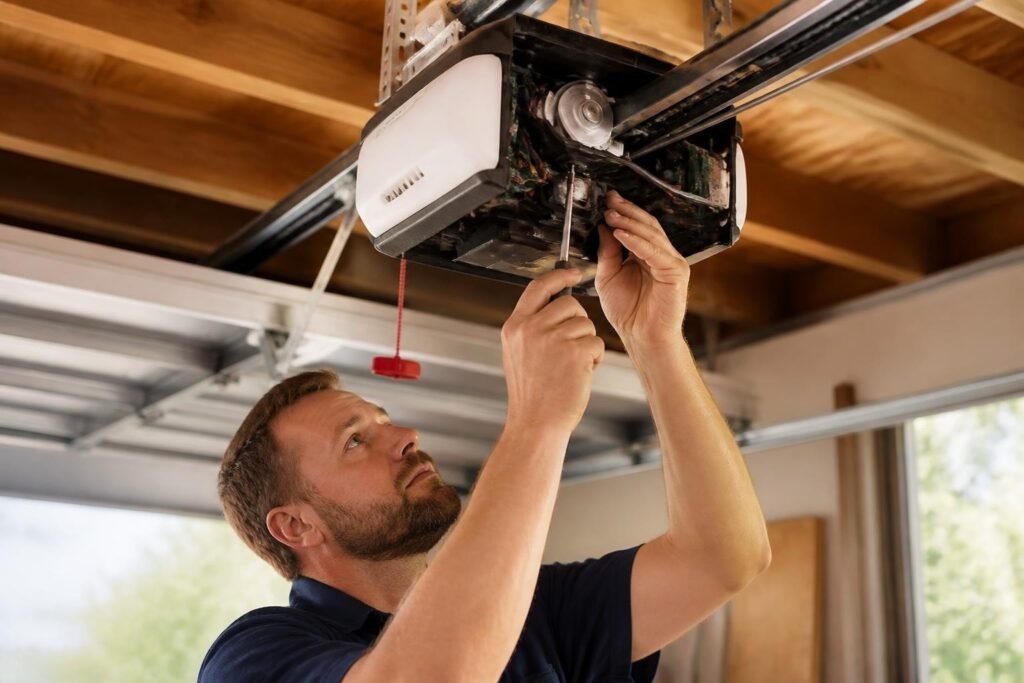
When your garage door opener fails, you're faced with an immediate decision: repair or replace? Understanding garage door opener repair cost helps homeowners and business owners in Los Angeles make informed choices that balance budget with long-term reliability. The typical garage door opener repair cost ranges from $150 to $450, depending on the component that failed and labor requirements. However, several factors influence the final price, from the opener's age and model to the complexity of the diagnostic work required. This guide breaks down every cost element so you can anticipate expenses and know when repair makes financial sense.
Common Garage Door Opener Repairs and Their Costs
Garage door openers contain several mechanical and electronic components that wear over time. Each part carries its own repair price point.
Motor and Drive System Repairs
The motor is the heart of your opener system. When it burns out or loses power, replacement typically costs $200 to $350 including labor. Chain-drive systems experience more wear than belt drives, and the safety standard for automatic residential garage door operators requires specific force settings that a qualified technician must adjust after motor work.
Gear and sprocket assemblies fail frequently in older units. These plastic components strip under repeated stress, creating a grinding noise when the opener runs but the door doesn't move.
Typical gear assembly repair costs:
- Parts: $25 to $65
- Labor: $100 to $150
- Total: $125 to $215
Most technicians can complete gear replacement in 60 to 90 minutes when they carry the correct parts.
Circuit Board and Sensor Failures
Modern openers rely on logic boards that control everything from remote signals to safety reversals. When a circuit board fails, you'll notice erratic behavior, failure to respond to remotes, or complete system shutdown. According to detailed opener-repair pricing guides, logic board replacement runs $150 to $300 for the part alone, plus $75 to $150 in labor.
Photo-eye sensors prevent the door from closing on objects or people. When these sensors misalign or fail, the door reverses immediately or won't close at all. Sensor repair is relatively affordable:
| Repair Type | Parts Cost | Labor Cost | Total Range |
|---|---|---|---|
| Sensor realignment | $0 | $75-$125 | $75-$125 |
| Single sensor replacement | $30-$50 | $75-$100 | $105-$150 |
| Both sensors + wiring | $60-$100 | $100-$150 | $160-$250 |
Remote and Wall Switch Issues
When remotes stop working, the problem might be as simple as dead batteries or as complex as a failed receiver board. Homeowners often mistake receiver failure for a dead remote, leading to unnecessary remote purchases.
Remote and control repair breakdown:
- Battery replacement (DIY): $3 to $8
- Remote reprogramming: $50 to $85 service call
- Wall switch replacement: $75 to $125
- Receiver board replacement: $100 to $200
Testing multiple remotes before calling for service can save a diagnostic fee. If none of your remotes work but the wall button does, the receiver board likely needs replacement.
Factors That Influence Garage Door Opener Repair Cost
The baseline garage door opener repair cost varies significantly based on several key factors that technicians evaluate during the diagnostic phase.
Opener Type and Age
Three main opener types dominate the market, each with different repair profiles:
Chain-drive openers are the most affordable to repair because parts are widely available and the mechanism is straightforward. However, they experience more wear due to metal-on-metal contact.
Belt-drive systems cost slightly more to repair due to specialized belt assemblies, but they require fewer repairs overall. Belt replacement typically runs $150 to $250 including labor.
Screw-drive openers have fewer moving parts but require complete trolley replacement when the drive mechanism fails, costing $175 to $325.
Age plays a critical role in repair economics. Openers manufactured before 2010 may need parts sourced from specialty suppliers, adding $50 to $150 to the repair cost and extending turnaround time. Units older than 15 years often lack required safety features that current code mandates, making replacement more practical.
Labor Rates and Service Call Fees
Los Angeles service providers typically charge between $75 and $150 for the initial diagnostic visit. Many companies, like Gates On Site, include this fee in the repair price when you proceed with the work. Understanding local labor rates helps you evaluate quotes accurately.
Standard labor rates in the Los Angeles area:
- Hourly rate: $85 to $135
- Minimum service call: $75 to $125
- Emergency/after-hours: $150 to $250
- Weekend surcharge: $25 to $50 additional
Some repairs require only 30 minutes, while complex electrical troubleshooting can extend to two hours. Ask technicians for time estimates before authorizing work.
Part Availability and Brand-Specific Components
Mainstream brands like Chamberlain, LiftMaster, and Genie maintain excellent parts availability through local distributors. Proprietary components from luxury brands or commercial-grade systems may require special orders that add 3 to 10 business days and increase costs by 20 to 40 percent.
When your opener uses discontinued parts, technicians may need to fabricate solutions or retrofit compatible components from current product lines. This adaptation work adds $100 to $300 to the final garage door opener repair cost depending on complexity.
Repair Versus Replacement Decision Points
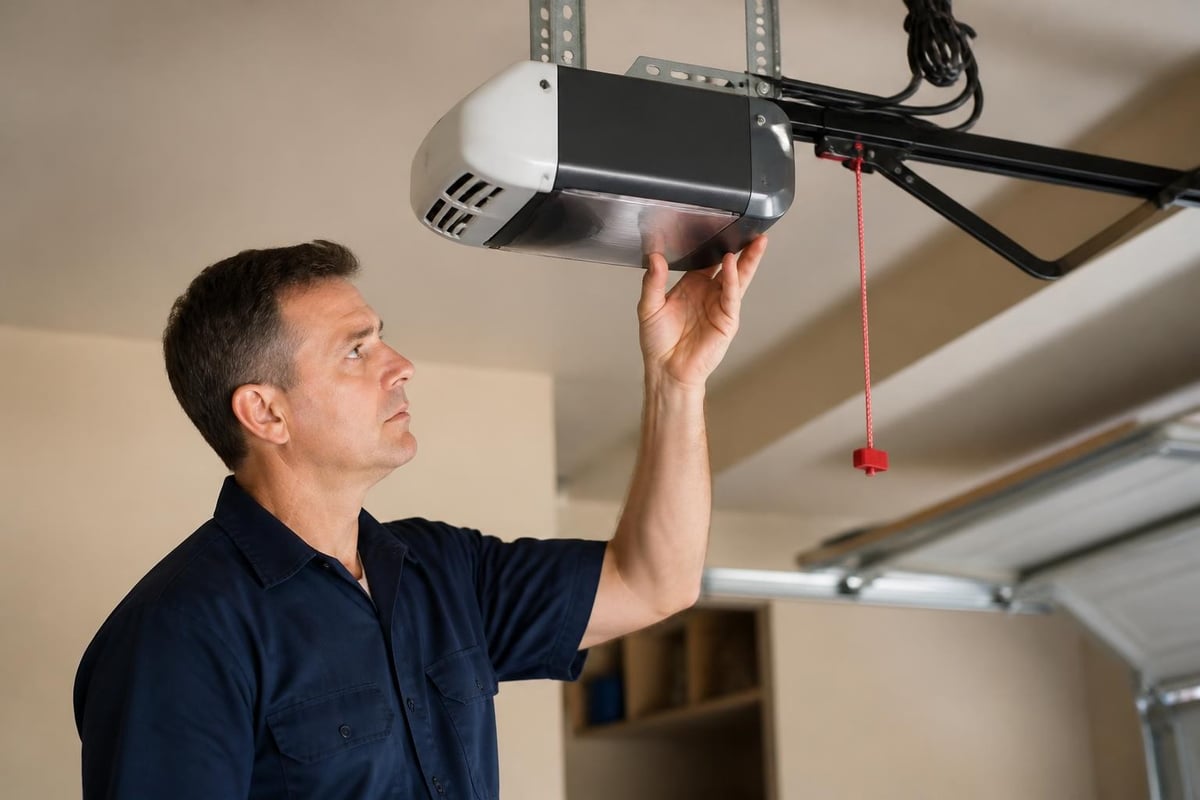
Deciding whether to repair or replace your garage door opener requires analyzing several financial and practical factors beyond the immediate garage door opener repair cost.
When Repair Makes Financial Sense
Repair is typically the best choice when:
- The unit is less than 10 years old
- Repair cost is less than 50% of replacement cost
- Only one component has failed
- The opener meets current safety standards
- You've had no previous major repairs
A $200 gear replacement on a seven-year-old opener makes excellent financial sense. The same repair on a 16-year-old unit with a history of issues suggests replacement is the better investment.
Cost Comparison: Repair vs. New Installation
| Scenario | Repair Cost | Replacement Cost | Best Choice |
|---|---|---|---|
| Single gear failure (5-yr unit) | $175 | $350-$500 | Repair |
| Motor + board (12-yr unit) | $400 | $400-$550 | Replace |
| Sensor realignment (any age) | $85 | N/A | Repair |
| Worn trolley (15-yr unit) | $250 | $375-$525 | Replace |
New garage door opener installation typically costs $350 to $650 for standard residential units, including removal of the old opener, installation, programming, and safety testing. Commercial or heavy-duty openers run $800 to $2,000 installed.
According to comprehensive cost analyses, homeowners should consider replacement when cumulative repairs over two years exceed 60% of a new unit's cost.
Safety and Code Compliance Considerations
Federal regulations require automatic reversal systems on all openers manufactured after 1993. Older units without photo-eye sensors and pressure-reversal mechanisms present genuine safety risks, particularly in homes with children.
Upgrading to a modern opener provides:
- UL 325 compliant safety sensors
- Battery backup for power outages
- Smartphone connectivity and monitoring
- Rolling-code encryption against break-ins
- Quieter operation with current belt technology
While these features don't directly affect immediate garage door opener repair cost, they represent substantial value that a simple repair cannot deliver on older equipment.
Regional Cost Variations in Los Angeles
Los Angeles presents unique pricing factors that influence the garage door opener repair cost compared to national averages.
Cost of Living Impact on Service Rates
The Los Angeles metro area maintains labor rates approximately 15 to 25 percent higher than the national average. This premium reflects higher operating costs, licensing requirements, and cost of living. However, competition among service providers helps moderate prices in densely populated areas.
For homeowners managing properties or businesses with gate systems, finding a provider who handles both gate and garage door work can streamline service and potentially reduce per-visit charges. Many repair companies, including those offering overhead garage door repair services, maintain fully stocked vehicles that enable same-day repairs without return trips.
Permit and Inspection Requirements
Most garage door opener repairs don't require permits in Los Angeles County. However, if your repair involves electrical work beyond simple connections, or if you're upgrading to a new unit, specific situations trigger permit requirements:
- New electrical circuits: Building permit required
- Service panel modifications: Electrical permit required
- Basic component replacement: No permit needed
- Sensor installation/replacement: No permit needed
Permit costs add $75 to $200 to project expenses but ensure code compliance. Check with your local building department before major electrical upgrades.
Preventive Maintenance to Reduce Long-Term Costs
Strategic maintenance significantly reduces the lifetime garage door opener repair cost by catching small issues before they cascade into major failures.
Monthly Inspection Checklist
Performing simple monthly checks takes less than 10 minutes and can prevent expensive repairs:
- Test the auto-reverse function by placing a 2×4 board in the door's path
- Clean photo-eye sensors with a soft cloth to maintain proper alignment
- Listen for unusual sounds during operation (grinding, squealing, or clicking)
- Check the wall button for loose wiring or inconsistent response
- Observe door balance by disconnecting the opener and manually lifting the door halfway
Doors that drop or feel heavy indicate spring issues that, if ignored, will overwork the opener motor and lead to premature failure. Many homeowners discover signs of garage door spring problems during routine inspections.
Professional Tune-Up Value
Annual professional maintenance costs $89 to $150 but delivers substantial value:
- Complete safety testing of all sensors and auto-reverse functions
- Lubrication of chain or belt drive components
- Tension adjustment and hardware tightening
- Gear inspection before visible wear occurs
- Software updates for smart openers
According to professional association guidelines, annual tune-ups extend opener lifespan by 30 to 50 percent and reduce emergency repair frequency by approximately 60 percent.
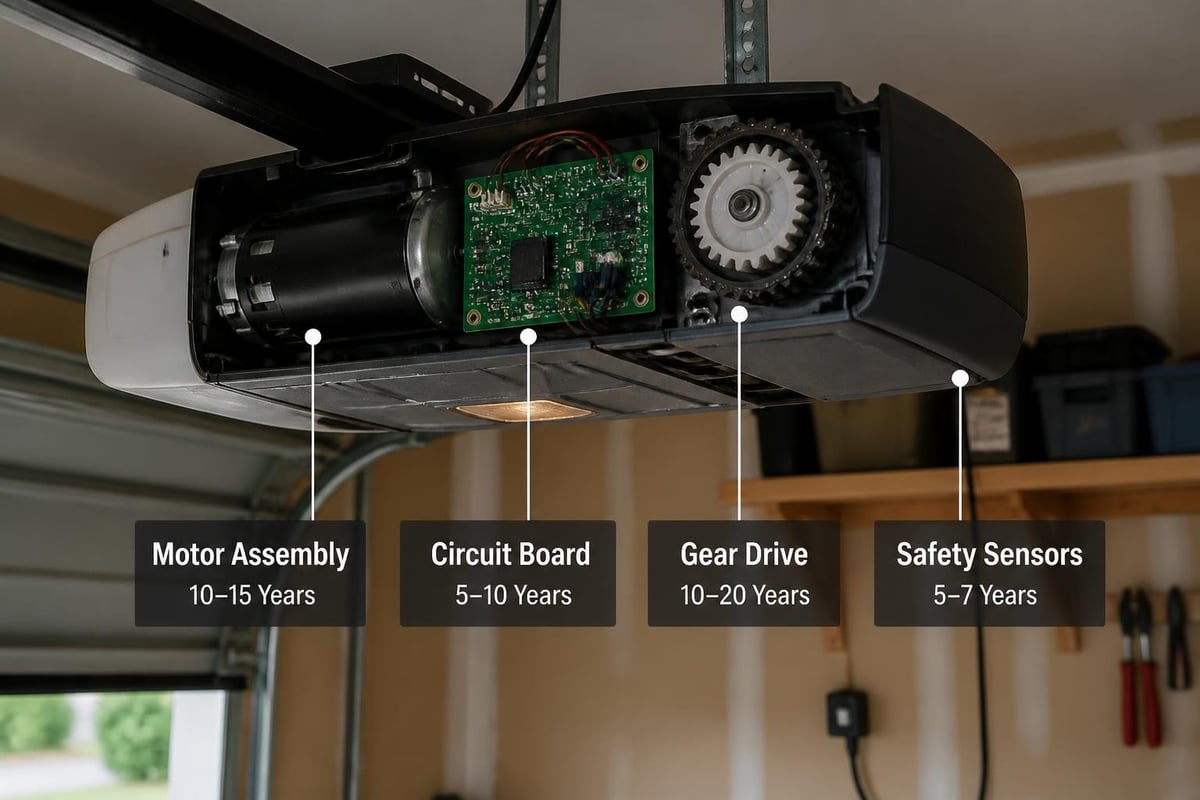
Component Lifespan Expectations
Understanding typical component lifespans helps you budget for inevitable repairs:
| Component | Expected Lifespan | Warning Signs |
|---|---|---|
| Motor | 10-15 years | Hesitation, humming without movement |
| Gear assembly | 7-12 years | Grinding noise, door not moving |
| Circuit board | 8-14 years | Erratic behavior, no remote response |
| Belt/Chain | 8-15 years | Slipping, unusual noise, visible wear |
| Photo sensors | 10-20 years | Frequent reversal, alignment issues |
Proactive replacement of worn gears before complete failure prevents damage to other components. A $175 gear replacement is far more economical than the $400+ bill when a failed gear damages the motor.
DIY Repairs Versus Professional Service
Some garage door opener repairs suit confident DIYers, while others require professional expertise for safety and warranty reasons.
Safe DIY Repairs
Homeowners with basic tools and mechanical aptitude can handle:
- Battery replacement in remotes and backup systems
- Sensor cleaning and minor realignment (not replacement)
- Remote programming following manufacturer instructions
- Lubricating chains and moving parts with appropriate products
- Replacing wall button switches with power disconnected
These repairs cost $5 to $50 in materials and save $75 to $150 in service call fees. Always disconnect power at the circuit breaker before any work involving electrical components.
When Professional Service Is Essential
Complex repairs require specialized knowledge and tools that justify professional service:
- Gear and motor replacement involves disassembly of the entire drive mechanism
- Circuit board diagnosis and replacement requires electrical testing equipment
- Spring adjustment or replacement presents serious injury risk from high-tension components
- Sensor replacement and wiring must meet UL 325 safety compliance
- Track or structural repairs affect overall door operation and safety
Professional technicians carry liability insurance that protects homeowners from injury claims and property damage. The garage door opener repair cost for professional service includes this protection along with parts warranties that DIY work doesn't provide.
Cost Savings Analysis
Consider this scenario: A gear replacement requires a $35 part and takes a skilled technician 75 minutes. The total professional repair costs $185. A DIY attempt saves approximately $150 in labor but risks:
- Installing the gear incorrectly, causing premature motor failure ($300+ repair)
- Stripping the mounting assembly, requiring complete head replacement ($400+)
- Personal injury from spring tension or electrical shock (medical costs vary)
- Voiding manufacturer warranties on related components
For most homeowners, the risk-adjusted savings don't justify DIY work beyond basic maintenance tasks.
Getting Accurate Repair Quotes
Securing reliable estimates helps you budget appropriately and avoid surprise charges when addressing garage door opener repair cost concerns.
Questions to Ask Service Providers
Before scheduling service, gather essential information:
- What is your diagnostic fee, and is it credited toward repairs?
- Do you stock common parts or require ordering time?
- What warranties cover parts and labor?
- Can you provide a repair estimate range before the visit?
- Are you licensed and insured for this work?
Reputable companies provide transparent pricing structures. Be cautious of providers who refuse to discuss typical repair ranges or pressure immediate decisions.
Understanding Quote Components
Professional estimates should itemize:
- Diagnostic or service call fee: $75-$150
- Labor rate and estimated time: $85-$135/hour
- Specific parts needed with part numbers: Varies by component
- Tax and disposal fees: Typically $15-$35
- Warranty terms: 30-90 days labor, 1-5 years parts
Compare quotes from at least two providers, but remember that the lowest price doesn't always represent the best value. Independent cost guides help you identify outlier quotes that may indicate incomplete diagnostics or substandard parts.
Red Flags in Repair Quotes
Watch for warning signs that suggest unreliable service:
- Quotes significantly below market rates (40%+ lower than competitors)
- Pressure to replace rather than repair on newer equipment
- Vague descriptions of work to be performed
- Reluctance to provide written estimates
- No mention of warranties or guarantees
- Lack of proper licensing documentation
Quality service providers stand behind their work with clear warranties and transparent communication about repair options versus replacement economics.
Smart Decision-Making for Opener Repairs
Armed with comprehensive cost information, you can make confident decisions about garage door opener repairs that balance immediate expenses with long-term value. The garage door opener repair cost typically justifies repair on units less than a decade old when single components fail, while older systems with multiple issues often warrant replacement. Regular maintenance dramatically reduces emergency repair frequency and extends equipment life, making annual tune-ups one of the most cost-effective investments for any garage door system.
For choosing components that work seamlessly with your garage and gate systems, understanding compatible opener options helps ensure long-term reliability.
Understanding garage door opener repair cost empowers you to budget effectively and make decisions that protect your investment. Whether you're dealing with a simple sensor issue or evaluating a major motor replacement, knowing typical price ranges helps you recognize fair quotes and avoid unnecessary expenses. When your garage door opener needs attention, Gates On Site provides same-day repair services throughout Los Angeles with no emergency charges, fully stocked service vehicles, and over 20 years of experience handling both residential and commercial systems.