
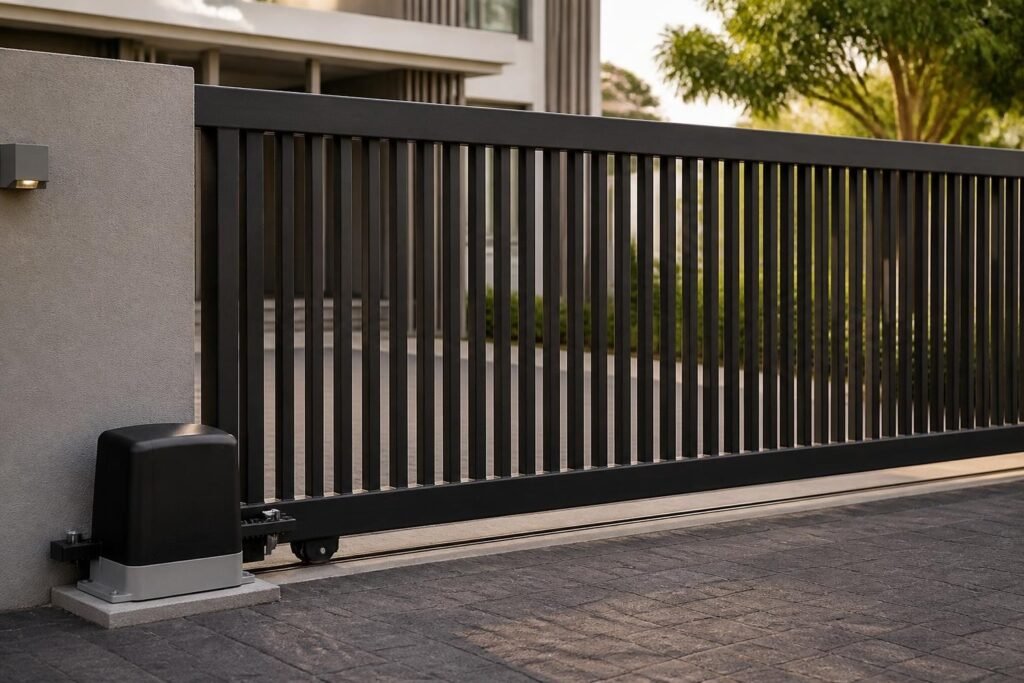
Investing in a motorized gate transforms your property's security, convenience, and curb appeal, but understanding the full financial picture requires careful consideration of multiple factors. Whether you're securing a residential driveway or a commercial facility in Los Angeles, motorized gate cost varies significantly based on gate type, automation technology, installation complexity, and long-term maintenance needs. This comprehensive guide breaks down every expense category to help property owners make informed decisions and budget accurately for both upfront and ongoing costs.
Understanding Base Motorized Gate Cost Components
The total motorized gate cost encompasses far more than the gate itself. A complete project includes the physical gate structure, automation hardware, electrical work, installation labor, permits, and accessories. Each component contributes to the final price, and understanding these elements helps you allocate your budget effectively.
Gate structure costs form the foundation of your investment. Materials range from affordable chain-link at $300–$800 to premium wrought iron or custom wood designs exceeding $5,000. The size and weight of your gate directly impact both material and automation costs, since heavier gates require more robust operators and reinforced mounting systems.
Automation equipment represents the second major expense category. The operator unit, control board, safety sensors, and access control devices typically account for 30–50% of total project cost. Entry-level residential operators start around $400–$800, while commercial-grade systems with advanced features can reach $2,500–$5,000 or more.
Gate Type and Configuration Impact
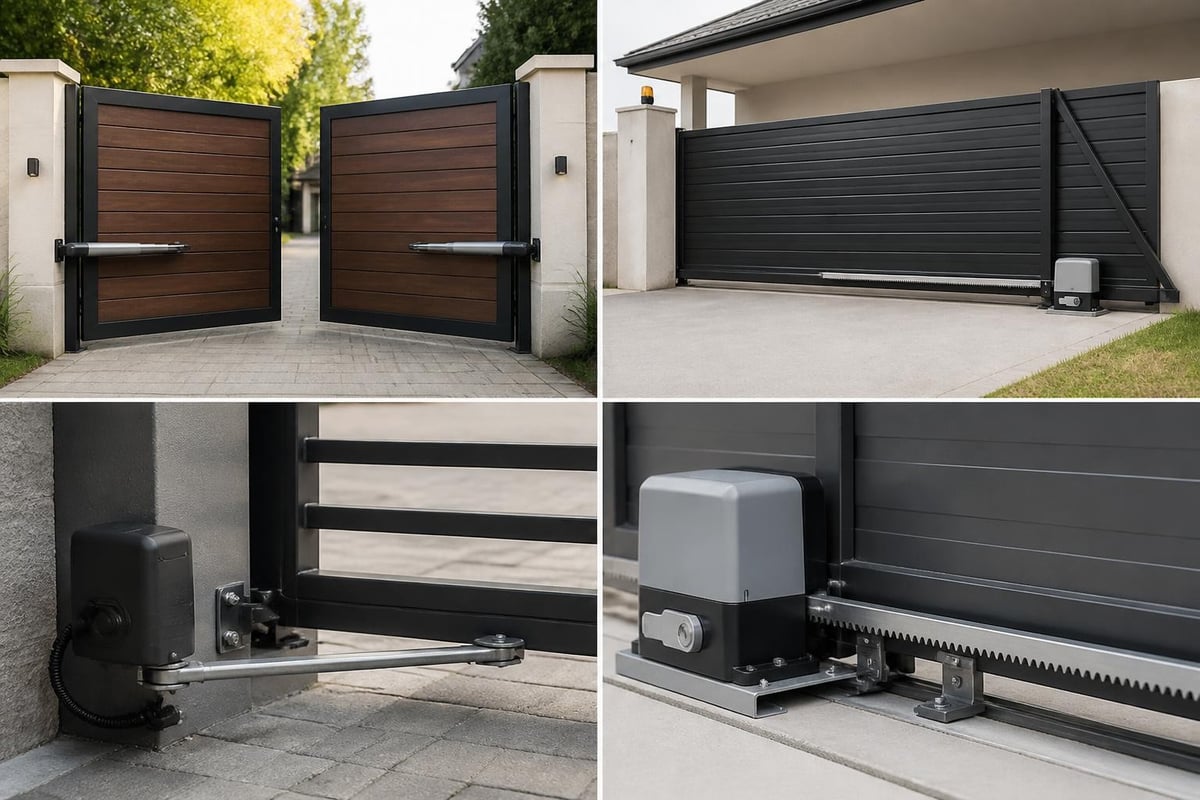
Your choice between swing gates and sliding gates significantly affects motorized gate cost. Swing gates generally cost less to automate ($800–$2,500 for the operator) but require adequate clearance space. They work well for residential driveways with gentle slopes and sufficient swing radius.
Sliding gates cost more to motorize ($1,500–$4,500 for commercial systems) but excel in space-constrained environments. They ride on a track system that demands proper ground preparation, drainage, and occasionally concrete foundations, adding $500–$2,000 to installation costs.
Bi-folding and telescoping gates serve specialized applications where standard configurations won't fit. These custom solutions typically start at $8,000–$15,000 installed, reflecting their complex engineering and installation requirements.
| Gate Type | Operator Cost | Installation Labor | Total Automation Range |
|---|---|---|---|
| Single swing | $800–$1,800 | $400–$800 | $1,200–$2,600 |
| Dual swing | $1,200–$2,500 | $600–$1,200 | $1,800–$3,700 |
| Residential slide | $1,500–$2,800 | $800–$1,500 | $2,300–$4,300 |
| Commercial slide | $2,500–$4,500 | $1,200–$2,500 | $3,700–$7,000 |
Installation Labor and Professional Services
Professional installation ensures your motorized gate operates safely and reliably for years. Labor costs in Los Angeles typically range from $800 to $3,000 depending on project complexity, with the higher end reflecting commercial installations or challenging site conditions.
Basic installations on level ground with existing electrical service nearby cost $800–$1,500. The installer mounts the operator, connects power, installs safety devices, and programs basic access controls. Expect 4–8 hours of labor for straightforward residential projects.
Complex installations involving trenching for electrical lines, concrete work for gate posts or track foundations, or integration with existing security systems can push labor costs to $2,000–$3,500. Commercial projects often require coordination with electricians, concrete contractors, and security system specialists.
Electrical Work Requirements
Every motorized gate needs power. If you don't have electrical service within 50 feet of the gate location, you'll need to budget for electrical installation. Licensed electricians in Los Angeles charge $80–$150 per hour, and running new circuits can add $500–$2,000 to your project.
- Dedicated circuit installation: $300–$800
- Trenching for underground conduit: $8–$15 per linear foot
- Solar power systems (off-grid alternative): $1,200–$3,500
Many property owners choose solar-powered operators to avoid trenching costs. While the upfront equipment cost is higher, you eliminate electrical installation expenses and ongoing power consumption. Solar systems work well in sunny Los Angeles but require adequate sun exposure and battery backup for nighttime operation.
Safety Devices and Compliance Requirements
Modern motorized gates must incorporate multiple safety features to prevent entrapment and comply with UL 325 standards. According to UL 325 requirements, all automatic gates need external entrapment protection devices, which significantly impact overall motorized gate cost.
Photo-eye sensors represent the minimum safety requirement, using infrared beams to detect obstructions. Quality sensor pairs cost $80–$200 installed. Many systems use dual sensors at different heights to detect vehicles, pets, and children.
Edge sensors attach to the leading edge of the gate and stop movement upon contact. These pressure-sensitive devices cost $150–$400 installed and provide critical secondary protection. Commercial installations often require edge sensors on both the leading and closing edges.
Advanced Safety Features
Beyond basic compliance, advanced safety systems enhance protection and may reduce liability exposure for commercial properties. Safety loops embedded in pavement detect vehicles and prevent gate closure, costing $300–$800 installed per loop.
Video monitoring integration allows operators to verify gate area security before opening or closing remotely. Camera systems range from $200 for basic models to $1,500+ for commercial-grade PTZ (pan-tilt-zoom) cameras with night vision and cloud storage.
For Los Angeles properties seeking same-day installation and immediate safety compliance, electric gate repair specialists maintain fully stocked vehicles with all required safety devices and can complete installations with full code compliance.
Access Control Systems and Entry Methods
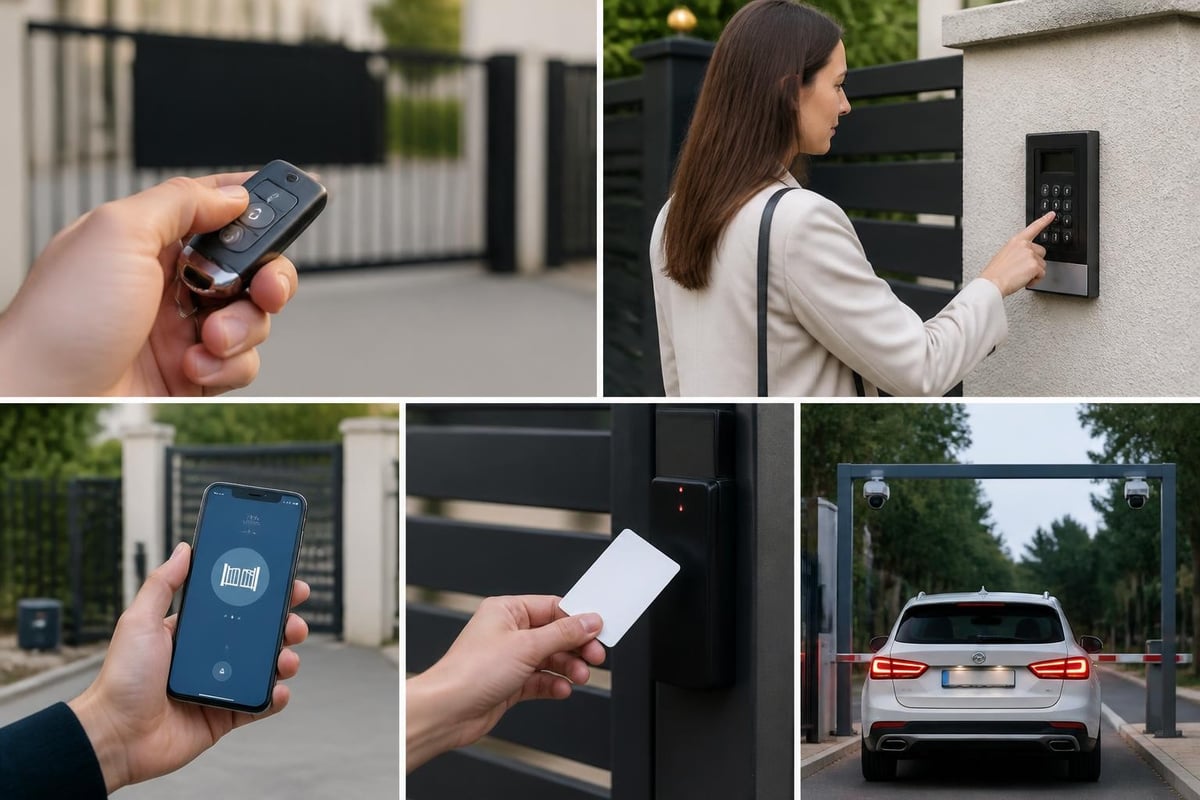
How users access your gate dramatically affects motorized gate cost and long-term convenience. Entry systems range from simple remote controls to sophisticated biometric readers, with prices spanning $50 to $5,000+ per entry point.
Remote controls remain the most affordable option at $30–$80 per transmitter. Multi-button remotes let residents control both gate and garage doors from a single device. However, lost or stolen remotes create security concerns, and replacement costs add up over time.
Keypads provide shareable access through PIN codes, costing $150–$500 installed. Commercial-grade weather-resistant keypads with backlit keys and administrative programming capabilities cost $300–$500. You can issue temporary codes to contractors or guests and change them as needed without hardware replacement.
| Access Method | Equipment Cost | Installation | Monthly Fees | Best For |
|---|---|---|---|---|
| Remote control | $30–$80 | Included | $0 | Single-family homes |
| Keypad | $150–$500 | $100–$200 | $0 | Small multi-tenant |
| Telephone entry | $800–$2,500 | $200–$500 | $20–$60 | Apartments, offices |
| Card/fob reader | $400–$1,500 | $150–$400 | $0–$30 | Commercial facilities |
| License plate recognition | $2,000–$5,000 | $300–$800 | $30–$100 | High-traffic commercial |
| Smartphone/app control | $300–$800 | $100–$300 | $0–$20 | Tech-savvy residents |
Multi-User and Commercial Access Solutions
Properties with multiple users benefit from telephone entry systems that let visitors call residents for access. Basic cellular dialers cost $800–$1,500, while full-featured systems with video verification reach $2,500–$4,000. Monthly cellular service fees add $20–$60 to operating costs.
Proximity card or key fob systems work well for businesses with 10–100 users. Readers cost $400–$1,500, and individual credentials run $2–$10 each. Cloud-based systems with audit trails and remote management capabilities charge $30–$100 monthly but eliminate on-site server requirements.
Integration with your property's existing access control systems can reduce duplication and streamline user management across gates, doors, and parking facilities, though integration often requires custom programming at $500–$2,000.
Permits, Inspections, and Code Compliance
Los Angeles County and municipal jurisdictions require permits for motorized gate installations, adding $150–$800 to your project cost. Permit fees vary by jurisdiction, gate size, and whether electrical work is included. Failing to obtain proper permits can result in fines and complications during property sales.
Building permits ensure your installation meets structural, electrical, and safety codes. Most residential installations require a combination building/electrical permit costing $200–$500. Commercial projects need separate permits for construction, electrical, and sometimes fire/life safety systems, totaling $500–$1,500.
According to CPSC safety standards, gates must comply with entrapment prevention requirements, which inspectors verify before issuing final approval. Inspection fees of $75–$200 per visit are typically included in permit costs, but re-inspections for failed installations cost extra.
HOA and Community Approvals
Many Los Angeles neighborhoods impose homeowners association (HOA) design guidelines that affect motorized gate cost through material restrictions, style requirements, or mandatory upgrades. Some associations require premium materials or specific colors that add 20–50% to base costs.
Budget 4–8 weeks for HOA architectural review before beginning work. Rush approvals sometimes available for $200–$500 expedite fees. Review association CC&Rs carefully-some require professional installation certifications or specific operator brands, limiting your contractor choices.
Ongoing Maintenance and Operating Costs
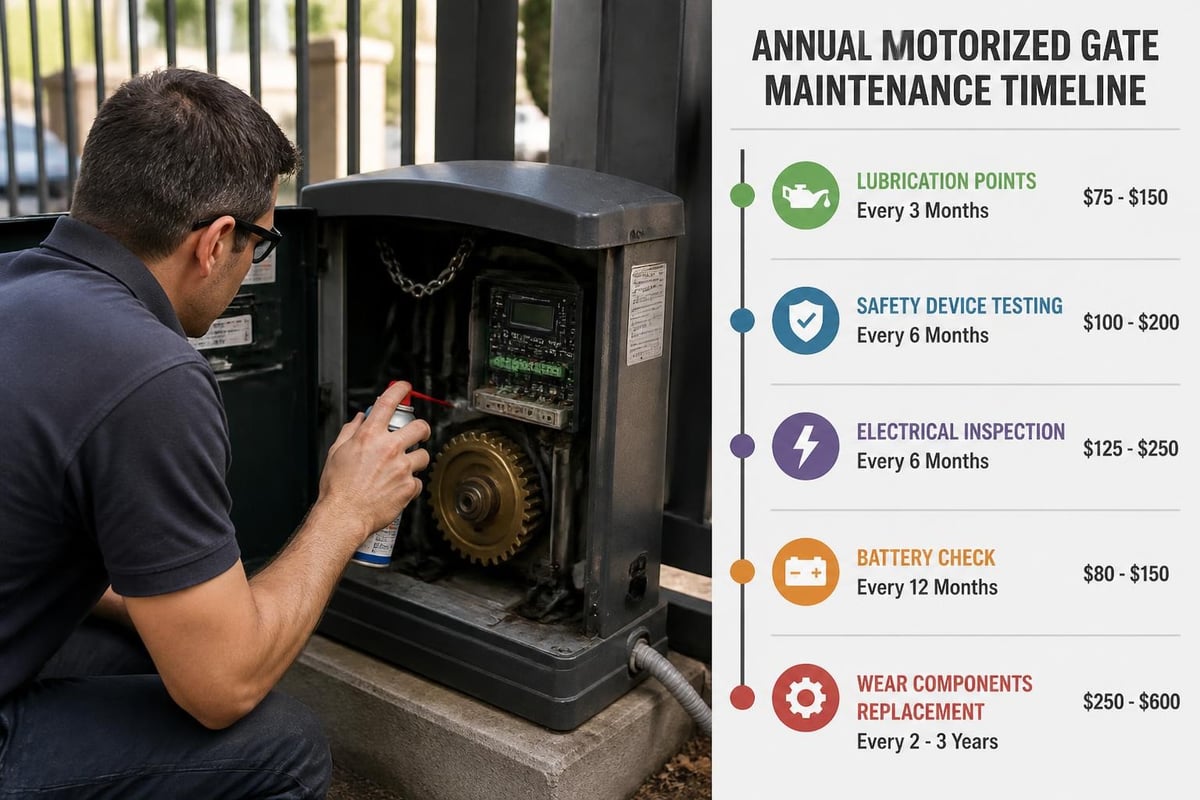
Beyond initial installation, motorized gate cost includes regular maintenance and periodic repairs. Well-maintained systems last 15–25 years, while neglected gates often fail within 5–10 years, requiring expensive emergency repairs or complete replacement.
Preventive maintenance should occur every 6–12 months, costing $150–$400 per visit. Technicians lubricate moving parts, test safety devices, adjust limit switches, and inspect electrical connections. Annual maintenance contracts typically offer 10–20% savings over per-visit pricing.
Common wear items require periodic replacement:
- Gate operator batteries (backup systems): $80–$200 every 3–5 years
- Photo-eye sensors: $100–$250 every 5–8 years
- Drive chains or belts: $150–$400 every 8–12 years
- Circuit boards: $200–$600 every 10–15 years
Energy Consumption
Electric gates consume minimal power, typically $3–$15 monthly in electricity costs. Solar-powered systems eliminate operating costs but may require battery replacement every 4–7 years at $150–$400. Heavier commercial gates with frequent operation cycles consume more power, especially in cold weather when operators work harder.
Standby power consumption (keeping electronics and safety devices active) accounts for 60–80% of total energy use. Modern operators with energy-saving modes reduce consumption by 30–50% compared to older units, paying for themselves through utility savings over their lifetime.
Material and Design Upgrades
Premium materials and custom designs substantially increase motorized gate cost but deliver enhanced aesthetics, durability, and property value. Standard designs using stock materials represent the most affordable option, while fully custom gates can cost 3–5 times as much.
Material selection impacts both appearance and longevity:
- Chain-link: $300–$800 (industrial, utilitarian)
- Aluminum: $1,200–$3,500 (lightweight, corrosion-resistant)
- Steel: $1,800–$5,000 (strong, requires maintenance)
- Wrought iron: $3,000–$8,000 (decorative, durable)
- Wood: $2,500–$6,000 (natural aesthetic, weather-sensitive)
- Composite: $3,500–$7,500 (low maintenance, varied styles)
Decorative Elements and Customization
Custom ornamental details, powder coating in specific colors, and architectural embellishments add $500–$3,000 to base gate costs. Mediterranean-style estates and modern architectural homes often specify custom designs that reflect the property's character, viewing the gate as an essential design element rather than purely functional hardware.
According to Cost vs. Value analysis, high-quality gates and entry improvements typically return 60–75% of cost upon resale, with premium neighborhoods seeing even higher recovery rates. Gates serve as a home's first impression, and well-executed installations enhance perceived value disproportionately to their cost.
Geographic and Site-Specific Factors
Los Angeles property characteristics significantly influence motorized gate cost through soil conditions, slope, wind exposure, and existing infrastructure. Hillside properties often require extensive foundation work, while flat lots with stable soil allow simpler installations.
Slope considerations affect both gate type selection and installation cost. Sloped driveways exceeding 8–10% grades require specialized operators with anti-freewheel braking systems, adding $300–$800. Extreme slopes may necessitate sliding gates or custom solutions, substantially increasing costs.
Wind exposure in coastal or hilltop locations demands heavier-duty operators and reinforced gate construction. High-wind-rated systems cost 20–40% more but prevent damage and maintain reliable operation during Santa Ana wind events that can exceed 60 mph.
Soil and Foundation Requirements
Los Angeles's varied geology creates installation challenges. Expansive clay soils require deeper post foundations (4–6 feet versus 2–3 feet in stable soil), adding $200–$600 per post. Rocky or hardpan conditions may require specialized excavation equipment, increasing labor costs 30–50%.
Sliding gates need level, stable track foundations. Poor soil may require 4–6 inch concrete pads extending the gate's full length, costing $8–$15 per linear foot. Properties in hillside areas sometimes need retaining walls or terracing to create adequate level areas, adding $2,000–$10,000 to project scope.
Commercial vs. Residential System Differences
Commercial motorized gate cost runs significantly higher than residential due to heavier construction, higher duty cycles, enhanced safety requirements, and sophisticated access control. Understanding these differences helps property owners budget appropriately for their specific application.
Duty cycle ratings indicate how frequently operators can safely cycle. Residential systems rated for 10–30 cycles daily cost $800–$2,500, while commercial units handling 100+ cycles cost $2,500–$5,000. Installing residential equipment in commercial applications voids warranties and leads to premature failure.
Construction specifications differ substantially. Commercial gates must meet ASTM F2200 standards for vehicular gate construction, which specify material gauges, welding requirements, and structural load calculations. These requirements add 30–50% to fabrication costs compared to residential gates.
Liability and Insurance Considerations
Commercial property owners face greater liability exposure, making robust safety systems essential. Many insurance policies require specific safety features, regular professional maintenance documentation, and compliance with NAFCA installation guidelines. Inadequate systems can increase insurance premiums or result in coverage denials.
Professional maintenance contracts ($600–$2,000 annually) provide documented compliance and rapid repair response. For commercial properties, the cost of gate downtime-blocking access for customers, deliveries, or employees-often exceeds repair costs, justifying premium maintenance programs.
Operator Type and Technology Selection
Gate operator technology significantly impacts motorized gate cost, performance, and longevity. The four primary operator types each suit specific applications, with prices varying based on gate weight, cycle requirements, and feature sets.
Arm operators (articulated or linear) work for swing gates, mounting to the gate post and pushing/pulling the gate leaf. Linear arms cost $600–$1,500 for residential applications, while heavy-duty articulated arms for large commercial gates reach $2,000–$4,000. These systems require precise installation to prevent binding and premature wear.
Underground operators hide mechanics below ground level, creating clean aesthetics but costing $1,800–$4,500 installed per gate leaf. Installation requires concrete vaults and careful waterproofing. While expensive, these systems suit high-end properties where visible hardware detracts from architectural design.
Sliding Gate Operator Options
Sliding gates use rack-and-pinion, chain-drive, or screw-drive operators. Chain-drive systems ($1,200–$2,500) offer quiet operation and low maintenance. Screw-drive units ($1,500–$3,000) provide excellent power for heavy gates up to 2,000 pounds. Industrial rack-and-pinion systems ($2,500–$5,000) handle gates exceeding 3,000 pounds common in commercial facilities.
According to buyer’s guides covering gate opener types, feature trade-offs between operator styles significantly affect long-term satisfaction. Cheaper units may lack soft-start/stop features that reduce mechanical stress, or variable speed control that adapts to wind resistance.
Battery backup systems ensure operation during power outages, critical for security gates. Basic backup adds $200–$400, while solar charging systems with multi-day capacity cost $800–$2,000. Los Angeles's frequent planned power shutoffs make backup systems increasingly valuable.
Regional Cost Variations and Local Market Factors
Los Angeles motorized gate cost trends 15–30% higher than national averages due to elevated labor rates, strict code requirements, and premium material preferences. Coastal neighborhoods often specify corrosion-resistant materials and finishes that add $500–$2,000 to standard installations.
Permitting complexity varies dramatically across Los Angeles County jurisdictions. Unincorporated county areas typically process permits faster with lower fees ($150–$300), while municipalities like Beverly Hills or Malibu impose stricter design review and higher fees ($400–$800).
Contractor availability and competition also affect pricing. High-demand periods (spring and early summer) see 10–20% price premiums, while winter months offer opportunities for negotiated discounts. Obtaining 3–5 detailed quotes helps ensure competitive pricing for your specific scope.
Seasonal and Economic Factors
Material costs fluctuate with steel and aluminum market prices. Recent years have seen 20–40% price volatility for metal gates, making project timing significant for budget-conscious buyers. Locking in quotes with material price guarantees protects against mid-project increases.
Labor shortages in skilled trades periodically drive installation costs higher. Experienced gate installers command premium rates ($80–$150/hour) but deliver superior results with fewer callbacks. Federal Register updates to operator safety standards occasionally require equipment upgrades or installation procedure changes that affect pricing temporarily until installers adjust to new requirements.
Value-Engineering Strategies and Cost Management
Strategic planning can reduce motorized gate cost without sacrificing quality or longevity. Understanding where to invest and where to economize ensures maximum value from your budget.
Phased implementation spreads costs over time. Install manual gates initially with operator-ready mounting hardware, then add automation within 1–2 years. This approach costs 10–15% more than integrated installation but eases immediate budget pressure.
Material selection offers significant savings opportunities. Powder-coated steel gates deliver 80% of wrought iron's aesthetic appeal at 60% of the cost. Aluminum gates eliminate rust concerns in coastal areas without composite material premiums.
DIY Considerations and Professional Value
Experienced homeowners can self-install basic swing gate operators, saving $400–$800 in labor. However, electrical work requires licensed professionals in Los Angeles, and errors with safety device installation create serious liability risks. Most property owners find professional installation worth the cost for proper setup, warranty coverage, and code compliance.
Buying equipment separately versus through installers sometimes saves 15–25% on hardware costs but voids many manufacturer warranties that require professional installation. Equipment-only purchases also shift burden of component compatibility and sizing calculations to the buyer, where errors prove expensive.
Comparing local pricing benchmarks for similar projects helps identify fair market rates and avoid overcharging. Request itemized quotes breaking out materials, labor, permits, and accessories to understand where your money goes and identify negotiation opportunities.
Understanding motorized gate cost requires evaluating equipment, installation, safety systems, access control, permits, and ongoing maintenance as an integrated investment rather than isolated expenses. For Los Angeles property owners seeking reliable installation and responsive service, Gates On Site delivers over 20 years of experience with same-day service throughout the region. Whether you need a new motorized gate system or repairs to existing equipment, our licensed technicians arrive with fully stocked vehicles to complete your project efficiently and ensure years of trouble-free operation.