
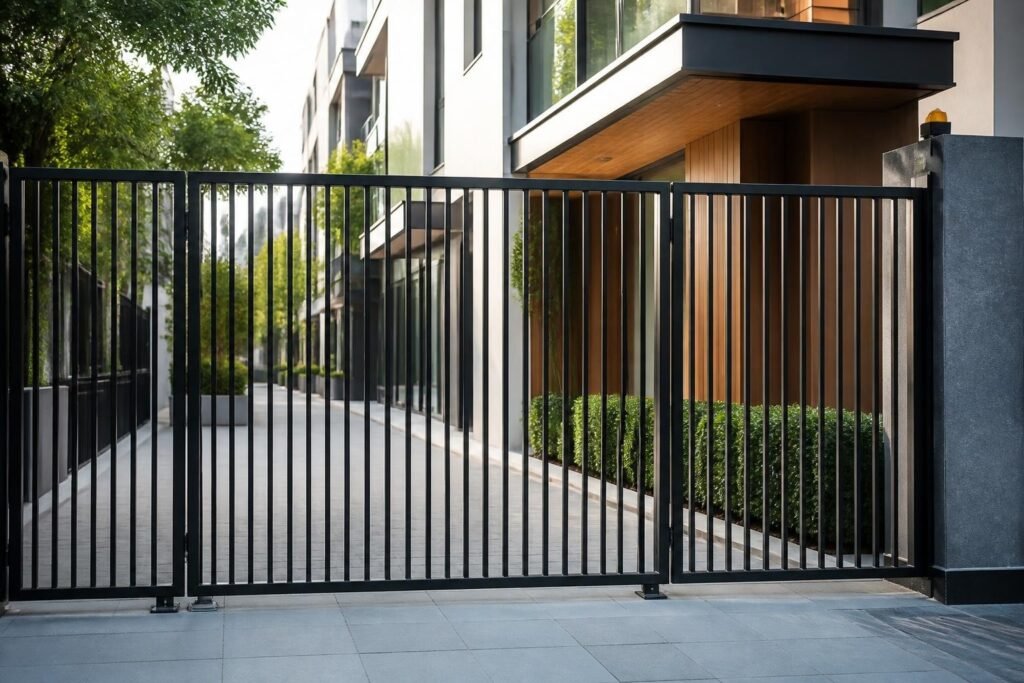
Property gates serve as the first line of defense for residential and commercial properties, combining security, aesthetics, and functionality in a single installation. Whether protecting a private estate, securing a commercial facility, or controlling access to a gated community, these barriers have evolved from simple manual swing gates to sophisticated automated systems. Understanding the different types, features, and maintenance requirements of property gates helps owners make informed decisions that balance security needs with convenience and curb appeal.
Types of Property Gates and Their Applications
Property gates come in numerous configurations, each designed for specific security levels, traffic volumes, and aesthetic preferences. The selection process requires careful consideration of site conditions, intended use, and local building codes.
Swing Gates
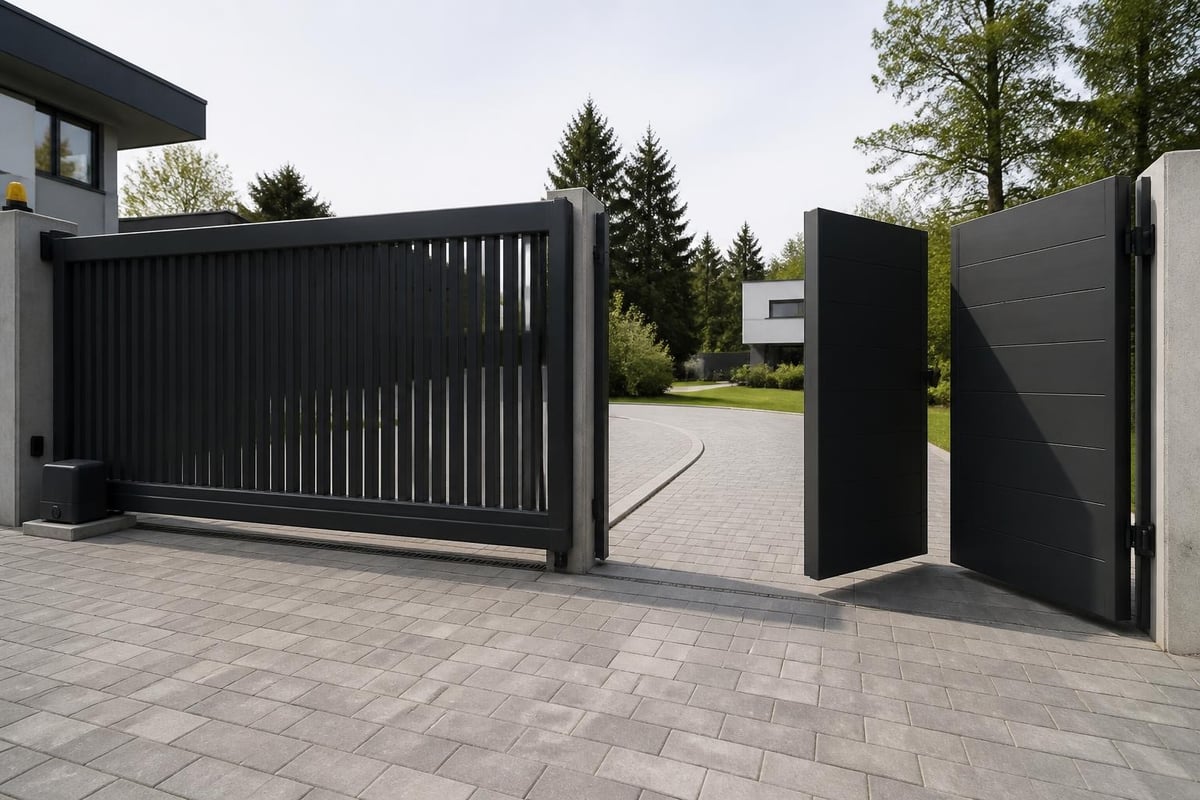
Swing gates remain one of the most popular choices for residential properties, operating like a traditional door by pivoting on hinges. Single-swing gates work well for narrower openings up to 16 feet, while dual-swing gates accommodate wider driveways and create a grand entrance.
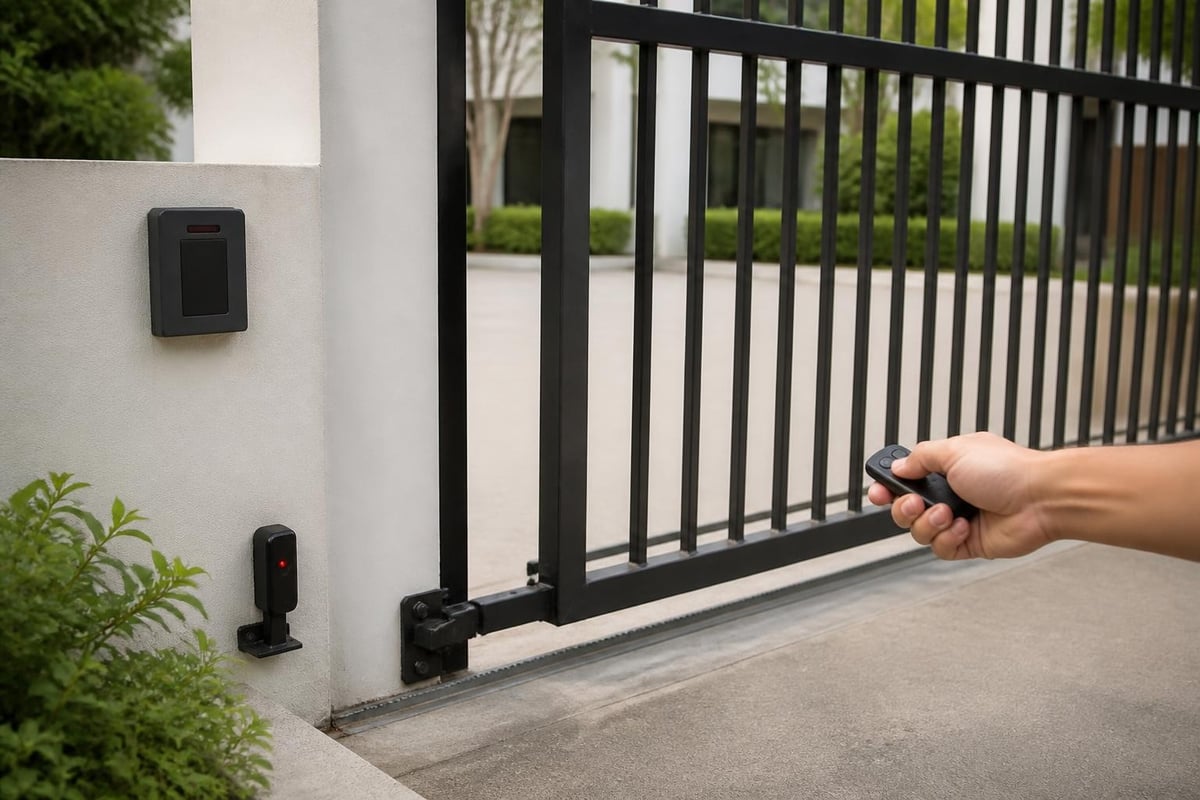
These gates require adequate clearance space to open, making them ideal for properties with ample driveway depth. Modern swing gates often integrate with automated openers that respond to remote controls, keypads, or smartphone apps, providing both convenience and security.
| Gate Type | Typical Width | Best Application | Automation Complexity |
|---|---|---|---|
| Single Swing | 8-16 feet | Residential driveways | Low |
| Dual Swing | 12-24 feet | Estate entrances | Moderate |
| Slide Gates | 8-40+ feet | Commercial, limited clearance | Moderate |
| Vertical Lift | 10-30 feet | Industrial, overhead clearance | High |
Slide Gates
Slide gates (also called sliding or cantilever gates) move horizontally along the fence line, making them perfect for properties with limited driveway depth or steep inclines. Track-mounted slide gates run on wheels along a ground track, while cantilever slide gates suspend above ground level, eliminating track maintenance and snow/debris issues.
Commercial properties frequently choose slide gates because they handle high-traffic volumes efficiently and provide excellent security when paired with proper access control systems. The cantilevered design, though more expensive initially, offers superior durability and requires less maintenance over time.
Vertical Lift and Barrier Gates
Vertical lift gates rise upward to allow access, similar to a drawbridge mechanism. These property gates work exceptionally well when horizontal space is limited or when matching existing architectural styles. Parking facilities, industrial sites, and facilities requiring rapid access/egress often deploy barrier arm gates that combine speed with vehicle detection safety systems.
Barrier gates serve as cost-effective solutions for high-frequency access points where full gate security isn't required, such as parking lot entrances or visitor checkpoints. They integrate seamlessly with card readers, license plate recognition systems, and intercom stations.
Security Features and Access Control Integration
Modern property gates function as sophisticated security systems that do far more than physically block entry. Integration with access control technology transforms gates into smart perimeter protection that logs activity, restricts unauthorized access, and provides remote management capabilities.
Physical Security Standards
Property gates designed for high-security applications must meet specific industry standards. The ASTM F2200 standard establishes requirements for automated vehicular gate construction, covering design, installation, and testing protocols that ensure gates can withstand attempted breaches while operating safely.
For facilities requiring vehicle barrier protection against forced entry or ramming attacks, crash-rated gates tested to ASTM F2656 standards provide measurable resistance. These gates undergo rigorous testing where vehicles at specific speeds and weights attempt to breach the barrier, with ratings indicating stopping power.
Critical infrastructure and government facilities often specify gates that meet Department of Homeland Security criteria, which can be verified through the SAFETY Act approved technologies database.
Access Control Technologies
Contemporary property gates leverage multiple access control methods:
- Keypads and card readers provide individual access codes that can be programmed, tracked, and revoked
- License plate recognition (LPR) systems automatically identify authorized vehicles and open gates without driver interaction
- Smartphone apps enable remote gate operation and visitor access from anywhere
- Intercom systems allow two-way communication for visitor screening
- Biometric scanners add fingerprint or facial recognition for maximum security
These systems generate audit trails that record every gate operation, creating accountability and helping property managers identify patterns or security concerns. Integration with property-wide security systems enables coordinated response protocols when unauthorized access is attempted.
Safety Compliance for Automated Property Gates
Automated property gates must incorporate multiple safety features to prevent entrapment injuries and comply with building codes. UL 325 standards govern gate operators and require specific entrapment protection devices based on the gate's application and location.
Entrapment Protection Systems
Modern gate operators include several layers of safety protection:
- Photo-eye sensors detect objects or people in the gate's path and reverse or stop movement
- Edge sensors mounted on the gate's leading edge respond to contact pressure
- Loop detectors embedded in driveways sense vehicles and prevent gate closure
- Force-limiting operators automatically reverse when meeting unexpected resistance
- Manual release mechanisms allow gate operation during power failures or emergencies
Gates serving public access points require more stringent safety measures than private residential gates, with monitored entrapment protection and regular third-party testing. Installation records, operator manuals, and maintenance logs should document compliance with applicable codes.
Emergency Access Considerations
Fire departments and emergency services require unimpeded access during emergencies. Property gates must incorporate emergency override systems, typically using Knox boxes, fire department master keys, or automatic gate opening triggered by emergency vehicle sirens.
The NFPA guidance on fire department access addresses gate installations, emphasizing that security measures cannot compromise emergency response times. Communities and commercial properties should coordinate with local fire marshals during gate planning to ensure compliance.
Design Considerations and Material Selection
Property gates make powerful architectural statements while serving functional purposes. Material choice affects durability, maintenance requirements, aesthetic compatibility, and long-term cost of ownership.
Material Options
| Material | Advantages | Maintenance | Typical Lifespan |
|---|---|---|---|
| Wrought Iron | Classic appearance, extremely strong | Rust prevention, painting | 30-50 years |
| Aluminum | Lightweight, rust-resistant, versatile | Minimal, occasional cleaning | 20-30 years |
| Steel | Maximum security, impact-resistant | Rust treatment, regular coating | 25-40 years |
| Wood | Natural aesthetic, customizable | Sealing, staining, rot prevention | 15-25 years |
| Vinyl/Composite | Low maintenance, weather-resistant | Cleaning only | 20-30 years |
Wrought iron and ornamental steel gates offer timeless elegance and superior strength, making them popular for estate properties and historic buildings. The material accepts intricate scrollwork, custom designs, and powder-coat finishes in virtually any color. Regular maintenance prevents rust and ensures longevity.
Aluminum gates provide excellent corrosion resistance, particularly important in coastal areas or regions with harsh winters. Their lighter weight reduces strain on automated operators and support structures, though they offer less impact resistance than steel alternatives.
Accessibility Requirements
Commercial property gates and gates serving public accommodations must comply with ADA design standards, ensuring accessible passage for individuals with disabilities. Requirements address opening force, clear width, threshold height, and operating mechanisms that don't require tight grasping or twisting.
Automated gates generally meet accessibility standards more readily than manual gates, as they eliminate the physical effort required for opening. However, designers must ensure control stations (keypads, card readers) are positioned at accessible heights and don't create protruding obstacles.
Maintenance and Common Repair Needs
Regular maintenance extends property gate lifespan and prevents unexpected failures that compromise security. Most automated gate problems stem from predictable wear patterns that preventive care can address before they cause system failure.
Routine Maintenance Tasks
Property gates require periodic attention to several critical components:
- Hinges and pivot points need lubrication every three to six months to prevent binding
- Wheel assemblies and tracks (on slide gates) require cleaning and debris removal
- Safety sensors should be tested monthly and cleaned of dirt, spider webs, or moisture
- Battery backup systems need testing and replacement every 2-3 years
- Gate operators and motors benefit from professional inspection annually
Weather exposure accelerates wear on property gates, particularly in areas experiencing temperature extremes, salt air, or heavy precipitation. Protective coatings, proper drainage design, and material selection suited to local climate conditions minimize weather-related deterioration.
Common Repair Issues
Even well-maintained gates eventually require professional attention. When automated systems malfunction, property owners in Los Angeles can access same-day electric gate repair services to restore security and functionality without extended downtime.
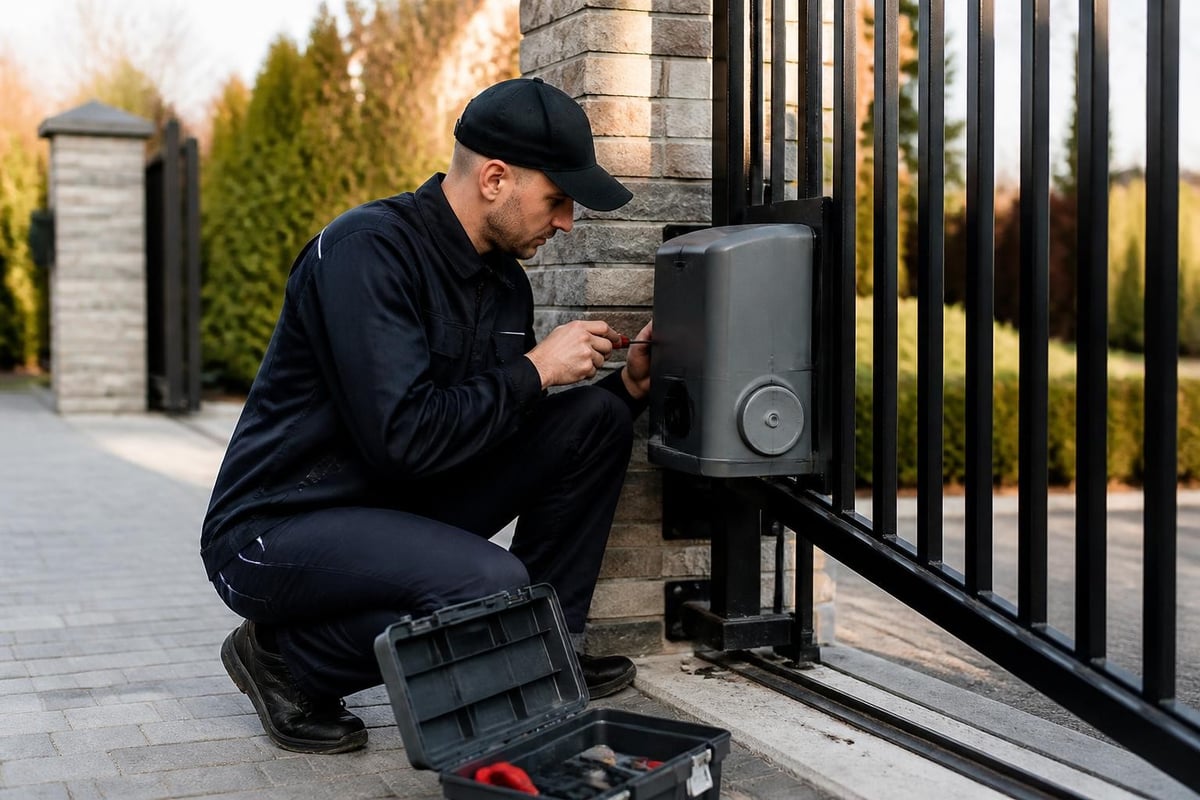
Motor and operator failures typically result from power surges, age-related component wear, or environmental exposure. Burned-out motors, failed control boards, and damaged wiring require diagnosis by experienced technicians with proper replacement parts.
Structural problems develop when gates sag, hinges fail, or support posts shift. These issues often indicate improper initial installation, inadequate foundation work, or soil movement. Correcting structural problems may require reinforcing posts, adjusting gate alignment, or installing additional support.
Safety system malfunctions compromise both security and user safety. Non-functioning photo-eyes, failed edge sensors, or disabled emergency releases create liability exposure and code violations requiring immediate attention from qualified professionals.
Advanced Features and Smart Integration
Technology continues transforming property gates from simple barriers into intelligent security systems that integrate with comprehensive property management platforms. Modern installations incorporate features that would have seemed futuristic just a decade ago.
Smart Home and Building Integration
Property gates now connect seamlessly with smart home ecosystems, allowing owners to:
- Monitor gate status in real-time through mobile apps
- Receive notifications when gates open or close
- Grant temporary access to visitors, delivery drivers, or service providers
- Review gate activity logs and video footage
- Integrate gate control with security cameras, lighting, and alarm systems
Voice control through platforms like Amazon Alexa or Google Assistant enables hands-free gate operation, while geofencing technology can automatically open gates as authorized vehicles approach and close them after passage.
Commercial Property Applications
Commercial property gates serve diverse functions beyond basic access control. Parking management systems synchronize gates with payment processing, validating paid parking or subscription access. Loading dock gates coordinate with scheduling systems to manage vendor access during approved time windows.
Multi-tenant facilities use property gates with individual access credentials that track tenant activity, allocate parking spaces, and generate usage reports for billing purposes. These sophisticated systems integrate with building management platforms to create comprehensive property oversight.
Perimeter Security and Threat Assessment
Property gates function as one component within layered security approaches. The CISA guidance on physical security emphasizes that effective perimeter protection requires integrated fencing, gates, access control, surveillance, and response protocols working together.
Vehicle Barrier Protection
High-security installations requiring protection against vehicle-borne threats deploy crash-rated gates and bollards tested to withstand specific impact forces. The FHWA primer on vehicle security barriers provides technical guidance on designing gate systems that balance daily operational needs with threat mitigation requirements.
Facilities conducting threat assessments evaluate factors including:
- Asset value and consequences of unauthorized access
- Threat likelihood based on location, purpose, and history
- Standoff distance available for perimeter protection
- Traffic patterns and operational flow requirements
- Response capabilities of security personnel or law enforcement
Based on assessment results, property owners select appropriate gate ratings, reinforce supporting structures, and integrate gates with surveillance and intrusion detection systems.
Layered Defense Strategies
Effective security employs multiple barriers that delay intruders and provide response time. Property gates serve as the primary perimeter barrier, working with:
- Fencing extending from gate boundaries to eliminate bypass routes
- Lighting illuminating approaches and eliminating concealment areas
- Cameras providing surveillance of gate areas and recording activity
- Signage warning of restricted access and surveillance presence
- Secondary access control at building entrances for additional verification
This defense-in-depth approach recognizes that no single security measure provides complete protection, but layered systems exponentially increase difficulty for unauthorized access while preserving legitimate user convenience.
Installation Considerations and Site Preparation
Proper property gate installation requires careful site evaluation, preparation, and professional execution. Shortcuts during installation create chronic problems that expensive repairs cannot fully correct.
Site Assessment Factors
Before installation, professionals evaluate several critical factors:
Soil conditions determine foundation requirements, with clay soils requiring deeper posts and concrete footings than stable bedrock. Poor drainage creates gate foundation movement that causes misalignment and binding.
Slope and grade affect gate operation, particularly for swing gates that may not close properly on inclines. Site grading may be necessary to create level mounting areas or ensure proper drainage away from gate mechanisms.
Utility locations must be identified before excavation for gate posts or underground operators. Damaging buried electrical, gas, or communications lines creates safety hazards and expensive repairs. Professional installers contact utility locating services before breaking ground.
Wind exposure influences gate design, with large solid gates creating substantial wind load on operators and support structures. Sites with persistent high winds may require reinforced posts, larger operators, or perforated gate designs that reduce wind resistance.
Professional Installation Value
DIY property gate installation rarely achieves the performance and longevity that professional installation provides. Experienced installers ensure proper post spacing, operator sizing, safety system integration, and code compliance that protects property owners from liability.
Licensed contractors carry insurance covering installation errors, provide warranties on work performed, and understand local permitting requirements. They also stock specialized tools for precise gate alignment, welding equipment for secure connections, and diagnostic equipment for testing automated systems.
For property owners throughout the Los Angeles area seeking reliable gate services, Gates On Site offers comprehensive installation, repair, and maintenance backed by over 20 years of experience and fully stocked service vehicles for efficient on-site work.
Property gates represent significant investments that provide security, convenience, and aesthetic value when properly selected, installed, and maintained. From residential driveways to commercial facilities, these systems balance access control with operational efficiency while meeting safety standards and user expectations. Whether you're experiencing gate malfunctions, planning new installations, or seeking to upgrade existing systems, Gates On Site delivers expert residential and commercial gate services throughout Los Angeles, with same-day emergency repairs at no extra charge to keep your property secure and accessible.