
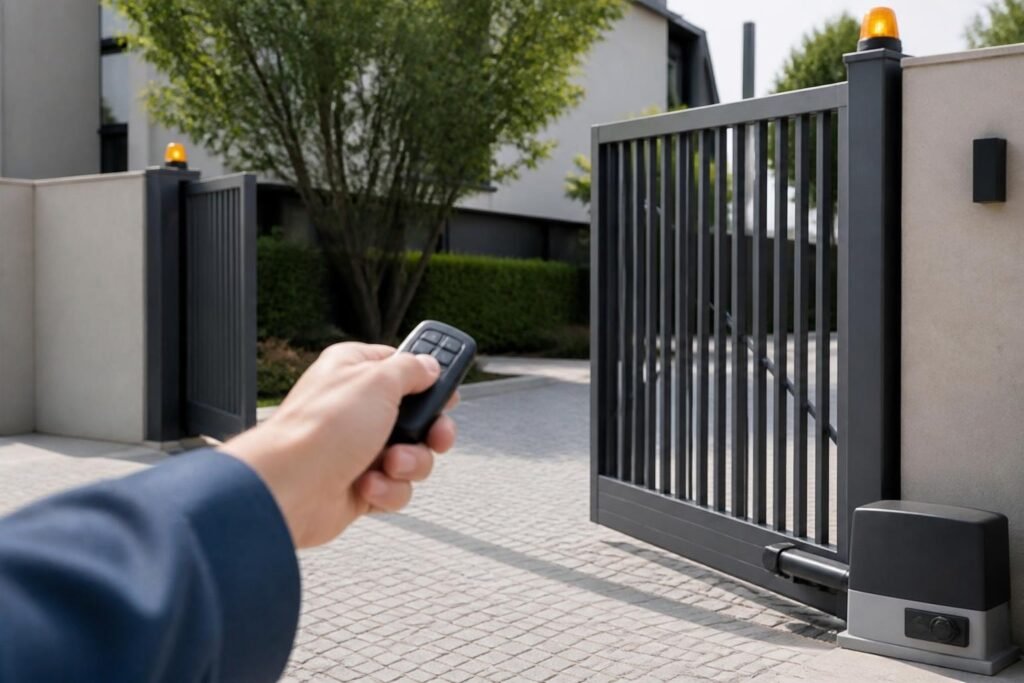
Property owners in Los Angeles and across the nation increasingly rely on automated access control to enhance security and convenience. A remote control gate opener transforms a manual barrier into a sophisticated entry system that responds to wireless commands from vehicles, smartphones, or handheld devices. Whether protecting a residential driveway or managing a commercial facility, understanding how these systems work, what features matter most, and how to maintain them ensures reliable performance for years to come.
Understanding Remote Control Gate Opener Technology
Modern gate automation relies on radio frequency transmission between a portable controller and a receiver unit mounted on the gate operator. When you press the button on your transmitter, it sends an encoded signal that the receiver validates before triggering the motor to open or close the gate.
How Wireless Communication Works
The communication between remote and operator happens across specific frequency bands, with most residential systems operating at 300-390 MHz. Commercial installations sometimes use different frequencies to avoid interference and accommodate multiple users.
Key transmission components include:
- Transmitter circuit board and battery
- Antenna for signal propagation
- Receiver module integrated with the operator
- Rolling code or fixed code security protocols
Security has evolved significantly since the early days of gate automation. Modern remote control gate opener systems predominantly use rolling code technology, which generates a new encryption key with each use. This prevents code grabbing and unauthorized duplication that plagued older fixed-code systems.
The UL 325 safety standard governs automatic gate operators in North America, ensuring that remote-controlled systems include required safety features like entrapment protection and emergency release mechanisms.
Types of Remote Control Gate Openers
Selecting the right operator depends on gate type, weight, usage frequency, and site conditions. Each category offers distinct advantages for specific applications.
Swing Gate Operators
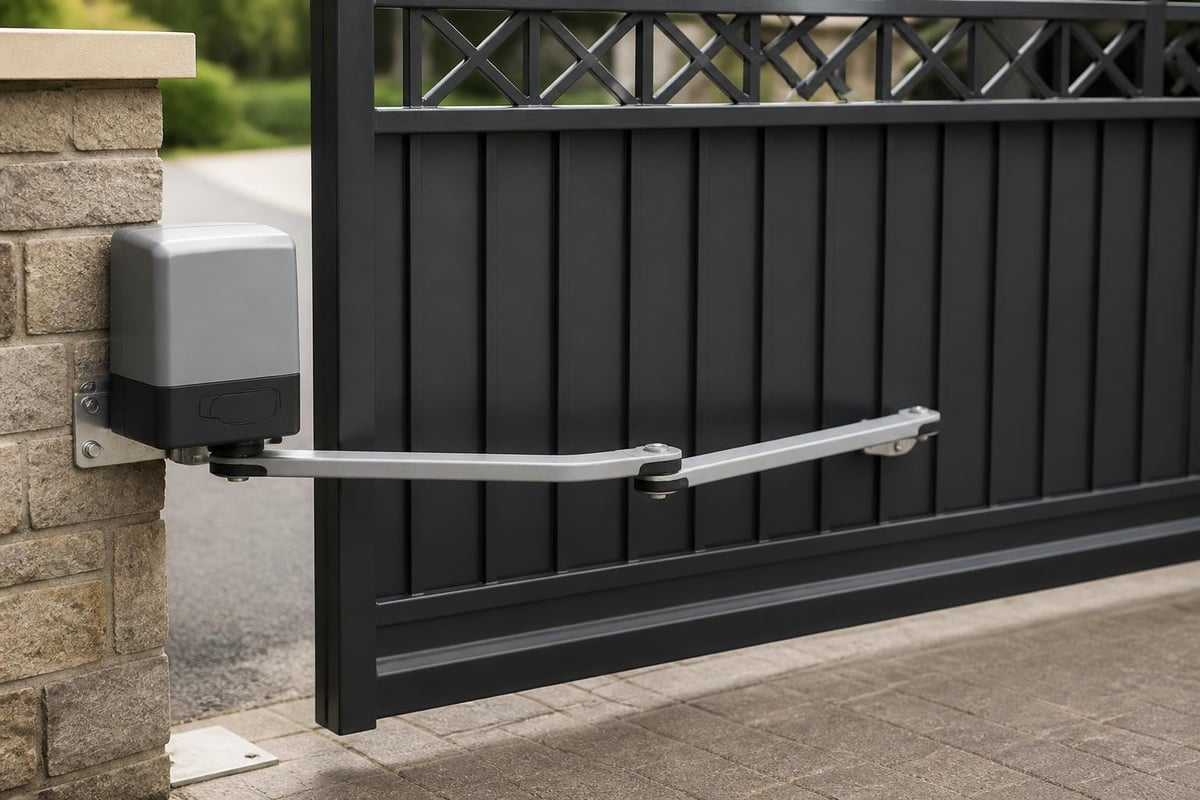
Swing gate systems open inward or outward like traditional doors. Remote control gate opener units for swing gates mount on posts or walls near the hinge point, using articulated arms or linear actuators to push or pull the gate leaves.
| Operator Type | Weight Capacity | Ideal Application | Power Requirement |
|---|---|---|---|
| Articulated Arm | Up to 1,000 lbs | Residential driveways | 120V or solar |
| Linear Actuator | Up to 1,500 lbs | Commercial entries | 120V/240V |
| Underground | Up to 2,000 lbs | High-end residential | 120V/240V |
Articulated arm operators are the most common for residential installations because they accommodate gates mounted on masonry columns where underground installation isn't practical. Linear actuators provide faster cycle times for high-traffic commercial locations.
Slide Gate Operators
Slide gate systems move horizontally along a track, making them ideal for properties with limited clearance perpendicular to the fence line. A remote control gate opener for sliding gates drives a gear or chain that engages a rack mounted to the gate bottom.
Advantages of slide gate automation:
- No clearance needed for gate swing arc
- Better wind resistance than swing gates
- Faster operation for wide openings
- Suitable for sloped driveways
Commercial facilities often prefer slide gates because they handle larger openings efficiently and integrate well with card access systems and vehicle loops. Residential applications benefit from the space-saving design when driveway geometry doesn't accommodate swing gates.
Barrier Arm Operators
High-speed barrier arms control parking facilities, toll lanes, and restricted access roads. These specialized remote control gate opener systems cycle in under three seconds and often include traffic light integration and vehicle detection.
The DASMA gate opener resources provide comprehensive technical guidance on selecting and installing various operator types, including barrier arms and their unique safety requirements.
Essential Features for Modern Gate Automation
Today's remote control gate opener technology extends far beyond simple open/close commands. Advanced features enhance security, convenience, and integration with broader property management systems.
Smart Home Integration
Wi-Fi enabled operators connect to home automation platforms, allowing control through smartphone apps, voice assistants, and scheduled automation. You can grant temporary access to visitors, receive notifications when the gate operates, and monitor battery backup status remotely.
Integration platforms typically support:
- iOS and Android mobile apps
- Amazon Alexa voice commands
- Google Home compatibility
- IFTTT automation triggers
- Remote diagnostic monitoring
Property managers appreciate the audit trail capabilities that log every gate operation, identifying who accessed the property and when. This becomes particularly valuable for commercial facilities and multi-tenant residential communities.
The NIST IoT cybersecurity guidance addresses important security considerations when connecting gate operators to networks and the internet, helping prevent unauthorized access through cyber vulnerabilities.
Battery Backup Systems
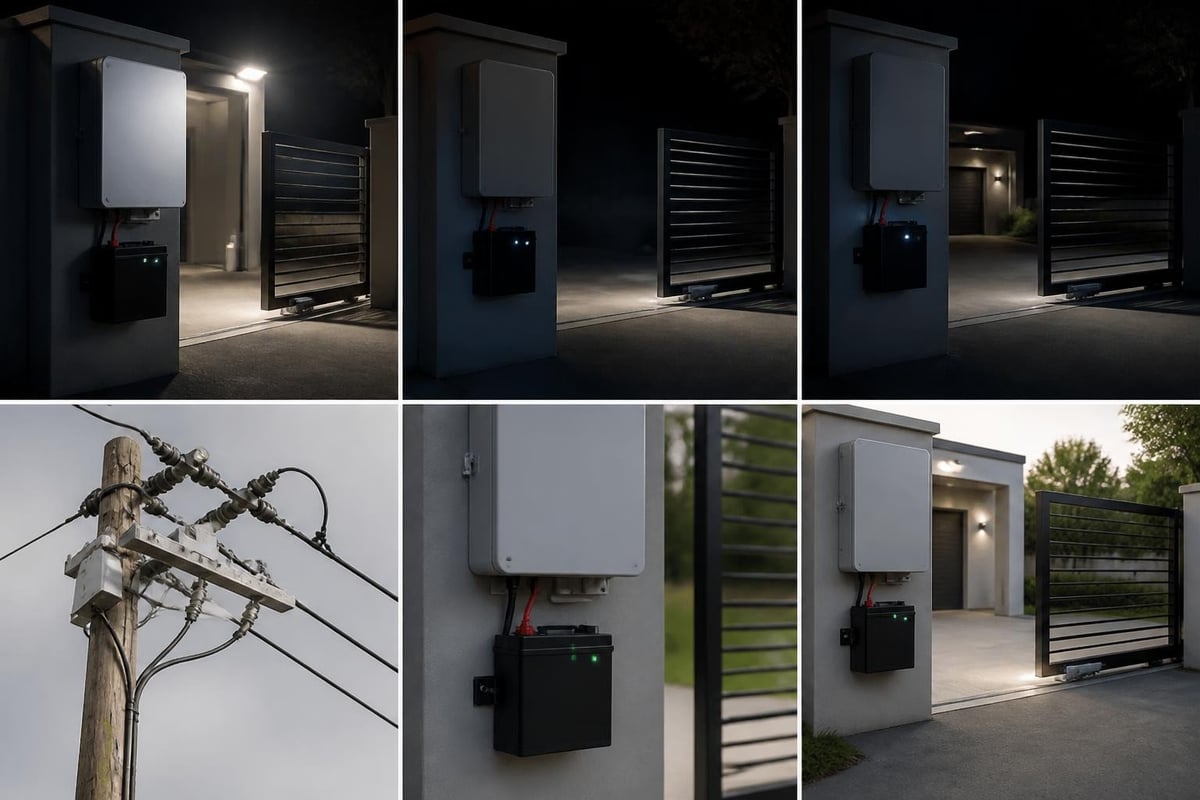
Power outages shouldn't compromise property access. Quality remote control gate opener units include battery backup that maintains operation during electrical service interruptions. Backup capacity varies from basic systems that provide 20-30 cycles to commercial units offering hundreds of operations.
| Backup Type | Typical Capacity | Charging Time | Best For |
|---|---|---|---|
| Standard 12V | 20-30 cycles | 24-48 hours | Residential, rare outages |
| Deep Cycle | 50-100 cycles | 48-72 hours | Areas with frequent outages |
| Lithium Ion | 100+ cycles | 12-24 hours | Commercial, critical access |
Los Angeles experiences relatively few extended power outages, but coastal areas prone to Public Safety Power Shutoffs during fire season benefit from robust backup systems. When selecting a professional electric gate repair service, ensuring your operator includes properly maintained battery backup provides peace of mind during emergencies.
Solar Power Options
Remote locations without electrical service can utilize solar-powered remote control gate opener systems. A solar panel charges batteries that power the operator, making automation possible for ranch gates, farm entries, and vacation properties.
Solar system components include:
- Photovoltaic panel (30-50 watt typical)
- Charge controller to prevent overcharging
- Deep cycle battery bank (usually 12V)
- Low-voltage operator designed for solar use
Solar installations require careful calculation of daily energy needs versus available sunlight. In Southern California's climate, solar gate automation works exceptionally well due to abundant sunshine year-round. Proper panel positioning and battery sizing ensures reliable operation even during winter months with shorter days.
Installation Requirements and Considerations
Professional installation ensures safe, code-compliant operation and prevents the most common failure points that plague DIY installations. Understanding what the installation process involves helps property owners make informed decisions.
Site Assessment Factors
A qualified technician evaluates multiple factors before recommending a specific remote control gate opener configuration. Gate weight and dimensions represent the most obvious considerations, but other variables significantly impact system selection.
Cycle frequency matters considerably. A residential driveway gate that operates 10-20 times daily requires a different duty rating than a commercial facility gate cycling hundreds of times. Commercial-duty operators include heavier components, larger motors, and enhanced cooling systems.
The ASTM F2200 standard specifies construction requirements for automated vehicular gates, covering crucial safety aspects like gap dimensions, entrapment zones, and required guarding that installers must address during site planning.
Wind loading affects gate operator sizing more than many property owners realize. Los Angeles neighborhoods exposed to Santa Ana winds need operators with sufficient torque to overcome wind resistance on solid gates. Slatted or ornamental gates with open designs present less resistance.
Electrical and Safety Code Compliance
Gate operator installation must comply with National Electrical Code requirements and local amendments. The NEC electrical code governs wiring methods, circuit protection, and grounding practices for outdoor motor installations.
Essential electrical requirements:
- Dedicated circuit with appropriate amperage
- GFCI protection for outdoor receptacles
- Proper grounding of operator chassis
- Conduit protection for buried wiring
- Emergency disconnect within sight of operator
Safety devices prevent the gate from striking vehicles, pedestrians, or objects in the path. Photo eye sensors create an invisible beam across the gate opening that reverses operation if interrupted. Pressure-sensitive edges detect contact and immediately stop or reverse movement.
The ADA accessibility guidelines affect commercial installations, specifying maximum opening force, clear width requirements, and operation timing that automated gates must satisfy. Residential properties don't face these requirements, but applying similar principles enhances safety for all users.
Professional vs. DIY Installation
While some property owners possess the skills for gate automation installation, most benefit from professional expertise. Licensed technicians bring experience with code requirements, safety device placement, and the subtle adjustments that ensure smooth, quiet operation.
Professional installation typically includes:
- Complete site assessment and operator sizing
- Electrical circuit installation or verification
- Operator mounting and alignment
- Safety device installation and testing
- Remote programming and user training
- Documentation of all settings and adjustments
The Gates On Site team has witnessed countless DIY installations that seemed to work initially but developed problems within weeks. Improper limit switch adjustment, inadequate safety device coverage, and electrical wiring shortcuts create hazards and premature failure. Their experienced technicians ensure installations meet all safety standards while delivering reliable long-term performance.
Troubleshooting Common Remote Control Problems
Even properly installed systems occasionally develop issues. Understanding common problems helps property owners determine when simple fixes suffice versus when professional service becomes necessary.
Remote Transmitter Issues
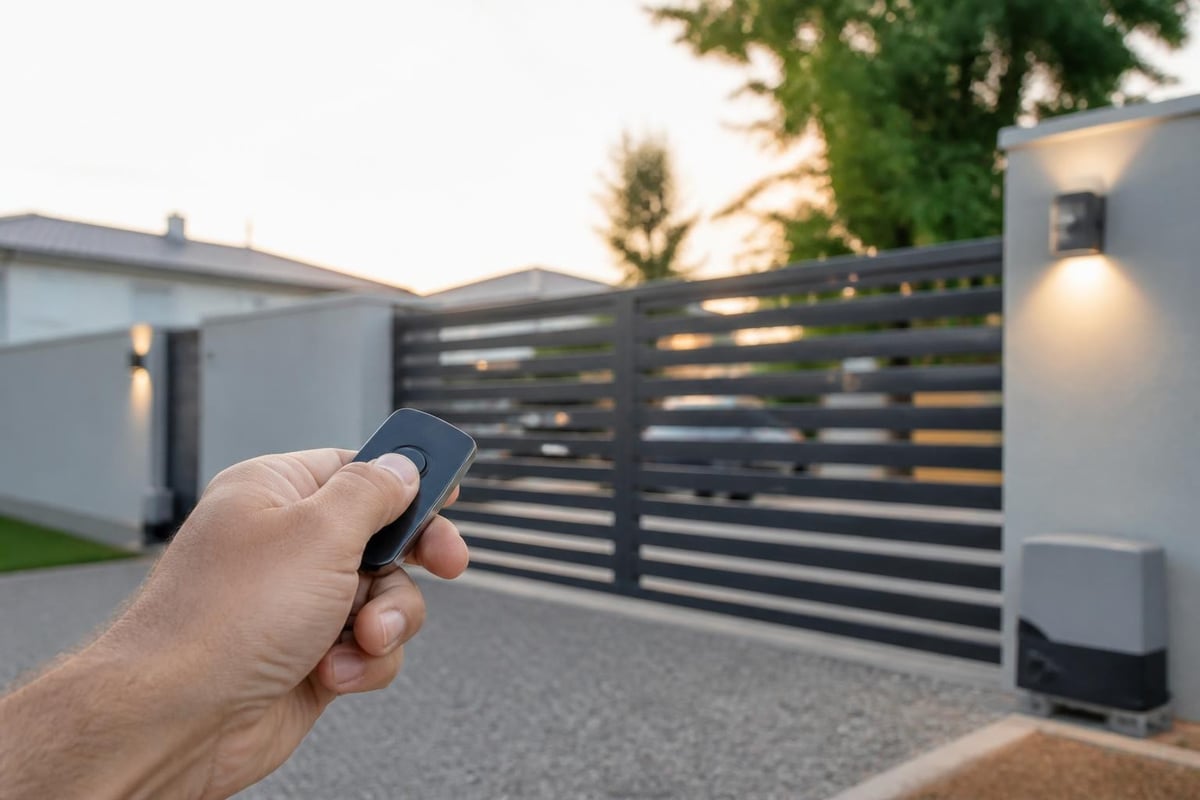
When your remote control gate opener stops responding, the transmitter is often the culprit. Battery depletion represents the most common cause. Most remotes use 3V lithium coin cells that last 1-3 years depending on usage frequency.
Transmitter troubleshooting steps:
- Replace battery and verify proper polarity
- Check for corroded battery contacts
- Confirm LED indicator lights when pressing button
- Test from various distances to rule out range issues
- Try alternate remote if available
If battery replacement doesn't resolve the problem, the transmitter circuit board may have failed due to moisture exposure or physical damage. Modern rolling code remotes can't be easily repaired, making replacement the practical solution.
Reception and Range Problems
A remote that worked perfectly yesterday but suddenly requires you to be within a few feet of the gate indicates reception issues. Several factors degrade signal strength and range.
| Problem | Likely Cause | Solution |
|---|---|---|
| Gradual range decrease | Antenna damage or disconnection | Inspect and replace antenna |
| Sudden range loss | Receiver board failure | Replace receiver module |
| Intermittent operation | Interference from new devices | Change frequency or relocate receiver |
| Works only close to gate | Weak transmitter battery | Replace battery |
Metallic structures near the receiver antenna can block or reflect radio signals, creating dead zones where the remote won't work despite being reasonably close. Repositioning the antenna or using an external antenna sometimes resolves these issues.
Operator Response Failures
When the remote transmits properly (confirmed by LED indicator) but the gate doesn't respond, the problem lies with the operator or its control board. First, verify the operator has power by checking for panel lights or attempting to operate the gate using the wall button if installed.
Circuit breakers trip for a reason. Resetting a breaker without identifying why it tripped invites repeated failures or fire hazards. Common causes include motor overload from binding gates, damaged wiring, or failed capacitors in the operator.
The DASMA technical data sheets include troubleshooting flowcharts for various gate operator symptoms, helping technicians systematically diagnose issues from remote control problems to mechanical binding.
Maintenance Best Practices
Preventive maintenance dramatically extends remote control gate opener service life and prevents inconvenient failures. A systematic approach addresses the most common wear points before they cause breakdowns.
Regular Inspection Schedule
Monthly visual inspections catch developing problems early. Walk through the gate's full travel path looking for new obstacles, accumulated debris, or changes in vegetation that could interfere with operation.
Monthly inspection checklist:
- Gate moves smoothly through full range
- No unusual sounds during operation
- Safety sensors align and function properly
- Photo eye lenses clean and unobstructed
- Remote operates from expected range
- Battery backup indicator shows full charge
Quarterly maintenance should include lubricating all moving parts with appropriate products. Swing gate hinges need heavy grease, while slide gate tracks and wheels require lighter lubricants that won't attract excessive dirt and debris.
Seasonal Maintenance Tasks
Los Angeles' mild climate doesn't impose the extreme seasonal demands that northern climates experience, but the region's dry summers and wet winters create specific maintenance needs.
Before winter rains arrive, inspect all electrical connections and junction boxes for secure seals. Water intrusion into control boxes or motor housings causes corrosion and electrical failures. Applying dielectric grease to exposed connections provides additional moisture protection.
Summer heat affects remote control gate opener performance through increased resistance in electrical components and accelerated lubricant breakdown. Higher ambient temperatures reduce motor cooling efficiency, making it crucial to verify the operator isn't mounted in direct afternoon sun without shade protection.
The energy efficiency considerations for electric motors apply to gate operators, where proper maintenance and alignment reduce unnecessary power consumption while extending motor life.
When to Call Professionals
Some maintenance tasks exceed typical property owner capabilities or require specialized tools and training. Attempting these repairs without proper knowledge creates safety hazards and potentially worsens problems.
Professional service becomes necessary for:
- Control board diagnostics and replacement
- Motor bearing replacement or rebuild
- Safety sensor adjustment and compliance testing
- Electrical circuit troubleshooting
- Structural repairs to gate mounting points
Gates On Site maintains fully stocked service vehicles throughout Los Angeles, enabling same-day repairs for most remote control gate opener issues. Their technicians diagnose problems accurately and carry the components needed to complete repairs on the first visit, minimizing downtime and inconvenience.
Security Considerations for Remote Access
A remote control gate opener represents a critical component of property security. Ensuring only authorized individuals can operate your gate requires attention to several vulnerability points.
Code Management Strategies
Modern operators support multiple remote transmitters, allowing different family members or employees to have individual access devices. This capability becomes a security asset when managed properly but creates vulnerabilities if ignored.
When employees leave, contractors complete projects, or you sell vehicles with visor-mounted remotes, delete those specific remote codes from the operator's memory. Most systems support individual code deletion without affecting other authorized remotes.
Remote management best practices include:
- Maintaining a log of all remotes issued
- Deleting codes immediately when access should end
- Using temporary access codes for short-term needs
- Implementing PIN pads for delivery drivers
- Reviewing access logs monthly for anomalies
Some property owners never delete old remote codes, leaving dozens of potentially compromised transmitters in circulation. This defeats the purpose of having a security gate. Annual review of all programmed remotes should be standard practice.
Physical Security Measures
The most sophisticated remote control gate opener provides little security if someone can easily climb over the fence or manually release the operator. Emergency manual release mechanisms are required by code for safety but must be secured against unauthorized use.
Quality operators include release mechanisms that require a key or tool to access, preventing casual tampering. The release should be accessible for emergency responders but not obvious to potential intruders.
Perimeter security works as a system. Your gate automation should integrate with fencing of appropriate height, with gaps too small for climbing, and ideally monitored by cameras or motion sensors. A premium gate operator on a three-foot fence provides little actual security.
Advanced Features and Future Trends
Gate automation technology continues evolving, with manufacturers introducing capabilities that seemed futuristic just a few years ago. Understanding emerging trends helps property owners make investment decisions that remain relevant longer.
Artificial Intelligence and Predictive Maintenance
Newer remote control gate opener systems incorporate sensors that monitor motor current draw, cycle times, and operating temperatures. AI algorithms analyze this data to predict component failures before they occur, alerting property owners to schedule maintenance proactively.
This predictive approach transforms maintenance from reactive emergency repairs to planned service during convenient times. Commercial properties particularly benefit from avoiding unexpected gate failures that disrupt operations.
Vehicle Recognition Technology
License plate recognition eliminates the need for remotes entirely, automatically opening gates for registered vehicles. Cameras capture plate images, software compares them to authorized databases, and the gate opens seamlessly as vehicles approach.
This technology works exceptionally well for commercial properties with fleet vehicles, delivery services, or controlled parking facilities. Residential applications exist but represent a smaller market due to higher costs and the limited number of vehicles needing access.
Enhanced Integration Capabilities
The trend toward comprehensive smart property management accelerates. Future remote control gate opener systems will integrate more seamlessly with:
- Visitor management platforms
- Package delivery coordination
- Video intercom systems
- Biometric access controls
- Municipal emergency response networks
Los Angeles properties increasingly adopt these integrated approaches, particularly in commercial developments where property management efficiency directly impacts operating costs and tenant satisfaction.
Selecting the Right System for Your Property
With dozens of manufacturers and hundreds of models available, choosing an appropriate remote control gate opener requires considering your specific needs and circumstances rather than selecting the cheapest or most expensive option.
Residential Selection Criteria
Homeowners should prioritize reliability, ease of use, and aesthetic integration. The operator shouldn't detract from property appearance while providing years of trouble-free service.
For typical single-family residential applications, a quality medium-duty operator from established manufacturers provides the best value. Features to prioritize include battery backup, smartphone control capability, and quiet operation.
Solar power makes sense for properties where running electrical service to the gate location costs significantly more than solar equipment. For gates within 100 feet of existing electrical service, standard powered operators usually represent better long-term value.
Commercial Application Requirements
Commercial installations demand higher duty ratings, faster cycle times, and more robust construction. A residential-grade remote control gate opener operating in a commercial environment will fail prematurely from excessive use.
| Property Type | Daily Cycles | Recommended Duty | Special Features |
|---|---|---|---|
| Small office | 50-100 | Medium commercial | Card access integration |
| Warehouse | 100-300 | Heavy commercial | Vehicle loop detection |
| Apartment complex | 200-500+ | Industrial | Multiple access methods |
| Storage facility | Variable | Commercial | Individual tenant codes |
Professional guidance becomes even more critical for commercial installations. The Gates On Site team helps commercial clients specify appropriate systems based on actual usage patterns and future growth projections, preventing costly under-sizing or wasteful over-specification.
Investing in a quality remote control gate opener and maintaining it properly provides years of convenient, secure property access. Whether you're selecting a new system for the first time or addressing issues with an existing installation, understanding the technology, features, and maintenance requirements enables informed decisions. If you're experiencing gate automation problems or need expert guidance on system selection, Gates On Site provides professional installation, repair, and maintenance services throughout Los Angeles with same-day emergency response at no extra charge.