
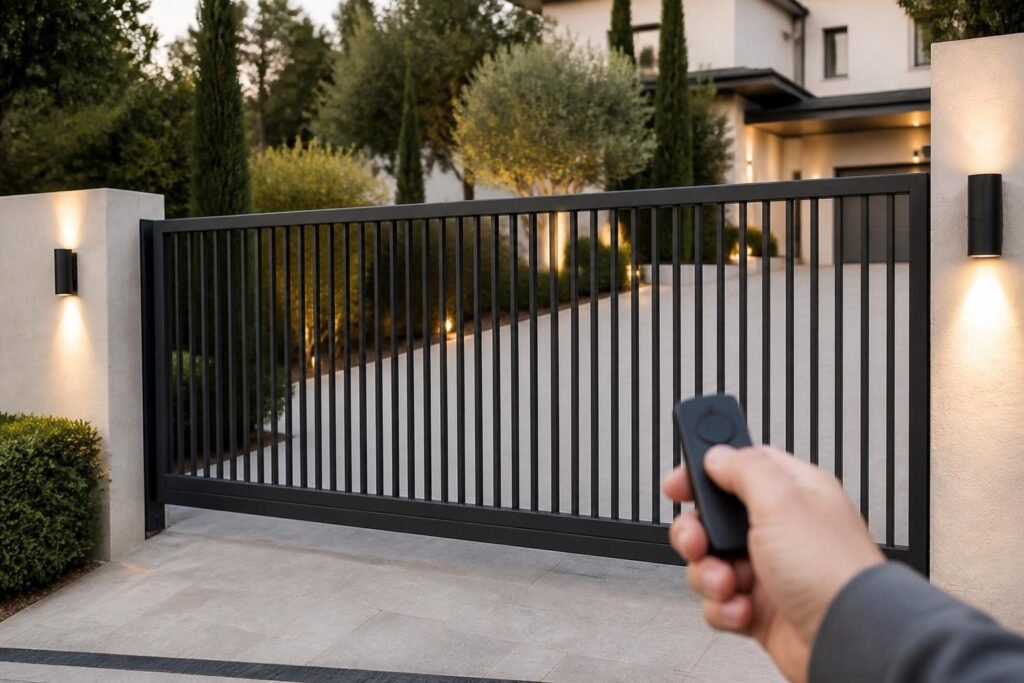
A residential gate serves as the first line of defense for your property, combining security, privacy, and curb appeal into a single functional element. Whether protecting a driveway, pool area, or the perimeter of your entire estate, the right gate system can transform both the safety and value of your home. For Los Angeles homeowners, where property boundaries and security concerns vary widely across neighborhoods, understanding the options, regulations, and maintenance requirements for residential gates has never been more important.
Types of Residential Gate Systems
Homeowners today face a wider selection of residential gate configurations than ever before. Each type addresses specific needs related to property layout, security priorities, and aesthetic preferences.
Swing Gates
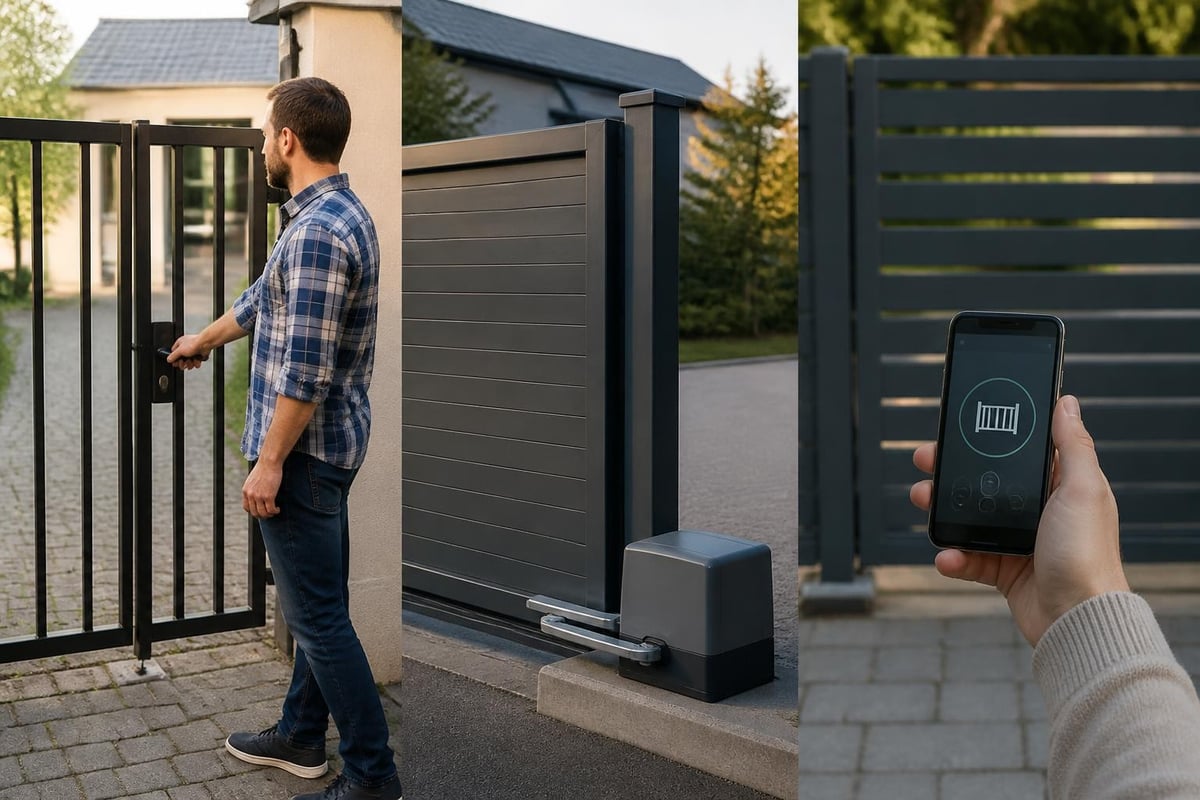
Traditional swing gates remain the most common residential gate choice for driveways and pedestrian entrances. These gates pivot on hinges, opening either inward toward the property or outward toward the street. Single-swing models work well for narrower driveways, while double-swing configurations suit wider openings and create a more dramatic entrance.
The space required for swing clearance represents the primary limitation. Properties with steep driveways or limited setback from the street may find swing gates impractical, as they need adequate room to complete their arc without obstruction.
Sliding Gates
Sliding gates travel horizontally along a track, making them ideal for driveways with space constraints or steep inclines. A cantilever sliding gate suspends above the ground on rollers, while a track-mounted version rides on wheels within a ground-level channel.
Key advantages of sliding residential gates:
- Minimal clearance requirements (no swing radius needed)
- Excellent for sloped driveways
- Stable operation in wind
- Scalable to very wide openings
Sliding systems do require adequate run space alongside the driveway opening-typically 1.5 times the gate width-which may not suit all property configurations.
Pedestrian and Pool Gates
Smaller pedestrian gates provide walk-through access without opening the main driveway gate. These supplementary access points enhance convenience while maintaining security perimeters.
Pool gates serve a critical safety function, and their design is heavily regulated. The Consumer Product Safety Commission’s safety standards for gates and enclosures mandate specific height, latch placement, and self-closing requirements to prevent unsupervised child access to pool areas. Non-compliance can result in liability exposure and insurance complications.
Material Selection and Durability
The material you choose for your residential gate directly impacts longevity, maintenance requirements, and initial cost.
| Material | Lifespan | Maintenance Level | Security Rating | Cost Range |
|---|---|---|---|---|
| Wrought Iron | 30+ years | Medium (rust prevention) | Excellent | $$$ |
| Aluminum | 20-30 years | Low | Good | $$ |
| Wood | 15-20 years | High (sealing, staining) | Moderate | $$-$$$ |
| Steel | 25-35 years | Medium-High | Excellent | $$$ |
| Vinyl/PVC | 20-25 years | Very Low | Poor-Moderate | $ |
Wrought iron gates deliver unmatched durability and security, with intricate designs that enhance property aesthetics. Los Angeles's relatively dry climate minimizes rust concerns, though coastal properties require more frequent protective coating applications.
Aluminum offers an excellent strength-to-weight ratio, making it popular for automated systems that benefit from lighter gate panels. Powder-coating provides color options and corrosion resistance without the weight penalty of steel.
Wood gates create warm, natural aesthetics that complement certain architectural styles beautifully. However, California's sun exposure accelerates weathering, demanding regular sealing and potential board replacement over time.
Automation and Access Control
Converting a manual residential gate to automated operation transforms daily convenience and can enhance security through controlled access logging.
Operator Types
Electric gate operators fall into distinct categories based on gate configuration and weight:
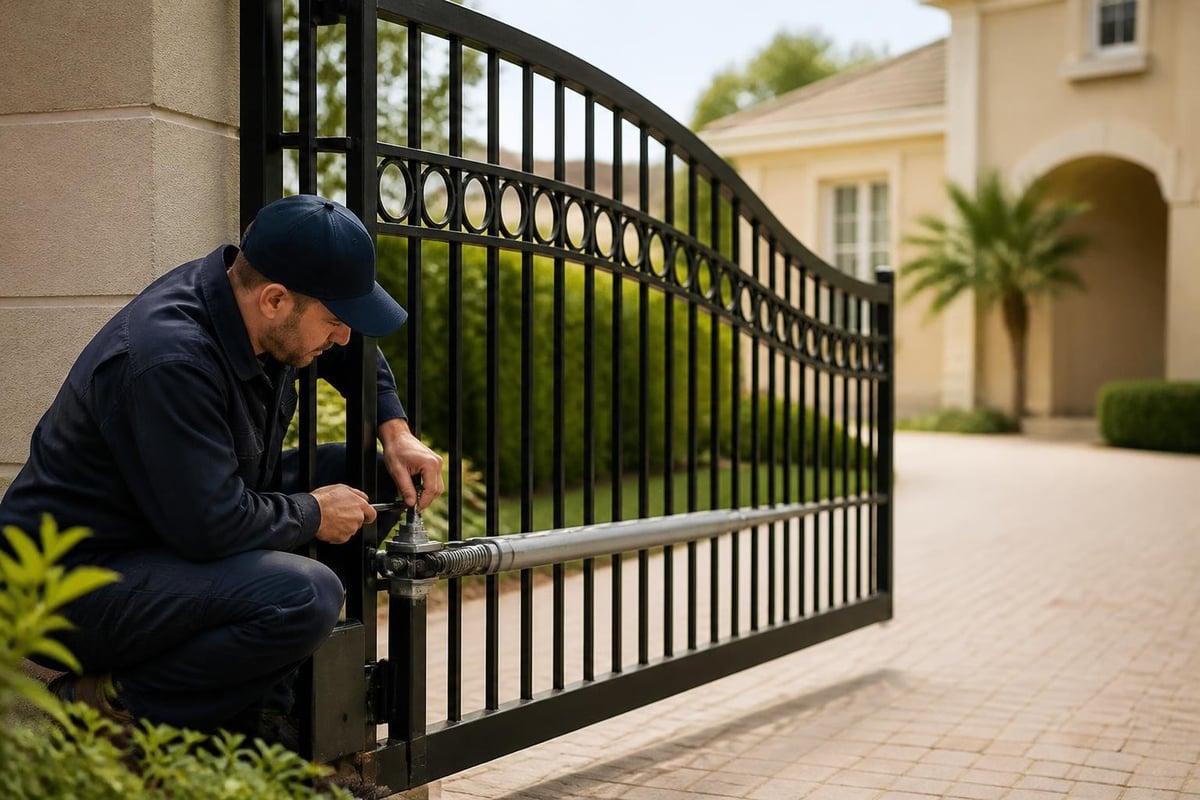
- Articulated arm operators – Mount to swing gates, using mechanical arms to push or pull panels
- Linear actuators – Ram-style devices that extend and retract to move swing gates
- Slide gate operators – Chain or rack-and-pinion systems that drive sliding gates along tracks
- Underground operators – Concealed units installed below swing gates for aesthetic installations
When selecting an operator for your residential gate, weight capacity and duty cycle ratings prove critical. Undersized operators experience premature wear and frequent failures, particularly in frequent-use applications or with heavy wrought iron gates.
Safety Standards and Entrapment Protection
All automated residential gate systems installed in the United States must comply with UL 325 safety requirements, which classify operators based on application and mandate specific entrapment-protection devices. Residential gates fall under Class I, II, or IV depending on whether they're vehicular or pedestrian, and whether access is restricted to supervised users.
Required safety devices typically include:
- Photo-eye sensors that detect obstructions in the gate path
- Pressure-sensitive edge switches that reverse upon contact
- Timer systems that auto-reverse if the gate doesn't complete travel within expected timeframes
- Manual release mechanisms for power-failure situations
Professional installation ensures compliance with both UL 325 and local building codes. If you're experiencing issues with an automated system, seeking expert electric gate repair services ensures that safety features remain functional and code-compliant after servicing.
Access Control Technologies
The method by which authorized users trigger your residential gate affects both convenience and security posture.
Traditional Options
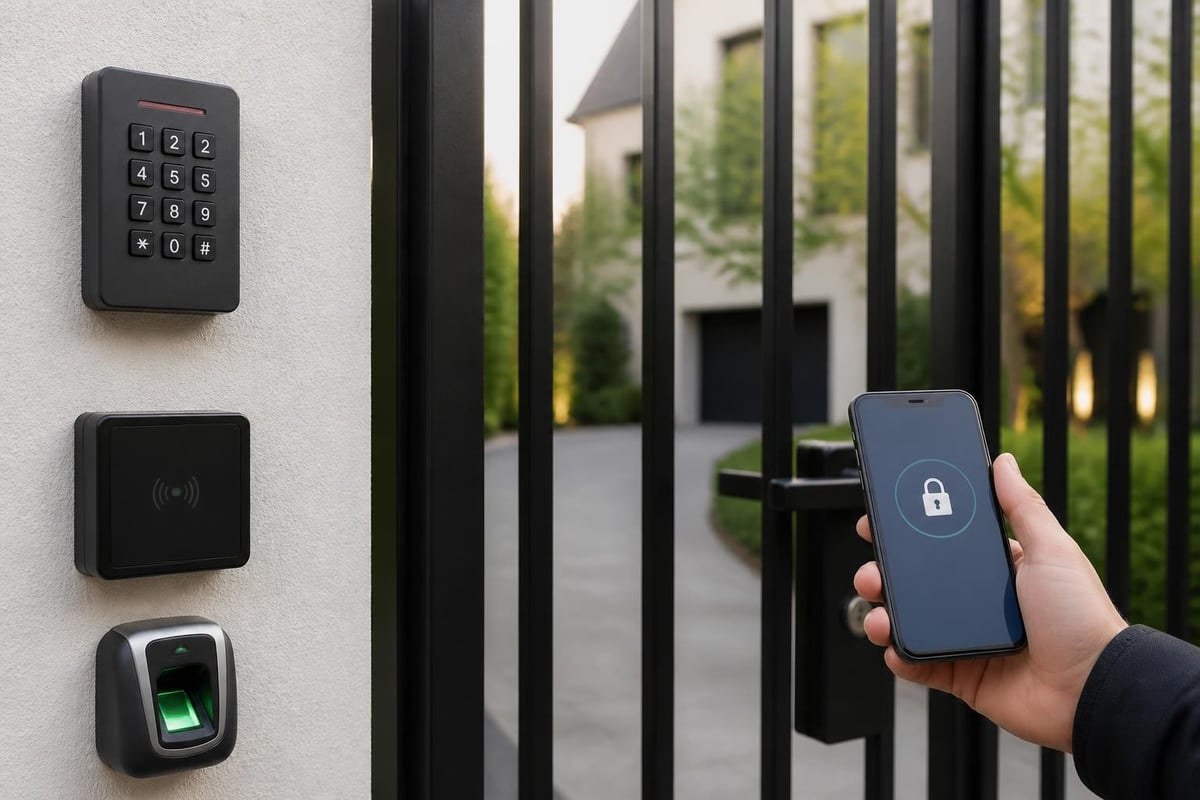
Keypad systems require users to enter a numeric code, offering reasonable security when codes are changed periodically. Wireless keypads eliminate trenching requirements for power and signal wires.
Remote transmitters remain the most common residential solution, operating on rolling-code technology that prevents code grabbing by potential intruders. Multi-button remotes can control multiple gates or doors from a single device.
Intercom systems allow property owners to screen visitors before granting access, with video intercoms adding visual verification capabilities.
Smart Gate Integration
Modern residential gate systems increasingly integrate with home automation platforms and smartphone applications. These advanced controllers enable:
- Remote operation from anywhere with cellular connectivity
- Temporary access codes for guests or service providers
- Activity logging that tracks all entries and exits
- Integration with security cameras and alarm systems
- Voice control through platforms like Amazon Alexa or Google Assistant
A recent IEEE review of gate security systems examined biometric authentication, multi-factor access control, and health-status monitoring capabilities emerging in smart gate designs, highlighting how IoT integration continues reshaping residential access control.
Installation Considerations and Code Compliance
Proper installation of a residential gate involves far more than mounting hardware and connecting power. Multiple regulatory frameworks govern placement, operation, and safety features.
ADA Compliance for Accessible Properties
While private residences generally aren't subject to Americans with Disabilities Act requirements, homeowners planning aging-in-place modifications or rental properties should understand ADA technical requirements for gates. Accessible gate design addresses:
- Minimum clear opening widths (32 inches minimum for pedestrian gates)
- Maximum threshold heights (typically 0.5 inches)
- Operating force requirements for manual gates
- Maneuvering clearances on both sides of the gate
These considerations benefit anyone with temporary mobility limitations and enhance property marketability.
Fire Code and Emergency Access
Properties in fire-hazard severity zones or gated communities must address emergency responder access. Solutions include:
- Knox boxes containing gate keys or access codes
- Fire department master remote systems (Opticom or similar)
- Break-away gates that emergency vehicles can drive through
- Battery backup systems ensuring gates can open during power outages
Local fire marshals provide specific guidance for compliant installations in their jurisdictions.
Structural and Engineering Standards
For automated vehicular gates, ASTM F2200 specifications outline construction requirements addressing wind load resistance, structural integrity, and material specifications. These engineering standards ensure gates withstand environmental forces and operational stresses throughout their service life.
Maintenance and Longevity
Even the highest-quality residential gate requires regular maintenance to deliver reliable, long-term performance. Neglect leads to accelerated wear, safety system failures, and costly emergency repairs.
Routine Maintenance Tasks
Monthly checks should include:
- Visual inspection of gate alignment and smooth operation
- Safety sensor verification (test photo-eyes and pressure edges)
- Lubrication of hinges, rollers, and moving components
- Battery backup testing for automated systems
Quarterly maintenance:
- Tighten all mounting bolts and hardware connections
- Inspect chain or belt tension on operators
- Clean tracks and remove debris from sliding gate channels
- Verify limit switch calibration
Annual professional service:
- Comprehensive electrical system inspection
- Operator motor and gearbox examination
- Structural integrity assessment
- Safety system recalibration and compliance verification
For Los Angeles residents, scheduling professional maintenance before the winter rainy season prevents weather-related failures during the wettest months.
Common Issues and When to Call Professionals
Certain residential gate problems demand professional diagnosis rather than DIY troubleshooting:
- Intermittent operation or complete failure – May indicate controller board issues, wiring faults, or transformer problems requiring electrical expertise
- Unusual noises during operation – Grinding, squealing, or banging sounds often signal bearing failure, misalignment, or worn components
- Safety system malfunctions – Never bypass or ignore safety devices; professional recalibration ensures code compliance
- Gate sagging or structural movement – Indicates hinge failure, post settling, or foundation problems requiring structural assessment
Attempting complex repairs without proper knowledge can compromise safety systems or void manufacturer warranties.
Security Effectiveness and Design Considerations
While a residential gate provides psychological deterrence and access control, understanding its security limitations helps homeowners develop comprehensive protection strategies.
Physical Security Factors
Gate effectiveness depends heavily on the broader perimeter security context. A robust gate installation with inadequate fencing on either side provides minimal real security benefit, as intruders simply bypass the controlled access point.
Research on Crime Prevention Through Environmental Design demonstrates how access control features interact with visibility, lighting, and territoriality markers to influence criminal decision-making. A residential gate works best when integrated into a layered security approach including:
- Adequate perimeter fencing (minimum 6 feet for security applications)
- Strategic lighting eliminating concealment zones
- Surveillance camera coverage of gate and adjacent areas
- Clear property boundary markers (landscaping, signage)
Balancing Security and Aesthetics
Fortress-like residential gate installations may actually reduce security by signaling valuable assets worth the effort to breach. Balanced designs that suggest security without appearing paranoid often prove more effective.
Open designs with visibility through the gate discourage hiding spots while maintaining an inviting appearance. Strategic landscaping can enhance beauty while eliminating concealment opportunities near access points.
Smart Technology Integration
The convergence of residential gates with broader smart-home ecosystems opens new convenience and security capabilities while introducing cyber-security considerations.
Integration Platforms
Modern gate controllers increasingly support:
- Z-Wave and Zigbee protocols for mesh-network home automation
- Wi-Fi connectivity enabling direct smartphone control
- Cloud-based management allowing remote monitoring and control
- IFTTT integration creating automated routines (close gate at sunset, etc.)
These capabilities transform a simple access barrier into an active component of whole-home security and automation systems.
Cybersecurity Considerations
Connected residential gate systems become potential attack vectors if not properly secured. Best practices include:
- Changing default passwords on controllers and apps immediately
- Enabling two-factor authentication when available
- Keeping firmware updated with manufacturer security patches
- Using separate network VLANs for IoT devices when possible
- Disabling unused remote access features
The convenience of smartphone control shouldn't compromise physical security through inadequate digital protection.
Cost Factors and Budget Planning
Residential gate project costs vary dramatically based on configuration, materials, automation level, and site-specific requirements.
Budget Breakdown
| Component | Basic Range | Mid-Range | Premium |
|---|---|---|---|
| Gate panel (materials/fabrication) | $800-$2,000 | $2,000-$5,000 | $5,000-$15,000+ |
| Automation system | $600-$1,200 | $1,200-$2,500 | $2,500-$6,000+ |
| Installation labor | $500-$1,500 | $1,500-$3,000 | $3,000-$8,000+ |
| Access control devices | $100-$300 | $300-$800 | $800-$2,500+ |
| Concrete/foundation work | $300-$800 | $800-$1,500 | $1,500-$4,000+ |
Total project costs typically range from $2,500 for a basic manual pedestrian gate to $30,000+ for elaborate automated estate entrance systems with advanced access control.
Long-term Value Considerations
While premium residential gate systems require substantial upfront investment, they deliver value through:
- Enhanced property values (quality gates often return 50-75% of installation cost in appraised value)
- Reduced insurance premiums in some cases (ask your insurer about security-related discounts)
- Increased privacy and quality of life for daily use
- Lower lifetime maintenance costs when quality components are specified initially
Cheap gate installations frequently cost more over 10-15 years than quality systems due to repeated repairs and premature replacement.
Environmental and Climate Factors
Los Angeles's Mediterranean climate presents specific challenges and opportunities for residential gate installations.
Sun and Heat Exposure
California's intense UV radiation accelerates deterioration of painted and powder-coated finishes. Dark-colored gates absorb more heat, potentially affecting operator performance during summer peaks. Metal expansion and contraction cycles can loosen hardware over time.
Protective measures include UV-resistant finishes, regular inspection and tightening of fasteners, and thermal management for operator enclosures in full-sun locations.
Wind and Seismic Considerations
Coastal properties face stronger wind loads requiring reinforced mounting and potentially heavier-duty operators. Seismic activity, while infrequent, can shift posts and misalign gates over years of settling.
Professional installations account for local conditions through proper foundation depth, bracing techniques, and operator sizing that addresses environmental factors beyond simple gate weight.
Selecting and maintaining a residential gate involves balancing security needs, aesthetic preferences, budget constraints, and long-term reliability considerations. Whether you're planning a new installation or troubleshooting an existing system, understanding the technical standards, safety requirements, and maintenance demands ensures your gate delivers years of dependable service. When your residential gate needs professional attention, Gates On Site provides same-day repair services throughout Los Angeles with over 20 years of experience in automatic gate systems, backed by fully stocked service vehicles and licensed technicians who handle everything from minor adjustments to complete system overhauls.