
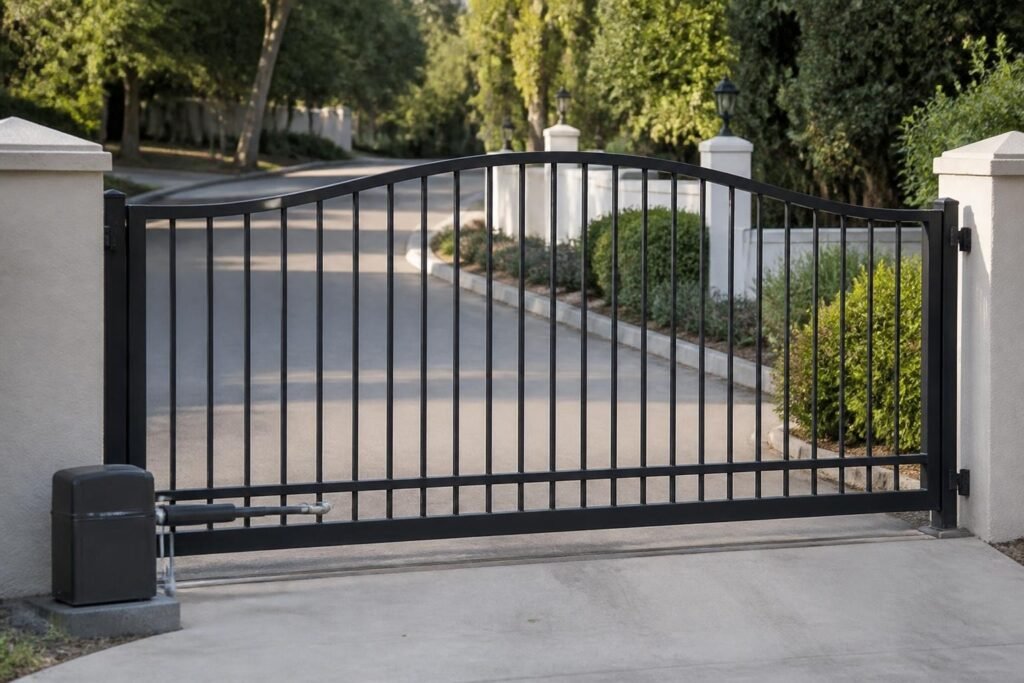
Homeowners and business owners seeking to enhance property security without breaking the bank often turn to simple driveway gates as a practical solution. These straightforward installations provide controlled access, curb appeal, and peace of mind while avoiding the complexity and expense of elaborate custom designs. In 2026, the market offers numerous options that balance functionality with affordability, making professional-grade access control accessible to a wider range of properties across residential and commercial applications.
Understanding Simple Driveway Gates
Simple driveway gates emphasize functionality over ornamental features. They typically feature clean lines, minimal decorative elements, and straightforward construction methods that reduce both material costs and installation complexity.
Core Components and Design Philosophy
The simplicity of these gates lies in their stripped-down approach to access control. Rather than intricate scrollwork, custom welding, or specialty hardware, simple driveway gates rely on proven designs that prioritize durability and ease of maintenance. Most feature either a single-swing or sliding mechanism, with materials chosen for longevity rather than aesthetic flourish.
Key characteristics include:
- Standardized dimensions that fit common driveway widths
- Minimal moving parts to reduce maintenance needs
- Readily available replacement components
- Straightforward installation procedures
- Compatible with basic automation systems
The design philosophy centers on delivering essential security features while keeping costs predictable. According to driveway gate cost guides, homeowners can expect to invest between $1,500 and $4,000 for a basic installation, significantly less than custom ornamental designs that often exceed $10,000.
Material Choices for Simple Driveway Gates
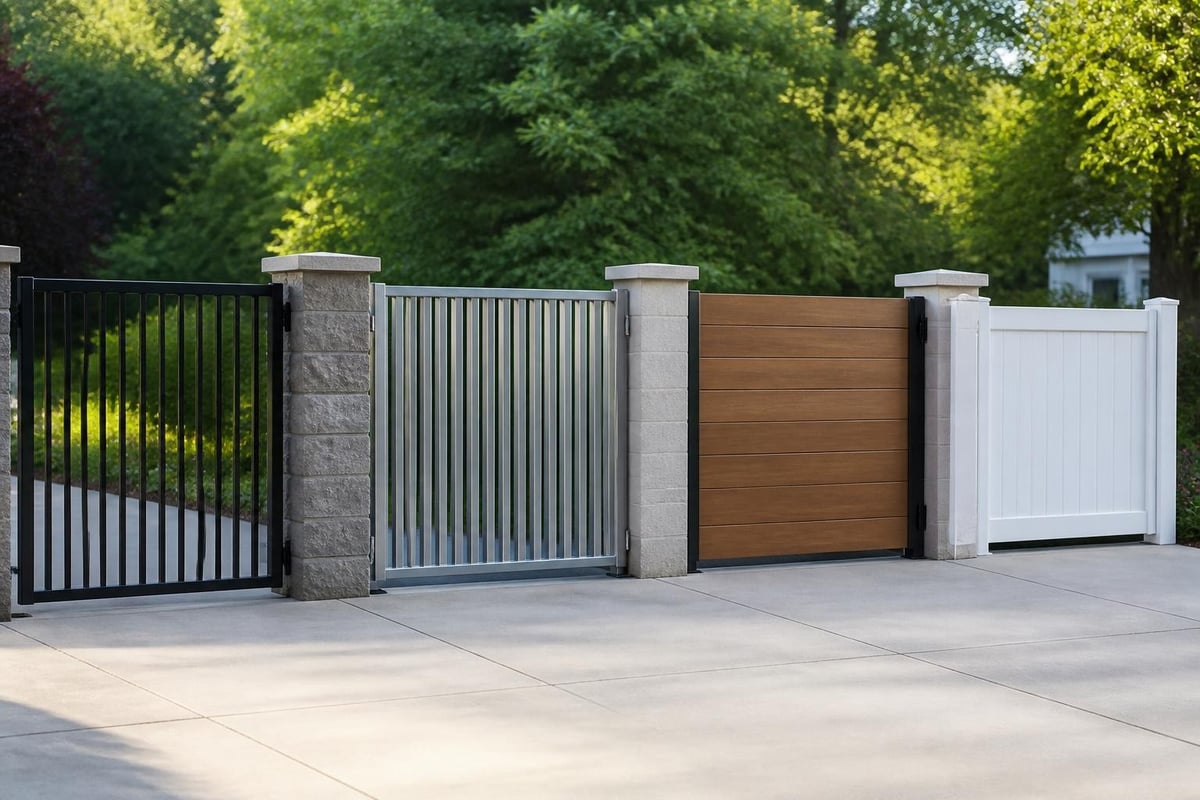
Material selection dramatically impacts both initial cost and long-term maintenance requirements. Each option offers distinct advantages depending on climate, aesthetic preferences, and budget constraints.
Steel and Aluminum Options
Steel gates represent the most common choice for simple driveway gates due to their strength-to-cost ratio. Powder-coated or galvanized finishes protect against rust, particularly important in coastal regions like Los Angeles where salt air accelerates corrosion. Steel frames typically support chain-link, welded wire mesh, or flat metal panels.
Aluminum gates offer superior corrosion resistance with reduced weight, making them ideal for automated systems with smaller motors. While aluminum costs approximately 20-30% more than steel, the material requires virtually no maintenance and performs exceptionally well in humid or coastal environments.
| Material | Initial Cost | Maintenance | Lifespan | Best Application |
|---|---|---|---|---|
| Steel (galvanized) | $$ | Moderate | 15-25 years | High-traffic commercial |
| Aluminum | $$$ | Minimal | 25-35 years | Coastal residential |
| Vinyl | $ | Minimal | 10-20 years | Light-duty residential |
| Wood composite | $$ | Low | 15-20 years | Semi-rural properties |
Wood and Composite Alternatives
Traditional wood gates provide natural warmth and privacy screening. Cedar and redwood naturally resist rot, though they require periodic sealing or staining. Modern wood composites combine wood fibers with polymer binders, delivering wood's appearance with enhanced weather resistance and reduced maintenance demands.
Composite materials resist warping, splitting, and insect damage while eliminating the need for regular refinishing. These materials work particularly well for simple driveway gates in climates with significant temperature swings or moisture exposure.
Automation Considerations
Converting simple driveway gates to automatic operation enhances convenience without necessarily increasing complexity. Modern gate operators have evolved to meet stringent safety standards while remaining accessible to average homeowners.
Safety Standards and Compliance
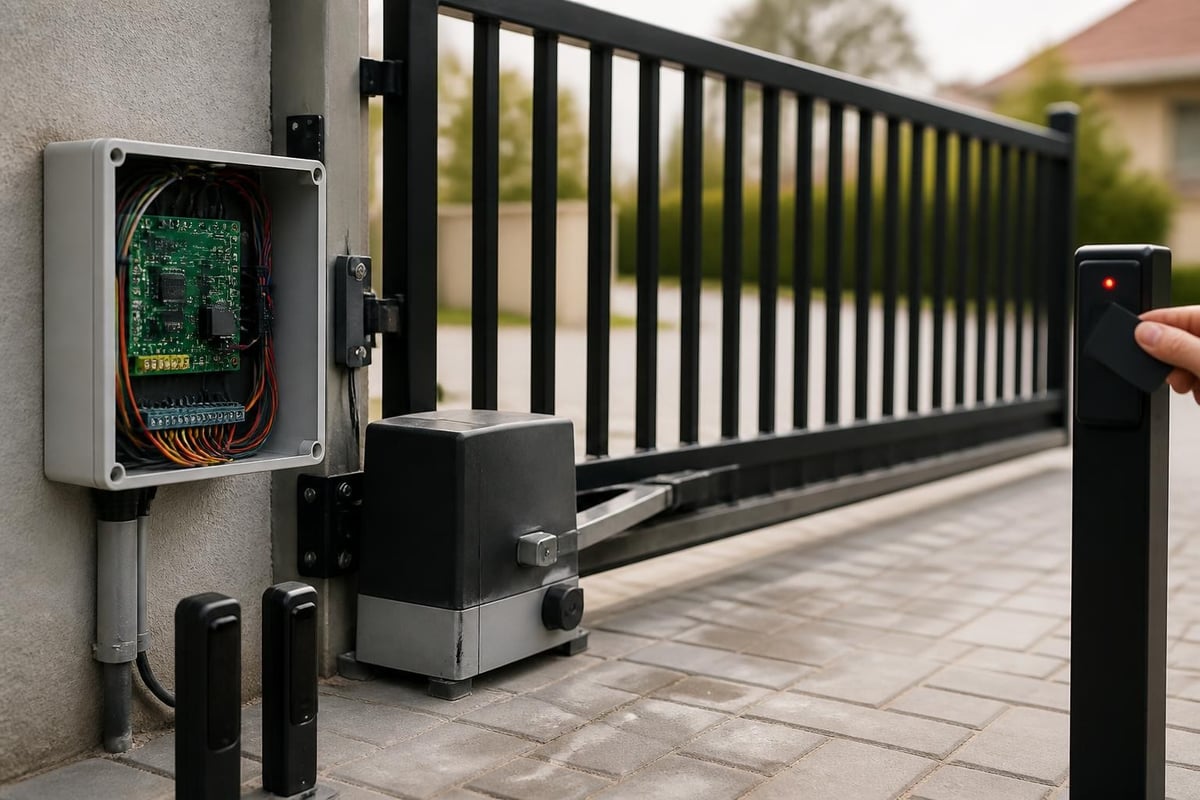
All automated gate systems must comply with UL 325 safety standards, which establish requirements for entrapment protection, force limitations, and emergency release mechanisms. These regulations protect users from serious injuries associated with powered gate operation.
The standard mandates several critical safety features:
- Photoelectric sensors to detect obstructions
- Adjustable force settings to prevent crushing injuries
- Manual release mechanisms for power failures
- Warning labels and operational instructions
- Regular testing and maintenance protocols
Understanding these requirements helps property owners select appropriate automation systems and ensures installations meet both safety and legal obligations. The ASTM F2200 standard further defines construction and performance requirements specific to vehicular gates.
Operator Types and Power Requirements
Swing gate operators mount to gate posts or hinges, using articulating arms to pull gates open and push them closed. These units work best for simple driveway gates with adequate clearance on the swing side. Solar-powered models eliminate trenching for electrical supply, though they require sufficient sun exposure for reliable operation.
Sliding gate operators use chain, belt, or rack-and-pinion drives to move gates along ground tracks. These systems suit properties with limited swing clearance or where wind exposure would catch open swing gates. Installation requires level, stable ground along the gate's travel path.
For properties requiring electric gate repair services, simpler automation systems typically cost less to diagnose and repair due to their straightforward mechanical and electrical designs.
Installation Methods and Requirements
Proper installation directly impacts gate performance and longevity. Simple driveway gates follow established procedures that competent DIYers can tackle, though professional installation ensures compliance with safety standards and local codes.
Post Installation and Foundation Work
Gate posts carry all structural loads and must resist both vertical weight and lateral pressure from wind or impact. Posts for simple driveway gates typically embed in concrete footings sized according to gate dimensions and soil conditions.
Standard requirements include:
- Footing depth below frost line (varies by region, typically 24-48 inches)
- Concrete volume of at least 12 cubic feet per post for gates up to 12 feet wide
- Post plumbness verified during concrete curing (deviation under 1/4 inch per 10 feet)
- Curing time of 72 hours minimum before hanging gates or installing operators
Properties with poor soil conditions may require augmented footings with larger diameters or deeper embedment. Clay soils prone to expansion benefit from gravel bases that provide drainage and reduce heave forces during freeze-thaw cycles.
Hardware and Hinge Selection
Quality hinges represent the most critical hardware component. Simple driveway gates function best with commercial-grade hinges rated for at least 150% of actual gate weight. Ball-bearing hinges reduce friction and extend operator life when automating gates.
Essential hardware includes:
- Heavy-duty strap or butt hinges (minimum 4-inch for residential gates)
- Drop rods or wheel kits for secondary gate leaves in double configurations
- Latch mechanisms compatible with automation systems
- Adjustable catch plates for precise gate alignment
- Grease fittings for long-term maintenance access
Professional installers emphasize proper gate alignment before final hardware tightening. Gates should hang with slight clearance from ground surfaces while maintaining consistent gaps along latch edges.
Design Variations Within Simplicity
Even simple driveway gates offer style variations that influence functionality and curb appeal. Understanding these options helps match gates to property characteristics and aesthetic preferences.
Single Swing vs. Double Swing Configurations
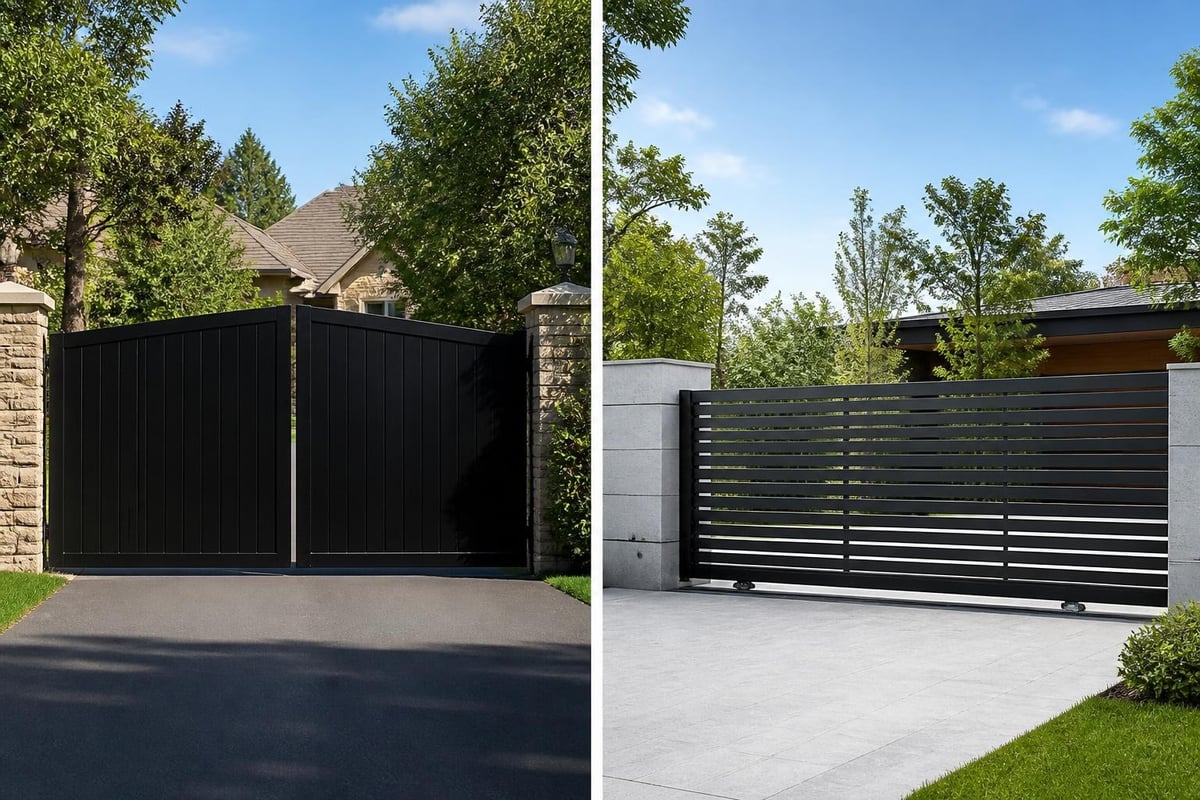
Single swing gates require half the hardware of double configurations and reduce automation costs by 40-50%. They suit driveways up to 14 feet wide, though gates exceeding 12 feet demand upgraded hinges and operators to manage increased weight and wind load.
Double swing gates distribute weight across two lighter leaves, reducing stress on individual posts and operators. This configuration works better for wider driveways and provides more balanced appearance, particularly for symmetrical properties. Most systems designate one leaf as primary (always opens) with the second as secondary (opens only when needed).
The Gate Safe organization emphasizes safety-by-design principles that influence configuration choices, particularly regarding automation force requirements and entrapment zones.
Sliding vs. Swing Mechanisms
Sliding gates excel where swing clearance limitations or property slopes prevent effective swing operation. They operate along ground-mounted tracks or cantilever systems that suspend the gate above ground level without tracks.
| Feature | Swing Gates | Sliding Gates |
|---|---|---|
| Space efficiency | Requires swing radius | Parallel to fence line |
| Wind resistance | Higher catch area | Lower profile |
| Automation cost | Lower | Moderate to high |
| Maintenance | Minimal | Track cleaning required |
| Snow/ice performance | Good | Requires track heating |
For simple driveway gates prioritizing budget control, single swing configurations typically deliver the lowest total installed cost. Properties with specific spatial constraints benefit from sliding systems despite higher equipment expenses.
Access Control Integration
Modern simple driveway gates accommodate various access control methods ranging from basic keypad entry to smartphone integration. The level of sophistication depends on security requirements and budget allocation.
Keypad and Remote Systems
Standard keypads mount to posts near driver positions, allowing code entry without leaving vehicles. Quality units feature weatherproof construction, backlit keys for night visibility, and programmable codes that owners can change periodically. Most support 10-50 unique codes, sufficient for family members, regular visitors, and service providers.
Remote controls operate on radio frequencies (typically 310-390 MHz) with ranges of 50-200 feet depending on terrain and interference. Rolling code technology prevents signal capture and replay attacks, enhancing security over fixed-code systems. Contemporary driveway gate openers incorporate this feature as standard equipment.
Smartphone and Intercom Options
Bluetooth and WiFi-enabled controllers transform smartphones into gate remotes while providing operational logs and remote management capabilities. These systems notify owners of gate activity and allow access granting from anywhere with internet connectivity.
Video intercom stations add visual verification before granting access to unknown visitors. Two-wire installation simplifies retrofitting existing simple driveway gates with communication systems. Cloud-based platforms store video clips and access logs for security review.
Maintenance Requirements
Simple driveway gates earn their designation partly through reduced maintenance demands. Regular attention to critical points prevents costly repairs and extends system life.
Routine Inspection Points
Monthly visual inspections should cover:
- Hinge pin wear and lubrication status
- Gate alignment and clearance measurements
- Latch engagement and adjustment needs
- Hardware tightness (bolts, screws, brackets)
- Surface finish condition and corrosion spots
Automated systems require additional checks of safety sensors, control board indicators, and operator mounting security. Property owners throughout Los Angeles service areas benefit from establishing maintenance schedules that address both mechanical and electrical components.
Seasonal Considerations
Climate variations demand adapted maintenance approaches. Winter preparations include lubricating hinges with cold-weather grease, checking seal integrity on control enclosures, and testing manual release mechanisms that may see emergency use during power outages.
Summer months bring increased usage that accelerates wear on high-traffic gates. Checking operator temperature ratings ensures systems don't overheat during continuous operation. Coastal properties require more frequent corrosion inspections regardless of season.
Understanding comprehensive gate safety features helps property owners maintain systems that protect users while delivering reliable access control.
Troubleshooting Common Issues
Even well-maintained simple driveway gates occasionally develop operational problems. Recognizing common issues enables quick resolution and minimizes downtime.
Mechanical Problems
Sagging gates result from hinge wear, post movement, or inadequate initial support. Adjustable hinges allow fine-tuning of gate position, while severe cases may require post realignment or replacement. Adding diagonal bracing stiffens gate frames and reduces long-term sagging tendencies.
Binding during operation indicates misalignment, debris accumulation, or ground settling. Checking clearances at multiple points along the travel arc identifies interference sources. Seasonal ground movement in clay soils can lift or lower gates relative to posts, requiring periodic adjustment.
Latch failures typically involve catch plate position, striker misalignment, or worn components. Most simple driveway gates use adjustable catches that compensate for minor gate movement. Lubricating latch mechanisms prevents binding and extends component life.
Electrical and Automation Faults
Automated gates introduce electrical troubleshooting requirements beyond purely mechanical installations. Common issues include:
- Intermittent operation suggesting loose wiring connections or corroded terminals
- Failure to close completely indicating limit switch misadjustment or obstruction sensor false triggers
- Slow operation pointing to low battery voltage (solar systems) or operator wear
- No response to controls requiring power supply verification and control board diagnosis
The Consumer Product Safety Commission documents safety concerns that often trace to maintenance neglect or improper automation adjustment. Regular testing of safety features prevents accidents and maintains compliance with established standards.
Cost Analysis and Budget Planning
Understanding total ownership costs helps property owners make informed decisions about simple driveway gates. Initial purchase price represents only one component of long-term expense.
Initial Investment Breakdown
Complete installation costs typically divide into these categories:
| Cost Component | Percentage of Total | Typical Range |
|---|---|---|
| Gate materials | 30-40% | $600-$1,600 |
| Posts and foundations | 15-25% | $400-$800 |
| Automation equipment | 20-30% | $500-$1,200 |
| Labor (if professional) | 25-35% | $600-$1,400 |
DIY installation eliminates labor costs but requires tools, equipment rental, and time investment. First-time installers often underestimate the challenges of setting plumb posts and achieving proper gate alignment, leading some to pursue professional assistance after beginning self-installation.
Long-Term Operating Costs
Annual ownership expenses include electrical consumption (automated gates), periodic lubrication supplies, and occasional component replacement. Simple driveway gates minimize these costs through design efficiency and readily available parts.
Budgeting $100-200 annually for maintenance supplies and minor repairs provides adequate reserve for typical residential installations. Commercial applications with higher cycle counts may require doubled maintenance budgets and more frequent professional service intervals.
The regulatory framework governing automated gate systems continues evolving, occasionally requiring retrofit expenses to maintain compliance with updated safety standards.
Enhancing Simple Gates
Property owners sometimes begin with basic installations and add features over time. Simple driveway gates accommodate numerous upgrades that enhance functionality without requiring complete replacement.
Security Additions
Magnetic locks supplement standard latches with powered security that prevents forced entry. These devices draw minimal power while providing significant resistance to tampering. Integration with access control systems allows scheduled locking that automatically secures properties during specified hours.
Motion-activated cameras mounted to gate posts document all entry and exit events. Modern systems with local storage eliminate cloud subscription costs while providing 30-90 days of video retention. Two-way audio capabilities transform cameras into remote intercom stations.
Aesthetic Improvements
Privacy slats insert into chain-link or welded wire panels, transforming see-through gates into visual barriers. These additions reduce wind load compared to solid panels while delivering privacy benefits. Color-matched slats maintain cohesive appearance with existing fencing.
Decorative post caps and basic trim elements add finished appearance without the cost of custom fabrication. Solar post lights combine illumination with architectural interest while avoiding electrical installation requirements.
Simple driveway gates deliver practical access control through straightforward designs that balance cost, functionality, and maintenance requirements. Whether choosing manual swing configurations or automated sliding systems, property owners benefit from understanding material options, safety standards, and installation best practices that ensure reliable long-term performance. When your gate system needs professional attention or you're ready to upgrade to automated operation, Gates On Site provides expert service throughout Los Angeles with same-day repairs and over 20 years of experience in residential and commercial gate systems.