
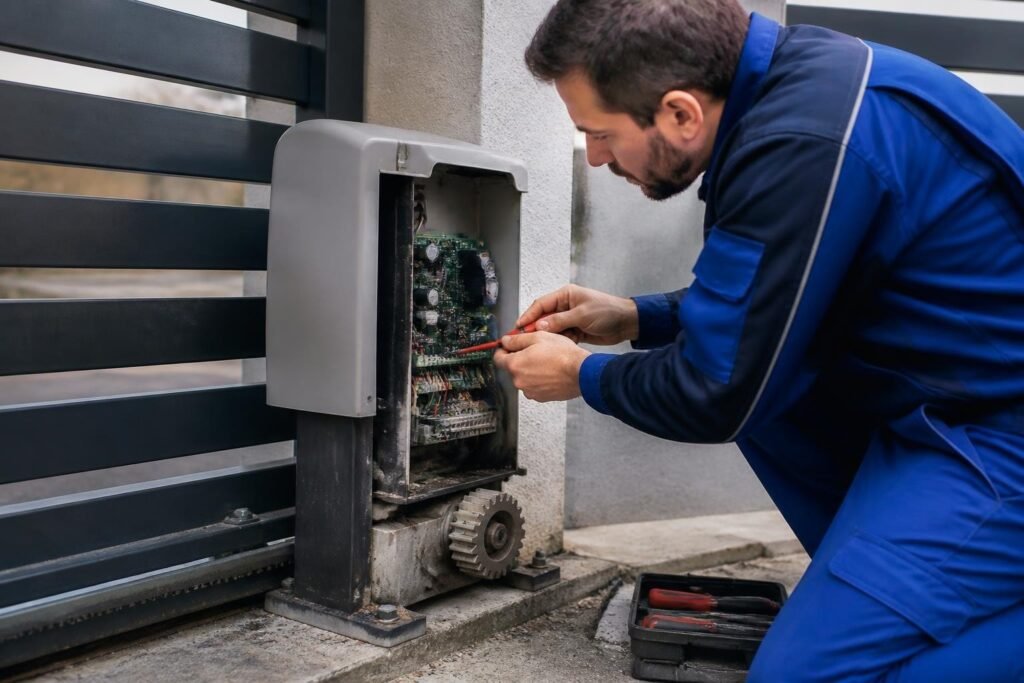
Electric gates provide security and convenience for residential and commercial properties, but when they malfunction, they can become a significant inconvenience and safety hazard. Understanding the most common electric gate problems, their causes, and solutions helps property owners make informed decisions about maintenance and repairs. This guide explores the issues that most frequently affect automatic gate systems and provides practical insights for troubleshooting and resolution.
Motor and Operator Failures
The gate motor serves as the heart of any automatic gate system, converting electrical energy into mechanical movement. When motors fail, gates become inoperable, leaving properties vulnerable and disrupting daily operations.
Signs of Motor Deterioration
Motor problems rarely occur without warning. Most operators experience gradual performance decline before complete failure:
- Unusual grinding, humming, or clicking noises during operation
- Intermittent starting and stopping mid-cycle
- Slower opening or closing speeds than normal
- Complete failure to respond to activation commands
- Excessive heat emission from the motor housing
Overheating represents one of the most common causes of premature motor failure. When motors run continuously or cycle too frequently without adequate cooling periods, internal components degrade rapidly. This issue becomes particularly prevalent in Los Angeles where summer temperatures stress electrical components.
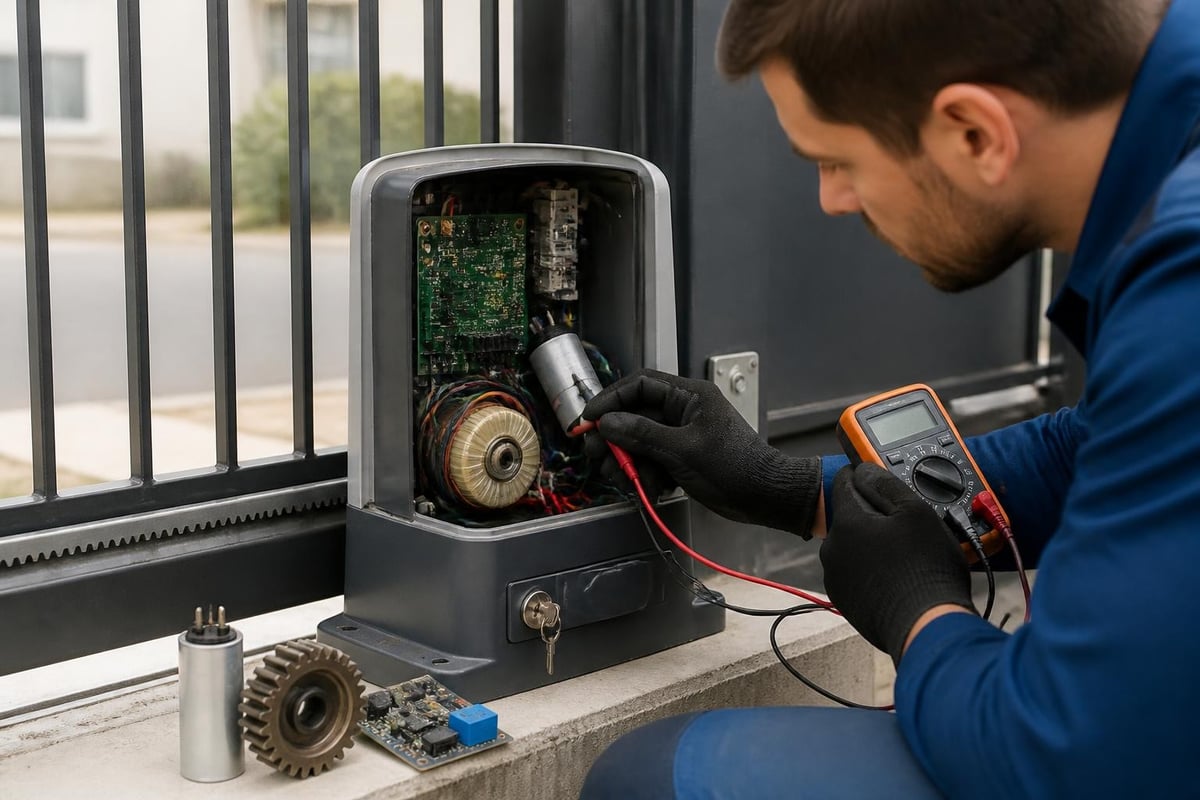
Capacitor failure affects many older gate systems. The capacitor provides the initial electrical surge needed to start the motor. When it weakens, the motor may hum without turning, or fail to start altogether. This component typically requires replacement every 3-5 years depending on usage frequency.
Environmental Factors Affecting Motors
Weather exposure accelerates motor wear in outdoor installations. Rain infiltration corrodes internal wiring and circuitry, while dust and debris penetrate motor housings and grind against moving parts. Proper weatherproofing and enclosure maintenance extend motor lifespan significantly.
Gates On Site provides same-day electric gate repair services throughout Los Angeles, with fully stocked vehicles carrying replacement motors and components for immediate repairs. Their technicians diagnose motor issues quickly and recommend either repair or replacement based on the specific failure mode and cost-effectiveness.
Power Supply and Electrical Issues
Electrical problems account for approximately 40% of all electric gate problems. These issues range from simple circuit breaker trips to complex wiring degradation that requires extensive troubleshooting.
Common Electrical Failure Points
| Issue Type | Symptoms | Typical Causes |
|---|---|---|
| Power Loss | Complete system shutdown, no lights or sounds | Tripped breaker, blown fuse, utility outage |
| Voltage Drop | Sluggish operation, dimming lights on opener | Undersized wiring, loose connections, corroded terminals |
| Intermittent Power | Random shutdowns, inconsistent operation | Damaged wiring, poor connections, faulty transformer |
| Short Circuits | Immediate breaker trip upon activation | Water intrusion, rodent damage, worn insulation |
The transformer converts standard household voltage to the lower voltage required by gate control systems. When transformers fail, the entire system loses power or operates erratically. Testing transformer output with a multimeter reveals whether voltage falls within the manufacturer's specified range.
Ground fault circuit interrupter (GFCI) outlets provide essential protection against electrical shock but can trip unnecessarily due to moisture or minor electrical anomalies. Properties in humid climates or those with underground wiring installations experience more frequent GFCI trips.
Battery Backup Complications
Many modern gate systems include battery backup for operation during power outages. These batteries require replacement every 2-4 years. Failing batteries often cause confusing symptoms: the gate may work during the day when solar panels charge the system but fail at night or during cloudy weather.
Battery terminal corrosion prevents proper charging and discharging. Regular cleaning with a wire brush and application of terminal protectant prevents this common issue. Always disconnect power before servicing battery connections.
Sensor and Safety System Malfunctions
Safety sensors prevent gates from closing on vehicles, people, or objects in the gate's path. UL 325 safety standards require specific entrapment protection devices on all automatic gate systems. When these sensors malfunction, gates either refuse to close or, more dangerously, close without detecting obstructions.
Photoelectric Sensor Problems
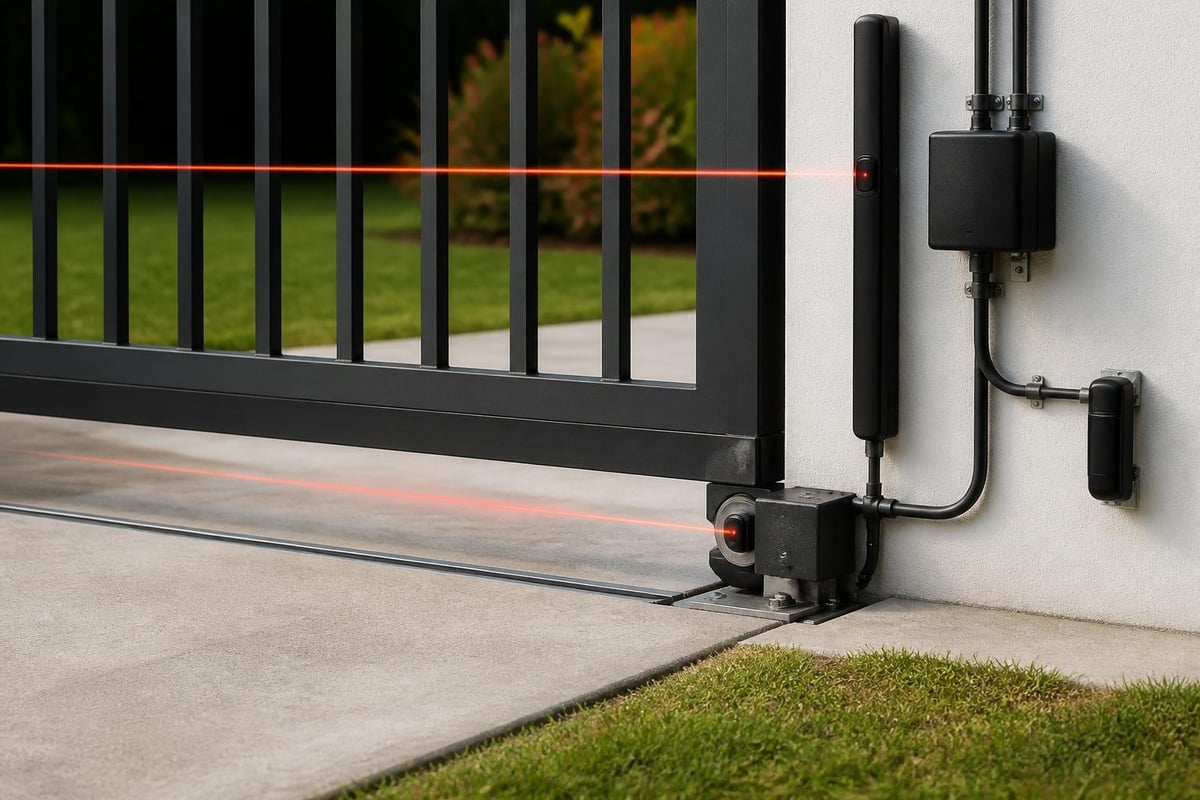
Photoelectric sensors create an invisible beam across the gate opening. Breaking this beam signals the control board to stop or reverse gate movement. Common sensor problems include:
- Misalignment causing constant false triggers
- Dirt, spider webs, or water droplets on sensor lenses
- Damaged wiring from landscaping equipment or weather
- LED indicator failures that prevent proper diagnostics
Proper sensor alignment requires both the transmitter and receiver to maintain precise orientation. Vibration from gate operation, ground settling, or accidental impacts knock sensors out of alignment. Most sensors include alignment indicators (usually LEDs) that simplify the adjustment process.
Edge Sensors and Pressure Detection
Edge sensors mount along the gate's leading edges and detect physical contact with objects. These sensors use either pressure-sensitive rubber strips or monitored resistance circuits. According to UL 325 external entrapment protection requirements, edge sensors must trigger reversal within specific force limits.
Weather degrades edge sensor rubber compounds, causing cracks that allow water infiltration. Once water enters these sensors, they generate false signals or fail to detect actual obstructions. Regular inspection for physical damage prevents these electric gate problems.
Control Board and Programming Issues
The control board serves as the gate system's brain, processing sensor inputs, controlling motor output, and managing timing sequences. Modern control boards include sophisticated programming for customizable operation, but this complexity introduces additional failure points.
Circuit Board Component Failures
Electronic components on control boards have finite lifespans. Capacitors bulge and leak, solder joints crack from thermal cycling, and integrated circuits fail from voltage spikes. Visual inspection often reveals obvious component damage, but many failures require testing with specialized equipment.
Lightning strikes and power surges destroy control boards instantly or cause cumulative damage that leads to delayed failure. Surge protectors provide essential defense against these events, yet many installations lack adequate protection. Properties in areas with frequent thunderstorms should install whole-system surge protection.
Programming Loss and Corruption
Control boards store programming in memory chips that can lose data when backup batteries fail or during power fluctuations. When programming corrupts, gates exhibit erratic behavior:
- Opening but refusing to close
- Closing partially then reversing
- Ignoring remote control signals
- Operating at incorrect speeds
- Failing to respond to timers or automated schedules
Reprogramming control boards requires accessing manufacturer-specific menus and entering correct parameters for gate weight, travel limits, force settings, and safety delays. Incorrect programming creates safety hazards and accelerates mechanical wear.
Mechanical Component Wear
While electric gate problems often involve electrical components, mechanical failures occur with equal frequency. The mechanical system must withstand repeated stress cycles while supporting substantial gate weight.
Hinge and Wheel Degradation
| Component | Wear Indicators | Replacement Interval |
|---|---|---|
| Hinges | Excessive play, squeaking, visible rust | 5-10 years |
| Wheels/Rollers | Flat spots, wobbling, cracked bearings | 3-7 years |
| Track/Rail | Rust, deformation, debris accumulation | 10-15 years |
| Chains/Belts | Stretching, broken links, fraying | 4-8 years |
Hinges support the gate's full weight while allowing smooth pivoting motion. Metal fatigue, rust formation, and lubrication loss cause hinges to bind or develop excessive play. Gates that swing unevenly or produce grinding sounds during operation typically need hinge service or replacement.
Sliding gate wheels bear constant load and roll across tracks that accumulate dirt and debris. Bearing failure within wheels creates wobbling motion that stresses the motor and drives erratic operation. The ASTM F2200 standard provides specifications for automated vehicular gate construction, including wheel and track requirements that minimize wear.
Chain and Belt Drive Systems
Chain drives require regular lubrication and tension adjustment. Over time, chains stretch and develop slack that prevents smooth power transfer. Excessive slack allows chains to jump sprockets, potentially jamming the gate mid-cycle.
Belt drives operate more quietly than chains but wear differently. Belts develop cracks and lose flexibility, especially in extreme temperatures. A worn belt slips under load, causing the gate to move slowly or stop before completing its travel.
Remote Control and Access System Failures
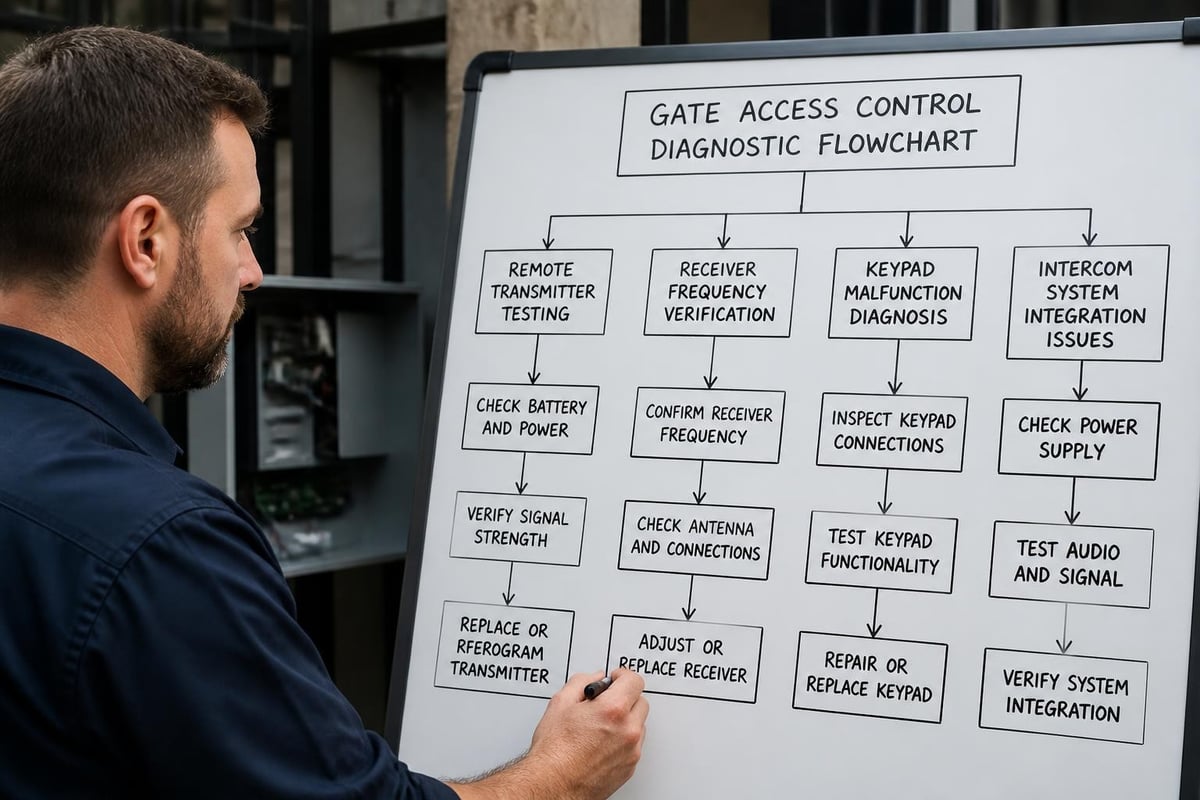
Remote transmitters and receivers facilitate convenient gate operation, but these systems introduce additional complexity and potential failure points. When access control systems malfunction, property access becomes problematic.
Transmitter and Receiver Issues
Remote control problems manifest in several ways:
- Reduced operating range requiring closer proximity
- Intermittent response requiring multiple button presses
- Complete failure to trigger gate movement
- Receiver responding to neighbor's remotes (frequency interference)
Battery depletion represents the most common transmitter problem, yet many users overlook this simple solution. Transmitter batteries typically last 1-2 years with normal use. Testing with a fresh battery eliminates this variable during troubleshooting.
Receiver antenna damage reduces signal reception range. Antennas mounted externally suffer weather damage and physical impacts. Replacing damaged antennas or relocating receivers to better positions resolves many range-related electric gate problems.
Keypad and Card Reader Malfunctions
Keypads endure constant exposure to weather and physical use. Button contacts wear out, water seeps behind faceplates, and direct sunlight degrades display screens. Regular cleaning and weatherproofing extend keypad lifespan, but eventual replacement remains inevitable.
Card readers and proximity sensors require proper positioning relative to vehicle windows for convenient access. Readers mounted too low or too high frustrate users and encourage workarounds that defeat security measures. The HSE guidance on electric gate safety addresses positioning considerations for access controls to minimize risks while maintaining functionality.
Preventive Maintenance Strategies
Proactive maintenance prevents many electric gate problems before they cause complete system failure. Regular inspection and service extend component lifespan and identify developing issues during early stages when repairs cost less.
Monthly Inspection Checklist
Property owners should perform basic inspections monthly:
- Test photoelectric sensors by breaking the beam during gate closure
- Verify edge sensors trigger appropriate reversal responses
- Listen for unusual sounds during gate operation
- Observe gate movement for smooth, consistent speed
- Check remote control range from typical usage distances
- Inspect visible wiring for damage or exposure
Professional service should occur annually at minimum, with semi-annual service recommended for commercial installations or residential gates with heavy use. Technicians perform comprehensive testing beyond owner capabilities, including voltage measurements, force testing per DASMA technical guidance, and component replacement before failure occurs.
Lubrication Requirements
Proper lubrication reduces friction, prevents rust, and extends mechanical component life. Different components require specific lubricant types:
- Hinges and pivot points: Heavy-duty lithium grease applied quarterly
- Chains: Chain-specific lubricant applied monthly during heavy use
- Wheel bearings: Packed with bearing grease during installation, repacked every 2-3 years
- Sliding tracks: Light oil or silicone spray applied monthly to prevent debris accumulation
Over-lubrication attracts dirt and debris that accelerates wear. Apply lubricants sparingly and wipe away excess after application. Avoid petroleum-based products on rubber components as they cause degradation.
Emergency Response Procedures
When electric gate problems create immediate access issues, property owners need quick solutions. Understanding manual override systems and emergency release mechanisms prevents prolonged lockouts.
Manual Operation Methods
All automatic gates include manual override capability, though the specific mechanism varies by manufacturer and installation type:
- Swing gates: Typically feature a key-release mechanism that disengages the arm from the gate, allowing free swinging
- Sliding gates: Usually include a lever or handle that disengages the drive chain or belt for manual sliding
- Barrier arms: Often have a release latch at the counterweight end enabling manual lifting
Practicing manual override procedures during normal operation ensures familiarity during actual emergencies. Keep override keys accessible but secure from unauthorized access. Some installations require specialty tools for override operation, which should remain readily available.
Safety Considerations During Failures
Failed gates present safety hazards beyond mere inconvenience. Gates stuck in partially open positions create security vulnerabilities and traffic hazards. Gates that close without sensor functionality risk crushing injuries and property damage.
When electric gate problems disable safety systems, physically block the gate open until repairs restore full functionality. Never bypass or disable safety sensors permanently, as this violates code requirements and creates serious liability exposure. Temporary barriers and warning signs alert users to inoperative status while protecting against accidents.
System Upgrades and Modernization
Older gate systems lacking modern safety features should receive upgrades to meet current standards and reduce electric gate problems. Technology improvements over the past decade offer enhanced reliability, safety, and convenience.
Battery backup systems provide operation during power outages, preventing lockouts during storms or utility failures. Modern lithium batteries offer longer runtime and lifespan compared to traditional lead-acid batteries, while requiring less maintenance.
Solar power integration reduces operating costs and provides independent power in remote locations. Solar-charged systems include battery banks for nighttime and cloudy-day operation, offering true off-grid capability.
Smartphone connectivity enables remote monitoring and control through dedicated applications. Users receive alerts about operational issues, access activity logs, and grant temporary access to visitors without physical remote controls. These systems integrate with broader smart home platforms for comprehensive property management.
Understanding electric gate problems empowers property owners to recognize warning signs, perform basic troubleshooting, and make informed decisions about professional service needs. Regular maintenance, prompt attention to developing issues, and professional repair when needed ensure reliable gate operation and safety compliance. When you experience gate malfunctions or need expert diagnostics and repair, Gates On Site provides same-day service throughout Los Angeles with over 20 years of experience in residential and commercial gate systems, delivering fast, reliable solutions with no extra charge for emergency calls.