
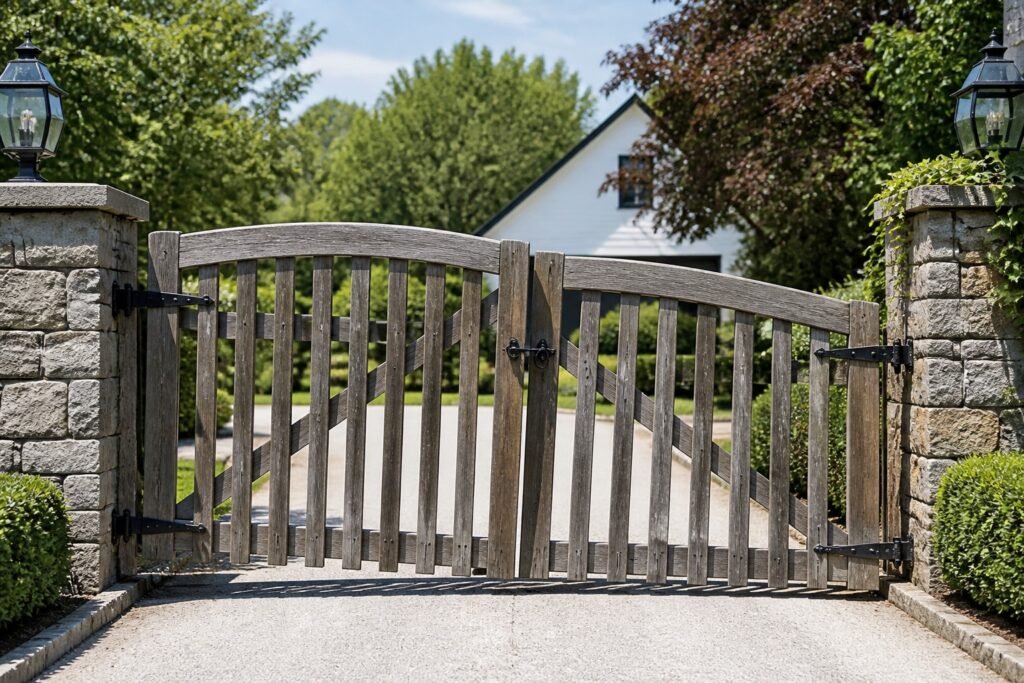
If you need wood gate repair near me, start by identifying what is failing: a sagging corner, a warped panel, loose hinges or a leaning post. Most wood gate problems can be fixed without replacing the gate, and many can be corrected in a single visit when the cause is found early. Los Angeles County's mix of dry heat, occasional heavy rain and irrigation overspray is hard on wood, so even well-built gates drift out of square over time.
This guide explains why wood gates sag and warp, how to tell a quick fix from a structural problem, which repairs are reasonable to attempt yourself, and when an automatic opener changes the diagnosis. It is written for homeowners with driveway gates and for property managers responsible for commercial gates and access systems.
Why Wood Gates Sag, Warp and Stick
Wood gates fail because moisture, gravity and repeated swinging gradually pull the frame out of square. Understanding the cause matters, because the right repair depends on it.
Sagging happens when the latch side of the gate drops below the hinge side. The gate's own weight acts as a constant lever on the hinges and the post. Over months and years, screws loosen in the wood fibers, the frame joints open slightly, and the gate begins to drag on the ground or miss the latch.
Warping is caused by uneven moisture absorption. When one face of a board is sun-baked while the other stays damp, the board cups, bows or twists. Boards that were not sealed on all sides, or that were milled from wood with uneven grain, warp first.
Sticking can result from either problem, or from swelling in humid weather, debris in the hinge hardware or a gate post that has shifted in the soil.
Common triggers in Southern California include:
- Sprinklers that spray the base of the gate and the post every morning
- Direct afternoon sun on a west-facing gate
- Winter storms that soften soil around a post footing
- Heavy decorative panels or added hardware that exceed what the original frame was built to carry
- Termites or dry rot at the post base or the bottom rail
Diagnosing the Problem Before You Repair It
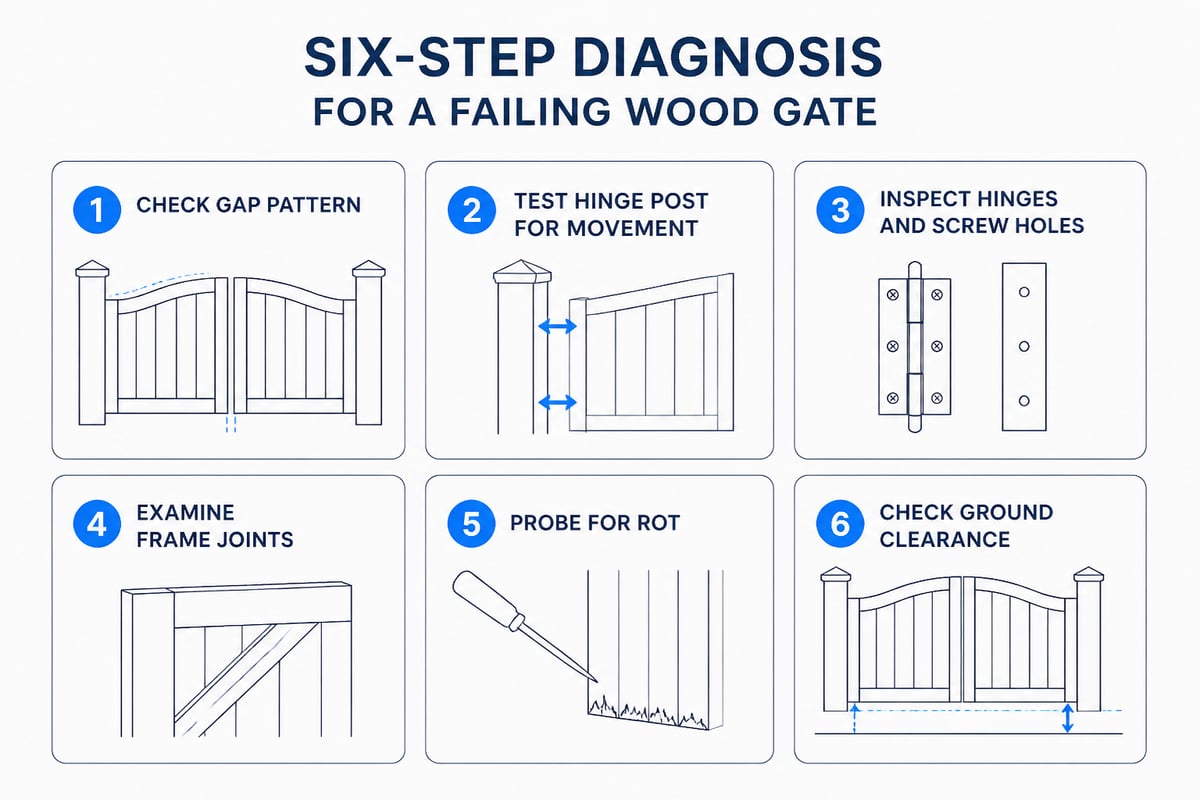
A short inspection tells you whether the gate needs adjustment, reinforcement or a post repair. Work through these steps with the gate closed, then open.
- Check the gap pattern. Look at the space between the gate and the post or fence on the latch side, top to bottom. A gap that is wider at the top and tighter at the bottom, or the reverse, confirms the gate is out of square.
- Push on the hinge post. If the post moves or rocks in the ground, the problem is the post, not the gate. Re-hanging a gate on a loose post only delays the failure.
- Inspect the hinges. Look for stripped screw holes, bent leaves and rust. Screws that spin freely have lost their grip in the wood.
- Examine the frame joints. Open corner joints, split rails and cracked cross braces indicate structural fatigue.
- Probe for rot. Press a screwdriver tip into the bottom rail and the base of each post. If it sinks in easily, the wood is decayed.
- Look at the ground. Note whether the gate drags on a settled driveway edge or a raised paver, which is a clearance issue rather than a gate defect.
Common Wood Gate Repairs and What They Involve
Most wood gate repairs fall into a handful of categories, each with a different level of effort and a different lifespan. The table below compares them side by side.
| Repair | Typical cause | Effort level | Expected result |
|---|---|---|---|
| Hinge and screw replacement | Stripped holes, loose hardware | Low | Restores swing if the frame is sound |
| Diagonal brace or anti-sag kit | Frame has dropped out of square | Low to moderate | Holds the gate square under its own weight |
| Frame joint reinforcement | Opened corners, split rails | Moderate | Stiffens the frame with brackets or new joinery |
| Board replacement | Cupped, split or rotted boards | Moderate | Removes warped sections, matches existing style |
| Post reset or replacement | Leaning, loose or rotted post | High | Corrects the root cause of repeat sagging |
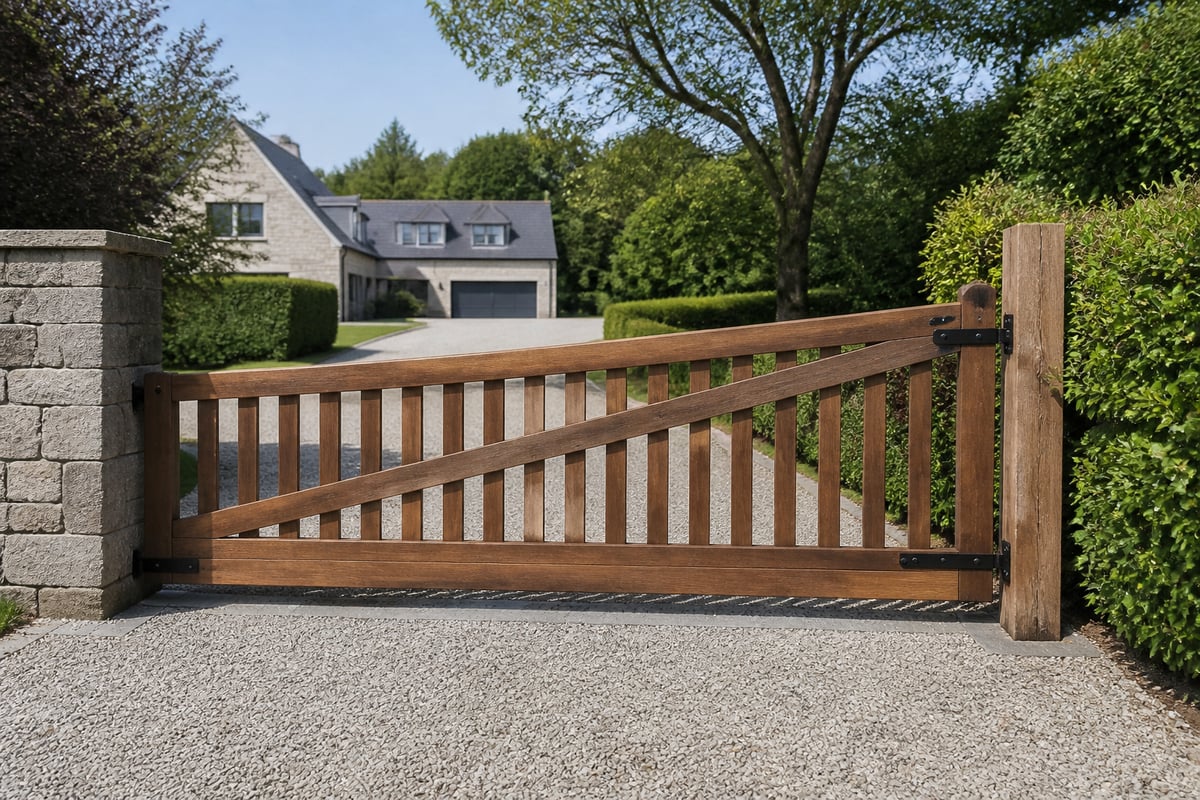
The most durable fix is rarely the cheapest-looking one. A diagonal brace running from the bottom of the hinge side up to the top of the latch side, set in compression, transfers the load to the hinge post and keeps the frame from racking. Without it, new hinges will simply loosen again.
Fixing a Sagging Wood Gate Step by Step
Many sagging gates can be corrected with basic tools if the post is solid and the wood is sound. Here is a practical sequence. If the latch no longer catches, our guide to fixing a gate latch that won’t catch covers the hardware side of the problem.
- Support the gate. Prop the latch end with a block or jack so the gate sits level and square.
- Remove loose hardware. Back out the hinge screws and inspect the holes.
- Repair the holes. Fill stripped holes with wood dowels coated in exterior wood glue, let them cure, then redrill pilot holes.
- Install longer screws. Use exterior-rated structural screws that reach into the post's solid core, not just the surface wood.
- Add a diagonal brace. Cut a brace to run from the lower hinge corner to the upper latch corner and fasten it to every board it crosses. A turnbuckle cable kit is an alternative that allows later adjustment.
- Check the latch alignment. Reposition the latch plate rather than forcing the gate to fit the old location.
- Seal exposed wood. Apply exterior sealer or paint to every cut edge and drilled hole to slow moisture entry.
A gate that still sags after bracing almost always has a post problem. If the post leans even a few degrees toward the open side, the hinges will never hold the gate level.
Straightening Warped Wood Gate Boards
Warped boards can sometimes be pulled back into line, but severe cupping or twisting usually means the board should be replaced. Mild bowing in a few pickets can be corrected by refastening them with additional screws into the rails, which holds the board flat against the frame. Moisture-related cupping sometimes eases once the board dries and is sealed on both faces.
Replace a board when:
- It has split along the grain or cracked at a fastener
- It is twisted more than a quarter inch over its length
- The wood shows soft, dark or crumbling areas
- It keeps lifting away from the rails after being refastened
When replacing boards, match species and thickness as closely as possible, and seal all six faces of the new board before installation. Unsealed replacements often warp within a season and leave a patchwork look.
Posts: The Repair That Prevents Repeat Failures
A wood gate is only as stable as the posts that carry it, and post failure is the most common reason a repaired gate sags again. Posts rot at or just below grade, where soil moisture and oxygen are both present. A post that appears sound above ground can be badly decayed underneath.
Signs a post needs attention include a visible lean, a rocking motion when pushed, soft wood at the soil line and cracks that run vertically from the base. For a post that is still sound but loose, resetting it in compacted gravel or concrete with a slight slope at the top to shed water can restore stability. A decayed post must be replaced, and the new post should be set deep enough, typically at least one third of its length underground, with a gravel base for drainage. Pressure-treated or naturally rot-resistant lumber extends its life considerably.
For homeowners, post work is the point where hiring a professional usually pays off. Setting a post plumb, in alignment with the opposite post and at the correct spacing for the gate width, is exacting work, and errors show up immediately as a binding or crooked gate.
When a Wood Gate Has an Automatic Opener
A wood gate with a motorized opener fails differently than a manual gate, because the motor adds force, weight and electrical components to the equation. Wood is a heavy gate material, and as the frame sags or the boards swell, the opener has to work harder to move the same gate. That extra strain often shows up as the gate stopping partway, reversing on its own, grinding or tripping the safety sensors.
Before assuming the motor has failed, check whether the gate itself is binding. A gate that has dropped even half an inch can drag on the driveway, overload the operator and burn out a motor that was perfectly healthy. Conversely, a failing operator can mimic a mechanical problem. Common electrical and mechanical culprits include worn limit settings, damaged arm brackets, failing capacitors, dead remotes and misaligned photo eyes.
This is where diagnosing the full system matters. Repairing the wood without testing the opener, or replacing the opener without correcting a sagging frame, leads to a repeat failure. A technician who handles both the gate structure and the automation can solve it in one visit. Gates On Site offers electric gate repair across Los Angeles, including same-day service on automatic gates where the opener, the wiring and the gate frame all have to be assessed together.
DIY Repair or Professional Help?
Simple adjustments are reasonable for a handy homeowner, but structural, electrical and post repairs are better left to a licensed technician. A useful rule is to consider the consequences of a mistake. A mis-set hinge screw costs you an afternoon. A mis-set post or a miswired opener can damage the gate, a vehicle or a person.
Reasonable to try yourself:
- Tightening or replacing hinge screws
- Adding a simple anti-sag brace or cable kit
- Resealing or repainting wood
- Replacing a single picket
Better handled by a professional:
- Resetting or replacing posts
- Rebuilding a rotted or racked frame
- Any repair involving the gate operator, wiring or safety sensors
- Heavy gates, double swing gates and commercial access gates
- Gates that have failed in a way you cannot trace to one cause
Property managers have an added reason to bring in a professional quickly. A commercial gate that will not close is a security gap, and one that will not open can block tenants, deliveries and emergency access. Documented service from a licensed, insured technician also helps with liability and maintenance records. Gates On Site handles commercial gate repair for businesses and multi-unit properties throughout Los Angeles County.
How to Choose a Provider for Wood Gate Repair Near Me
When you search for wood gate repair near me, the quality of the provider matters more than the proximity. A few criteria separate a reliable repair from a temporary patch.
- Licensing and insurance. Confirm the technician is licensed and insured for the work, especially if electrical components are involved.
- Experience with your gate type. Wood swing gates, sliding gates and automatic operators each have their own failure patterns.
- Stocked vehicles. A technician who arrives with common parts can often finish on the first visit instead of ordering and returning.
- A clear diagnosis. A good provider explains whether the problem is the hinge, the frame, the post or the operator before quoting the work.
- Written guarantees. Ask what is covered and for how long.
- Local reputation. Look for consistent recent reviews that mention gate work specifically.
Gates On Site provides residential and commercial gate repair in Los Angeles, CA, with licensed technicians and mobile service vehicles stocked with parts so many repairs can be completed on the first visit. The business holds over 100 five-star reviews on Google, and emergency gate and garage door repair is offered at no extra charge, which matters when a failed gate leaves a driveway or property entrance unsecured.
Preventing Future Sagging and Warping
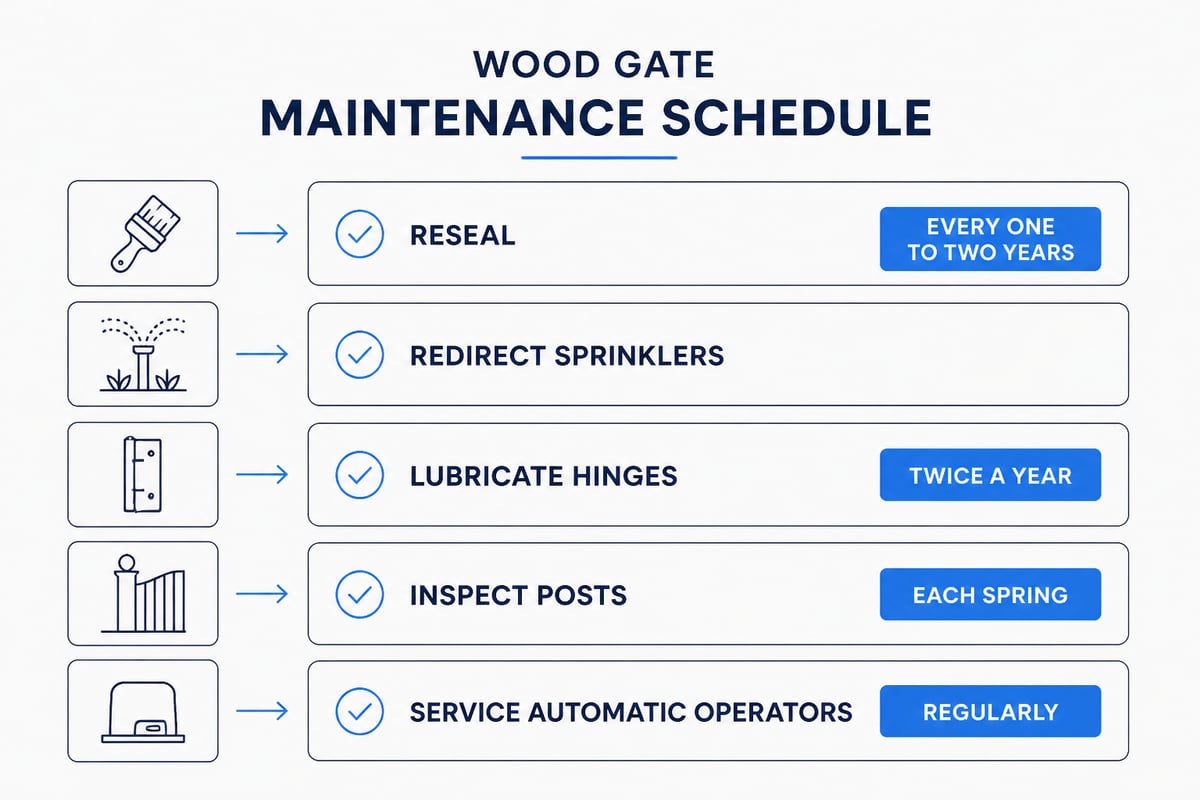
Routine maintenance extends the life of a repaired wood gate and costs far less than another structural repair. A seasonal routine works well in Los Angeles County.
- Reseal or repaint every one to two years, covering the bottom edges and end grain where moisture enters.
- Redirect sprinklers so water does not hit the gate or the post bases.
- Keep soil and mulch below the bottom rail to prevent constant moisture contact.
- Lubricate hinges and latches twice a year and check for loose screws.
- Inspect posts and the bottom rail each spring for softness or insect activity.
- Clear the swing path of debris, raised pavers and overgrown plants.
- Have automatic gates serviced regularly, since small operator faults often appear before a total failure.
Post and rail problems are common on wood fencing everywhere, and the principles described here apply in Southern California, though the local climate stresses differ.
Warning Signs That Call for Prompt Repair
Some wood gate symptoms are manageable, while others signal that the gate is becoming unsafe or unsecured. Act promptly if you notice any of these.
- The gate drags on the ground or no longer latches
- A hinge has pulled out of the post or frame
- A post leans noticeably or moves when the gate swings
- An automatic gate reverses, stalls, grinds or opens only partway
- Wood near the base of a post is soft, crumbling or insect-damaged
- The gate sits visibly crooked when closed
Delaying repair rarely saves money. A sagging gate that is bracing against a failing hinge accelerates damage to the post, the frame and, on automatic gates, the motor. Catching the problem early often means the difference between a hardware adjustment and a full frame rebuild.
Walk your gate this week with the six-step inspection above, and note whether the post moves, the screws spin free or the opener strains, so you can describe the problem clearly when you call for service. If the gate needs more than a hinge adjustment, or if an automatic opener is involved, the team at Gates On Site can diagnose the frame, the posts and the operator together, so call (323) 991-9630 to arrange a repair visit anywhere in Los Angeles County.