
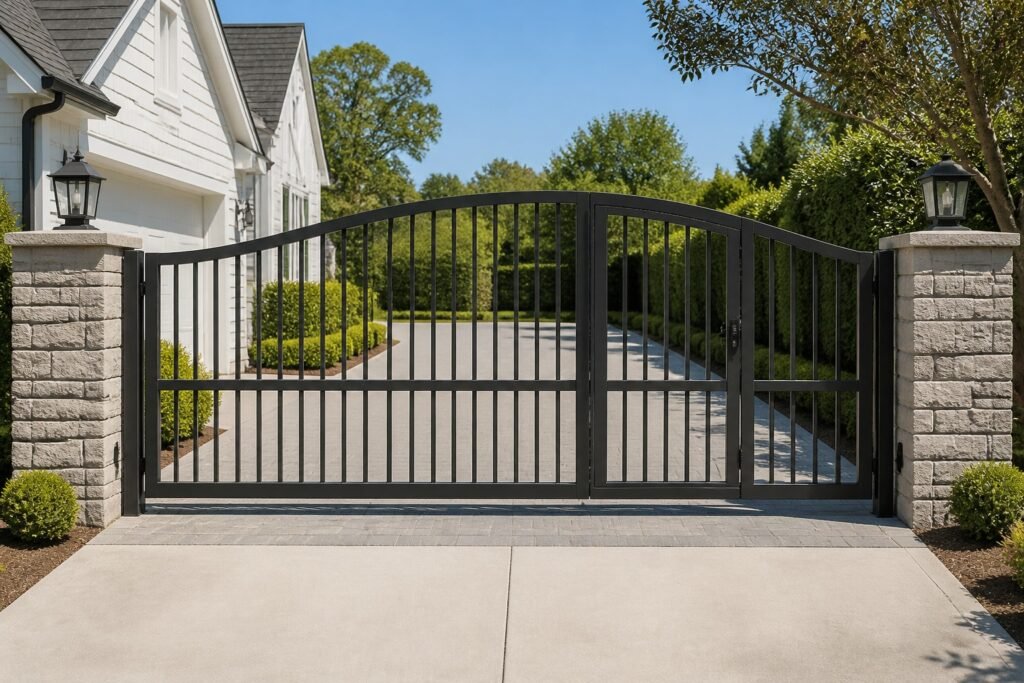
A driveway gate with door combines a wide vehicle gate and a smaller walk-through entry in one fence line, so you can let people in without opening the full driveway. The door can sit inside one gate leaf or beside the main gate as a separate unit, and the right choice depends on your driveway width, your slope and how often foot traffic comes through.
For Los Angeles County homeowners and property managers, the decision carries practical weight. Hills, narrow lots, deliveries, trash pickup and daily wear on motors all influence which layout holds up. This guide covers the configurations, sizing, safety rules and upkeep that determine whether the combination works for years or becomes a repair call.
What a Driveway Gate With a Door Actually Includes
A driveway gate with a pedestrian door is a two-part access system: a vehicle gate that slides or swings, and a hinged door sized for people, with its own latch and lock. Both parts share the same fence or wall line and usually the same style, but they operate independently.
Most setups include these components:
- Vehicle gate: a single or dual swing leaf, or a sliding panel, typically powered by an operator.
- Pedestrian door: a manual or electrically released walk-through, commonly 36 to 48 inches wide.
- Operator and controls: a motor, control board, remote receivers and keypad or intercom.
- Safety devices: photo eyes, edge sensors and manual release hardware.
- Frame and posts: structural supports sized for the weight of the gate and the door.
The pedestrian door matters most when you want to keep the large gate closed. Every cycle of a motorized gate adds wear to the operator, hinges and rollers. Sending a delivery driver, guest or gardener through the door instead of opening the whole driveway reduces that wear and keeps the property more secure.
Layout Options: Integrated Door Versus Separate Walk-Through
You can build the door into one leaf of the gate or place it beside the gate as its own opening, and each approach changes cost, strength and maintenance. Choosing between them is the single biggest design decision.
Door built into the gate leaf
An integrated door cuts an opening into a swing leaf. It saves space on narrow frontage and keeps the look uniform. The tradeoff is structural: the cutout weakens the leaf, adds a threshold that can catch on uneven concrete and shifts the leaf's weight distribution. The operator must be sized for a heavier, less balanced panel, and hinge fatigue shows up sooner.
Separate pedestrian gate beside the driveway gate
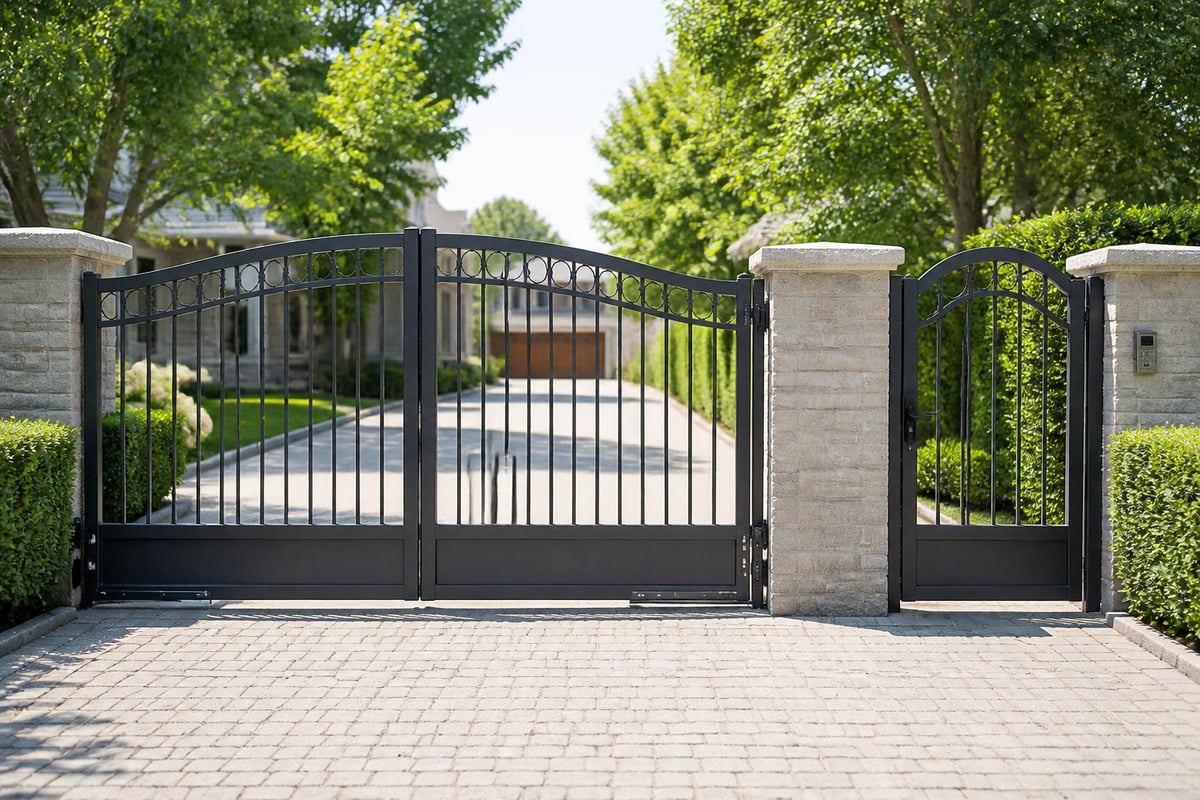
A standalone walk-through is installed next to the vehicle gate, sharing the fence line. This keeps the large gate simple and balanced, makes repairs easier and lets you run the two openings on separate locks and access rules. It needs more frontage, so measure before you commit.
Sliding gates and doors
Sliding gates suit sloped driveways and tight setbacks because they do not swing across the pavement. A door cannot be cut into a sliding panel the way it can into a swing leaf, so sliding systems almost always pair with a separate pedestrian gate.
| Layout | Best fit | Main advantage | Main drawback |
|---|---|---|---|
| Swing leaf with built-in door | Flat, wider driveways | Compact, uniform look | Weaker leaf, heavier load on hinges |
| Swing gate with separate door | Lots with extra frontage | Balanced gate, simpler repairs | Needs more width |
| Sliding gate with separate door | Sloped or tight driveways | No swing clearance needed | Needs side space for the track |
For examples of how these designs look once installed, browse a gallery of driveway gate images before settling on a style.
Sizing the Driveway Gate and the Door
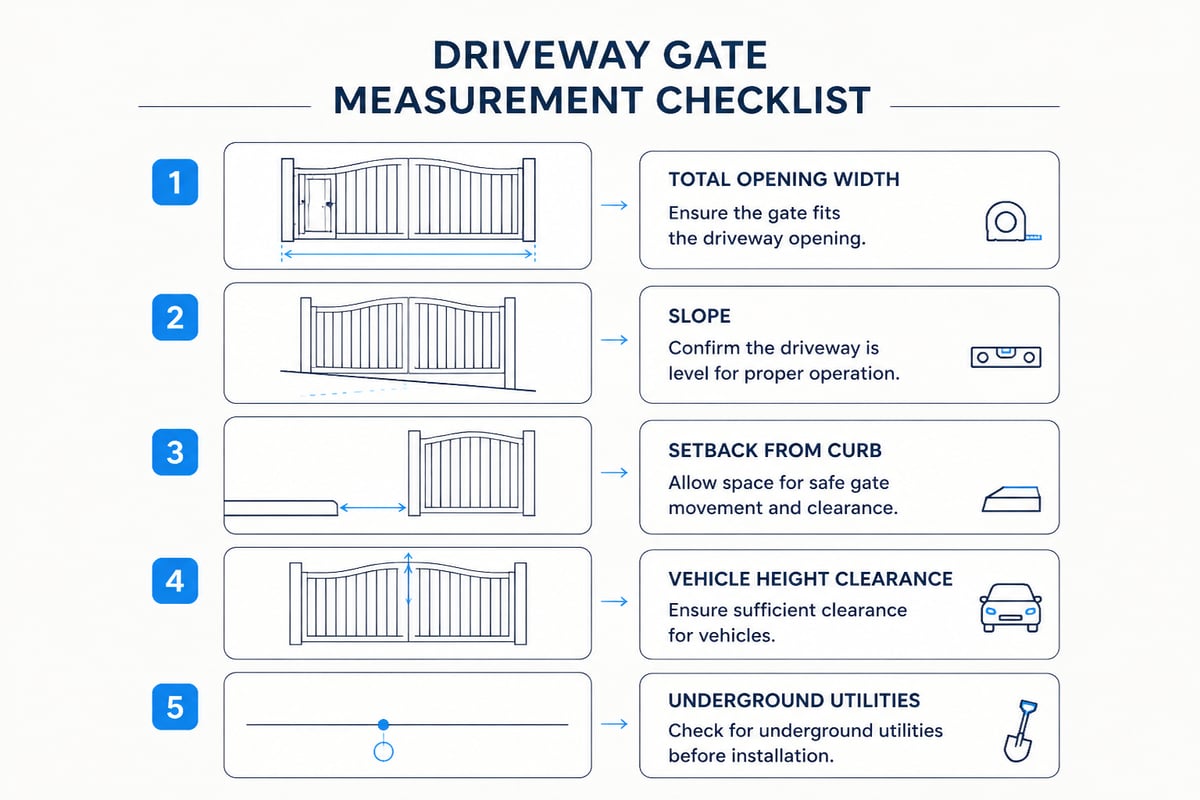
Standard sizing starts with the driveway opening, then adds the pedestrian entry on top of it. Driveway openings vary widely, so measure your own opening and allow enough extra width for a walk-through door beside or within the gate.
Measure these before ordering anything:
- Total width available between posts, walls or neighboring structures.
- Slope of the driveway, measured across the full swing or slide path.
- Distance from the gate line to the sidewalk and curb.
- Height clearance for vehicles, including roof racks and work vans.
- Location of buried utilities, sprinklers and electrical conduit.
Setback rules vary by city, and some municipalities regulate gates on fire access roads. As one example, the City of Everett requires a minimum 20-foot unobstructed gate width on required fire-department access roads, and an open gate must not block any part of that required width. The same document calls for entry gates on those roads to sit back at least 30 feet from the curb or sidewalk. Los Angeles County and its cities set their own requirements, so confirm the local rule and any fire-code approval before you build.
Materials: Matching the Gate to Your Property
Material choice affects weight, maintenance and how well the gate and door age together. Steel and wrought iron are strong and secure but heavy, which puts more load on hinges and operators. Aluminum is lighter and resists rust, which helps with Southern California sun and coastal air. Wood looks warm but needs sealing and tends to warp, and a warped leaf can stop a door latch from lining up.
If you are comparing options, these pages cover common builds in more detail:
- Metal gates for driveways for strength and security
- Custom driveway gates when the design must match an existing wall or home style
- Simple driveway gates for a lower-cost, low-maintenance approach
Whatever you pick, keep the door and the gate in the same material family. Mixed materials expand and contract at different rates, which loosens latches and shifts alignment over time.
Safety Requirements for Automatic Gates and Walk-Through Doors
Any automatic gate beside a walk-through door needs layered entrapment protection, because the two openings put people and moving metal close together. This is the area where shortcuts become dangerous.
The U.S. Consumer Product Safety Commission describes a standard requiring at least two entrapment-prevention mechanisms, including obstruction reversal and a secondary sensor such as an electric eye or edge sensor. Its guidance also calls for eliminating gaps over 2.25 inches, placing controls far enough from the gate to prevent contact during operation and making sure users can see the gate while it moves.
Apply those principles to a gate with a door:
- Keep the walk-through door outside the swing arc of the vehicle gate, or interlock the two so they cannot open together.
- Install photo eyes and edge sensors on both the opening and closing edges.
- Make sure every automatic gate has a manual release that works during a power outage.
- Place keypads and push buttons where the user can see the full travel of the gate.
- Close gaps in pickets and frames so a child or pet cannot get an arm or head caught.
Test the reversal function regularly by placing a solid object in the gate's path and confirming the gate stops and backs away.
Access Control and Opener Choices
The opener must match the gate's weight and duty cycle, and the access system should let you grant door access without opening the driveway. A heavier steel leaf with a built-in door needs a more powerful operator than a light aluminum panel.
Common access options include:
- Remote transmitters and wall-mounted keypads
- Intercoms and video entry panels
- Smartphone-based controls
- Magnetic locks or electric strikes on the pedestrian door
- Key fobs for tenants or staff
Gate operators vary widely in quality and capacity. For detail on motors, arms and slide mechanisms, see this overview of an automatic gate opener for a driveway and the related page on a driveway gate opener. Because the pedestrian door often has a separate lock, decide early whether it should be on the same access credential as the vehicle gate or a different one. For shared properties, separate credentials let you revoke a tenant's door access without reprogramming the whole system.
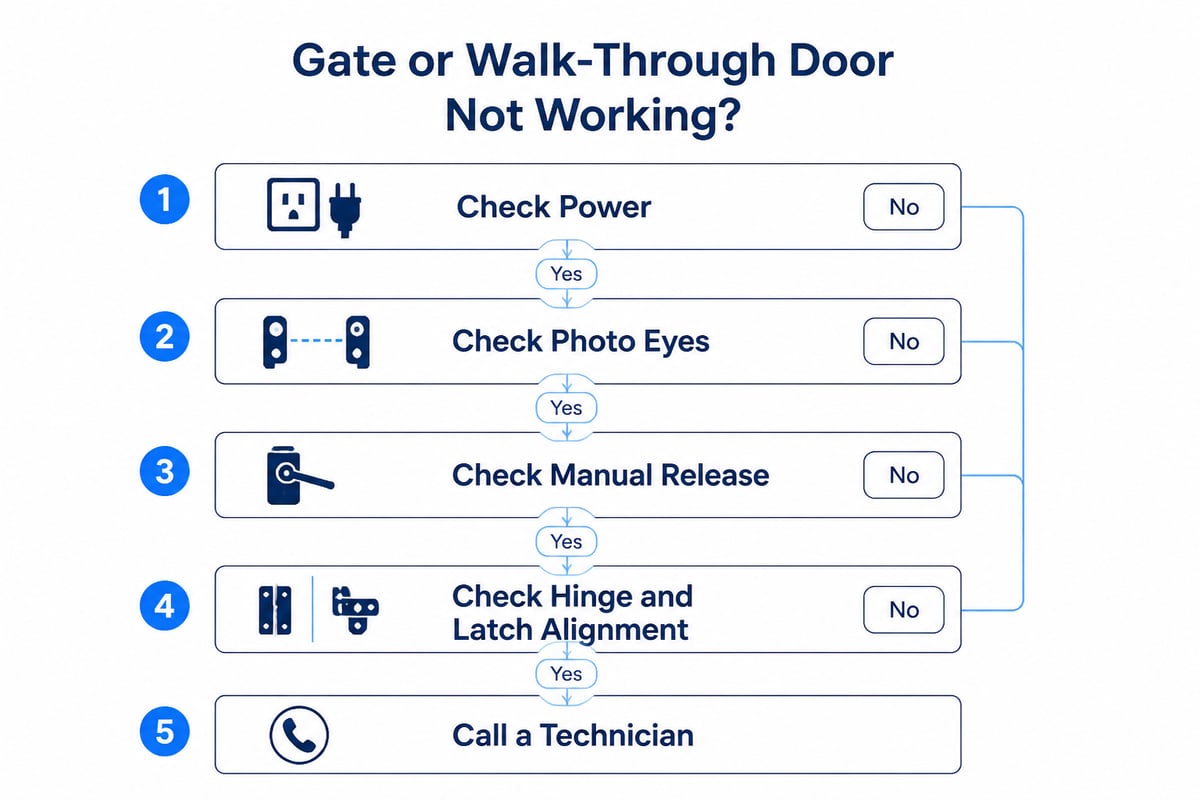
Common Problems With a Driveway Gate and Door
Most failures in a combined system trace back to alignment, wear or power. Knowing the early signs lets you act before a small issue shuts down the entrance.
Watch for these symptoms:
- The gate drags, stutters or stops partway through its travel.
- The pedestrian latch no longer lines up with the strike plate.
- The motor hums but the gate does not move.
- Remotes work intermittently or only at close range.
- The gate reverses for no apparent reason, often a dirty or misaligned photo eye.
- Visible sagging on a leaf, especially one with a cutout for a door.
Sagging is the most common issue with integrated doors. The leaf loses rigidity at the cutout, hinges loosen and the latch side drops. A leaf that rubs the pavement strains the operator and can burn out the motor. Fixing the cause, rather than adjusting the limit switches again and again, keeps the repair from repeating.
Maintenance Habits That Extend Gate Life
A short routine every few months prevents most breakdowns and keeps the door and gate working in sync. These steps take little time and catch problems early.
- Wipe photo eye lenses and clear debris from tracks and hinge areas.
- Lubricate hinges, rollers and the pedestrian latch with a product suited to outdoor metal.
- Tighten loose fasteners on hinges, posts and the operator mount.
- Test the safety reversal and the manual release.
- Check battery backups and replace aging batteries before they fail.
- Inspect wiring and conduit for sun damage, rodent chewing or water intrusion.
Keep landscaping trimmed so branches and sprinkler heads stay out of the gate path. In dusty or dry conditions, sensors and tracks can collect grime, so a quick cleaning goes a long way.
When to Call for Repair
Call a technician when the gate fails to open or close, the motor makes grinding sounds, safety sensors misbehave or the door can no longer latch securely. Attempting motor, wiring or spring-tension fixes without training risks injury and can void equipment warranties.
For homeowners and property managers in Los Angeles County, Gates On Site’s electric gate repair service handles residential and commercial systems, with technicians who are licensed, insured and certified. The company is family owned and operated with over 20 years of experience, and each service vehicle carries more than $100,000 in parts and tools so many repairs finish on the first visit. Emergency repairs are available throughout the day at no extra charge.
If you are still weighing a replacement against a fix, the driveway gate installation cost page outlines what drives pricing, which helps you judge whether repairing an older gate still makes sense.
Planning Questions to Settle Before Any Work Begins
Answering a handful of questions up front prevents rework. Walk through them with your installer or repair technician:
- Will the door be used daily, or only for occasional deliveries?
- Does the property have shared access for tenants, staff or guests?
- Is the driveway sloped, and which direction does it fall?
- What does your city or homeowners association require for gates and setbacks?
- Who will maintain the system, and how often will it be inspected?
- Does the existing wall or fence support the weight of new posts and hinges?
Pairing a gate with a garage entry adds another layer. If your property uses both, review how a garage gate with door is set up, and consider how the driveway system and garage door share power and remotes.
Start by measuring your opening width, slope and distance from the curb, then note how your current gate or door behaves so you can describe any symptoms accurately. If your system already struggles, have it inspected before the problem grows, since a misaligned leaf or tired operator rarely fixes itself. For Los Angeles County homeowners and property managers, Gates On Site can diagnose and repair your electric gate, so call (323) 991-9630 to book a visit or request emergency service.