
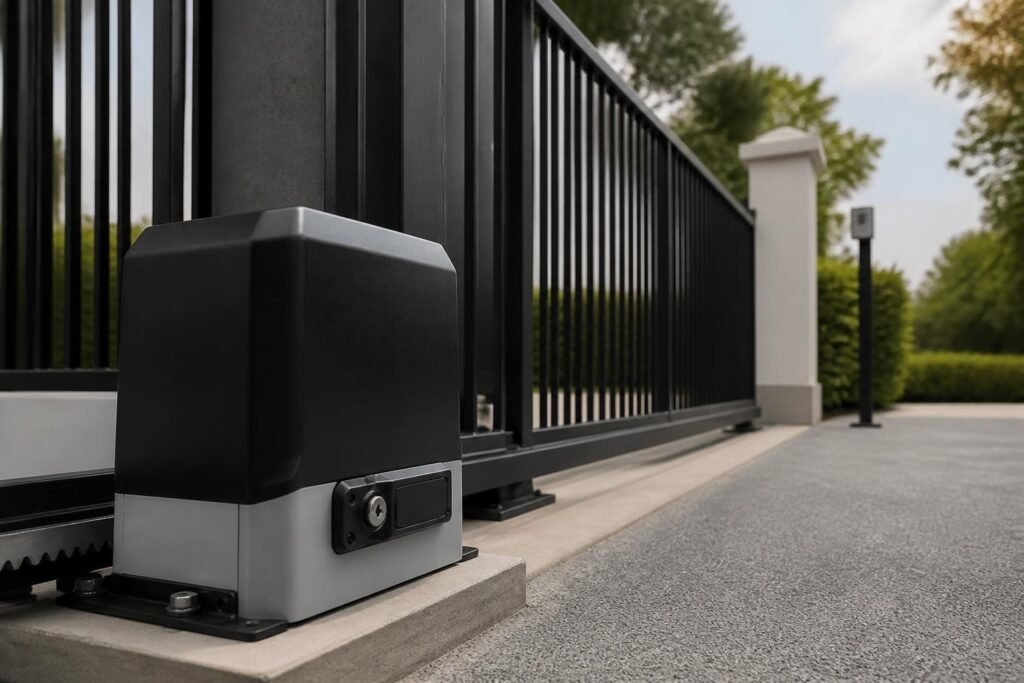
An electric gate motor serves as the mechanical heart of any automated gate system, transforming electrical energy into the precise rotational or linear force needed to open and close gates smoothly and safely. Whether securing a residential driveway or managing access to a commercial property, understanding how these motors function, which type suits your needs, and how to maintain them properly ensures years of reliable operation. Property owners in Los Angeles and similar urban areas increasingly rely on automated gate systems for convenience and security, making the selection and care of the right electric gate motor more important than ever.
Understanding Electric Gate Motor Fundamentals
The electric gate motor operates through electromagnetic principles, converting electrical current into mechanical motion that drives your gate open or closed. Modern motors integrate sophisticated control systems, safety sensors, and programmable features that make automated gates safer and more convenient than manual alternatives.
Core Components and Operation
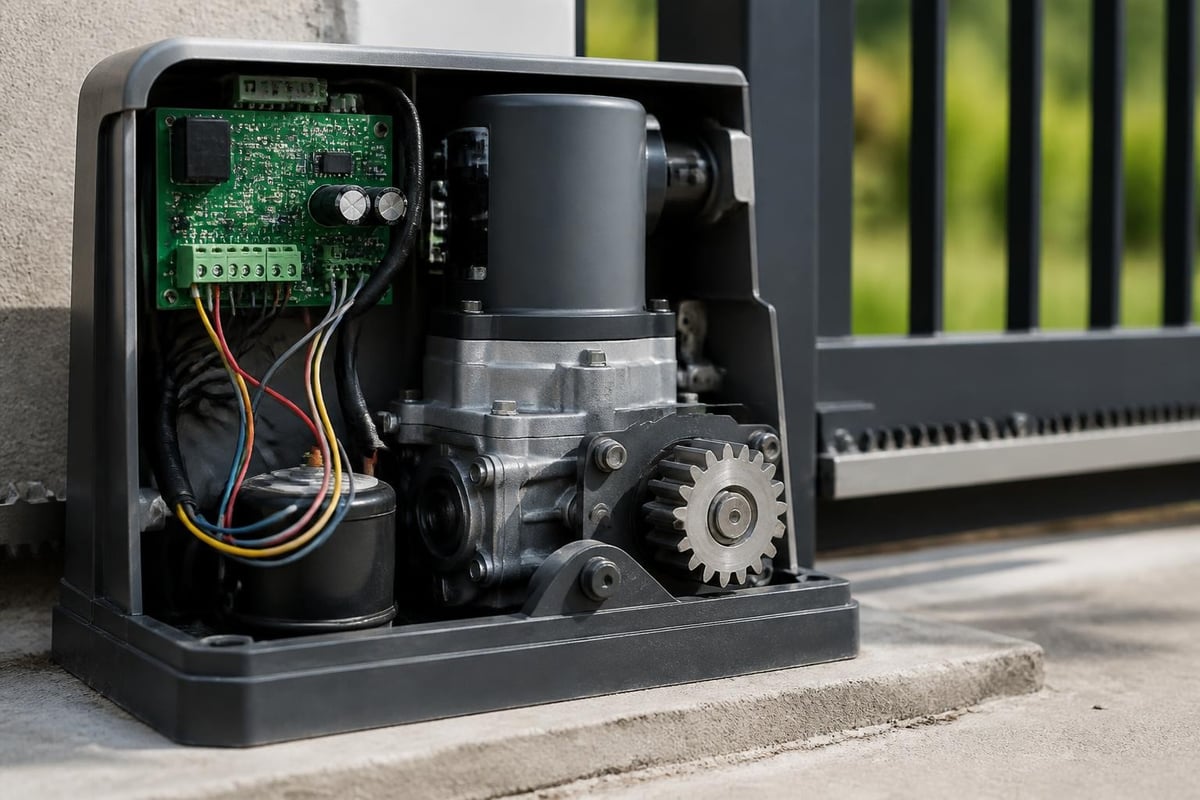
Every electric gate motor assembly includes several critical elements working in concert. The motor itself houses copper windings, permanent magnets or electromagnets, and a rotor shaft that converts electrical energy into rotation. A gear reduction system multiplies torque while reducing speed, providing the power needed to move heavy gates without requiring an oversized motor.
The control board acts as the system's brain, receiving signals from remote transmitters, keypads, or smartphone apps and directing power to the motor accordingly. These boards incorporate safety features including obstacle detection, auto-reverse functions, and programmable open/close timing.
Key components include:
- Motor housing: Weatherproof enclosure protecting internal mechanisms
- Gear reduction box: Increases torque for heavy gate movement
- Control board: Processes commands and manages safety features
- Limit switches: Define exact open and closed positions
- Capacitor: Provides starting boost for single-phase motors
Power requirements vary based on gate weight, frequency of use, and motor type. Residential installations typically operate on 120V or 240V single-phase power, while commercial applications may require three-phase power for larger, heavier gates.
Types of Electric Gate Motors
Selecting the appropriate motor type depends on gate configuration, weight, available space, and usage patterns. Each motor category offers distinct advantages suited to specific applications.
Swing Gate Motors
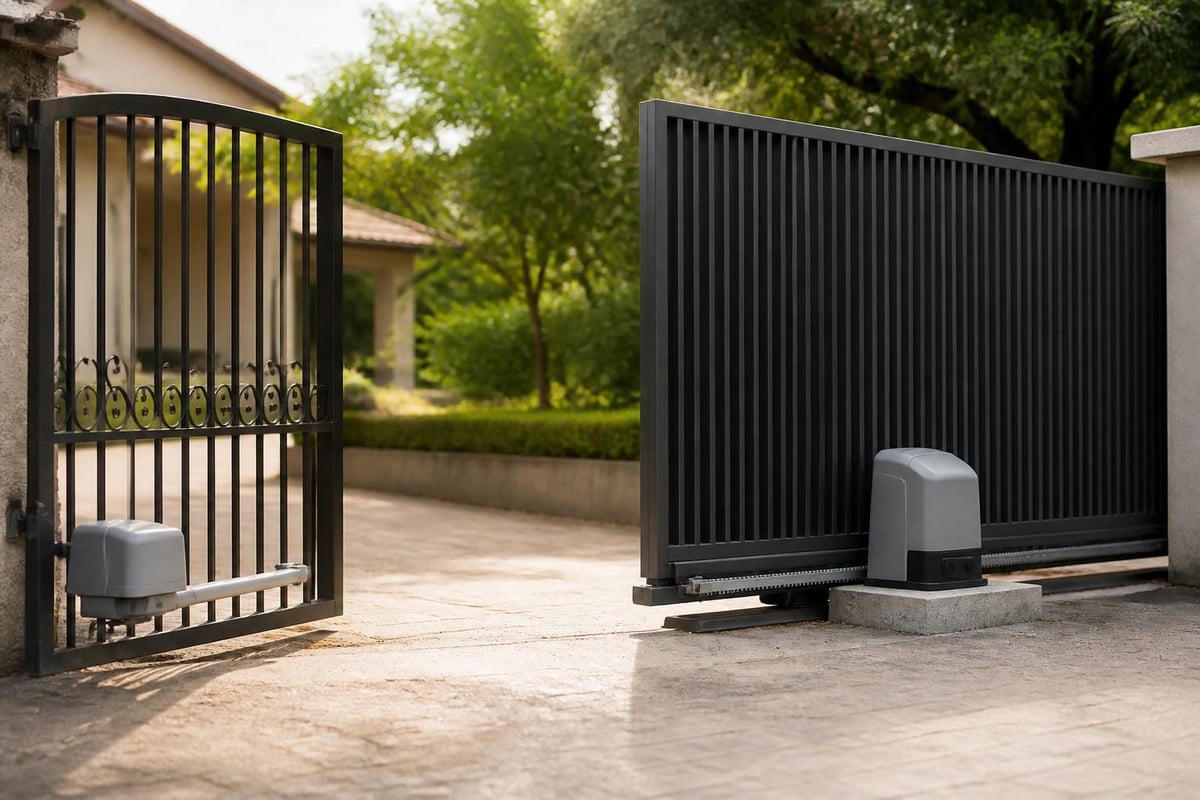
Swing gate operators fall into two primary categories: articulated arm motors and underground (hydraulic or electromechanical) motors. Articulated arm motors mount visibly on gate posts and attach to gates via mechanical arms, making them accessible for maintenance but more visible. Underground motors hide beneath the gate pivot point, preserving aesthetics while providing powerful operation.
| Motor Type | Gate Weight Capacity | Installation Complexity | Visibility | Typical Cost Range |
|---|---|---|---|---|
| Articulated Arm | 400-800 lbs per leaf | Moderate | High | $800-$1,500 |
| Underground Hydraulic | 800-2,000 lbs per leaf | High | Minimal | $2,000-$4,000 |
| Linear Screw Drive | 300-600 lbs per leaf | Low | Moderate | $600-$1,200 |
Articulated arm motors excel in retrofit situations where excavation is impractical. They adjust to varying gate mounting angles and accommodate uneven terrain more readily than underground units.
Slide Gate Motors
Slide gate motors mount alongside the gate track and drive the gate laterally via a rack-and-pinion or chain-drive mechanism. These motors handle significantly heavier gates than swing operators, with commercial units moving gates exceeding 5,000 pounds.
Rack-and-pinion systems engage a toothed rack welded to the gate with a gear (pinion) driven by the motor. This direct mechanical connection provides positive control and prevents gate drift. Chain-drive systems use a continuous loop chain, offering quieter operation but requiring more frequent tension adjustment.
The electric gate motor for sliding applications must generate sufficient torque to overcome rolling resistance and any grade incline. Professional installers calculate required force based on gate weight, wheel bearing friction, and worst-case conditions like ice or debris on the track.
Solar-Powered Options
Solar gate motors combine photovoltaic panels, battery storage, and low-voltage DC motors to operate gates without trenching electrical lines. These systems suit remote locations, environmentally conscious installations, or situations where electrical access is prohibitively expensive.
Modern solar operators include:
- High-efficiency monocrystalline panels (30-100 watts)
- Deep-cycle batteries (12V or 24V, 50-100 amp-hours)
- Charge controllers preventing overcharge/over-discharge
- Low-voltage DC motors optimized for battery operation
Performance depends on panel sizing, local sun exposure, and daily cycle count. A properly designed solar system handles 15-30 gate cycles daily even during winter months with reduced sunlight.
Critical Selection Factors
Choosing the right electric gate motor requires evaluating multiple technical and practical considerations beyond simply matching motor capacity to gate weight.
Duty Cycle and Usage Intensity
Duty cycle describes the motor's operational limits expressed as a percentage of time operating versus resting. A 30% duty cycle means the motor can run for 30 seconds, then must rest for 70 seconds to dissipate heat. Residential motors typically rate at 20-30% duty cycle, while commercial units achieve 50-100% continuous duty.
Residential applications with 10-20 daily cycles function perfectly with standard duty cycle motors. Commercial settings like apartment complexes, business parks, or storage facilities require commercial-grade motors designed for hundreds of daily cycles.
Undersizing duty cycle leads to premature motor failure as excessive heat degrades windings and control components. If your gate sees unusually heavy use, specify a commercial-duty electric gate motor even for residential installations.
Environmental Protection Ratings
Motors endure rain, temperature extremes, dust, and corrosion. The IP (Ingress Protection) rating indicates how well the housing shields internal components from environmental hazards. The first digit (0-6) rates solid particle protection; the second digit (0-8) rates liquid ingress protection.
Minimum recommended ratings:
- IP54: Protected from dust, resistant to water splashing (basic outdoor use)
- IP55: Dust-protected, resistant to water jets (standard residential)
- IP65: Dust-tight, protected against powerful water jets (coastal or industrial)
- IP67: Dust-tight, submersion-resistant to 1 meter (flood-prone areas)
Coastal properties require special attention due to salt air corrosion. Stainless steel hardware, conformal-coated circuit boards, and IP65+ ratings extend motor life in harsh environments.
Installation Requirements and Standards
Professional installation ensures safety, reliability, and compliance with electrical codes and industry standards. The UL 325 standard from UL Solutions establishes minimum safety requirements for gate operators, including entrapment protection provisions that have become mandatory in the United States.
Electrical Code Compliance
The National Electrical Code provisions specific to gate operators govern wiring methods, circuit protection, and grounding. Key requirements include:
- Dedicated circuit: The electric gate motor typically requires a dedicated 15A or 20A circuit
- GFCI protection: Ground-fault circuit interrupters protect against electrical shock in outdoor installations
- Proper conduit: Weatherproof conduit protects wiring from physical damage and moisture
- Grounding: Equipment grounding prevents dangerous voltage on metal components
- Disconnecting means: Accessible disconnect allows safe servicing
Installers must position control boxes and electrical connections to maintain required clearances from grade and ensure accessibility for maintenance. Burying wiring requires appropriate direct-burial cable or conduit rated for underground use.
Safety Sensor Integration
Modern regulations require multiple safety devices preventing gate contact with vehicles, pedestrians, or objects. Photo-eye sensors create invisible beams across the gate path; breaking the beam triggers auto-reverse or stop functions. Pressure-sensitive edge sensors detect physical contact and immediately reverse gate direction.
| Safety Device | Detection Method | Response Time | Typical Coverage |
|---|---|---|---|
| Photo-eye Sensors | Infrared beam interruption | 50-100 milliseconds | 2-20 feet |
| Edge Sensors | Pressure-activated switch | 20-50 milliseconds | Gate leading edge |
| Loop Detectors | Magnetic field disturbance | 100-200 milliseconds | Vehicle-sized area |
| Force Monitoring | Motor current sensing | 200-500 milliseconds | Entire gate movement |
The Health and Safety Executive guidance on powered gates emphasizes risk assessment and appropriate safety measure selection based on gate location, usage patterns, and potential hazards.
Maintenance and Troubleshooting
Regular maintenance extends electric gate motor lifespan and prevents costly emergency repairs. Establishing a consistent maintenance schedule keeps automated gates operating safely and reliably.
Routine Maintenance Schedule
Professional technicians recommend quarterly inspections for residential gates and monthly checks for commercial installations. Basic maintenance tasks include:
- Lubrication: Apply lithium-based grease to articulated arms, hinges, and pivot points
- Track cleaning: Remove debris from slide gate tracks and wheel paths
- Sensor alignment: Verify photo-eyes remain properly aligned and clean
- Hardware inspection: Tighten bolts, check for wear on chains or cables
- Battery testing: Verify backup battery charge and load capacity
The control board benefits from visual inspection for corrosion, burned components, or loose connections. Checking capacitor condition prevents unexpected motor starting failures-bulging or leaking capacitors require immediate replacement.
Gate balance affects motor workload and longevity. Swing gates should remain stationary when manually positioned at mid-travel; slide gates should roll freely without binding. Adjusting hinges, replacing worn wheels, or repairing track damage reduces motor strain.
Common Problems and Solutions
Electric gate motor issues typically manifest as complete failure, intermittent operation, or abnormal behavior. Systematic troubleshooting identifies root causes efficiently.
Motor hums but gate doesn't move: This symptom indicates mechanical binding, failed capacitor, or extreme overload. Check for obstructions, verify gate moves freely when disengaged from motor, and test capacitor with multimeter.
Gate reverses immediately after starting: Overly sensitive force settings or misaligned safety sensors trigger false obstruction detection. Recalibrate force limits according to manufacturer specifications and verify sensor alignment.
Remote control range decreased: Weak transmitter battery, antenna damage, or radio interference reduce communication range. Replace batteries first, then inspect receiver antenna connection and relocate receiver if interference persists.
When complex electrical issues arise or motors require major component replacement, property owners benefit from professional diagnostics. For Los Angeles residents experiencing persistent gate problems, Electric Gate Repair services provide same-day troubleshooting and repair by experienced technicians with fully stocked service vehicles.
Advanced Features and Smart Integration
Contemporary electric gate motors incorporate technology that enhances convenience, security, and monitoring capabilities far beyond simple open/close functionality.
Smart Control Systems
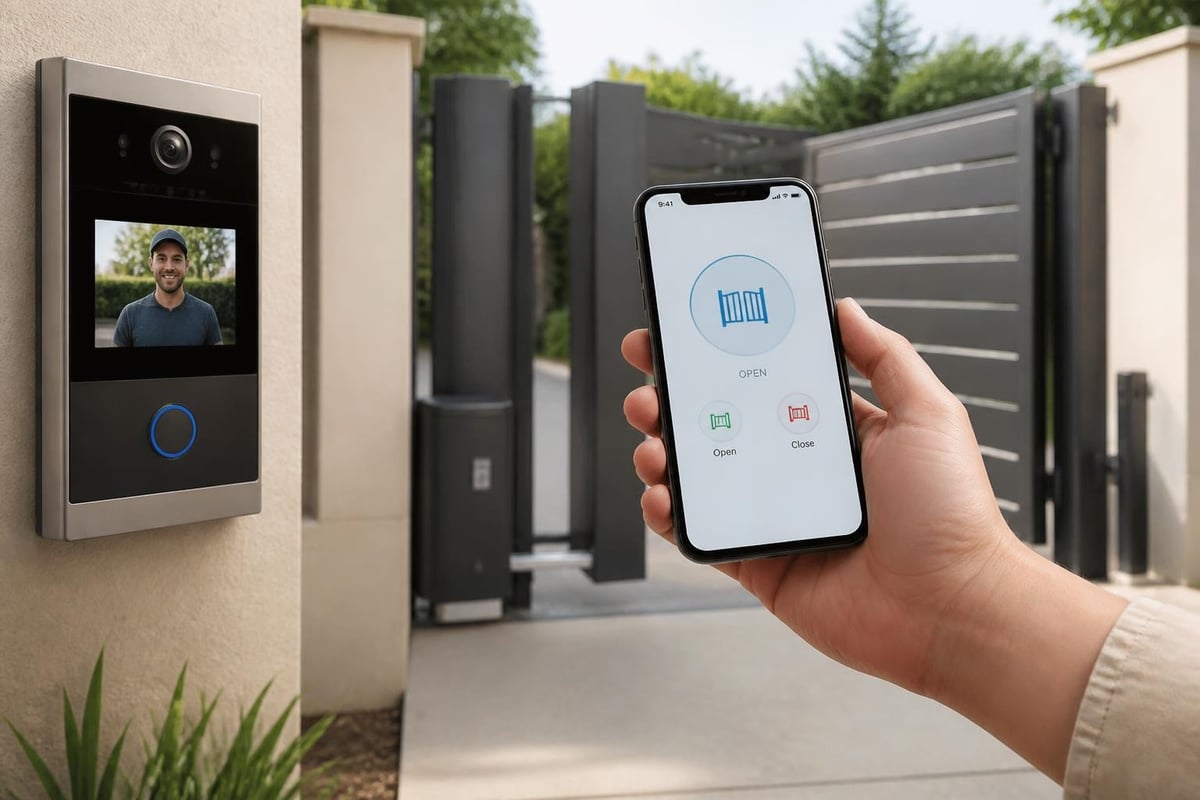
WiFi-enabled control boards allow smartphone operation from anywhere with internet connectivity. Property owners receive notifications when gates operate, monitor access history, and grant temporary access to visitors without physical transmitters.
Modern systems integrate with:
- Smart home platforms: Alexa, Google Home, Apple HomeKit compatibility
- Video intercom systems: Visual verification before granting access
- Access control databases: Track employee or resident entry/exit
- Cloud-based management: Remote programming and diagnostic access
Programmable schedules automatically lock gates during specified hours or restrict access on certain days. Vacation modes simulate normal usage patterns for security while owners travel.
Battery Backup and Reliability
Power outages disable electric gate motors unless equipped with battery backup systems. Sealed lead-acid or lithium-ion batteries maintain operation during electrical service interruptions, preventing lockout situations during emergencies.
Sizing backup batteries requires calculating:
- Motor power consumption (watts during operation)
- Expected cycles during outage (number of open/close operations)
- Control board standby draw (continuous power when idle)
- Desired runtime (hours or days of backup operation)
A typical residential swing gate motor consuming 100 watts during a 15-second cycle can operate 50-100 times on a 40 amp-hour 12V battery, providing several days of normal use during extended outages.
Industry Standards and Compliance
Professional installations adhere to multiple overlapping standards ensuring safety, performance, and reliability. Understanding these requirements helps property owners verify quality installations and maintain compliant systems.
The ASTM F2200 specification for automated vehicular gate construction establishes minimum design requirements addressing structural integrity, operational safety, and performance characteristics. Gates must withstand specified wind loads, operate safely across temperature ranges, and incorporate redundant safety features.
European installations follow EN standards, particularly EN 12453 (use of powered gates) and EN 12445 (test methods). The Irish Health and Safety Authority guidelines provide practical guidance on applying these standards, including force testing procedures and risk assessment frameworks.
The Gate Safe organization offers comprehensive resources for installers and owners, including safety checklists, maintenance schedules, and best practice recommendations. Their installer guidance emphasizes proper risk assessment and appropriate safety device selection for each unique installation.
Recent regulatory updates have strengthened entrapment protection requirements. The Consumer Product Safety Commission’s incorporation of UL 325 changes into mandatory federal rules reflects ongoing efforts to prevent gate-related injuries and fatalities, particularly involving children.
Cost Considerations and Value Analysis
Electric gate motor investments range from modest DIY installations to sophisticated commercial systems costing thousands of dollars. Understanding total cost of ownership guides better purchasing decisions.
Initial Purchase and Installation
Motor unit prices vary by type, capacity, and features:
- Basic residential swing motors: $400-$800
- Commercial-duty swing operators: $1,200-$3,000
- Residential slide gate motors: $600-$1,500
- Heavy-duty commercial slide motors: $2,500-$6,000
Installation labor adds substantially to project costs. Professional installation typically costs 50-150% of equipment price depending on complexity, site preparation requirements, and electrical work scope. Concrete pad preparation, gate fabrication, electrical trenching, and safety sensor installation all contribute to final expense.
DIY installation saves labor costs but requires electrical knowledge, proper tools, and careful attention to safety requirements. Incorrect installation voids warranties and creates liability exposure if accidents occur.
Long-Term Operating Costs
The electric gate motor consumes relatively little energy during normal operation. A typical residential system uses $2-5 monthly in electricity at average U.S. rates. Solar systems eliminate operating costs after initial investment but require battery replacement every 4-7 years ($150-400).
Maintenance costs include:
- Annual professional service: $150-300
- Remote transmitter replacement: $30-80 each
- Photo-eye sensors: $50-150 per pair
- Control board replacement: $200-600
- Complete motor replacement: $400-2,000
Properly maintained systems typically operate 10-15 years before requiring major component replacement. Preventive maintenance significantly extends lifespan and prevents costly emergency repairs during inconvenient failures.
Performance Optimization Strategies
Maximizing electric gate motor performance and longevity involves several proactive measures beyond basic maintenance.
Gate Balance and Mechanical Efficiency
Proper gate balance reduces motor workload dramatically. Swing gates should remain stationary at any point when manually positioned; gates falling open or closed indicate balance problems requiring adjustment. Slide gates should roll freely with minimal manual force throughout their travel range.
Worn wheels, misaligned tracks, or damaged rollers increase friction and strain motors. Replacing wheels at first signs of flat spots or binding prevents accelerated wear on more expensive motor components. Track alignment should maintain straight, level paths with minimal deviation.
Hinge lubrication schedules depend on usage intensity and environmental conditions. Dusty or coastal locations require more frequent lubrication than protected inland installations. Using appropriate lubricants prevents washout (water-resistant lithium grease) and maintains effectiveness across temperature extremes.
Environmental Protection Measures
Shielding motors from direct weather exposure extends operational life. While motors carry weatherproof ratings, minimizing direct rain, snow, and sun exposure reduces stress on seals and housing. Simple roof overhangs or dedicated equipment covers provide additional protection.
Drainage around underground motors prevents water accumulation in motor vaults. Proper vault installation includes gravel bases, weep holes, and adequate depth to keep sensitive components above seasonal high water levels.
Programming and Sensitivity Adjustment
Factory default settings rarely provide optimal performance for specific installations. Adjusting parameters including:
- Open/close speed: Slower operation reduces wear and noise
- Force limits: Minimum force sufficient for reliable operation maximizes safety
- Soft start/stop: Gradual acceleration/deceleration reduces mechanical shock
- Auto-close timing: Balances convenience against security requirements
- Photo-eye detection windows: Prevents nuisance triggering while maintaining safety
Professional programming accounts for gate weight distribution, wind loading, and usage patterns to optimize both performance and component longevity. Documentation of custom settings facilitates troubleshooting and prevents confusion during future service.
Selecting, installing, and maintaining the right electric gate motor ensures years of reliable automated access control while maximizing security and convenience. Understanding motor types, safety requirements, and proper maintenance practices helps property owners make informed decisions and avoid costly problems. Whether you're experiencing performance issues with an existing system or planning a new installation, professional expertise makes the difference between frustration and flawless operation. Gates On Site brings over 20 years of experience to residential and commercial properties throughout Los Angeles, delivering same-day electric gate repairs and expert installation services with no extra charge for emergency calls.