
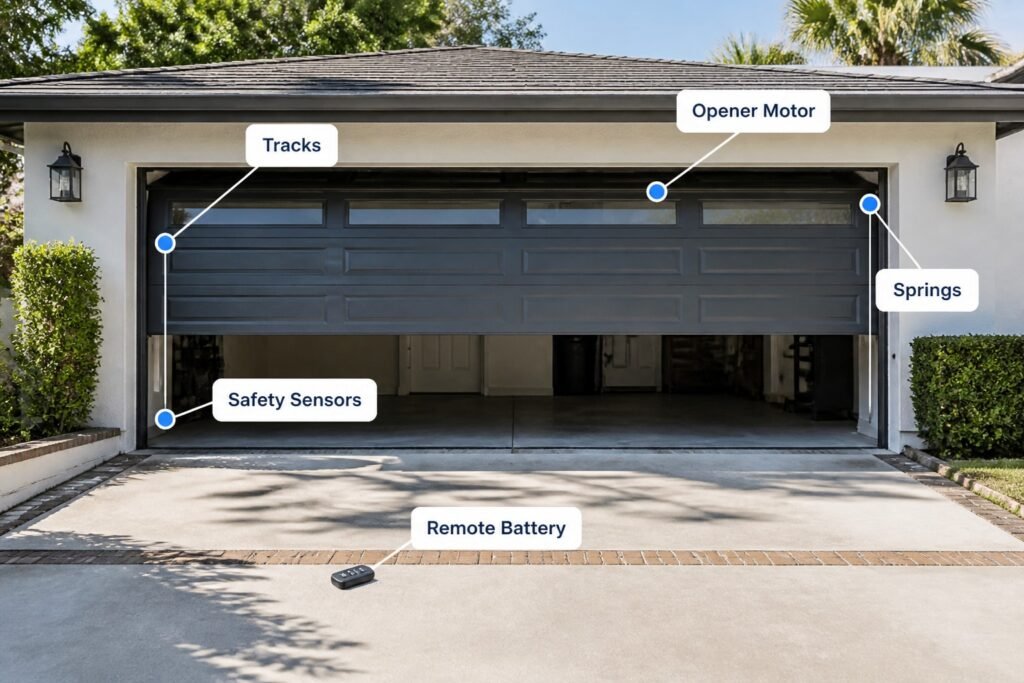
Most garage door opening problems trace back to one of five causes: a broken torsion or extension spring, misaligned safety sensors, a dead remote battery or opener fault, bent or obstructed tracks, or a door that has been left in manual-lock mode. Some of these take two minutes to fix with no tools. Others involve high-tension parts that should only be handled by a licensed technician.
This guide walks through each symptom in the order a technician would diagnose it, explains what is safe for a homeowner or property manager to check, and covers typical costs, door lifespan and the warning signs that a door is close to failing.
What Is Wrong With My Garage Door?
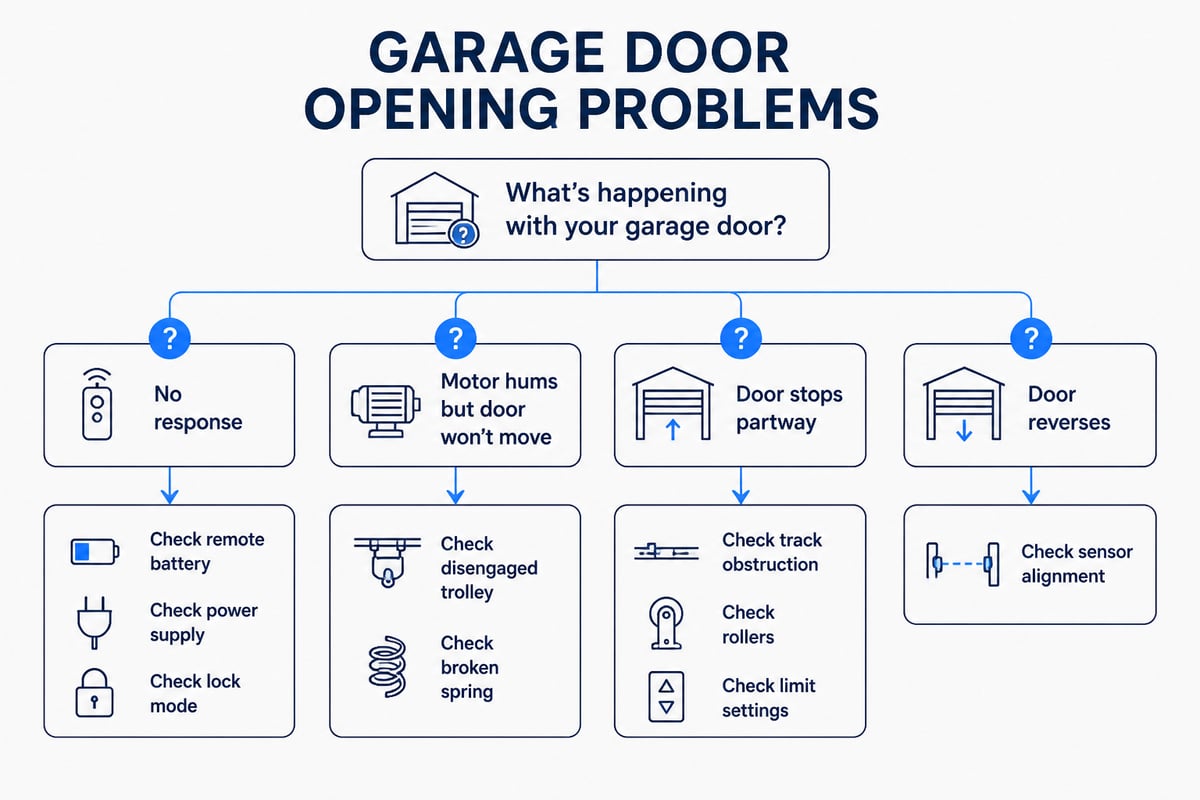
The fastest way to identify the problem is to match the symptom to its most likely cause. Start with what the door does, or fails to do, when you press the button.
| Symptom | Most likely cause | DIY check or call a pro |
|---|---|---|
| Nothing happens, no sound | Dead remote battery, no power, tripped breaker | DIY |
| Motor hums but door doesn't move | Broken spring or disengaged trolley | Pro for springs |
| Door goes up an inch or two, then drops | Broken spring or cable | Pro |
| Door opens partway, then stops | Track obstruction, force setting, worn rollers | DIY check, then pro |
| Door closes, then reverses | Sensor misalignment or limit setting | DIY |
| Loud grinding, banging or squealing | Dry rollers, worn hinges, loose hardware | Lubricate, then pro |
| One side higher than the other | Cable slipped or broke, bent track | Pro |
Begin with the simplest items. Many service calls in Los Angeles County turn out to be a battery, a sensor knocked out of line by a stored box, or a power strip that was switched off.
Why Won't My Garage Door Open When I Press the Button?
A door that does not respond at all is usually an electrical or signal problem rather than a mechanical one. Work through these checks in order:
- Test the wall button. If the wall button works and the remote does not, the remote battery or its programming is the culprit.
- Replace the remote battery. Most remotes use a coin cell that lasts one to three years.
- Check the power. Confirm the opener is plugged in, the outlet has power, and the GFCI outlet has not tripped.
- Look for a lock setting. Many wall panels have a "lock" or "vacation" button that disables remotes. Press and hold it to reset.
- Inspect the opener. If the unit's light is off and it will not respond to any input, the logic board or motor may have failed.
If the motor runs but the door stays put, look at the trolley. A red emergency release cord pulled while the door was closed leaves the carriage disconnected from the opener, so the motor spins freely. Re-engaging it usually requires running the door by hand to the closed position and pressing the button so the carriage reconnects.
For a detailed look at motor failures and what replacement involves, see this page on garage door motor replacement.
Why Does My Garage Door Only Open Partially and Then Stop?
A door that rises a few feet and stops is typically fighting resistance, and the opener is shutting off to protect itself. Common causes include:
- Obstructed or bent tracks. A dented track or debris in the channel stops the rollers from traveling smoothly.
- Worn or seized rollers. Rollers that no longer turn drag against the track and increase the load.
- Incorrect force or travel limits. If the open-limit setting is too low, the opener stops before the door reaches the top. Reducing the force setting too far has the same effect.
- Weakened springs. When springs lose tension, the opener carries more of the door's weight and may stall.
- Cold-weather stiffness or a heavy door. Added insulation, glass panels or a layer of paint can change a door's balance.
A simple balance test helps. With the opener disconnected and the door closed, lift it by hand. A properly balanced door rises smoothly and stays open at about waist height. If it feels very heavy or slams down, the springs are the problem, and that is a job for a professional.
How to Fix a Door That Closes and Then Reverses
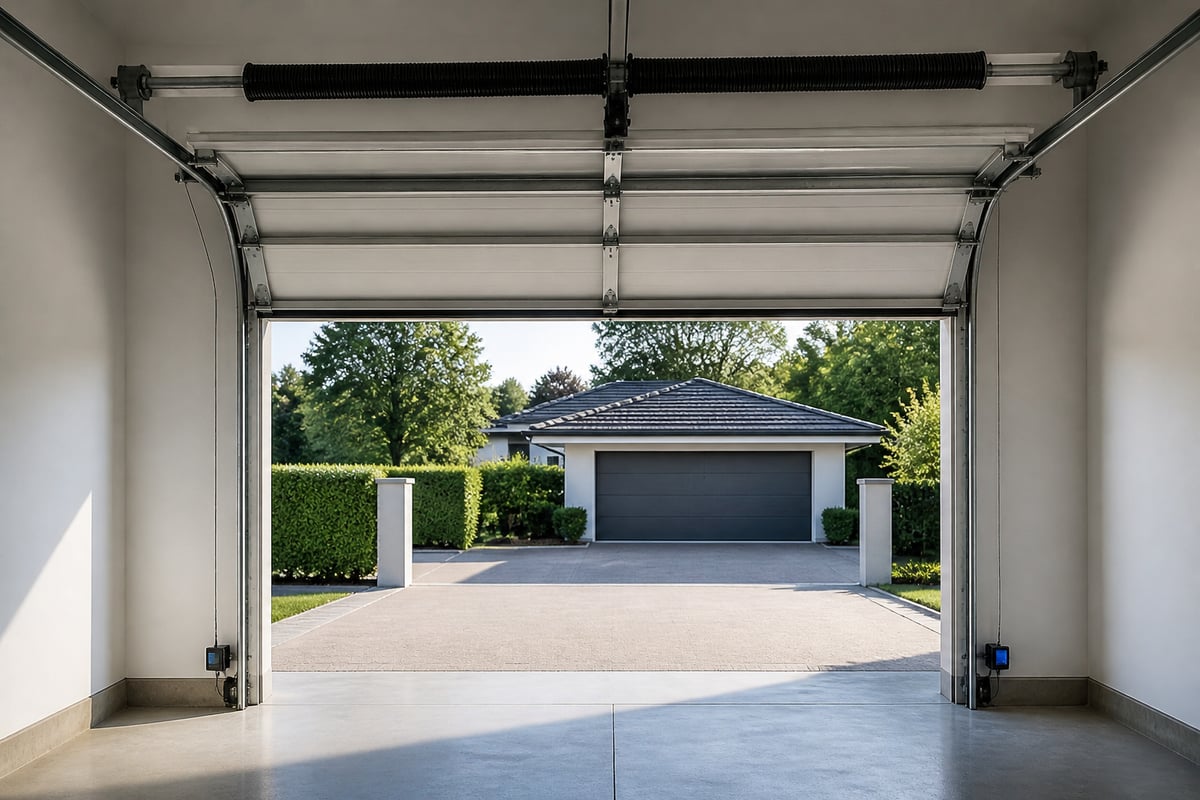
A door that reverses or refuses to close is almost always responding to its photo-eye sensors. Safety sensors are mounted near the floor, one on each side of the door, and they must be aligned for the door to close.
Check these items:
- Indicator lights. Both sensors usually show a steady light when aligned. A blinking or dark light signals a problem.
- Lens debris. Wipe each lens with a soft cloth. Dust, spider webs and direct afternoon sun can interfere with the beam.
- Alignment. If a sensor was bumped by a bicycle or storage bin, adjust it until the light turns steady.
- Wiring. Look for a frayed or pinched wire along the wall.
If the sensors are fine and the door still reverses when it touches the floor, the down-limit or force setting is probably off. The door believes it has hit an obstruction. This adjustment is made on the opener head and is spelled out in the owner's manual. If adjustments do not hold, the cause may be a failing logic board or damaged track.
The Spruce also outlines basic sensor and obstruction troubleshooting in its guide to common garage door problems.
Broken Springs and Cables: When to Stop and Call
A broken spring is the single most common reason a heavy garage door will not lift, and it is the repair that carries the most risk. Torsion springs, mounted on the bar above the door, are wound under enough tension to cause serious injury if mishandled.
Signs of a broken spring or cable include:
- A loud bang from the garage, often heard from inside the house
- A visible gap in the coil of the torsion spring
- The door lifting only a few inches before the opener strains and stops
- Slack or loose cables hanging near the drums
- A door that suddenly feels extremely heavy when lifted by hand
Do not try to lift the door with the opener, and do not attempt to wind or release spring tension yourself. Disconnect the opener, keep people and vehicles clear, and call a technician. Springs are rated for a set number of cycles and wear out with use, which is why technicians often recommend replacing both springs together.
For more on recognizing the warning signs, see this overview of signs your garage door spring is broken, and for the repair itself, garage door spring replacement.
Track, Roller and Alignment Faults
Bent tracks and worn rollers cause jerky movement, uneven lifting and doors that jump off the rail. A door that opens crooked, with one side higher than the other, usually points to a slipped cable or a track that has shifted away from the wall.
Look for these signs during a visual inspection:
- Dents or creases in the vertical track
- Gaps between the roller and the track wall
- Loose track brackets or bolts
- Rollers with flat spots or cracked nylon
- Hinges that have split at the pin
Tightening loose bolts and cleaning debris from the tracks are reasonable homeowner tasks. Reshaping a bent track is not, because forcing it can worsen the misalignment and put stress on the panels. A door that has come off its track is also unsafe to operate. For this situation, review what is involved in garage door track repair in Los Angeles.
Noise as a Warning Sign
Unusual sounds often appear weeks before a door fails to open, so they are worth treating as an early warning. A short guide:
- Squealing or screeching: dry rollers, hinges or springs that need lubricant
- Grinding: worn rollers or a failing opener drive gear
- Popping or banging: a spring under strain or a loose hinge
- Rattling: loose hardware or a worn chain
- Scraping: a track out of alignment or a panel rubbing the jamb
Apply a garage-door-specific lubricant to the rollers, hinges and springs twice a year. Avoid heavy grease on the tracks themselves, which attracts dirt. If noise continues after lubrication, a garage door tune-up can catch worn parts before they cause a breakdown.
Commercial Roll-Up Doors and Gate-Style Openers
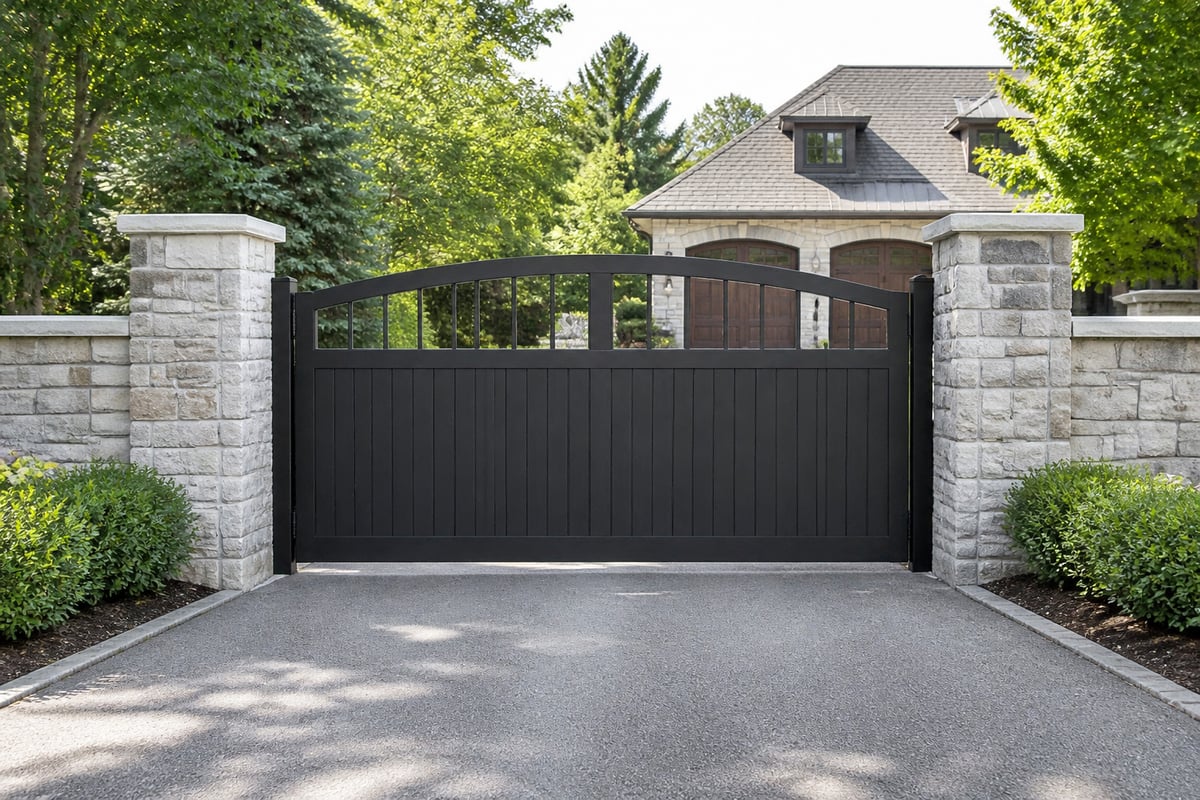
Property managers and business owners face the same categories of failure on roll-up doors, with some differences in how they show up. Commercial doors cycle more often, so motors, limit switches and springs wear faster. Common faults include a stuck door curtain, a tripped thermal overload on the operator, a damaged bottom bar edge sensor, and slats that have jumped the guides.
Because a stuck commercial door can block a loading dock, deliveries or tenant access, the cost of waiting is higher than it is at a home. Document the symptom, keep the area clear, and arrange service before a partial failure becomes a full lockout. Facilities that rely on automatic access should also keep gate and door openers on the same inspection schedule.
How Much Does It Cost to Fix a Garage Door That Won't Open?
Repair costs depend on which part failed, and a simple fix can cost far less than a replacement. Costs vary by region and door type, and generally fall into these categories:
- Remote or battery replacement: low cost, often under $50
- Sensor realignment or replacement: modest, usually under $150
- Roller or hinge replacement: moderate, depending on the number of parts
- Torsion or extension spring replacement: among the more common mid-range repairs
- Opener motor replacement: higher, depending on horsepower and features
- Section or panel replacement: varies widely with door style and material
These are general estimates, not quotes. For pricing specific to your door, contact Gates On Site directly. Opener-related costs are also discussed on this page about garage door opener repair cost.
What Is the Average Life of a Garage Door?
Garage door lifespan depends on materials, climate and how often the door is used, and the components wear at different rates. The components wear at different rates:
- Springs: rated for a set number of cycles, and wear out over time with regular use
- Openers: lifespan varies with use and maintenance
- Rollers and hinges: often replaced at least once during a door's life
- Panels: steel and insulated doors can outlast the hardware by many years
Regular lubrication, balance checks and prompt repairs extend all of these. A door that needs repeated major repairs, or whose panels are cracked or rusted through, may be better replaced than patched.
When a Professional Visit Makes Sense
A technician is the right call when the problem involves spring tension, cables, a bent track, a failed opener or any door that is stuck in the open or closed position. These are also the situations where an improvised fix carries the greatest risk of injury or further damage.
Gates On Site is a family-owned, licensed and insured company serving Los Angeles County with over 20 years of hands-on experience. Its garage door repair service covers overhead doors for homes and businesses, with technicians arriving in vehicles stocked with parts so many repairs can be completed on the first visit. Emergency service is available throughout the day at no extra charge, and every repair is backed by a 100% satisfaction guarantee.
FAQ
How long does it take to diagnose garage door opening problems?
A technician can usually identify the cause within 15 to 30 minutes of inspecting the door, springs, tracks, sensors and opener. Complex faults, such as a failing logic board, may take longer to confirm.
Is it safe to open a garage door manually when it won't open?
Yes, if the springs are intact. Pull the red emergency release cord and lift the door by hand. If it feels extremely heavy or drops when you release it, the springs have likely failed, so stop and call a professional.
Can cold or hot weather stop a garage door from opening?
Temperature changes can stiffen lubricants, shift sensor alignment and slightly change spring tension, which sometimes leads to slow or partial openings. If the door works normally once temperatures moderate, lubrication and a balance check usually resolve the issue.
Start today by testing the wall button, replacing the remote battery and checking that both sensor lights glow steadily; if the door still won't open or it feels unusually heavy, stop and leave the springs alone. When the problem goes beyond those checks, Gates On Site can send a licensed technician for a same-day visit, and you can book through its garage door repair service. Call (323) 991-9630 to reach Gates On Site and get your door working again.