
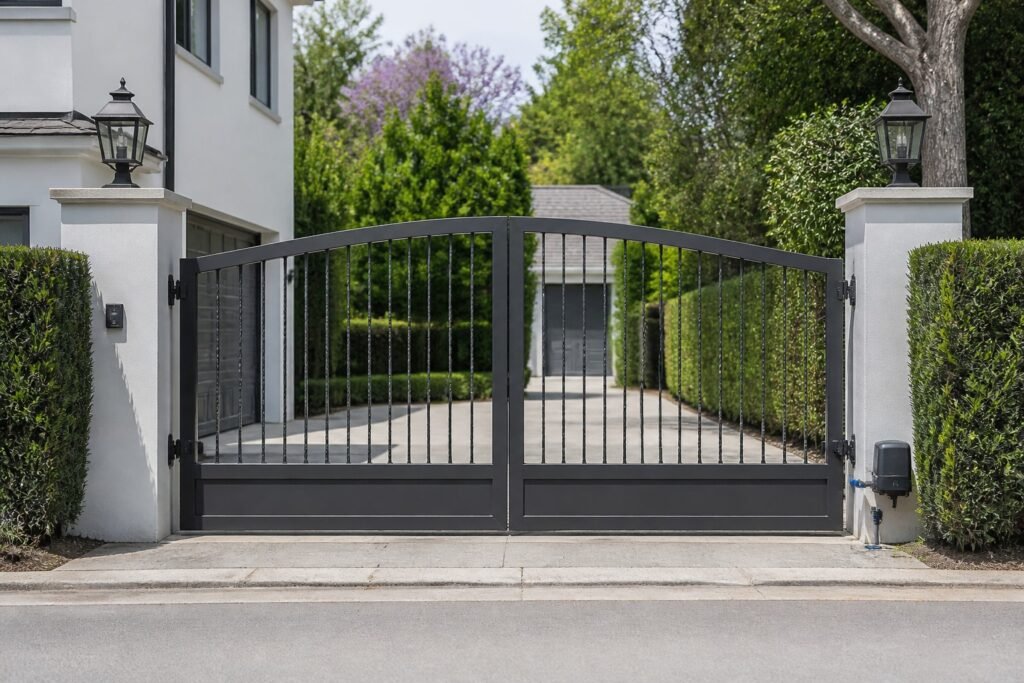
Most fence gate repair comes down to four problems: a sagging frame, worn hinges, a misaligned latch or a failed operator on an automatic gate. Sagging, sticking and latch trouble are often fixable in an afternoon with basic tools, while motor, sensor and control-board faults on electric gates call for a licensed technician. This guide helps Los Angeles homeowners identify the fault, estimate cost, and decide what to handle personally and what to hand off.
What Usually Goes Wrong With a Fence Gate
A gate often fails for mechanical reasons, and the symptom usually points toward the cause.
- Dragging on the ground or the latch post: The gate has sagged, usually from loose hinge screws, a shifted post or a frame that has lost its squareness.
- Won't latch or stays open: The latch and strike plate have drifted out of alignment, or the gate has settled.
- Squealing or stiff swing: Hinges are dry, rusted or bent.
- Rotted or cracked boards (wood gates): Moisture has reached the bottom rail or the joints where boards meet the frame.
- Rust, cracked welds or bent bars (metal and iron gates): Corrosion and impact damage weaken the frame, and a gate that flexes will eventually stop closing true.
- Gate that moves partway or not at all (automatic gates): The operator, power supply, limit settings, safety sensors or a track obstruction is at fault.
Los Angeles adds its own stress factors. Dry spells can shrink wood and loosen fasteners, and rain swells it again. Coastal neighborhoods add salt-laden air that can accelerate hardware corrosion. Heavy driveway gates also take daily cycles that wear rollers, hinges and motors.
How Do I Fix My Gate? A Step-by-Step Approach
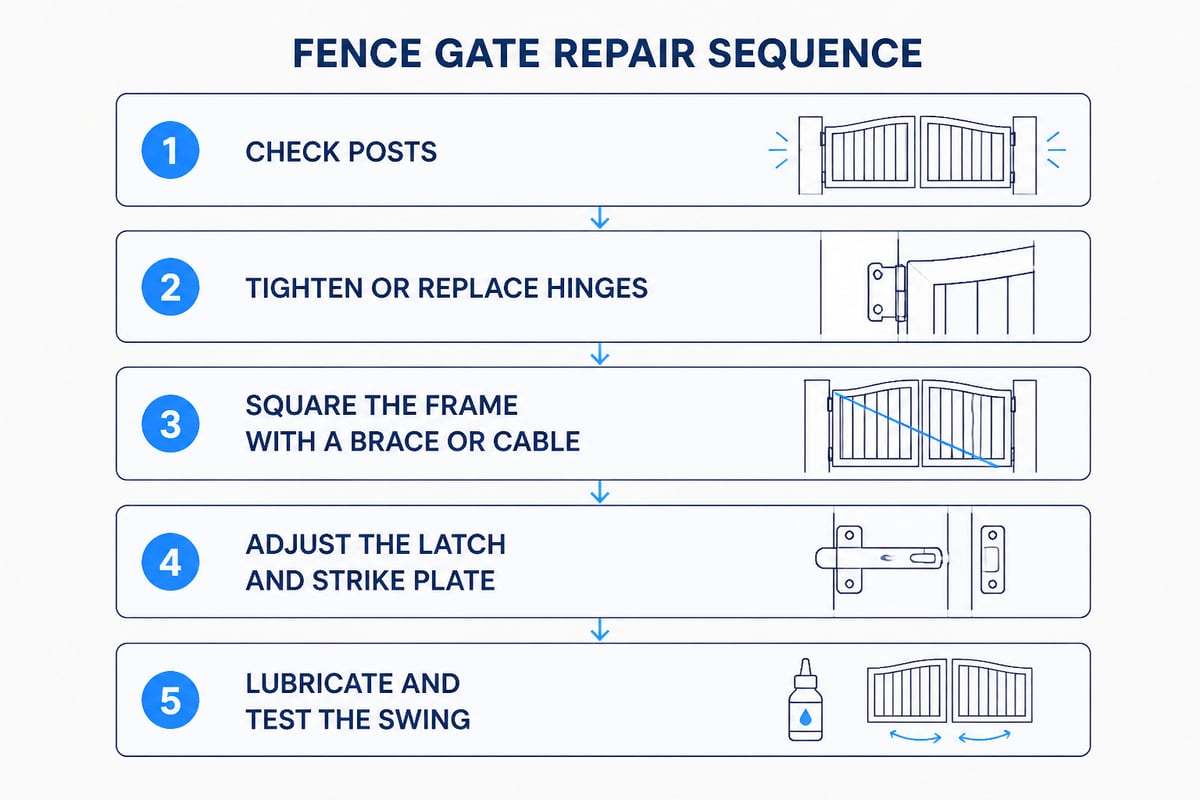
Fix the gate by checking the posts first, then the hinges, then the frame, and finally the latch, because each step affects the next.
- Check the posts. Push the hinge post and the latch post by hand. If either moves, the post footing is loose or the post has rotted at ground level. Nothing else will hold until the post is stable.
- Tighten or replace hinge hardware. Replace short screws with longer exterior-rated screws that reach solid post material. Stripped holes can be filled with glued hardwood dowels or toothpicks before re-driving screws.
- Square the frame. Hold the gate level and measure the diagonals. If they differ, the frame has racked. A tensioned anti-sag cable or a diagonal brace running from the bottom hinge side up to the latch side restores the shape.
- Adjust the latch and strike plate. Once the gate hangs true, reposition the strike plate so the latch bolt engages without lifting or pushing the gate.
- Lubricate and test. Apply a silicone or lithium-based lubricant to hinges and moving parts, then swing the gate through its full range several times.
If the gate is a heavy iron or steel panel, or if it is powered, stop at the diagnosis stage. Re-hanging a heavy panel is a two-person job at minimum, and any gate with a motor involves electrical and entrapment hazards.
Can You Repair a Fence Gate Yourself?
You can repair a manual fence gate yourself if the work involves hinges, latches, boards, braces and lubrication, but you should not attempt operator, wiring or spring-tension repairs on automatic gates and garage doors.
Good DIY candidates include:
- Replacing a latch, hinge set or gate hardware
- Adding a brace or anti-sag kit to a wood or vinyl gate
- Replacing a few rotted boards or pickets
- Re-setting a leaning wood post with fresh concrete
- Touching up paint, stain or rust-inhibiting primer
Jobs best left to a technician include:
- Gate operators that hum, click or run but fail to move the gate
- Control boards, remote receivers, keypads and intercom integrations
- Broken welds or bent frames on iron and steel gates
- Garage door springs and cables, which store dangerous tension
- Any repair on a gate that also functions as part of a pool barrier, where legal requirements apply
A partial DIY repair that goes wrong can cost more than a professional visit, particularly when a misadjusted operator forces a gate against its stops and strips gears.
Fixing a Sagging or Dragging Gate
A sagging gate is fixed by restoring the frame's square shape and re-supporting the hinge side, which usually takes a diagonal brace or a tension kit and fresh hinge hardware.
Start by lifting the latch end until the gate clears the ground, then note how far it rises. A rise of half an inch or less usually means loose hinge screws. A larger lift suggests a racked frame or a leaning post.
For wood gates, install a brace that runs from the lower hinge corner up to the top latch corner, so it works in compression. For lighter frames, a steel cable kit with a turnbuckle lets you adjust tension gradually until the gate hangs level. For heavy metal gates, a failed hinge weld or fatigued pin often needs welding or a hinge upgrade, and a mobile technician can handle that on site. Gates On Site covers this kind of work on its metal gate repairs page.
If the post itself has tilted, the fix has to come before any gate adjustment. Dig out around the footing, plumb the post with a level, and brace it while new concrete cures fully.
Repairing Latches, Hinges and Hardware
Latch and hinge problems are the easiest gate failures to fix, and they respond well to cleaning, realignment and replacement of worn parts.
Latches: If the bolt no longer reaches the catch, check whether the gate has sagged before touching the latch. Move the strike plate only after the gate hangs correctly. Replace any latch with a worn spring or a cracked housing, since a latch that fails intermittently is both annoying and unsafe near a street or pool.
Hinges: Look for elongated screw holes, bent pins and rust streaks. Heavy-duty strap or tee hinges rated for the gate's weight outlast light-duty hardware, and stainless or galvanized finishes resist coastal moisture.
Self-closing devices: Spring hinges and hydraulic closers lose tension over time. Adjust the tension screw a quarter turn at a time, and replace the unit if the gate slams or stalls.
How Much Gap to Leave for a Fence Gate
Leave a modest, even clearance on the latch side and between the gate and the hinge post, and allow slightly more if the material expands noticeably with moisture.
A few practical notes on gaps:
- Too tight a gap causes sticking in wet weather when wood swells
- Too loose a gap lets the gate rattle and wear the latch
- Allow enough clearance at the bottom, adjusted for slope, so the gate clears the driveway or walkway as it swings
- Leave extra room on wide gates, where small angular errors multiply
Pool gates follow different rules. California Health and Safety Code §115923 sets requirements for pool enclosures, including minimum height, limits on the gap beneath and on openings, and self-closing access gates that open away from the pool. If your gate guards a pool, those requirements override any general clearance advice.
Fence Gate Repair for Electric and Automatic Gates
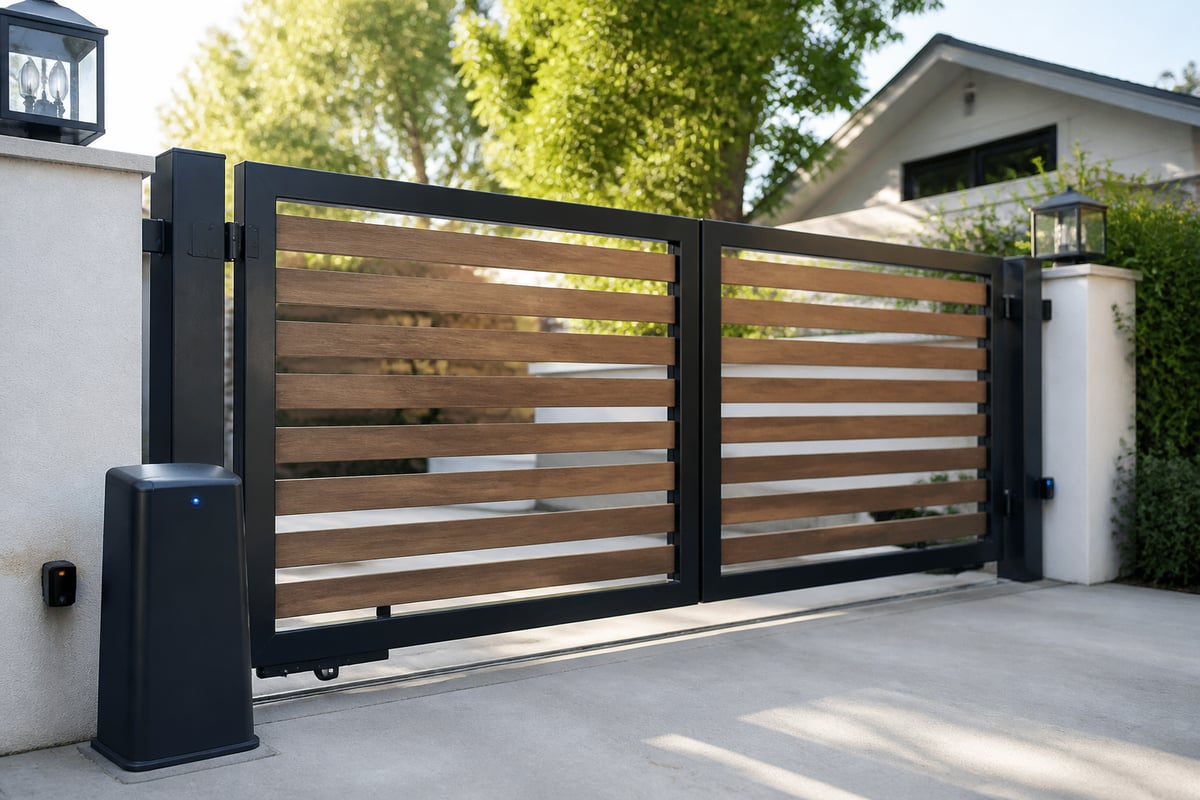
Electric gate faults are diagnosed by working from the power source outward, and most of them trace back to power, sensors, the operator or a mechanical obstruction.
Before calling for service, run through these checks:
- Confirm the outlet or breaker supplying the operator has power.
- Replace the batteries in your remotes and test the keypad.
- Clear debris, leaves and gravel from the track or the swing path.
- Wipe the photo-eye lenses and confirm they face each other without obstruction.
- Note any error code, blinking light or unusual sound from the control box.
If the operator hums but the gate stays put, the capacitor, gears or a seized hinge may be the culprit. If the gate reverses on its own, an overly sensitive force setting or a misaligned sensor is likely. If nothing responds at all, suspect the control board or the power supply.
Los Angeles code also treats electric driveway gates as a safety matter. In qualifying Fence Height Districts, Los Angeles Municipal Code §13.10 calls for an approved gate operator and a safety device that interrupts operation if the gate becomes blocked. A gate whose safety reversing has been disabled or bypassed is a liability risk, and it should be restored by a qualified technician. Gates On Site offers electric gate repair in Los Angeles, with licensed technicians who carry parts on their vehicles to complete repairs on the first visit.
For deeper troubleshooting, the pages on gate motor repairs and driveway gate repair explain the specific failures that affect swing and slide operators.
Repairs by Gate Material
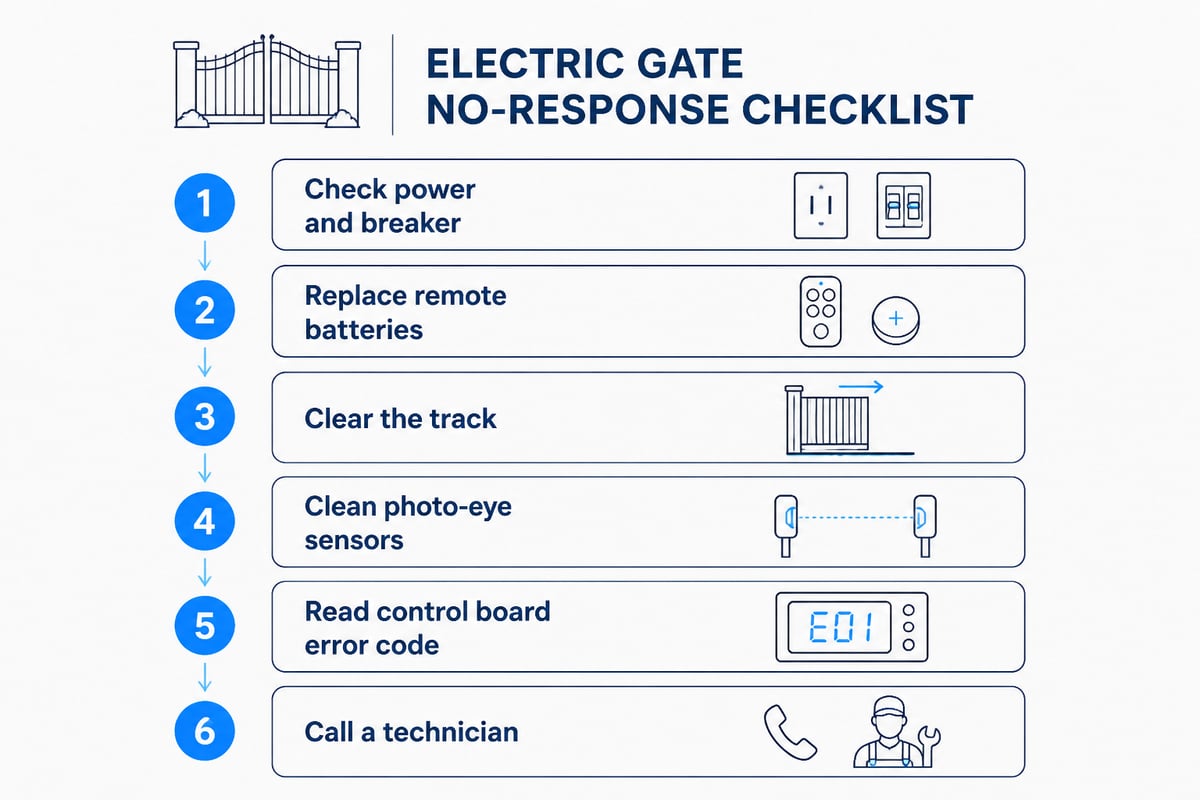
Each gate material fails in its own way, so the repair method depends on whether the frame is wood, vinyl, aluminum or iron.
| Material | Common failures | Typical repair approach |
|---|---|---|
| Wood | Rot, warping, loose joints, sagging | Replace boards, add brace, re-set post, seal and stain |
| Vinyl | Cracks, hinge tear-out, sagging from weight | Reinforce with an internal aluminum insert, replace hardware |
| Aluminum | Bent rails, loose fasteners, latch wear | Straighten or replace sections, tighten or swap hardware |
| Wrought iron and steel | Rust, cracked welds, heavy sag | Wire-brush and prime, re-weld joints, replace hinges |
Wood responds well to hands-on repair, but it needs ongoing sealing. Vinyl is low maintenance, yet it can crack under impact and sag if hinges are not reinforced. Iron is durable, though a cracked weld near a hinge calls for a welder, not a screwdriver.
Heavy wrought-iron gates are common across Los Angeles neighborhoods, and the city has specific rules for them. In Fence Height Districts, Los Angeles Municipal Code §13.10 sets height and style rules for qualifying driveway gates, including open wrought iron, a height limit of 6 feet, and sliding or inward-opening designs. If a repair means changing the gate's height, style or swing direction, check the code before you start.
How Much Does It Cost to Fix a Broken Gate?
The cost to fix a broken gate depends mainly on whether the fault is mechanical or electrical, and a simple latch or hinge swap costs far less than a motor or control-board replacement.
Rather than quote figures that vary widely by gate size, material and brand, consider the factors that move the price:
- Type of fault: Hardware swaps are inexpensive, while operator and board failures cost more.
- Gate weight and size: Heavy or wide gates need more labor and sturdier parts.
- Parts availability: Common operators are quick to source, while discontinued models may require retrofits.
- Welding or fabrication: Cracked frames call for skilled metalwork.
- Urgency: Some companies charge extra for after-hours calls, though Gates On Site provides emergency gate and garage door repair throughout the day at no extra charge.
Request a written estimate that separates labor from parts, and ask whether a diagnostic visit is credited toward the repair. For garage door openers, this cost breakdown shows what drives the price on that side of the property.
When a Repair Is No Longer Worth It
A repair stops making sense when the cost approaches the price of a replacement or when the underlying structure cannot hold the fix.
Signs it is time to consider replacement include a rotted frame across several joints, repeated weld failures, an obsolete operator with no parts supply, and a post system that keeps moving despite repeated footing work. A technician can compare the cost of another repair against the remaining life of the gate. If you are weighing both a gate and a garage door, residential garage door repair is worth considering at the same visit.
Preventive Maintenance for Los Angeles Gates
A short quarterly routine prevents most of the failures covered above.
- Lubricate hinges, rollers and chains with a product suited to outdoor use
- Tighten fasteners and inspect welds for hairline cracks
- Clear tracks, sensor lenses and the swing path
- Reseal or repaint wood and metal before the finish fails
- Test the auto-reverse feature on automatic gates by placing a safe obstruction in the path
- Keep a log of any new noises, delays or error codes
Coastal and canyon properties benefit from a closer look, since salt air and fine dust speed up wear on motors and moving parts.
FAQ
How long should a gate repair take?
A manual hardware repair such as a latch or hinge replacement often takes under an hour. Operator, control-board and welding repairs take longer, and parts availability can add time. Mobile technicians who stock common parts can often complete the work in a single visit.
Why does my automatic gate keep reversing?
Reversing usually means the gate sensed an obstruction, either real or false. Check for debris in the track, dirty or misaligned photo-eyes, and a force setting that is too sensitive. If the problem persists, have a technician test the safety system rather than disabling it.
Is it safe to keep using a gate that sags or scrapes?
A scraping gate wears its hinges and, on automatic models, strains the motor and gears. A gate that drags may also fail to latch, which creates a security and safety concern. Address the cause promptly to avoid a larger repair later.
Start today by running the checks in this guide: test the posts, look for loose hardware and note any error codes, then write down what you find. If the problem involves a motor, sensor, spring or a cracked weld, Gates On Site can help, since its family-owned team has more than 20 years of experience repairing gates and garage doors in Los Angeles. Its technicians are licensed, insured and certified, stock parts on every vehicle for same-day fixes in most cases, and back each repair with a 100% satisfaction guarantee. To get an automatic gate moving again, learn more about its electric gate repair service, then Call (323) 991-9630 to schedule a visit.